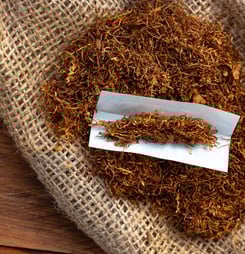

Avid pipe enthusiasts all across the world are invited to join together in their appreciation for this ancient pastime in celebration of International Pipe Smoking Day!
International Pipe Smoking Day Timeline
Earliest known tobacco pipe use in North America
Archaeologists analyzing a carved stone pipe from northern Alabama find nicotine residues, providing the earliest direct evidence of tobacco smoking with a pipe on the continent.
Tobacco pipe smoking reaches Europe
Following voyages to the Americas, Europeans adopt Indigenous tobacco and pipe-smoking practices, and clay pipes quickly spread across ports and cities as tobacco becomes a global commodity.
Rise of European clay pipe industries
Mass production of white clay pipes develops in England and the Netherlands, creating standardized, inexpensive smoking pipes that are widely traded to colonies in North America and beyond.
Social pipe smoking in military and trading posts
Archaeological finds at sites like Fort Vancouver show large numbers of discarded pipe fragments, indicating that pipe smoking was a common social activity among soldiers, traders, and laborers.
Meerschaum and briar pipes gain popularity
European craftsmen refine the use of meerschaum and later briar wood to carve durable, heat-resistant pipes, transforming pipe making into a specialized art and status symbol among smokers.
Pipe clubs and smoking lounges emerge
As pipe smoking becomes associated with leisure and sociability, gentleman’s clubs, tobacconists’ lounges, and organized pipe societies form in Europe and North America.
Hobbyist pipe collecting and artisan makers grow
With cigarette use dominating everyday smoking, pipe smoking shifts toward a niche hobby, and small artisan workshops and collector societies appear, focusing on craftsmanship, history, and community.
History of International Pipe Smoking Day
Using pipes is the oldest traditional form of smoking and while it has evolved over the years, in essence it has remained very much the same.
Getting its start in 2008, International Pipe Smoking Day (IPSD) began as an opportunity for pipe smoking hobbyists to celebrate this pastime.
Smokers Forums, a premier online forum in the UK, launched International Pipe Smoking Day, beginning through local pipe clubs that hosted small, in-person events. The date was chosen because February 20 is the anniversary of the founding of Smokers Forums.
As word spread about IPSD, more merchants, shop owners and others began getting involved so that the celebration grew in size and scope.
Now, this day is supported by a wide range of different enthusiasts, including the Comite International des Pipe Clubs, which is the international organization with members in at least 25 different countries across the globe. The United Pipe Clubs of America (UPCA) is part of this organization and the IPSD events.
While pipe smoking tends to be a solitary pursuit, especially in today’s world, International Pipe Smoking Day invites people to join together, taking time to enjoy this shared passion with others in their community.
How to Observe International Pipe Smoking Day
Check out some of these ideas for getting involved with International Pipe Smoking Day:
Attend a Pipe Show
One of the places that pipe smokers tend to unite together around their common interest is at pipe shows.
This is a time when these hobbyists can gather with other like-minded enthusiasts to connect with each other, learn and grow in their appreciation of pipe smoking.
Visit a Local Tobacco Shop
Locally owned tobacco shops are often run by passionate connoisseurs who want to make tobacco available to their community.
International Pipe Smoking Day might be just the time for a pipe hobbyist to visit a tobacco shop that is nearby. Strike up a conversation with the person behind the counter and consider trying a new type of flavor or style.
Of course, it is also possible to purchase tobacco online, but part of the beauty of the experience is visiting the store, taking in the aromas and enjoying the conversation with other pipe lovers.
Buy a New Pipe
Perhaps International Pipe Smoking Day would be a great motivator for a person with a pipe collection to consider adding to it!
The North American Society of Pipe Collectors was founded in Ohio in 1993 to show support for pipe smokers, share information and knowledge about tobacco, and provide camaraderie for people who are passionate about pipe smoking.
Check out their website for resources and more information on adding a piece to a pipe collection.
Facts About International Pipe Smoking Day
Sacred Pipes in Indigenous North American Diplomacy
For many Native American nations, especially on the Plains, pipes were not casual smoking tools but sacred objects used to seal agreements and communicate with the spiritual world.
The National Park Service notes that during treaty councils, the act of sharing a ceremonial pipe created a spiritual bond and obligation between parties that was understood as more binding than a written contract alone.
Ancient Pipes Held Residues of Many Plants, Not Just Tobacco
Chemical analysis of ancient pipes from pre‑colonial North America shows that Indigenous communities smoked at least dozens of different plant species, sometimes mixed together, for ritual, medicinal, or social purposes.
A University of Chicago report on biomolecular work led by Washington State University researchers found residues from plants other than tobacco in artifacts more than 1,000 years old, challenging the assumption that historic pipes were used only for nicotine.
Early Tobacco Pipes in North America Pre‑date European Contact
Archaeological evidence indicates that pipe smoking traditions in North America long pre‑date European arrival.
A study in the Proceedings of the National Academy of Sciences identified nicotine residues in stone pipes from the interior Pacific Northwest that date to at least 3,000 years ago, providing some of the earliest direct biomolecular evidence of tobacco use anywhere in the world.
Catlinite and the Rise of the “Peace Pipe” Image
Many Plains peoples carved ceremonial pipes from a soft red stone known as catlinite, quarried in what is now Minnesota.
According to U.S. military historical material from Fort McCoy, this distinct red pipestone became so closely associated with Native American diplomacy that 19th‑century Euro‑American observers popularized the stereotype of the “peace pipe,” even though these pipes had a much broader spiritual and cultural role than simply marking truces.
Native Tobacco Varieties Were Far Stronger Than Modern Cigarettes
The domesticated tobacco most widely used by Indigenous communities in eastern North America, Nicotiana rustica, contains significantly higher nicotine levels than the Nicotiana tabacum used in most modern cigarettes.
Research summarized by the Mapping Early New York Encyclopedia notes that this potent native species made ceremonial pipe smoking an intense physiological experience, which helped reinforce its restricted use in ritual and leadership contexts rather than as a casual, everyday habit.
Pipe Smoking Carries Distinct Cancer Risks Compared With Cigarettes
Large epidemiological studies have found that exclusive pipe smokers face substantially elevated risks of several cancers, even if they do not inhale deeply.
A pooled analysis in the journal BMC Cancer reported that current pipe smokers had significantly higher risks of cancers of the lung, larynx, esophagus, and head and neck compared with never‑smokers, though in many cases their risk was somewhat lower than that of heavy cigarette smokers, highlighting that method of tobacco use changes but does not eliminate health hazards.
Global Pipe and Pipe‑Tobacco Sales Persist Despite Falling Smoking Rates
While overall tobacco use has declined in many high‑income countries, niche markets for smoking pipes and pipe tobacco remain economically significant.
A 2022–2025 industry analysis projects the global tobacco pipe market to grow from about 1.35 billion to more than 2.3 billion U.S. dollars by 2033, even as health organizations like the American Lung Association document sharp long‑term drops in adult smoking prevalence, suggesting that pipe smoking is increasingly concentrated in smaller, hobbyist and collector communities.