
People have different ways of relaxing, some of them healthier than others. Some people drink a glass of wine, some doze off in front of the TV, and some people prefer physical pursuits.
One of the best and oldest ways to release the tension building up in both the body and the mind is practicing yoga!
The benefits of practicing yoga, such as mastering countless techniques of controlling the body and the mind, have been widely recognized by the Western world for years, and International Yoga Day aims to continue to inform people how much dedicating a bit of time to the art of yoga can improve their lives.
It is not just a physical practice, but also a mental one, with many of the teachings of yoga reflecting mental and spiritual states, and allowing your body to wadner and draft into unknown realms that will give you a focus in your life and a calmness with your soul.
How to Celebrate International Yoga Day
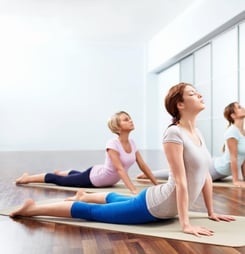
Practice Yoga
Even if you have never tried yoga in your life, that doesn’t mean that you should not be celebrating this day.
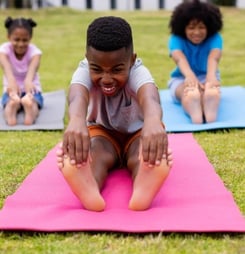
Yoga has helped and continues to help millions of people all over the world achieve inner peace and improve their physical condition, regardless of age or gender, so it is practically guaranteed that it would have a positive impact on your life as well.
And even if you don’t consider yourself a particularly fit person—don’t worry! You can still enjoy yoga without having to do the splits whilst balancing on your head!
As we already mentioned, yoga uses slow, fluid movements, and so, very few people suffer any kind of injuries practicing yoga.
Many of the meditation techniques, breathing exercises, and certain postures are considered safe and beneficial even for those suffering various illnesses as well as pregnant women.
Join a Local Yoga Day Event
Just make sure you don’t attempt a headstand the first time you decide to give yoga a try! If you feel inclined to attend an International Yoga Day event, there are many organized in cities the world over to choose from, including Austin, Texas, Hong Kong, London, Seoul, and many others.
Pick Up a Yoga Mat
So are you ready to do your body and mind a favor? We think you should be. The first step is buy a yoga mat, there are plenty to grab, as well as some comfortable and easy clothing that will allow for all the stretches, and you’re one step closer to being a pro!
Take advantage of the chance this coming International Day presents and learn something you will be able to benefit from for years and years to come.
International Yoga Day Timeline
Yoga Appears in the Rigveda
The Sanskrit word “yoga” is first recorded in the Rigveda, where it is used in the sense of “yoking” or harnessing, laying an early linguistic and conceptual foundation for later philosophical meanings of disciplined practice.
Upanishads Shape Early Yogic Ideas
Texts such as the Katha Upanishad describe yoga as a path of sense control and mental stillness leading to liberation, marking some of the earliest clear descriptions of yoga in a spiritual-philosophical sense.
Bhagavad Gita Systematizes Paths of Yoga
Composed as part of the Mahabharata, the Bhagavad Gita presents multiple “yogas,” including the disciplines of action, knowledge, and devotion, giving the term a broad ethical and spiritual meaning that influences later practice.
Patanjali Codifies Classical Yoga Philosophy
The Yoga Sutras attributed to Patanjali set out the eight-limbed path of yoga, integrating ethics, posture, breath control, and meditation into a systematic framework that becomes foundational for many later traditions.
Medieval Texts Develop Hatha Yoga
Manuals such as the Hatha Yoga Pradipika describe physical techniques, postures, and breath practices aimed at manipulating subtle energies, shifting yoga toward more body-centered disciplines alongside earlier meditative models.
Swami Vivekananda Introduces Yoga to Western Audiences
At the World’s Parliament of Religions in Chicago, Vivekananda presents yoga as a universal spiritual discipline grounded in Vedanta, sparking sustained Western interest in Indian philosophy and meditative yoga.
Krishnamacharya and Students Shape Modern Postural Yoga
Teaching in Mysore and later Madras, T. Krishnamacharya and pupils such as B.K.S. Iyengar and K. Pattabhi Jois blend traditional hatha methods with modern physical culture, creating dynamic posture-based styles that spread worldwide.
History of International Yoga Day
Yoga itself is a physical, mental and spiritual practice that originated in India about 6,000 years ago. Throughout the ages, yoga evolved and developed, along the way becoming a philosophy in itself.
Then, in the 19th century, yoga came to the attention of the West, which had begun to take a general interest in Eastern culture and philosophy. Soon after, Swami Vivekananda, the first Hindu teacher to actively advocate and explain yoga to a western audience, toured Europe and the United States.
The United Nations General Assembly declared International Yoga Day official on December 11th, 2014. The Prime Minister of India, Narendra Modi, had this to say about the decision to create this day:
“Yoga is an invaluable gift of India’s ancient tradition. It embodies unity of mind and body; thought and action; restraint and fulfilment; harmony between man and nature; a holistic approach to health and well-being. By changing our lifestyle and creating consciousness, it can help us deal with climate change. Let us work towards adopting an International Yoga Day.”
The date chosen on which to celebrate International Yoga Day, June 21st, is also of great significance, as it is Summer Solstice and marks the transition to Dakshinayana. So far, more than 170 countries worldwide have shown their support for this day.
Yoga is practiced all over the world and there is evidence of this as yoga continues to inspire and take over the world! Yoga classes are becoming more and more prevalent in our society today and there is a bigger demand than ever before.
Yes, yoga has been well marketed you may say, it is an ancient practice that has stood the test of time but you do not need to be a yogi ninja to really be able to appreciate the beauty and benefits of the tradition.
In fact, starting off slow and simple is going to be the best way to learn the rudiments as well as really being able to appreciate what it’s about. Lots of instructors begin at a low level, ensuring that everyone is able to keep up, feel the power and start to feel the benefits. So, what are the benefits you may ask?
What Are the Benefits of Yoga?
There are plenty of things to rave about when it comes to Yoga, most likely there is a day dedicated entirely to it! Tame your body and give it the inner peace that it deserves.
Yoga can improve flexibility, which doesn’t mean you’ll be able to go off and impress your friends with the splits after an hour, but it does mean that you may start to notice muscular improvements over time.
In addition, yoga is famous for toning up and strengthening your muscles. It works on core strength as well as assisting your muscles with vitality and can also promote a healthier metabolism.
While yoga may not be a cardio activity but it does have cardio and circulatory benefits, which is a big bonus. Any type of exercise, even gentle, gets the heart rate up which is what we want! This can aid with diets, and help protect you from injury.
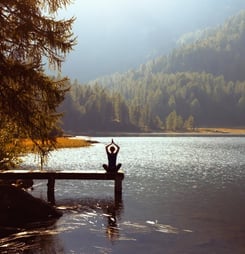
Strength as at the core of yoga, and so what else could we possibly want out of an activity? Add a little holistic music to your yoga, it will help the mind also. Yoga can be practiced inside or outside; but it is preferable outside, to allow yourself to feel the power of nature and the sun.
Are you on the yoga bandwagon yet? You should be, but let’s take things slow, one day at a time, afterall, that is why International Yoga Day was created isn’t it? 😉
Facts About International Yoga Day
Subtle Brain Changes Seen With Regular Yoga Practice
Neuroimaging studies suggest that regular yoga and meditation may increase the thickness of brain regions involved in attention and emotion regulation, such as the prefrontal cortex and anterior cingulate cortex, and may help preserve gray matter volume that typically declines with age.
Researchers propose that these structural differences could be one reason yoga is associated with better mood and cognitive function in older adults.
Yoga’s Role in Easing Chronic Low Back Pain
Randomized controlled trials funded and reviewed by the U.S. National Center for Complementary and Integrative Health have found that structured yoga programs can modestly reduce pain and improve function in people with chronic low back pain, with benefits comparable to conventional physical therapy in some studies.
Participants often report less disability and greater ability to carry out daily activities after several months of practice.
Ancient Texts Framed Yoga as Much More Than Exercise
In the Katha Upanishad, usually dated to the mid–first millennium BCE, yoga is defined as the “firm control of the senses,” presenting it as a disciplined path to a highest state of consciousness rather than a physical workout.
This early philosophical use of the term shows that Indian traditions originally understood yoga primarily as a mental and spiritual discipline that only later developed extensive physical techniques.
Classical Yoga Systematized an Eight‑Limb Path
Patanjali’s Yoga Sutras, composed roughly between the 2nd century BCE and 5th century CE, laid out an eight‑limbed system that includes ethical restraints, observances, posture, breath regulation, sense withdrawal, concentration, meditation, and meditative absorption.
This framework became one of the most influential blueprints for later yoga traditions, even though it mentions physical postures only briefly and focuses mainly on mind training and liberation.
Modern “Yoga As Exercise” Is Largely a 20th‑Century Creation
Historical research shows that the flowing sequences of standing postures familiar in many studios emerged in the 20th century, shaped by Indian teachers like T. Krishnamacharya and by global physical culture and gymnastics.
Earlier yoga texts mostly described seated meditation poses, so today’s popular forms represent a relatively recent fusion of traditional techniques with modern ideas about fitness and health.
Clinical Evidence Links Yoga to Lower Blood Pressure
Meta‑analyses of clinical trials indicate that yoga programs combining movement, breathwork, and relaxation can produce small but meaningful reductions in systolic and diastolic blood pressure, especially in people with hypertension.
These improvements are thought to result from better autonomic balance, reduced stress hormone levels, and increased adherence to other heart‑healthy behaviors.
University Students Show Measurable Stress Relief From Yoga
A 12‑week study of university students found that a regular yoga intervention significantly reduced perceived stress and anxiety and improved emotional well‑being compared with baseline measures.
The authors concluded that yoga can be a practical, low‑cost tool to support mental health in high‑pressure academic environments when offered alongside conventional services.