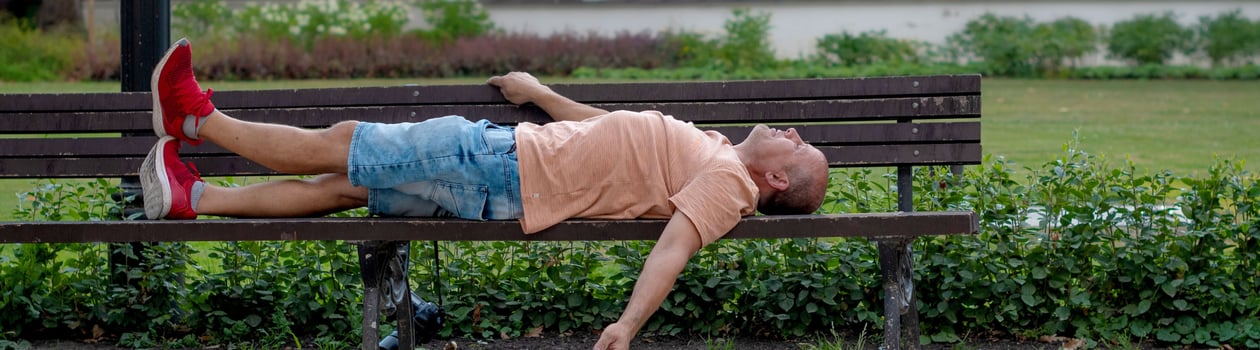
Feeling sleepy? That’s okay! On this day, it’s perfectly acceptable to take a little snooze no matter where you are. In the car. At your desk in the office. In the park. Wherever you are!
Why? Because it’s time for National Public Sleeping Day!
National Public Sleeping Day Timeline
Robert Owen Advocates the Eight‑Hour Day
Welsh social reformer Robert Owen popularizes the slogan “Eight hours labour, eight hours recreation, eight hours rest,” helping legitimize daytime rest and shorter work periods in industrial society.
First Dedicated Sleep Laboratory Opens
Physiologist Nathaniel Kleitman establishes one of the first formal sleep laboratories at the University of Chicago, laying the groundwork for modern scientific understanding of sleep and napping.
Discovery of REM Sleep
Kleitman and Eugene Aserinsky identify rapid eye movement (REM) sleep, showing that sleep has distinct stages and spurring deeper research into how short sleep bouts and naps affect brain function.
NASA Studies the Power Nap
NASA and the FAA publish research showing that a 26‑minute nap can significantly boost alertness and performance in pilots, giving scientific backing to brief, structured napping for safety‑critical work.
Japanese “Inemuri” Gains Scholarly Attention
Anthropologist Brigitte Steger and others begin documenting “inemuri,” the accepted practice of sleeping while present in Japan, highlighting how public dozing can signal diligence rather than laziness.
Major Review Maps the “Nap Paradox”
A comprehensive review in the journal Sleep Medicine Reviews summarizes decades of studies, finding that short daytime naps can aid memory and alertness while very long or frequent naps may relate to poorer health.
Genetic Basis for Napping Identified
Harvard‑led researchers report that certain genes predispose people to nap, showing that the urge for daytime sleep is partly biological and helping explain why some individuals benefit especially from brief public naps.
How to Celebrate National Public Sleeping Day
Celebrating National Public Sleeping Day comes with all sorts of different opportunities to enjoy the whole purpose of the day. Get involved in the day with some of these ideas:
Grab a Power Nap
National Public Sleeping Day is a time when it’s okay to go ahead and get that power nap in, even while in a public place! Riding in the carpool? Get a little shuteye. Super bored at work? Sneak a few zzz’s while sitting at the desk.
Whatever is happening, this is the day to go ahead and enjoy a little public sleeping!
Organize a Group Nap
Have a fun time on National Public Sleeping Day by grabbing a few friends, heading to a local coffee shop, a hotel lobby or some other hangout spot.
Arrange a meeting place ahead of time and don’t forget to tell everyone to bring their own pillow! Snuggle up on a bench. Or curl up on a sofa or chair. Whatever the case, be sure to get that sleep done in public.
Those who feel uncomfortable about taking a nap in public might want to consider choosing a less obvious place – like a dark movie theater!
Learn More About the Benefits of Naps
In honor of National Public Sleeping Day, get a bit more on board by learning a bit more about the amazing benefits that taking a little nap can provide. Try some of these fun facts to get started:
Taking a nap can improve your memory
Studies show that sleep can play an important part of the ability to store memories. Napping helps people to remember things including sense perception, verbal recall, motor skills and more.
Napping improves the mood
Taking a nap can help a person to feel just a little bit better. The relaxation that comes from lying down and resting, even if the person doesn’t fall asleep, can be a mood booster.
Naps can help with jet lag
People who nap on a regular basis may find that jet lag is easier to overcome because their circadian rhythms are already accustomed to getting sleep at unusual times.
Taking a nap may be good for the heart
A study has shown that people who nap for 45-60 minutes a day tend to have lower blood pressure than those who don’t nap.
History of National Public Sleeping Day
Most people don’t realize that Public Sleeping has a background that dates back more than two centuries!
It was in 1817 that Robert Owens, a Welsh reformer, was an advocate for limiting the work day to eight hours, and he also may have been part of the motivation for establishing the right of people to be able to take a nap in a public space.
No matter its history, National Public Sleeping Day was founded with the purpose of encouraging people to be sure they get enough sleep!
Consider all of the times it’s been a delight to see someone else have a bit of a nap in public, whether on a bus or in the waiting room of a medical office.
Babies sleep in public all the time, of course. And perhaps they are onto something! Take some time to enjoy this day to the fullest by getting a little bit of sleep in public.
National Public Sleeping Day FAQs


You may also like

National Napping Day
Taking a little daytime snooze is like hitting the reset button, recharging energy levels and boosting productivity in a flash.
- Canada
- United Kingdom
- United States

Baby Sleep Day
Tiny yawns, soft blankets, and quiet rooms—Baby Sleep Day brings attention to one of the most important parts of early life. It highlights how proper rest shapes a baby’s mind and body from the very beginning. Parents often wonder how to help their child sleep better, and this day opens...
- United States

World Sleep Day
Resting your eyes, recharging your body, and dreaming of wonderful things are just a few reasons to love bedtime.
- India
- International
- United Kingdom
- and 1 more

Eight Hours Day
Eight Hours Day marks a significant shift in workers' rights. It's a time when people come together to recognize fair labor practices. Celebrating this day reminds everyone of the balance between work and personal time. People celebrate Eight Hours Day for several reasons. It highlights the importance of fair working conditions...
- Australia
National days and holidays on February 28 2027

National Science Day
National Science Day in India celebrates the discovery of the Raman Effect by physicist C.V. Raman. This day highlights the importance of science in our everyday lives! It's a lively occasion that encourages people to appreciate how science shapes our world. Events and activities across the country make science accessible and...
- India

Real Bread Week
Real bread is a joy to behold! Made with natural ingredients and baked to perfection, each bite is a heavenly experience.
- United Kingdom

Ramadan
During this holy month, Muslims fast from sunrise to sunset, focusing on spiritual reflection and community. Ramadan is a time for self-improvement and bringing people together in celebration of faith.

Make Mine Chocolate
"Make Mine Chocolate" is a lively campaign urging people to think twice before giving live rabbits as Easter gifts. The campaign encourages people to opt for chocolate bunnies instead. This approach helps spread the message of responsible pet ownership while offering a sweet alternative that won't end up in shelters...
- United Kingdom
- United States
Seize Every Day
Join free for personalised recommendations, email reminders and exclusive guides. Never miss a day.