

The March Full Moon, also known as the Worm Moon, is a remarkable event that is highly anticipated and significant.
This particular full moon is celebrated for its timing. It closely follows the Spring Equinox and marks the beginning of spring, a season full of growth and renewal.
The Worm Moon gets its unique name from the earthworms that start to emerge from the warming soil. This natural phenomenon signals the return of robins and other birds, hinting at the coming of spring.
It’s a time when the balance of day and night is nearly equal, which adds to its significance in many cultures. People value this full moon as it heralds significant ecological and agricultural shifts—earthworms surface and aerate the soil, making it ideal for planting.
Additionally, the Worm Moon is of religious importance. In Christian traditions, it is often referred to as the Paschal Moon because it determines the date of Easter.
The first Sunday after this full moon is celebrated as Easter Sunday, which will be March 31 in, 2024. This makes the Worm Moon a pivotal marker in astronomical and cultural calendars, influencing global festivals and rituals.
March Full Moon Timeline
Council of Nicaea Defines Easter Rule
Christian bishops at Nicaea agree that Easter will fall on the first Sunday after the Paschal full moon following the spring equinox, formally tying a spring full moon to the liturgical calendar.
Gregorian Calendar Reform Adjusts Full Moon Tables
Pope Gregory XIII introduces the Gregorian calendar, refining lunar and equinox calculations so the ecclesiastical Paschal full moon, often occurring in March, better matches the astronomical sky.
Colonial Adoption of Native March Moon Names
European settlers in North America begin recording and using Indigenous names for the March full moon, such as Worm Moon, Crow Moon, and Sap Moon, linking it to thawing ground and maple sugaring.
Metonic Cycle Embedded in Easter Computations
Nineteen-year Metonic cycles, already known from antiquity, are systematically used in ecclesiastical tables so the Paschal full moon date, often a March or early April full moon, can be predicted far in advance.
U.S. Naval Observatory Standardizes Moon Phase Data
The United States Naval Observatory begins publishing authoritative lunar phase information, giving precise dates and times for full moons in March and other months for navigation and scientific use.
Farmers’ Almanac Popularizes “Worm Moon”
The Farmers’ Almanac helps standardize “Worm Moon” as the common English name for the March full moon, spreading Native-derived seasonal moon names across North American popular culture.
Scientific Outreach Explains Full Moon Geometry
Institutions like NASA and major museums widely teach that a full moon occurs when the Moon lies opposite the Sun across Earth, clarifying the astronomy behind each March full moon for the general public.
History of March Full Moon
The March Full Moon has a rich history that intertwines natural phenomena with cultural significance. This name originates from Native American tribes who observed natural events and linked them to lunar phases.
As the ground thaws in March, earthworm casts become visible, signaling the return of robins and the revival of the ecosystem, which gave rise to the name “Worm Moon.” Interestingly, an alternate origin ties the name to beetle larvae, often called “worms,” which also emerge in March as the snow melts.
The various names for the March Full Moon reflect the transitional nature of the season.
Names like Crow Moon, Crust Moon, and Sugar Moon highlight different aspects of the changing environment— from the cawing of crows, signaling the end of winter, to the crust forming on snow as it thaws and refreezes and the tapping of sugar maples.
These names denote the start of spring and connect to the activities and changes occurring in nature during this period.
This full moon plays a crucial role in agriculture and ecology, marking a time when farmers prepare for the new planting season, leveraging the softened soil that becomes ideal for sowing seeds.
The Worm Moon thus stands as a symbol of renewal and readiness, heralding significant shifts in both the natural world and human activity.
How to Celebrate March Full Moon
Celebrating the March Full Moon can be both magical and refreshing. Here are five quirky and playful ideas for making the most of this luminescent night!
Moonlight Picnic
Why not pack a basket with your favorite treats and head outdoors for a moonlight picnic? Choose a spot where the moon is clearly visible, lay down a cozy blanket, and enjoy the night sky.
It’s a perfect setting for some stargazing or simply soaking up the serene moonlit atmosphere.
Craft Your Own Moon Journal
Get creative with a moon journal! During the full moon, sit by a window or under the sky with a notebook. Draw, write, or paste items that resonate with you.
This could be a place to jot down thoughts, dreams, or moon-inspired artwork. Let the moon guide your creativity.
Moon Water Magic
Making moon water is easy and enchanting. Just fill a jar with water and set it under the moonlight overnight.
Later, you can use this charged water to water plants, in baths, or as a refreshing drink. It’s believed to carry the moon’s energy, enhancing your connection to the natural world.
A Night of Moon Photography
Capture the beauty of the full moon with a camera. Whether you use a phone or a professional camera, try taking photos from different angles and settings.
Experiment with long exposures or capture the silhouette of the landscape against the bright moon. It’s fun to engage with the night and create lasting memories.
Full Moon Reflections and Release
Write down things you wish to release or change in your life on pieces of paper. Read them aloud under the moonlight, and then safely burn them to symbolize letting go. This ritual is powerful for clearing the old and creating new beginnings.
Facts About March Full Moon
Hidden Harvest Moon Behavior in the Southern Hemisphere
“Worm Moon” May Have Referred to Beetle Larvae, Not Earthworms
A Patchwork of Indigenous Names for the March Moon
The March Moon Helps Anchor a 19‑Year Lunar Cycle
Paschal Full Moon Is A Table Date, Not the Actual March Full Moon
Western and Eastern Churches Often See Different “Spring” Full Moons
Around the March Equinox, the Moon’s Path Flips Seasonal Roles
March Full Moon FAQs
How is the date of the March full moon related to the start of spring?
Astronomically, the March full moon often falls close to the March equinox, when Earth’s axis is tilted so that the sun crosses the celestial equator and day and night are nearly equal in length worldwide.
However, there is no fixed rule that the full moon must occur before or after the equinox in any given year.
The apparent link between the “Worm Moon” and spring comes from seasonal patterns in the Northern Hemisphere, where thawing ground, earthworm activity, and returning birds tend to coincide with this full moon, rather than from a strict astronomical requirement.
Why do different cultures have multiple traditional names for the March full moon?
Traditional full‑moon names grew out of local ecology and seasonal work, so different peoples developed their own terms for the same lunar phase.
In parts of the Algonquin‑speaking world, the March full moon has often been called the Worm Moon for the first visible worm casts in thawing soil, while other Native American groups used names such as Crow Moon for the noisy return of crows, or Sap or Sugar Moon for the start of maple‑sap collection.
Because climate, wildlife, and food sources vary across regions, each community emphasized the sign of the season that mattered most to its own way of life.
Is the “Worm Moon” name historically accurate for Native American traditions, or is it a modern invention?
The idea of naming moons by seasonal signs is traditional, but many of the specific English labels popular today, including “Worm Moon,” were standardized and widely circulated by non‑Native compilers in the 19th and 20th centuries.
Historical records and Native organizations note that names and translations vary from tribe to tribe, and that a single, universal list does not reflect this diversity.
“Worm Moon” does appear in modern summaries of Algonquin‑influenced traditions, yet experts caution that it should be seen as one regional and translated label among many, rather than the definitive Native American name for the March full moon.
What is the Paschal full moon, and how does it differ from the actual March full moon in the sky?
The Paschal full moon is a calculated date used by many Christian churches to determine Easter.
It is defined as the first “ecclesiastical” full moon that falls on or after March 21, a fixed church date for the start of spring. This date comes from tables and algorithms based on a 19‑year Metonic cycle, rather than direct observation of the sky.
As a result, the Paschal full moon can be off by a day or more from the true astronomical full moon in March or April, even though in many years they appear to coincide.
How exactly does the full moon in March help determine the date of Easter?
In Western Christian practice, Easter is set as the Sunday following the Paschal full moon, which is the first tabulated full moon on or after March 21.
Once that ecclesiastical full‑moon date is known from tables or formulas, the calendar is checked for the next Sunday, and that day is observed as Easter.
This means Easter can fall between March 22 and April 25, depending on where the Paschal full moon lands in that range of spring dates.
Why does the church use a mathematical cycle instead of the real astronomical full moon to set Easter?
Church calendars adopted a hybrid solar‑lunar system centuries ago so that communities across wide regions could share a uniform date for Easter.
To avoid relying on variable local observations of the moon, church scholars used the Metonic cycle, a 19‑year pattern in which 235 lunar months line up closely with 19 solar years, and built tables of “ecclesiastical” full moons based on that cycle.
These tables, adjusted during the shift from the Julian to the Gregorian calendar, make it possible to compute Easter far into the future with pen and paper, even if the calculated full moon differs slightly in date from the astronomically observed one.
Do the March full‑moon names or the Paschal full moon have any effect on the Moon itself?
Neither the traditional names such as Worm Moon or Crow Moon nor the Paschal full‑moon rules change anything about the Moon’s physical behavior.
The Moon follows its usual orbital cycle, producing a full phase roughly every 29.5 days. The names are cultural labels that reflect seasonal patterns on Earth, while the Paschal full moon is an agreed‑upon calendar construct.
Both systems show how people organize time and meaning around the same recurring astronomical event, rather than altering the event itself.



You may also like
March Equinox
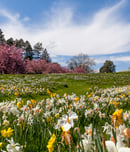
The March Equinox is a unique day when Earth’s position around the Sun aligns so that day and night are nearly equal everywhere on the planet. This balance happens as the Sun’s rays shine directly on Earth’s equator, making it a significant astronomical event. The equinox signals the beginning of spring...

Spring Begins
Spring Begins is a day full of life and new starts. It falls on March 19 or 20, depending on where you live. This date marks the spring equinox in the Northern Hemisphere. It's a special moment when day and night are almost the same length. People welcome warmer weather...
- Canada
- International
- United Kingdom
- and 1 more

Easter Monday
Easter Monday is the perfect time to relax and spend quality time with family and friends. Enjoy a leisurely brunch, hunt for hidden Easter eggs, or take a leisurely stroll in the sunshine.
Coptic Easter
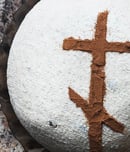
Coptic Easter, also called Pascha, is one of the most meaningful celebrations in the Coptic Orthodox year. It centers on the resurrection of Jesus Christ and the belief that life ultimately triumphs over death. For the faithful, the message is not abstract or distant. It is personal, lived, and sung...
National days and holidays on March 22 2027

March Madness
Get your game face on for March Madness! This high-energy tournament is a slam dunk of excitement, passion, and heart-pumping action. So grab your team colors, gear up for the showdown, and let the madness begin!
National Agriculture Week
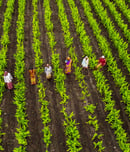
National Agriculture Week shines a spotlight on the farmers, ranchers, and agricultural workers who fill our plates and fuel our lives. Behind every meal and everyday product is someone who works hard, from dawn to dusk, to ensure we all have what we need. This week connects us to the...

Semana Santa
Semana Santa, or Holy Week, is a profound time of reflection and devotion in many Christian communities. Streets come alive with solemn processions, participants carry religious icons, and traditional music fills the air. This period focuses on the final days of Jesus Christ, drawing believers together in shared faith and contemplation...

Esther Fast
Esther Fast is a special day in the Jewish faith. It remembers when Queen Esther called on her people to fast and pray before she risked her life to speak to the king. They didn’t turn to weapons or arguments. They turned to God. Through fasting, they opened their hearts...
Seize Every Day
Join free for personalised recommendations, email reminders and exclusive guides. Never miss a day.