National Airboat Day celebrates one of the loudest, windiest, most delightfully oddball ways to explore a wetland: the airboat.
Built to skim across water too shallow for most vessels, airboats turn marshes, swamps, and grassy flats into navigable “roads,” offering riders a close look at wildlife and wide-open scenery that can feel almost otherworldly.
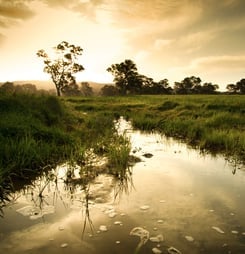
Airboats are especially associated with the Florida Everglades, a vast subtropical wetland where sawgrass prairies, mangroves, and tree islands create a mosaic of habitats.
National Airboat Day taps into that sense of adventure, while also nudging people to appreciate what makes wetlands special and worth protecting.
How to Celebrate National Airboat Day
Ride an Airboat
Booking a guided airboat ride is the classic way to mark the day. Airboats are typically flat-bottomed and powered by a large propeller driven by an aircraft-style or automotive engine.
Instead of pushing through water with a submerged prop, an airboat’s fan blasts air behind it, letting the boat glide over very shallow water and even across wet vegetation.
A ride tends to include two thrills at once: speed and proximity. The wide, open design often means unobstructed views, so riders can scan the horizon for movement, ripples, and silhouettes.
Wildlife sightings can vary by location and conditions, but airboat routes commonly pass through areas where wading birds feed, and reptiles bask.
Practical comfort counts, too. Airboats are famously noisy, so hearing protection is often provided. Sunglasses help with the wind, and a brimmed hat is smart if it can stay put. A light layer can be helpful because moving air feels cooler on the skin, even in warm climates.
The goal is to be comfortable enough to stay alert and enjoy the details: the way grasses bend, the sudden stillness when the motor cuts, and the “wow, that’s a real alligator” moment.
Organize a Wildlife Scavenger Hunt
A scavenger hunt turns sightseeing into a game and can be tailored to any age group. Instead of focusing only on “big ticket” animals, a well-designed list blends charismatic wildlife with easier-to-spot features that build observation skills and awareness of the environment.
A well-rounded scavenger hunt list might include:
- A wading bird standing perfectly still
- A bird flying with long legs trailing behind
- An alligator “slide” or trail near the water’s edge
- A fish breaking the surface
- A patch of sawgrass or a wide, grassy “prairie” view
- A tree island rising above the marsh
- Evidence of nesting activity, such as a rookery area viewed from a safe and respectful distance
For an eco-friendly twist, keep it “look, don’t take.” Photos, sketches, or short notes can serve as proof instead of collecting anything from the environment.
Adding a “quiet minute” challenge can be surprisingly fun: everyone goes silent for sixty seconds to see who notices the most sounds, from insects to distant bird calls.
Picnic in the Marshes
A picnic can make the day feel like a mini-expedition, but it works best when it’s planned with wetland realities in mind. Choose foods that pack well and won’t create crumbs or litter that could attract wildlife. Reusable containers help keep trash contained, and a dedicated bag for all waste is essential.
Wetlands can be buggy, sunny, and breezy—sometimes all at once. A practical picnic kit might include:
- Plenty of water and electrolyte-friendly drinks
- High-protein snacks that don’t melt easily
- Sunscreen and insect repellent
- A small towel for quick cleanups
- A lightweight blanket that can be shaken out and repacked easily
The most important step is choosing a safe, appropriate spot. Many wetland areas are protected, and access is often guided or regulated for good reason.
Picnicking should never involve trampling vegetation or approaching animals for a better view. The best picnic is the one that leaves the landscape looking completely untouched.
Share Your Adventure
Airboat outings are naturally photogenic: wide skies, mirror-flat water, and wildlife that looks like it wandered out of a nature documentary. Sharing photos and videos can help others understand why wetlands matter, especially when posts highlight respect for wildlife and habitat.
The most responsible content tends to emphasize:
- Distance and patience, using a zoom lens instead of a close approach
- Natural behavior rather than baiting or staging
- The habitat itself, not just individual animals, since ecosystems are the real “star.”
Captions can do more than say “look at this.” They can share what was learned, what surprised the group, or which small choices helped keep the trip low-impact. That kind of storytelling turns a fun outing into a quiet invitation for others to notice, respect, and care.
Craft Airboat-Themed Art
Airboats have a distinctive silhouette, part boat and part aircraft, which makes them rich creative inspiration. Airboat-themed art can be as simple or as ambitious as the maker wants, and it works just as well whether or not anyone actually rides one.
Ideas include:
- Building a model airboat from cardboard, craft sticks, and a bottle-cap “fan”
- Drawing a wetland landscape that highlights layers of sky, marsh, water, and tree islands
- Writing a short poem that captures the sensory side of the ride, especially the wind and sound
- Creating a “field sketch” page with quick drawings of birds, plants, and water patterns
For families or classrooms, these crafts also double as a subtle introduction to engineering basics. The core idea behind an airboat is simple: airflow creates thrust.
Even a paper fan can demonstrate how moving air pushes an object forward, making the real boat’s design feel intuitive rather than mysterious.
Learn About the Everglades
National Airboat Day is a natural prompt to learn about wetland ecology, especially the Everglades, which is often described as a “river of grass.” The Everglades region includes sawgrass marshes, mangrove habitats, cypress areas, and elevated tree islands, each supporting different communities of plants and animals.
Wildlife diversity is one of the Everglades’ signature features. The ecosystem is known for hundreds of bird species and a rich mix of fish, reptiles, and mammals.
Wading birds are iconic here because wetlands provide the shallow feeding grounds they need. Reptiles such as alligators have an outsized role in shaping habitat, and mammals range from common species to rare and protected ones.
Learning can be hands-on without being intrusive. A simple pair of binoculars and a field guide can turn a casual outing into a mini naturalist session. Even watching how animals use the landscape, birds clustered near a feeding spot, or reptiles choosing sun-warmed banks, teaches how habitat supports behavior.
This is also a good time to learn the difference between a thrilling ride and a respectful one. A quality eco-tour prioritizes wildlife distance, avoids harassment of animals, and treats the environment as the main attraction rather than an obstacle course.
Support Conservation Efforts
Wetlands do a lot of heavy lifting for the planet. They filter water, support fisheries, buffer storms, and provide irreplaceable habitat. Supporting conservation can be practical, local, and surprisingly doable, even for people who live far from major wetland areas.
Ways to help include:
- Donating to reputable conservation groups focused on wetlands and wildlife
- Volunteering for habitat restoration days, cleanups, or citizen science projects
- Practicing responsible travel habits, such as staying on designated routes, never feeding wildlife, and packing out all trash
- Learning about invasive species issues in wetlands and avoiding the spread of plants or animals between waterways
Support does not need to be dramatic to make a difference. Small, consistent actions—paired with education and respectful recreation—are often the ones that add up over time.
Why Celebrate National Airboat Day?
National Airboat Day highlights a very specific tool built for a very specific landscape. In shallow wetlands, standard boat propellers can snag in vegetation or strike bottom, and even small disturbances can churn sediment or damage fragile plant communities.
Airboats solve the mobility problem by keeping propulsion above the waterline. The thrust comes from a large fan, allowing the hull to skim over thin water and soft terrain that would stop other boats cold.
That design makes airboats uniquely suited for guided wetland exploration. Riders can cover a lot of ground, which increases the chance of seeing different habitats and the wildlife that depends on them.
In a single outing, people might pass open sawgrass flats, skirt mangrove edges, and glide near patches of higher ground where different plants grow. Even without a checklist of animals, the landscape itself becomes the point: a living system shaped by water levels, seasons, and the constant push and pull between land and water.
Celebrating airboats is also, indirectly, a celebration of wetland ecology. The Everglades, in particular, is a biodiversity powerhouse, home to a remarkable number of bird species, along with fish, reptiles, and mammals.
Wading birds often steal the show, but the supporting cast matters just as much: fish that recycle nutrients, insects that feed birds, and plants that stabilize soil and provide shelter. An airboat ride can make those connections easier to grasp because it moves through the habitat rather than observing it from a distant viewpoint.
The day also underlines the value of responsible outdoor fun. An airboat outing is often shared among family members or friends, and the experience tends to bring out a certain kind of teamwork: everyone scanning for movement, passing binoculars around, comparing photos, and swapping “Did you see that?” reactions.
Those shared moments can turn casual visitors into people who genuinely care about wetlands, because it is easier to value what feels personal and unforgettable.
Finally, National Airboat Day encourages people to think about conservation in a way that is not scolding or abstract. Wetlands are delicate, and they face pressures from development, altered water flow, pollution, and invasive species.
But a day focused on exploration can be a gateway to stewardship. When people see wildlife in its habitat and learn how that habitat functions, protecting it stops being a vague idea and starts feeling like common sense.
History of National Airboat Day
National Airboat Day was created in February 2021 by Wild Florida Airboats as a way to spotlight airboat eco-tour experiences and encourage more people to engage with the Everglades environment.
The day was introduced with the idea that a memorable ride can be more than entertainment. It can be an entry point into understanding a complex wetland ecosystem and why it deserves careful protection.
Airboats have long been associated with wetland travel because they can navigate places that would otherwise be difficult to reach.
Their shallow-draft design and above-water propulsion make them especially useful in marshy terrain where vegetation is thick, and water depth can change quickly.
That practical advantage is part of what makes airboats so closely tied to Everglades-style landscapes, where the boundary between land and water is constantly shifting.
From the beginning, the celebration leaned into both fun and education. Early observances emphasized inviting riders to experience airboats firsthand, sometimes with special promotions designed to make the outing feel festive and accessible.
The underlying message, however, remained consistent: airboats offer an up-close view of a living ecosystem, and those views should inspire respect.
National Airboat Day also fits into a broader trend of themed days created by outdoor and tourism organizations to highlight specific experiences while promoting conservation-minded attitudes.
In this case, the focus is not only on the mechanics of the boat or the thrill of speed, but also on what the boat makes visible: birds stalking in shallow water, reptiles sunning on banks, and the vast, textured beauty of wetlands that can seem endless.
By pairing adventure with appreciation, National Airboat Day gives airboats a role beyond recreation. It frames them as a gateway to learning, a way to connect people to wetlands, and a reminder that the most exciting landscapes are often the ones that need the most care.
National Airboat Day Facts
Airboats have a unique history and purpose that set them apart from traditional watercraft.
From their early roots in aviation experiments to their modern use in rescue missions and law enforcement, these flat-bottomed, propeller-driven boats are designed for environments where ordinary boats fail.
The following facts highlight how airboats evolved, why they perform so well in shallow and extreme conditions, and how specialized training supports their safe and effective operation today.
Airboats Began as Aviation Experiments
The first airboats grew out of early 20th‑century aircraft research: aviation pioneer Glenn Curtiss built a 1905 “iceboat” prototype with a step‑hull and aircraft-style pusher propeller, while Alexander Graham Bell’s team in Canada tested similar fan‑driven craft on water and ice around 1909, showing that airboats were originally conceived as offshoots of experimental airplanes rather than traditional boats.
Why Airboats Excel in Shallow Wetlands
Airboats have flat bottoms and aircraft-type propellers mounted above the waterline, allowing them to operate in as little as a few inches of water, across mudflats, floating vegetation, and even short stretches of dry ground—conditions that can quickly disable conventional propeller or jet boats—making them particularly suited to marshes, floodplains, and the Everglades’ shallow “river of grass.”
Rescue Teams Rely on Airboats in Extreme Conditions
Fire and rescue departments across North America use airboats for missions on ice, broken ice, floodwater, and fast-moving rivers because there are no moving parts in the water that can snag debris or endanger victims, and properly trained crews have cut rescue times from nearly an hour to under 15 minutes in documented winter emergencies.
Specialized Training for Law Enforcement Airboat Operators
Because airboats handle differently from traditional boats—skidding through turns and relying on throttle rather than a submerged rudder—maritime law enforcement and emergency responders in the United States often attend dedicated Airboat Operator Courses, such as those developed by the National Association of State Boating Law Administrators (NASBLA), to learn safe high‑speed maneuvering and risk management in shallow or obstructed waterways.
The Everglades Is a River, Not a Swamp
Despite its swampy appearance, the Florida Everglades is actually a very slow‑moving, shallow river—historically up to 60 miles wide—flowing from Lake Okeechobee south toward Florida Bay; this “river of grass” hydrology creates vast expanses of water only a few inches deep, one reason shallow‑draft vessels like airboats became such an important way to traverse the landscape.
A Global Hotspot for Rare and Endangered Species
The Greater Everglades ecosystem supports more than 60 threatened or endangered species, including the Florida panther, West Indian manatee, American crocodile, and snail kite, making it one of the world’s most imperiled wetland habitats and a critical focus for U.S. restoration and conservation efforts.
Seeing Both Crocodiles and Alligators in One Place
Southern Florida, including parts of the Everglades, is the only place on Earth where American alligators and American crocodiles coexist in the wild, thanks to a rare overlap of freshwater, brackish, and coastal habitats that allows both species—with different salinity tolerances and temperature needs—to share the same broad region.