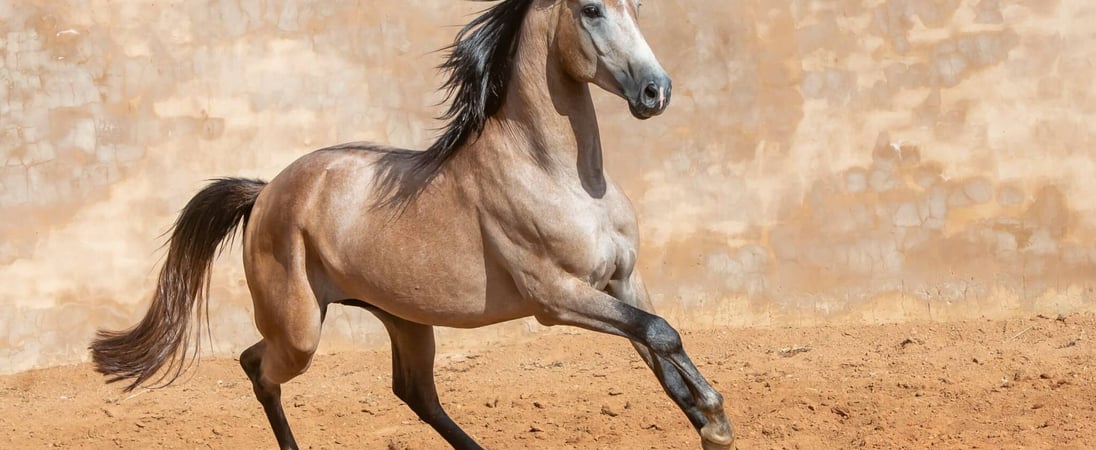
National Arabian Horse Day
National Arabian Horse Day celebrates the elegance and charm of Arabian horses, one of the oldest horse breeds.
This day highlights their unique traits and the joy they bring to horse lovers everywhere. Arabian horses are known for their beauty, intelligence, and strong bond with humans, making them cherished companions and show stars.
How to Celebrate National Arabian Horse Day
Saddle Up for a Ride
Celebrate National Arabian Horse Day by going for a ride on one of these majestic creatures. Visit a nearby stable and enjoy a leisurely ride.
Feel the wind in your hair as you experience the horse’s smooth gait. Remember to snap some photos to capture the moment. A ride on an Arabian horse will leave anyone smiling and exhilarated.
Attend a Horse Show
Witness the grace and beauty of Arabian horses at a local horse show. Watch these elegant animals compete and perform in various events. Educational events, parades, and exhibitions take place across the country to honor these magnificent creatures.
Cheer for your favorites and marvel at their athleticism. Horse shows are a fun way to see these horses in action and meet fellow enthusiasts.
Host a Themed Party
Throw a National Arabian Horse Day party with horse-themed decorations and activities. Serve snacks shaped like horseshoes and play horse-related games.
Invite friends and family to join in the celebration. This is a quirky way to bring people together and share your love for Arabian horses.
Learn and Share
Dive into the history and characteristics of Arabian horses through books and documentaries. Share newfound knowledge with friends and family.
Host a small get-together where everyone can learn about these remarkable animals. Knowledge is power, and spreading it can help others appreciate these horses, too.
Visit a Horse Farm
Take a trip to a nearby horse farm to see Arabian horses up close. Meet the horses and learn about their care and training from the experts.
Many farms offer tours and interactive experiences. A farm visit is educational and fun, making it a great way to spend the day.
National Arabian Horse Day Timeline
c. 1500–500 BCE
Early Arabian-Type Horses in the Near East
Archaeological and artistic evidence from the Near East shows small, refined war and chariot horses resembling later Arabian types, indicating ancient selective breeding for speed and endurance.
7th–8th Century CE
Arab Cavalry and the Spread of Desert Horses
During the early Islamic expansions, Arab cavalry mounted on desert-bred horses helped project military power from the Arabian Peninsula into North Africa, Iberia, and western Asia, spreading the influence of Arabian-type bloodlines. [1]
1704–1730
Arabian Sires Found the Thoroughbred
Three stallions of predominantly Arabian (and related Oriental) breeding—the Byerley Turk, Darley Arabian, and Godolphin Arabian—are imported to Britain and become the principal foundation sires of the Thoroughbred racehorse. [2]
1817
Polish State Stud at Janów Podlaski Established
The kingdom of Congress Poland founded the Janów Podlaski stud, which became a major European center for breeding and improving Arabian horses, later renowned for purebred Polish Arabians sold worldwide. [3]
1878
Crabbet Arabian Stud Begins in England
Lady Anne Blunt and Wilfrid Scawen Blunt establish the Crabbet Arabian Stud, importing desert-bred Arabian horses and developing bloodlines that profoundly shape Arabian breeding in Britain, Europe, the Americas, and Australia.
1908
The American Arabian Horse Registry Is Founded
The Arabian Horse Registry of America (now part of the Arabian Horse Association) is created to record purebred Arabians in the United States, formalizing pedigrees and supporting organized breeding of the breed in North America.
1970
World Arabian Horse Organization Is Formed
National registries from multiple countries created the World Arabian Horse Organization (WAHO) to standardize definitions of a purebred Arabian and coordinate international studbook policies, safeguarding the breed’s global integrity.
History of National Arabian Horse Day
National Arabian Horse Day began in 2021, thanks to the efforts of the Scottsdale Show and the Arabian Horse Association of Arizona.
The goal was to raise awareness and appreciation for the Arabian horse and its deep connection with humans. The day quickly gained popularity among horse enthusiasts, reflecting the strong bond people have with these animals.
The day aims to celebrate the remarkable qualities of Arabian horses. These horses are famous for their distinctive appearance, including their arched necks and high tail carriage.
They are also known for their stamina and friendly nature, making them beloved companions and stars in many horse shows and competitions. By dedicating a day to these horses, organizers hope to educate the public about their history and significance.
Events on National Arabian Horse Day include parades, horse shows, and educational seminars. These activities provide opportunities to see Arabian horses up close and learn about their care and training.
The day not only honors the horses but also brings together communities of horse lovers to share their passion and knowledge.
People celebrate this day to appreciate the Arabian horse’s remarkable qualities. These horses are admired for their graceful movement, endurance, and distinctive appearance, such as their dished faces and high tail carriage.
They have a significant role in history and culture, being used in ancient times for travel, war, and trade. Today, they continue to inspire and captivate equestrians and the general public alike.
These activities offer opportunities to learn about Arabian horse care, breeding, and training. They also allow people to see these horses up close, fostering a deeper appreciation and understanding of their special attributes.
National Arabian Horse Day Facts
These facts highlight what makes the Arabian horse truly exceptional, from its unique physical traits to its lasting influence on history and modern breeding. Each point focuses on a specific characteristic or role that helped shape the breed’s reputation for endurance, strength, and deep connection with humans.
-
Desert-Hardened Physiology
Arabian horses evolved in harsh desert environments, and studies show they have exceptional thermoregulation and cardiovascular efficiency, allowing them to dissipate heat and maintain performance over long distances better than many other breeds—one key reason they dominate modern endurance racing.
-
Slightly Different Skeleton
Many Arabian horses possess an atypical skeletal structure for the species: 17 pairs of ribs instead of 18, five lumbar vertebrae instead of six, and occasionally one fewer tail vertebra, a configuration linked by researchers and breed historians to their compact, strong backs and distinctive high tail carriage.
-
Foundation of the Thoroughbred
The global Thoroughbred racing industry traces directly to Arabian stallions: the Darley Arabian, Godolphin Arabian, and Byerley Turk, imported to England between the late 17th and early 18th centuries, became three of the primary foundation sires from which almost all modern Thoroughbreds descend.
-
Bedouin “Tent Horses”
For centuries, Bedouin tribes on the Arabian Peninsula kept their finest Arabian mares inside family tents, both for protection and to ensure human bonding, and maintained detailed oral pedigrees known as “asil” to guarantee purity of bloodlines that were prized as much for loyalty and bravery as for speed.
-
War Mounts of Empires
Arabian horses served as premier cavalry mounts across the Middle East and North Africa, and their reputation for stamina and agility led to widespread use by Ottoman, Mamluk, and later European armies, which imported them specifically to improve the hardiness and spirit of their own military horse stocks.
-
Poland’s State Arabian Studs
Beginning in the 19th century, Poland established state studs such as Janów Podlaski that systematically bred Arabian horses imported from the Middle East; despite wars and political upheaval, these programs built bloodlines—like the famed Saklawi and Kuhailan types—that are still influential in international Arabian breeding today.
-
Endurance Champions on the Trail
In modern sport, Arabian horses routinely dominate 100‑mile (160 km) endurance rides like the Tevis Cup in California, where veterinary data show they finish with superior metabolic recovery scores and lower incidence of fatigue-related issues compared with heavier or less desert-adapted breeds.
National Arabian Horse Day FAQs
What makes Arabian horses different from many other breeds from a biological standpoint?
Arabian horses are generally smaller and more compact than many light horse breeds, with a refined “dished” head, large nostrils for efficient airflow, and a naturally high-set tail.
Studies and breed descriptions also note that some Arabians have fewer vertebrae and ribs than the typical horse, which contributes to their short, strong back and efficient stride.
These traits, together with dense bone and a high proportion of slow-twitch muscle fibers, help support their well-known stamina in hot, arid environments. [1]
How did Arabian horses influence the development of other modern horse breeds?
As one of the oldest recorded horse breeds, Arabians were widely used to refine local horses in Europe, the Americas, and Asia.
Stallions of Arabian or part-Arabian ancestry stand at the foundation of major breeds such as the Thoroughbred, American Quarter Horse, Morgan, and many warmbloods, where Arabian blood was used to add endurance, refinement, and toughness to heavier or slower native stock.
This influence is documented through historic studbooks and genetic studies tracing shared male and female lines. [2]
Why are Arabian horses so successful in endurance riding?
Arabian horses excel in endurance because they combine efficient movement, high aerobic capacity, and strong heat tolerance. Their relatively light frame, dense bone, and efficient cardiovascular system allow them to maintain moderate speeds over long distances while conserving energy.
Research on endurance competitions consistently shows Arabians or Arabian crosses dominating top placings in 100‑mile (160‑km) rides, and veterinary checks frequently record lower heart rates and faster recovery times in well-conditioned Arabians compared with many other breeds. [3]
Are Arabian horses really too “hot” or spirited for beginner riders?
Many professionals consider this a misconception. Arabian horses are generally described as intelligent, people-oriented, and responsive, which can make them rewarding but also unforgiving of inconsistent handling. Their sensitivity means they may react more quickly to rider cues than some heavier breeds.
As a result, suitability for beginners depends more on the individual horse’s training, age, and temperament, plus access to good instruction, rather than the breed alone; calm, older Arabians are often used successfully in lesson and family settings.
How have Arabian horses been portrayed in Middle Eastern history and culture?
In Arabian and broader Middle Eastern culture, the horse—especially the Arabian—has long symbolized nobility, courage, and divine favor.
Bedouin oral traditions describe mares being treasured family possessions, sometimes sheltered inside tents, and many classical Arabic poems praise the speed and loyalty of war horses.
Historical records from the Arabian Peninsula also show that finely bred horses were important diplomatic gifts and trade commodities, linking tribes and later states across the region. [4]
What roles do Arabian horses play in modern equestrian sports and activities?
Today, Arabian horses compete internationally in endurance, showing, dressage, show jumping, and flat racing, as well as being popular trail and family horses.
Their agility and expressive movement are well-suited to disciplines that reward precision and presence, while their stamina dominates endurance riding worldwide.
Breed registries and sport federations track thousands of Arabian entries each year, and specialized shows and championships are held across North America, Europe, and the Middle East. [5]
What general care considerations are important for Arabian horses compared with other breeds?
Arabian horses have the same basic needs as other light horses—an appropriate forage-based diet, regular hoof care, vaccination, and parasite control—but their high intelligence and sensitivity mean they typically benefit from consistent, calm handling and regular mental stimulation, such as varied work and turnout with companions.
Many Arabians maintain good condition on moderate feed, so owners are often advised to monitor body weight to avoid overfeeding, and to introduce training carefully because the breed tends to learn quickly, for better or worse. [6]
How do Arabian horses contribute to endurance riding?
Arabian horses dominate endurance riding due to their exceptional stamina. They often win long-distance races, such as the Tevis Cup, covering 100 miles in a day.
Are there any famous Arabian horses in history?
Yes, Marengo, Napoleon’s favored mount, was an Arabian. Another example is the stallion Godolphin Arabian, a foundation sire of the Thoroughbred breed.
How can someone experience Arabian horses firsthand?
Many farms offer tours and riding lessons with Arabian horses. Attending local horse shows or visiting breeding farms provides an up-close experience with this majestic breed.
Also on ...
View all holidays
International Tug of War Day
Two teams fiercely pull a rope in opposite directions in this exciting competition that has been around for centuries.



Constantin Brancusi Day
A renowned sculptor who created modern art and was influential in the development of modernism, his works often depicted simplified forms.
We think you may also like...

Day of the Horse
Whether galloping through fields or performing intricate maneuvers, horses captivate hearts and inspire with their beauty and spirit.