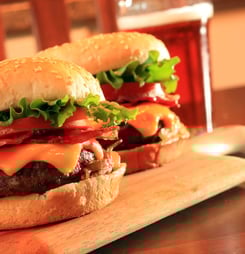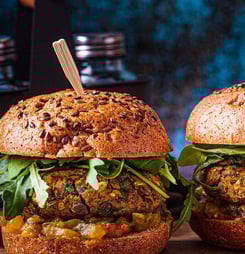

National Beef Burger Day is a celebration dedicated to honoring America’s beloved beef burger.
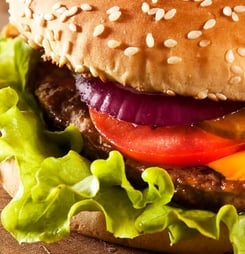
This day highlights the joy of savoring a juicy beef patty nestled between fresh buns, topped with favorite condiments and crisp vegetables.
It’s a time when burger enthusiasts come together to appreciate the rich flavors and satisfying experience that only a classic beef burger can provide.
The significance of National Beef Burger Day extends beyond mere indulgence; it underscores the cultural importance of the beef burger in American society.
This observance acknowledges the burger’s evolution from humble beginnings to becoming a staple at family gatherings, barbecues, and diners nationwide.
National Beef Burger Day Timeline
Early Mechanical Meat Grinders
German engineer Karl Drais patents one of the first recognizable meat grinders, a hand-cranked device that lets butchers efficiently mince beef for patties and sausages, paving the way for uniform ground beef used in burgers.
Hamburger Popularized at the St. Louis World’s Fair
Vendors at the 1904 Louisiana Purchase Exposition in St. Louis sell “hamburger sandwiches” to huge crowds, helping transform a regional minced-beef patty on bread into a nationally recognized American food.
First Hamburger Chain, White Castle, Opens
White Castle opens its first restaurant in Wichita, Kansas, standardizing small square beef patties and pioneering assembly-line burger production, which helps legitimize ground beef as clean, affordable fare.
McDonald Brothers Introduce the Speedee Service System
In San Bernardino, California, Richard and Maurice McDonald redesign their restaurant around a “Speedee Service System,” focusing on a simplified menu built around fast, standardized beef burgers that shape modern fast food.
Backyard Grilling Boom in Postwar Suburbia
With rising suburban homeownership and widespread charcoal grill use, beef burgers become a staple of backyard cookouts, embedding the burger in American leisure and family culture.
Trademark for the Term “Cheeseburger”
A Denver restaurant, the Humpty Dumpty Drive-In, receives a U.S. trademark for the word “cheeseburger,” reflecting how topping a beef patty with cheese had become a popular, commercially significant variation.
Global Spread of the American Beef Burger
By 1990, McDonald’s operates in more than 50 countries, symbolizing how the American-style beef burger has become a global icon and adapting to local tastes while retaining its core format.
How to Celebrate National Beef Burger Day
Celebrating National Beef Burger Day offers a delicious way to appreciate this iconic dish. Here are some exciting ways to make the most of the occasion:
Host a Backyard Cookout
Gather friends and family for a barbecue. Fire up the grill, cook juicy patties, and enjoy an outdoor feast.
Experiment with Unique Recipes
Try new flavors by adding creative toppings, sauces, or international ingredients. Mix up the usual routine with unexpected twists.
Organize a Burger Cook-Off
Challenge loved ones to a friendly competition. Compare homemade creations, vote for favorites, and crown the ultimate burger champion.
Visit a Local Burger Spot
Support nearby restaurants by ordering their signature beef burgers. Discover fresh flavors and appreciate expert craftsmanship.
Share Your Masterpiece Online
Post photos and recipes of your delicious creations. Inspire others to try new ideas and join the celebration.
Try a DIY Burger Bar
Set up a toppings station with different cheeses, sauces, and vegetables. Let everyone customize their perfect burger.
History of National Beef Burger Day
National Beef Burger Day started in 2020. The Beef. It’s What’s For Dinner. brand created this day to honor America’s love for beef burgers.
The initiative came from the National Cattlemen’s Beef Association, an organization representing ranchers and beef producers. Their goal was to highlight the importance of high-quality beef in American culture while encouraging people to enjoy their favorite burger recipes.
Since its introduction, this special day has gained popularity across the country. Restaurants, home cooks, and grilling enthusiasts celebrate by preparing and enjoying delicious beef burgers.
The event also marks the unofficial start of summer, a season known for outdoor cookouts and backyard barbecues. Many people use the occasion to try new recipes, experiment with different toppings, or visit local burger joints to support small businesses.
Beyond food, this day recognizes the work of cattle farmers and ranchers who contribute to the beef industry.
Their dedication ensures high standards in meat production, delivering quality beef to homes and restaurants.
National Beef Burger Day continues to grow in significance, bringing communities together to share meals and appreciate a culinary icon that has been a staple of American dining for generations.
Facts About National Beef Burger Day
Hamburg Steak’s Journey to the American Burger
The modern beef burger can be traced to “Hamburg steak,” a minced and seasoned beef patty popular with German immigrants in the 19th century, which appeared on American menus as early as the 1870s before eventually being served between slices of bread and then a bun.
Beef Burgers and the Maillard Reaction
The browned crust and deep flavor on a seared beef burger come largely from the Maillard reaction, a complex series of chemical reactions between amino acids and sugars that accelerates at temperatures above about 285°F and produces hundreds of new flavor and aroma compounds.
Safe Temperatures for Ground Beef Patties
Because harmful bacteria like E. coli and Salmonella can be mixed throughout ground beef, food safety guidelines recommend cooking burgers to an internal temperature of 160°F, which is high enough to destroy these pathogens even if the center is no longer pink.
Beef Burgers and U.S. Beef Consumption
Beef burgers help drive American beef consumption, with the average person in the United States eating roughly 57 pounds of beef per year and food service burgers accounting for a large share of that demand in quick-service and casual restaurants.
How Fat Content Changes a Burger’s Texture
The ratio of fat to lean meat in ground beef has a major influence on burger juiciness; blends around 80 percent lean to 20 percent fat are widely recommended because the fat melts during cooking, helping keep the patty moist and tender while contributing to flavor.
Fast-Food Burgers and Globalization
The rise of beef burgers is closely tied to the expansion of American fast-food chains after World War II, and by the early 21st century, companies like McDonald’s were serving tens of billions of burgers worldwide, turning the beef patty in a bun into a globalized symbol of American-style dining.
Cattle Breeds Behind the Classic Burger
Many supermarket and restaurant burgers in the United States come from British-origin beef cattle breeds such as Angus and Hereford, which were imported in the 19th century and selectively bred for marbling, growth rate, and carcass quality that suit ground beef and steak production.