
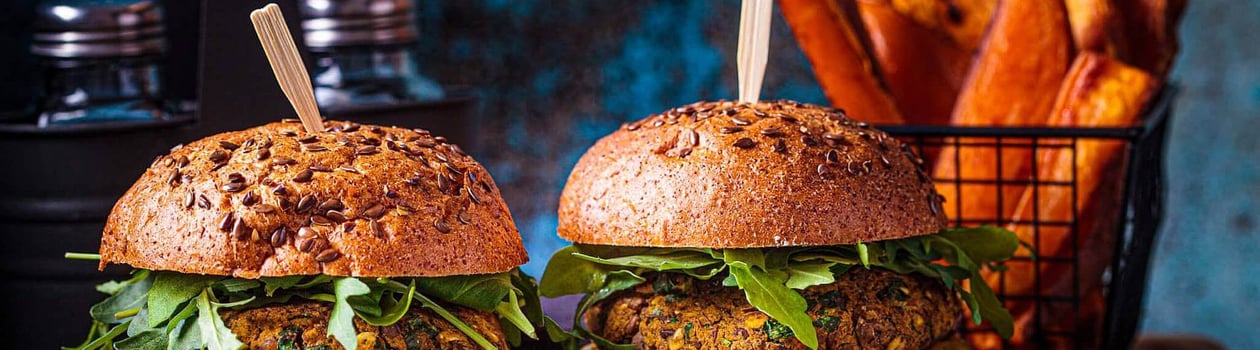
Healthy and delicious, Veggie Burgers have been making their way into the hearts of people for more than 50 years. As an alternative to burgers made from meat, veggie burgers are typically healthier for the body as well as being environmentally healthy for the planet.
National Veggie Burger Day is the perfect time to enjoy this tasty food!
How to Celebrate National Veggie Burger Day
Enjoy celebrating National Veggie Burger Day in a variety of ways, all of which include a healthy and environmentally beneficial plant-based meal! Get started observing the day with some of these ideas:
Host a National Veggie Burger Day Gathering
Since National Veggie Burger Day happens in the summertime for those in the northern hemisphere, it makes sense to invite over some friends and neighbors for a barbecue. But, instead of throwing a pile of meat on the grill, choose to make it a plant based celebration by putting some veggie burgers on. Plus, add some buttered buns, side dishes such as coleslaw or fries and enjoy a delicious meal.
Many companies are now making vegetable burgers that are sold in different health food stores and grocery stores all over the world. Usually they can be found in the freezer section of the supermarket. Some of the most popular brands of veggie burgers throughout the United States include:
- Trader Joe’s Vegetable Masala Burger. Selling mostly their own brand of organic and healthy food choices, Trader Joe’s also offers other affordable veggie burger options, including the Thai Sweet Chili Veggie Burger.
- Morning Star Farms Garden Veggie Burger. This one is easy to find in many stores, but it is notable that it isn’t vegan because it includes egg.
- Beyond Meat’s The Beyond Burger. Made from non GMO ingredients, this veggie burger works well on the grill and even contains beet juice that makes it “bleed” like a real burger.
- Dr. Praeger’s Kale Veggie Burgers. With nine different vegetables, this veggie burger is well loved, though a bit thin, so many people might enjoy a double version of this one.
Go Out for Veggie Burgers
Many restaurants today are getting on board with the move toward plant-based veggie burgers that are meant to be part of a healthier diet, as well as being better for the environment.
In addition to those cafes who carry only vegetarian and vegan menu items, many fast food restaurants are now offering plant-based burgers as part of their regular offerings. For those who haven’t tried one yet, National Veggie Burger Day is the perfect time to get out to one of these restaurants to try out a black bean, chickpea or other veggie burger.
Try Making Veggie Burgers at Home
Tons of recipes for veggie burgers can be found online and in a wide variety of different cookbooks, particularly those of a vegetarian or vegan nature. Plus, when these tasty patties are made at home, you can rest assured that they are fresh and don’t contain a collection of hard-to-pronounce preservatives or other strange ingredients. They’re healthy, fresh and delicious!
Creating veggie burgers might be a bit easier with a food processor, but it isn’t necessary as the ingredients can also be mashed together. Some of the most typical base ingredients for veggie burgers might include chickpeas, black beans, soybeans, brown rice, feta cheese, oat bran, oat flour, breadcrumbs, tomato paste, onion, egg, garlic, black eyed peas, and various other options.
Truly, when it comes to making veggie burgers, the key is getting the ingredients to stick together in a patty so that they can be grilled or fried. This can be done through the use of an ingredient that works as a glue, such as ketchup, barbecue sauce, egg or tomato paste.
Veggie burgers can sometimes be made better by chopping the vegetables and roasting them prior to making them into patties. This will help to remove some of the moisture and make them stick together better.
Hold a National Veggie Burger Day Cookoff
A great way to celebrate National Veggie Burger Day would be to invite a variety of friends or family members to a cookoff gathering. Depending on the workplace, it might even be possible to get permission to have a celebration with coworkers during a lunch break at the office, or schedule it as an after-work activity.
Have a few different guests bring their favorite recipe for plant based burgers and then fire up the grill to serve them at the party. (And don’t forget to have people bring delicious side dishes as well!) Other guests can act as judges for a taste test and vote to see which veggie burger is the winner!
National Veggie Burger Day Timeline
Hamburger is invented
With vague origins, the patty of ground meat is created in the US and grows in popularity over the next two centuries.
International Vegetarian Union is created
This union of national vegetarian societies aims to bring unity to the normalization of the vegetarian diet.
Recipes for “no meat burgers” emerge
Perhaps for economic or health reasons, the idea for making meatless burgers at home is put into print.
First Veggie Burger is served in a restaurant
Under the name of Garden Burger, the first veggie burger is served by Wenner’s vegetarian restaurant, named The Gardenhouse, in Gresham, Oregon.
Burger King debuts the Veggie Burger
Ahead of its time, Burger King becomes the first fast food chain to offer veggie burgers all throughout the United States.
History of National Veggie Burger Day
The origins of the veggie burger don’t really date back that far. But the history of the veggie burger can’t really be told without noting the beginnings of its muse, the hamburger. The hamburger was born in the United States around the late 19th century and gained popularity in the 20th century due to its affordability as well as the emergence of the working class.
But when health food gurus, vegetarians and environmental activists got involved, the veggie burger was created to offer the concept of the hamburger without as many negative effects.
Veggie burgers started out as a cuisine that was made in people’s home kitchens, with the first recipes for them emerging in the mid 20th century. One early cultural reference to veggie burgers was shortly after the end of World War II, in a 1948 radio drama series called Let George Do It, where a character speaks about veggie burgers made of nuts and legumes.
Eventually, these recipes for veggie burgers made their way to restaurants. The first documented restaurant to serve veggie burgers, or “Garden Burgers” on their menu was at Wenner’s, a vegetarian restaurant in Oregon in 1980.
Another contender for early restaurant veggie burgers followed close behind in 1982 in London, served at a natural foods restaurant in Paddington. This burger was appropriately named the “VegeBurger”.
The first National Veggie Burger Day took place in 2017 when it was founded by Amy’s Kitchen.
National Veggie Burger Day Facts
Environmental Footprint of a Veggie Patty
Life cycle assessments that track emissions from farm to plate consistently find that plant-based burger patties generate far fewer greenhouse gases than beef patties, largely because growing crops directly for food is more efficient than raising cattle for meat.
A 2018 analysis by the University of Michigan for Beyond Meat estimated that a Beyond Burger produced about 90 percent less greenhouse gas emissions and required 93 percent less land than a quarter‑pound U.S. beef burger, figures that are broadly in line with independent academic reviews comparing plant-based to conventional beef.
Water and Land Savings from Plant-Based Burgers
Replacing a single conventional beef burger with a plant-based burger can dramatically reduce resource use because cattle feed, grazing land, and water for animals all add to a burger’s footprint.
The same University of Michigan assessment reported that producing a Beyond Burger used roughly 99 percent less water and 93 percent less land than a similar beef patty, findings echoed by broader research from organizations such as the World Resources Institute which shows ruminant meat as the most resource-intensive major protein.
Veggie Burgers and Heart Health Nutrients
Many veggie burgers are naturally free of dietary cholesterol and lower in saturated fat than beef patties, which can support heart health when eaten as part of an overall balanced diet.
The American Heart Association notes that swapping some red and processed meat for plant-based proteins like beans and soy can help reduce intake of saturated fat while increasing fiber, a nutrient that helps lower LDL (“bad”) cholesterol and is generally absent from meat.
Protein Quality in Plant-Based Patties
Veggie burgers vary widely in how much and what kind of protein they provide, with some relying on whole beans and others on isolated soy or pea proteins designed to rival beef.
The Academy of Nutrition and Dietetics explains that people can get all essential amino acids from plant foods as long as they eat a variety of protein sources over the course of the day, and many newer plant-based burgers are formulated to match or exceed the protein found in a typical beef patty.
Early Commercial Veggie Burgers in the 1980s
Although home cooks had been experimenting with meatless patties for decades, the first widely marketed commercial veggie burgers did not appear until the 1980s.
In the United States, Gardenburger emerged from a vegetarian restaurant in Oregon around 1981 and soon began selling frozen patties in supermarkets, while in the United Kingdom, the Vegeburger, developed by Gregory Sams, helped introduce packaged meatless burgers to British shoppers and popularize vegetarian convenience foods.
Fast Food Chains and the Mainstreaming of Veggie Burgers
The spread of veggie burgers onto fast food menus marked an important cultural shift in how plant-based eating was perceived.
Burger King introduced a nationwide veggie burger option in the United States in 2002, years before most competitors, and by the late 2010s, major chains across Europe and North America were trialing or permanently adding plant-based burgers, reflecting both growing consumer demand and industry interest in lowering the climate impact of their menus.
Market Growth of Plant-Based Meat Alternatives
Veggie burgers now sit within a rapidly expanding global market for plant-based meat alternatives that include nuggets, sausages, and ground “beef” analogues.
The Good Food Institute reports that U.S. retail sales of plant-based meat grew from about $962 million in 2019 to $1.4 billion in 2021, outpacing overall meat sector growth and signaling that meatless patties and related products have moved from niche health food stores into mainstream supermarkets and restaurant chains.
National Veggie Burger Day FAQs



You may also like

National Beef Burger Day
National Beef Burger Day is a celebration dedicated to honoring America's beloved beef burger. This day highlights the joy of savoring a juicy beef patty nestled between fresh buns, topped with favorite condiments and crisp vegetables. It's a time when burger enthusiasts come together to appreciate the rich flavors and satisfying...
- United States

National Burger Day
A juicy, flavorful patty nestled between soft, toasted buns, adorned with melted cheese, crispy bacon, and a tangy sauce.
- United Kingdom

National Hamburger Day
Grill up a hamburger for yourself, or visit any number of sandwich shops and restaurants to enjoy one of mankind’s greatest, greasiest culinary inventions.
- United States

National Corned Beef and Cabbage Day
Get ready to celebrate St. Patrick's Day with this delicious meal made of slow-cooked, savory meat and tender, flavorful vegetables.
- Ireland
- United States
National days and holidays on June 5

National Donut Day
Celebrate National Donut Day by enjoying delicious donuts, honoring their World War I roots, and supporting charities that carry on this sweet tradition.
- United States

Vivid Sydney
Vivid Sydney is a dazzling celebration that transforms the city into a vibrant playground of lights, music, and creativity. For weeks, iconic landmarks and urban spaces glow with stunning light installations and 3D projections, captivating both locals and tourists. This festival draws millions of visitors each year, offering an enchanting...
- Australia

The Big Lunch
The Big Lunch is a beautiful day filled with community spirit. This annual event is like an enormous block party, where the tantalizing fragrances of home-cooked delicacies mingle with music and laughter. The event means sharing meals. It also means making new - or renewing - heartwarming connections. As...
- United Kingdom

National Fish and Chip Day
Celebrate National Fish and Chip Day by enjoying this classic comfort food, discovering its working-class roots, and exploring tasty global variations.
- United Kingdom
Seize Every Day
Join free for personalised recommendations, email reminders and exclusive guides. Never miss a day.