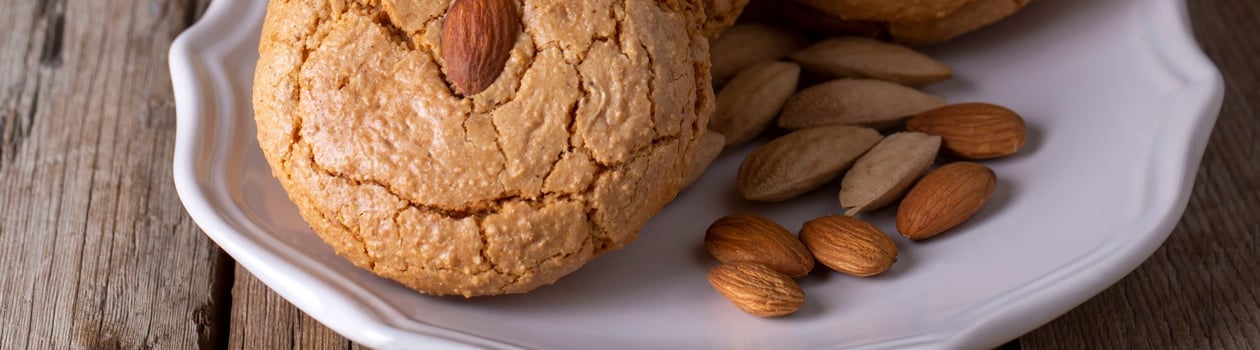
Have you ever tried a Chinese almond cookie? This crisp, golden treat is the kind of bite-sized comfort that feels both simple and special at the same time. It snaps lightly, then melts away, leaving a gentle almond fragrance behind. Often shaped into a neat round, it’s sometimes compared to a coin, which helps explain why it’s frequently connected with wishes for good luck and prosperity.
Part of the cookie’s charm is how it fits into everyday life. It can be a grab-and-go sweet from a bakery box, a small offering placed on a table for guests, or a treat tucked into a tin and saved for later.
Many people love it alongside tea, where the cookie’s toasty, nutty sweetness balances the warmth and tannins of the brew. Its buttery texture and tidy crumb make each bite feel satisfying without being heavy.
National Chinese Almond Cookie Day honors this beloved cookie, celebrating its cultural charm and straightforward goodness. More than just a snack, it carries a sense of tradition in every crumb: the familiar bakery aroma, the careful shaping, the little decorative touches, and the way it often shows up when people want to share something pleasant.
Families and friends often pass a plate around, trading stories as easily as they trade cookies. The mild almond aroma and gentle crunch make it widely appealing, even to those who don’t usually reach for strongly flavored desserts.
Whether someone is discovering it for the first time or revisiting a childhood favorite from a neighborhood bakery, this day highlights how a small food can play a big role in bringing people together.
How to Celebrate National Chinese Almond Cookie Day
National Chinese Almond Cookie Day is a perfect excuse to enjoy this beloved traditional treat. If you’re looking for ways to mark the occasion, here are a few fun and simple ideas to try.
Bake Your Own Batch
Tap into your inner baker by preparing a batch of Chinese almond cookies at home. Although they look refined, the core ingredients are simple: flour, sugar, fat (often butter, sometimes a blend for extra tenderness), and almond flavor. The dough is usually rolled into small balls, gently flattened, and baked until lightly golden.
A few helpful tips can help recreate the familiar bakery-style cookie:
- Aim for a shortbread-like consistency. These cookies should be crisp and crumbly rather than chewy. Mix the dough only until it forms.
- Use almond flour or finely ground almonds for a richer taste and a delicate, sandy texture. Almond extract adds aroma, but real nuts deepen the flavor.
- Brush with a light egg wash. This simple step creates the glossy golden top often seen in bakery versions.
- Decorate with a sliced almond or sesame seeds. Many classic cookies feature a single almond slice pressed gently into the center.
- Monitor baking time closely. Overbaking in the oven can make them overly dry rather than crisp and tender.
Homemade cookies also leave room for creativity. Some bakers prefer a stronger almond fragrance, while others enjoy a softer nutty flavor. Adjusting the almond extract, replacing part of the flour with almond flour, or slightly changing the sugar level can help achieve the texture and taste you prefer.
Host a Tea Party
Serve almond cookies with a selection of teas and turn a simple snack into a small celebration. These cookies pair beautifully with teas that feature roasted, floral, or malty notes. A lightly toasted oolong complements the nutty warmth of the cookie, while jasmine tea offers a fragrant contrast. Even a classic black tea works well, since the cookie’s sweetness softens the tea’s boldness.
To keep the gathering relaxed but thoughtful, arrange a few small plates and encourage guests to experiment with different tea pairings. Offering two or three varieties with distinct flavors can make the tasting more engaging.
Guests can even vote on their favorite combination. Fresh fruit or a few additional pastries can round out the table while still letting the almond cookies remain the highlight.
A tea gathering also invites conversation. Guests may share food memories, discuss favorite bakeries, or talk about family traditions. The cookie itself often sparks curiosity, from its round shape to the decorative stamps some bakeries use, and the meaning the almond flavor holds for different tastes.
Explore Local Bakeries
Turn the day into a small adventure by searching for the best Chinese almond cookies in your area. Chinese bakeries often have their own interpretation shaped by family recipes and local preferences.
Some versions are extremely crisp and crumbly, almost like delicate shortbread. Others are softer and sandier, dissolving gently with each bite. Certain recipes lean buttery, while others highlight a toasted almond flavor. Even the fragrance can range from subtle to very aromatic.
While tasting different versions, consider noticing these details:
- Shape and thickness: thinner cookies tend to be crispier, while thicker ones can feel softer.
- Color: an even pale golden tone often indicates careful baking; darker edges may signal dryness.
- Aroma: quality cookies release a pleasant almond scent before the first bite.
- Texture: the best cookies break neatly and then soften as they dissolve, leaving a gentle nutty flavor.
Bringing home a small assortment turns tasting into a fun activity. It also supports local bakeries that continue to prepare these treats daily rather than only on special occasions.
Share the Sweetness
Pack homemade or bakery-bought cookies into small tins, boxes, or wrapped bundles and share them with friends, neighbors, or coworkers. Almond cookies make wonderful gifts because they travel well and feel festive without being overly heavy. Even a small portion can brighten a workspace, kitchen counter, or shared break room.
Adding a short note can make the gift feel more thoughtful. The message might mention the cookie’s coin-like shape, which many people associate with good fortune, its traditional pairing with tea, or a personal story about discovering the cookie at a favorite bakery.
When sharing with a group, consider including two types of cookies: the traditional almond version and another with a twist, such as a citrus-scented variation or one topped with sesame seeds. Comparing the two makes the tasting experience more engaging and highlights the cookie’s delicate texture and flavor.
Learn the History
Take some time to explore the story behind the Chinese almond cookie and gain a deeper appreciation for the treat. These cookies sit at the crossroads of baking tradition, ingredient symbolism, and community life. Understanding why they look and taste the way they do can make enjoying them even more satisfying.
Interesting topics to explore include the broader Cantonese bakery tradition, the role Chinese bakeries have played as gathering places in many communities, and how certain sweets became linked to festive moments. Even the cookie’s round shape reflects larger cultural patterns in food presentation, where appearance can symbolize prosperity, harmony, and good fortune.
Knowing the background also gives hosts something interesting to share while serving cookies. A treat that carries a story tends to stay in people’s memories long after the last bite.
However you celebrate, National Chinese Almond Cookie Day is a sweet reminder that simple pleasures can bring people together.
About National Chinese Almond Cookie Day
National Chinese Almond Cookie Day takes place each year on April 9. The exact origins of the observance are not clearly recorded, and the person or organization that established it remains unknown.
What is clear, however, is why the cookie deserves its own day. Chinese almond cookies have a recognizable bakery identity: crisp, crumbly, lightly sweet, and filled with a warm toasted aroma that feels comforting rather than flashy.
Many versions are small round cookies, sometimes finished with a glossy surface and a single sliced almond placed in the center. In certain bakeries, decorative stamps are added on top to create a festive appearance.
The flavor develops through a combination of ingredients working together. Almond extract delivers the fragrance people immediately recognize, while ground almonds or almond flour add richness and depth.
The type of fat used, often butter in homemade recipes and sometimes different fats in commercial bakeries, helps shape the cookie’s final texture. Ideally, the cookie snaps cleanly before gently dissolving, leaving a mild nutty sweetness behind.
The Chinese almond cookie, commonly associated with this day, also has an intriguing history. Some historians suggest that it evolved from a traditional Chinese walnut cookie called Hup Toh Soh, which dates back to the Ming Dynasty during the 16th century.
This connection becomes clearer when comparing textures. Walnut cookies were known for their crumbly structure and nutty flavor. Over time, bakery recipes adapted to ingredient availability and changing tastes.
Almonds, with their mild sweetness and appealing aroma, became a natural replacement in many versions. Eventually, the term “almond cookie” became linked with a particular style of crisp bakery biscuit found in Chinese bakeries, even though ingredient balances could vary from place to place.
Symbolism also contributed to the cookie’s popularity. Round shapes often represent coins or completeness, and sweet foods traditionally express wishes for happiness and prosperity.
Because almond cookies are easy to portion and share, they fit naturally into moments when people gather or exchange small gifts. A tin of cookies might appear at family visits, celebrations, or casual tea gatherings as a welcoming gesture.
Chinese immigrants introduced these cookies to the United States during the nineteenth century, where they quickly became a staple in Chinese-American bakeries. Today, they are enjoyed widely and often symbolize good luck, especially during festive events.
As Chinese bakeries expanded in many communities, almond cookies became one of those reliable classics that customers expected to see on display. Their sturdy structure made them easy to stack and package, ideal for bakery boxes and gift tins.
Compared with cream-filled pastries, they also stay fresh longer, which made them practical for gifting or keeping at home. Over time, this practicality helped cement their place in everyday bakery culture.
Different regions and bakeries developed their own subtle variations. Some cookies contain more butter and resemble Western shortbread. Others are drier and more crumbly, creating the sandy texture associated with traditional bakery styles.
Almond flavor can be pronounced or delicate, depending on the recipe. Toppings vary as well: sliced almonds remain common, but sesame seeds or stamped decorations also appear.
National Chinese Almond Cookie Day celebrates all of these variations without insisting on a single “correct” version. It welcomes bakery classics, homemade batches made with care, and creative modern interpretations that experiment with flavors or ingredients. Regardless of the style, the cookie continues to serve the same purpose it always has: a small, crisp treat meant to accompany tea and bring people together.
National Chinese Almond Cookie Day Timeline
Ming Dynasty nut cookies emerge
Nut-based cookies such as walnut cookies (hup toh soh) become popular in China, providing the rustic, crumbly template that later inspires almond-style cookies.
Chinese immigrant bakeries appear in the United States
Late 19th century
Chinese immigrant bakeries appear in the United States
Southern Chinese immigrants establish bakeries in American Chinatowns, adapting traditional festival pastries and nut cookies for local tastes and ingredients.
https://www.smithsonianmag.com/history/chop-suey-and-beyond-how-chinese-cuisine-adapted-to-america-180956810/
Refined flour and baking powder reshape Chinese-style cookies
Industrial milling and widespread use of baking powder in the United States make it easier for Chinese bakers to produce lighter, crisper cookies with a standardized texture.
Coin-shaped cookies tied to prosperity symbolism
Round, coin-like pastries and cookies are promoted in Chinese-language cookbooks and newspapers as auspicious foods, echoing the long-standing association of round foods with wealth and completeness.
Almond extract and nuts became common in Chinese American baking
As almond extract and blanched nuts become more affordable in North America, Chinese American bakeries incorporate almond flavor into various cookies, giving rise to a distinct almond cookie style.
Almond extract and nuts became common in Chinese American baking
As almond extract and blanched nuts become more affordable in North America, Chinese American bakeries incorporate almond flavor into various cookies, giving rise to a distinct almond cookie style.
Influential Chinese American cookbook codifies almond cookie style
Publication of “The Chinese Cookbook” by Craig Claiborne and Virginia Lee includes a Chinese almond cookie recipe, helping standardize the American version and introduce it to mainstream home bakers.
Chinese almond cookies were recognized as a Chinese American classic
Food writers and restaurant critics increasingly describe almond cookies as a hallmark dessert of Chinese American restaurants, alongside fortune cookies and sweet fried pastries.
History of National Chinese Almond Cookie Day
National Chinese Almond Cookie Day developed from the broader tradition of celebrating foods that hold cultural significance and everyday comfort. Although the exact founding details remain unclear, the focus on this cookie feels appropriate. Chinese almond cookies have long been a familiar presence in bakery displays and household snack tins, bridging special occasions and ordinary moments.
The deeper history of the cookie connects to Chinese bakery traditions, particularly those from southern China. In those regions, baked goods evolved alongside tea culture and lively market life.
Cookies made with nuts became popular because nuts add flavor, aroma, and a sense of prosperity. Regional techniques gradually shaped the textures people recognize today: crisp edges, tender crumbs, and balanced sweetness that pairs naturally with tea.
As Chinese communities spread and established bakeries in new places, almond cookies traveled with them. Bakers adapted recipes according to available ingredients and customer preferences, helping the cookie gain popularity across many neighborhoods. In Chinese-American bakery traditions, especially, the almond cookie became a dependable staple that could be produced in batches, packaged neatly, and shared easily.
Today’s celebration of National Chinese Almond Cookie Day highlights that long journey, from earlier nut-cookie traditions to the bakery counters where these treats are purchased as gifts, served alongside tea, or enjoyed straight from the box. It also reminds people how food traditions endure.
Often, they survive not through grand ceremonies, but through small everyday rituals: offering guests something sweet, saving a favorite cookie for later, or learning a recipe and passing it forward to the next generation.
Sweet Symbols and Ancient Roots of Chinese Almond Cookies
Coin-Shaped Cookies and the Symbolism of Prosperity
Round, coin-shaped cookies in Chinese culture are often associated with wealth and prosperity, echoing the form of ancient Chinese cash coins with their distinctive circular shape.
During festive occasions such as Lunar New Year, many families prepare or serve round pastries and cookies to symbolize a wish for financial luck and a smooth, complete year ahead, a concept tied to the cultural importance of circular forms representing unity, harmony, and the cyclical nature of good fortune.
From Walnut Cookie to Modern Variations
The traditional Chinese walnut cookie, commonly called hup toh soh, is believed to have originated during the Ming dynasty and became a widely popular everyday snack in southern China and Hong Kong.
These cookies are characterized by a sandy, crumbly texture and a distinctive cracked surface, created by using lard or oil-rich dough and often baking at relatively high temperatures; the same basic technique underlies many later nut-flavored Chinese cookies that swap in different nuts or flavorings while preserving the characteristic melt-in-the-mouth texture.
Almonds in Traditional Chinese Medicine and Diet
Although not native to China, almonds and closely related apricot kernels have long been used in traditional Chinese medicine, where they are described as having a moistening effect on the lungs and are commonly included in sweet soups and desserts to soothe dry coughs.
Recipes using “almond” in Chinese dessert culture frequently rely on apricot kernels, which have a similar flavor but a slightly more bitter edge, and are soaked, ground, and strained to create smooth, fragrant bases for jellies, tofu-like puddings, and baked goods.
Why Almond Extract Smells Stronger than Almonds
The intense aroma associated with many almond-flavored cookies actually comes from benzaldehyde, the main compound responsible for “almond” scent and flavor, rather than from whole nuts alone.
Commercial almond extract is typically a concentrated solution of benzaldehyde in alcohol, so only a small amount produces a much more pronounced flavor than ground nuts, which explains why some traditional recipes balance both extract and real nuts to achieve a deep aroma and a richer, fattier mouthfeel.
How Roasting Changes the Flavor of Almonds
Roasting almonds transforms their flavor through a combination of Maillard reactions between amino acids and sugars and the degradation of fats into volatile aromatics, generating toasty, caramel-like notes that are especially noticeable in baked goods.
Food scientists have found that medium roasting temperatures tend to maximize desirable nutty aromas while preserving vitamin E and healthy monounsaturated fats better than very high temperatures, which can increase bitterness and reduce some nutritional value.
Chinese American Bakeries as Community Hubs
Chinese American bakeries began appearing in larger numbers in U.S. Chinatowns during the early to mid-20th century, serving both as economic footholds for immigrant families and as informal social centers for local communities.
These bakeries blended Cantonese and Hong Kong–style pastry traditions with American tastes, offering items such as cocktail buns and sponge cakes alongside more Western-influenced cookies and pies, which helped introduce non-Chinese customers to Chinese flavors while also adapting recipes to local ingredients and preferences.
The Science Behind “Short” and Crumbly Cookies
The signature melt-in-the-mouth texture of many nut-based cookies comes from a “short” dough that has a high ratio of fat to flour, which inhibits long gluten strands from forming.
When solid fats such as butter, lard, or shortening coat the flour particles and then melt in the oven, they leave behind tiny pockets and weak gluten networks, creating a crumbly, tender bite; finely ground nuts add extra fat and particulate matter that further disrupts gluten and contributes to a sandy, delicate texture prized in traditional nut cookies.