
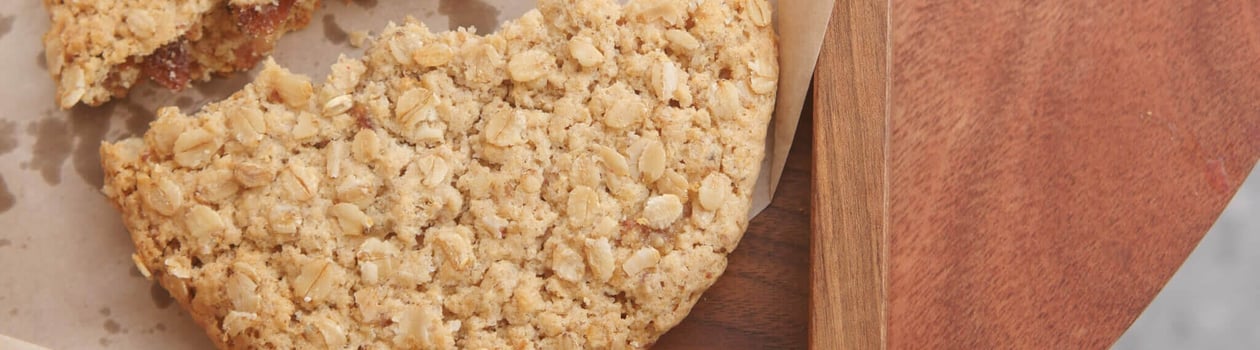
National Lacy Oatmeal Cookie Day spotlights a cookie that manages to be both homey and a little fancy at the same time. Lacy oatmeal cookies are thin, crisp, and delicately patterned, with a toffee-like flavor that comes from butter and sugar caramelizing as the batter spreads into a wide, amber-edged round in the oven.
National Lacy Oatmeal Cookie Day is a fun celebration of a unique, crispy treat. These cookies are much thinner and crunchier than traditional oatmeal cookies, with a delicate, lacy appearance that comes from how the dough spreads thin in the oven.
That “lace” is not a decoration added later. It is baked right in. As the butter melts and the sugars liquefy, the mixture flows outward, and the oats create a speckled, webby structure that sets into a brittle snap once it cools. The result is a cookie that looks intricate but comes from straightforward pantry ingredients and a little attention to timing.
The mix of oats, butter, and sugar creates a light yet flavorful snack, often paired with ice cream or enjoyed alongside a warm cup of tea. Their caramelized edges and toffee-like sweetness make them irresistible, a delightful contrast to the heartier, chewy version of the classic oatmeal cookie.
Texture is the main event here. Chewy oatmeal cookies lean on moisture, thicker dough, and a shorter bake. Lacy oatmeal cookies do the opposite. They bake longer and thinner, which means the flavors concentrate.
The oats toast slightly, the butter browns at the edges, and the sugar develops a deeper caramel note. Even a small cookie can taste surprisingly rich, which is why these are often served as a “one or two is perfect” kind of treat.
This day isn’t just about enjoying a tasty dessert; it’s a reminder of how simple ingredients can create something unexpectedly elegant.
For bakers, it also highlights the fun science of cookies. Minor adjustments can change everything: a warmer baking sheet can make a cookie spread more; a tablespoon more flour can tighten the batter; a finer grind of oats can make the cookie smoother; a darker pan can deepen browning.
Lacy oatmeal cookies are a delicious way to see how ingredients behave under heat, and how “simple” baking can still feel like a craft.
Lacy oatmeal cookies are versatile. They can be eaten on their own, crumbled over desserts, or used as a sophisticated garnish for cakes. Their intricate texture and crisp bite offer a satisfying experience, whether you’re an expert baker or someone who just loves a good cookie.
They also shine in places where thicker cookies can feel heavy. Because they are thin and crisp, they work well with creamy elements, and they add crunch without adding a lot of bulk.
Some bakers even shape them while they are warm, draping them over a rolling pin or the bottom of a glass to create curved “cups” that can hold fruit, mousse, or a small scoop of ice cream.
Others sandwich them with chocolate or a thin layer of ganache for a tidy, bakery-style finish. Even broken pieces have a role, turning into a quick dessert topping that looks intentionally fancy.
How to Celebrate National Lacy Oatmeal Cookie Day
There are plenty of creative ways to celebrate National Lacy Oatmeal Cookie Day. From baking experiments to cookie-sharing adventures, there’s something for every cookie lover to enjoy.
A good celebration can be as low-key as enjoying a single perfectly crisp cookie or as ambitious as turning the kitchen into a mini test bakery.
Because lace cookies bake quickly and change texture as they cool, they are especially satisfying for people who like near-instant results. One tray comes out and, a few minutes later, the cookies have transformed from soft and bendy to crisp and crackly.
Bake a Batch of Your Own
Why not try making your batch of these delicate treats? Search for a lacy oatmeal cookie recipe and see what you can whip up.
Lacy oatmeal cookies reward a few small best practices. Measure carefully, especially flour and sugar. Lace cookies rely on spreading, so a heavy hand with flour can make them thicker and less lacy. Too much sugar can make them spread too far and turn fragile. Use a lined baking sheet, such as parchment paper or a silicone mat, to prevent sticking and make it easier to lift the cookies off intact.
Keep portions small and spaced well. A teaspoon-sized scoop can spread into a surprisingly large circle, so leaving plenty of space helps prevent the cookies from merging together. Watch the bake closely. The difference between golden and overly dark can happen fast, especially near the edges. Many bakers aim for deep golden centers with browned rims for maximum toffee flavor. Let the cookies cool before moving them. They are soft when hot and crisp when cool, and a little patience helps avoid breakage.
Experiment with adding extra ingredients to create your own twist. Finely chopped nuts such as almonds, pecans, or hazelnuts add depth and a gentle bitterness that balances sweetness. Chocolate can go into the batter, but it also works beautifully as a finishing touch, whether drizzled, half-dipped, or used to sandwich two cookies together. Even a pinch of cinnamon or a small amount of citrus zest can make the whole kitchen smell like a bakery.
If the goal is extra lace, some bakers use part quick oats and part old-fashioned oats, or pulse the oats briefly to create a mix of textures. Smaller oat pieces help create a more even, delicate web, while larger flakes keep the cookie looking unmistakably oat-based.
Host a Cookie Exchange
Gather friends or family for a cookie exchange. Each person can bring their own version of lacy oatmeal cookies, and everyone can swap recipes. This is a fun way to taste different takes on the cookie while expanding your baking horizons.
To keep things running smoothly, it helps to agree on a few simple standards. Encourage people to bring their cookies fully cooled and packed in flat layers, since these treats snap easily. It can also be helpful to include notes on texture. Some cookies are meant to be extra crisp, while others may be slightly softer or more delicate. Those small details help everyone discover their favorites.
A cookie exchange can also turn into a casual tasting. Set out a few beverages and take turns describing what stands out, such as buttery aroma, toasted oats, caramel notes, a hint of salt, or a chocolate finish. It is a playful way to talk about flavor without taking it too seriously.
Pair with Your Favorite Beverage
Lacy oatmeal cookies are perfect with a warm drink. Pour a cup of coffee, tea, or hot cocoa and enjoy the balance of sweetness and warmth.
Because these cookies are thin and caramel-forward, they pair especially well with drinks that have some bitterness or roast to balance the sugar. Black tea, espresso, and cocoa all work well. Creamy options like a latte or a milky chai echo the cookie’s buttery flavor.
Their crisp texture also makes them ideal for dipping. A quick dunk softens the cookie into a tender bite, while a longer dunk can make it fall apart. Fully cooled cookies and slightly larger sizes tend to hold up better.
Get Creative with Dessert
These cookies can easily become part of a more elaborate dessert. Crumble them over ice cream or yogurt, or use them as a garnish for cakes. Their thin, crisp texture adds contrast and visual appeal.
They also work beautifully as ice cream sandwiches when paired with two similar cookies and frozen briefly to set. Cookie pieces can be layered into parfaits with whipped cream, pudding, or fruit, where they soften slightly and create a pleasing mix of creamy and crisp.
Serving them alongside cheesecake offers a lighter alternative to a traditional crust, and brushing the back of a cookie with melted chocolate helps it stay crisp longer, especially when paired with ice cream.
Share the Love
Pack up some homemade cookies and give them to neighbors, friends, or coworkers. Everyone enjoys a surprise treat, and sharing a simple cookie can brighten someone’s day.
Because lace cookies are fragile, flat containers and parchment between layers help keep the delicate edges intact. If you need to travel with them, slightly thicker versions tend to hold up better, and adding a few extra cookies as a cushion never hurts.
Including a handwritten note with a simple tip, such as waiting until the cookies are fully cool before lifting them, can make the gift even more thoughtful and encourage others to try baking them themselves.
National Lacy Oatmeal Cookie Day Timeline
Scottish Oatcakes as Oat “Proto-Cookies”
In medieval Scotland, thin oatcakes made from oats, water, and fat became a staple portable food, providing the rustic ancestor to later sweet oatmeal biscuits and cookies. [1]
Quaker Oats Brand Is Established
The Quaker Oats name is registered, and commercial oat processing expands in the United States, setting the stage for oats to move from porridge and oatcakes into home baking recipes. [1]
Fannie Farmer Publishes an Early Oatmeal Cookie Recipe
Fannie Merritt Farmer’s “Boston Cooking-School Cook Book” includes a sweet oatmeal raisin cookie, one of the first widely circulated American recipes to turn oats into a dessert cookie. [1]
Oat Cakes Recipe Appears on Quaker Oats Packages
Quaker begins printing an oat cake recipe on its oatmeal boxes, encouraging home bakers to use oats in sweet baked goods and helping popularize oatmeal-style cookies across the U.S. [1]
First Quaker Oats Sweet Cookie Recipes Circulate
Quaker Oats starts featuring recipes for sweet oatmeal cookies on its packages, and by 1922, its “Famous Oatmeal Cookies” help cement the oatmeal cookie as a mainstream American treat. [1]
Thin, Crisp Oat Biscuits Emerge in Europe
European bakers develop thin, crisp oat biscuits, or Haferkekse, using toasted oats and relatively little flour, creating a lighter, lacy-style cookie akin to later lacy oatmeal cookies. [1]
Oats Become Common in Biscuits and Cookies
As sugar becomes cheaper and industrial baking grows, British and European biscuit makers incorporate oats into sweet biscuits, broadening the range from hearty oatcakes to delicate, crisp oat cookies. [1]
Quaker Oats Brand Is Established
History of National Lacy Oatmeal Cookie Day
National Lacy Oatmeal Cookie Day first gained attention online around 2015. It isn’t clear who created the holiday, but it quickly became a hit among fans of sweet, crispy treats.
Like many modern food-themed days, it spread through online calendars and social sharing, where an eye-catching cookie has a natural advantage. Lacy oatmeal cookies photograph well, with their golden color and intricate pattern, and they have a clear “hook”: they are not the oatmeal cookie most people picture first.
That combination of novelty and nostalgia helps a small celebration gain traction, especially among home bakers looking for a new challenge.
The idea likely grew from a love for oatmeal cookies and the more delicate, lace-like version that spreads thin as it bakes. This crunchy cookie’s combination of oats, sugar, and butter has made it a popular choice.
The cookie itself traces its roots to traditional oatmeal cookies, which became popular in the late 19th century.
Oats have a long history as a reliable grain, and oatmeal baking grew alongside broader interest in practical, nourishing ingredients. By the late 1800s, oatmeal cookies were appearing in American cookbooks, and recipes continued to spread as oats became widely available and marketed for home kitchens.
Over time, oatmeal cookies shifted from being framed as sensible and hearty to being appreciated as comfort food, the kind of recipe that gets tweaked and passed around.
Over time, bakers experimented with thinner, crispier variations, and that led to the creation of lacy oatmeal cookies. Their fragile, intricate appearance and satisfying crunch make them a unique spin on the classic cookie.
Lace cookies as a category are built on a similar principle: high butter and sugar, relatively low flour, and a batter that spreads dramatically. Adding oats brings a rustic flavor and a familiar chew-free “oat” identity, even though the finished cookie is crisp. In many kitchens, the shift from thick to lacy happens for practical reasons.
Someone prefers a crunchier cookie, someone bakes them a minute too long, or someone tries a new ratio and discovers a happy accident. Once that crisp, caramelized texture clicks, it is easy to see why the style sticks around.
These cookies also reflect a broader baking trend: the appeal of contrast. A thin, crackly cookie paired with something creamy or soft is instantly satisfying. It is the same logic behind wafer cookies with ice cream, biscotti with coffee, or crisp pastry with custard. Lacy oatmeal cookies simply do it with oats and a home-baked charm.
National Lacy Oatmeal Cookie Day celebrates this delightful treat, offering a chance for cookie lovers to bake, share, and enjoy their favorite versions. Whether enjoyed on their own or with other desserts, these cookies bring joy to many.
For bakers, it is also a nudge to pay attention to the little details that make lace cookies work. Butter temperature, pan temperature, and portion size matter. So does choosing the right moment to remove them from the oven, when the centers look set but still glossy and the edges are deep golden.
Those small decisions are the difference between a cookie that shatters into sugary crumbs and one that snaps cleanly and tastes like toasted oats and caramel.
Fans of the holiday continue to celebrate each year by baking, swapping recipes, and sharing cookies with loved ones.
And the best part is that lacy oatmeal cookies welcome personal style. Some people like them barely sweet with a little extra salt. Others like a darker, more intensely caramelized bake.
Some keep them plain to highlight the oat flavor, while others dress them up with chocolate, nuts, or a whisper of spice. National Lacy Oatmeal Cookie Day makes room for all of it, one crisp, delicate round at a time.
The Healing Power of Forgiveness in Families
Forgiveness within families is more than an emotional choice. Research shows it plays a powerful role in mental health, emotional stability, and long-term well-being.
From adult children working through past hurts to young people navigating family conflict, the ability to forgive is closely linked to stronger self-esteem, better relationships, and greater life satisfaction.
Sugar Chemistry Creates the “Lace” Pattern
The characteristic lace-like holes in thin cookies come from a combination of high sugar and fat with very little flour.
As the dough heats, the sugar melts, and the fat liquefies, causing the batter to spread out into a thin sheet; steam from the moisture then creates tiny bubbles that set in place as the sugar hardens, leaving a crisp web of holes on cooling.
Oatmeal Cookies Grew Out of Savory Oatcakes
Sweet oatmeal cookies evolved from much plainer Scottish and English oatcakes that were closer to a hard, travel-ready bread than a dessert.
These oatcakes, made with oats, water, and sometimes a little fat, were carried by soldiers and travelers; as sugar became cheaper and home baking more common in the 19th century, cooks began adding sugar and butter, gradually transforming oatcakes into the softer, richer oatmeal cookies known today.
Fannie Farmer Helped Standardize the Oatmeal Cookie
One of the first widely circulated recipes for a sweet oatmeal cookie in the United States appeared in Fannie Merritt Farmer’s 1896 “Boston Cooking-School Cook Book.”
Farmer was influential in promoting level measurements and precise instructions, so her inclusion of an oatmeal cookie helped transfer what had been a more informal, homey preparation into a standardized recipe that could be reproduced across American kitchens.
Norway Has Its Own Oatmeal Lace Cookie Tradition
Norwegian havreflarn, or oatmeal lace cookies, show how thin, crisp oat biscuits developed in European home baking.
A traditional recipe from the cultural organization Sons of Norway uses rolled oats, butter, sugar, egg, baking powder, and just a spoonful of flour, producing a caramelized, wafer-thin cookie that spreads on the pan and bakes into a delicate, lacy round often served with coffee.
Oat Beta-Glucan Is a Legally Recognized Heart-Health Fiber
Oats are rich in beta-glucan, a soluble fiber that forms a gel in the gut and helps lower LDL (“bad”) cholesterol by binding bile acids and reducing cholesterol absorption.
Health authorities such as the U.S. Food and Drug Administration and Health Canada allow certain heart-health claims for foods that provide about 3 grams of oat beta-glucan per day, reflecting consistent evidence that regular oat consumption can reduce cardiovascular risk.
Oats Were Once Marketed More for Health Than Indulgence
When companies like Quaker began selling processed oats in the late 19th and early 20th centuries, they promoted oats primarily as a nutritious, economical staple rather than a dessert ingredient.
Early oat recipes on packages featured porridges and simple “oat cakes,” but by 1908 Quaker was printing an “oat cake” cookie on its boxes, a move that helped shift oats from a purely health-focused breakfast grain into a foundation for American home-baked treats.
Thin Cookies Rely on Different Ratios Than Chewy Ones
The same basic ingredients can yield either chewy or ultra-thin cookies, depending on their ratios and handling.
Formulas that favor melted butter, a higher proportion of sugar to flour, and sometimes a small amount of liquid produce a very fluid dough that spreads widely and bakes quickly, driving more browning and crispness at the edges.
In contrast, more flour, creamed (rather than melted) butter, and slightly thicker dough help cookies keep their shape and stay chewy in the center.



You may also like

Oatmeal Monday
Oatmeal Monday is a quirky tradition with practical roots in Scottish university life. Long before dining halls, meal plans, and late-night delivery, students were expected to fend for themselves, and that meant hauling in the basics: food for the belly and fuel for the fire. Oats, ground into oatmeal, were...

National Cookie Dough Day
Unbaked delight with a mix of sweetness and texture, a culinary temptation awaiting the oven's transformative touch.
- Australia
- Canada
- United Kingdom
- and 1 more

National Oatmeal Cookie Day
Fun to make, even more fun to eat; bake (or buy) your favorite version of the sweet an at least a little healthy treat, the oatmeal cookie. Enjoy with milk!
National Oatmeal Nut Waffles Day
Crispy on the outside, soft on the inside, a breakfast creation blending the wholesomeness of oats with the nutty goodness.
National days and holidays on March 18 2027

March Madness
Get your game face on for March Madness! This high-energy tournament is a slam dunk of excitement, passion, and heart-pumping action. So grab your team colors, gear up for the showdown, and let the madness begin!

National Groundwater Awareness Week
A vital resource, groundwater is a hidden treasure beneath our feet. Its protection is crucial for our future and the planet's.

International Teach Music Week
International Teach Music Week is a vibrant celebration that lights up every year's third week of March, and unites over 750 music schools and various organizations globally. They offer free 30-minute lessons to new students, encouraging everyone from kids to adults to explore the joy of music. It's a time when...
- Canada
- Italy
- Philippines
- and 4 more

Oranges And Lemons Day
Oranges and Lemons Day is a cheerful, bell-ringing tradition centered on St. Clement Danes Church and a nursery rhyme that has echoed through generations. It blends two things that rarely share the spotlight: church bells and citrus fruit. At its heart, the day celebrates the sound of a particular tune played...
Seize Every Day
Join free for personalised recommendations, email reminders and exclusive guides. Never miss a day.