National K9 Veterans Day
Dedicated canine partners, with unwavering loyalty, play crucial roles, showcasing the incredible bond between soldiers and dogs.
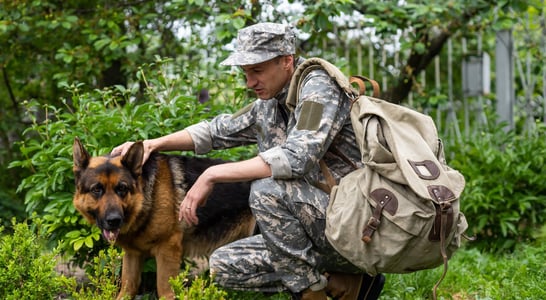
With their keen senses, adept trainability and strong sense of loyalty, dogs not only make good pets and furry companions – they can also make great co-workers! This is especially true for military dogs who are trained to accomplish a wide range of tasks and support activities in conflict and war zones.
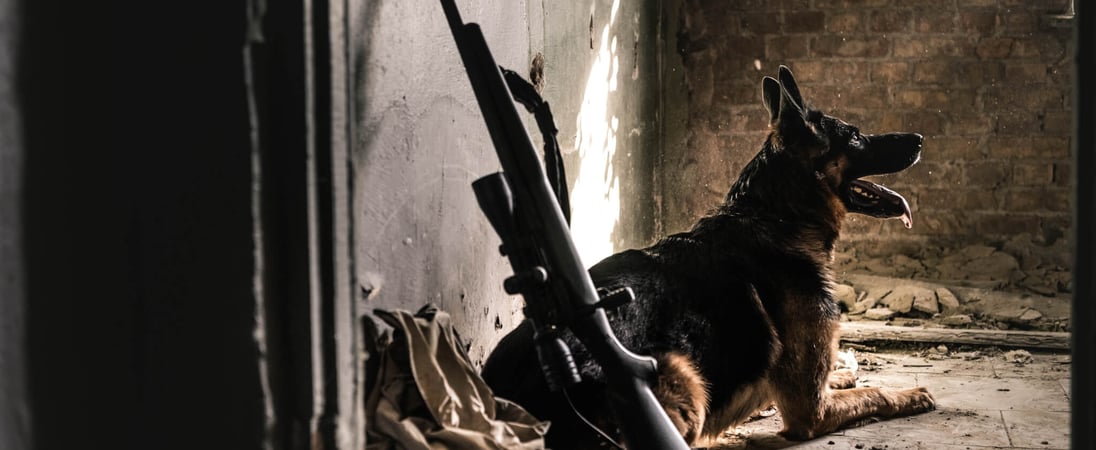
National K9 Veterans Day is set aside to show appreciation to all of the working service dogs who have served and sacrificed over the years.
National K9 Veterans Day Timeline
c. 600 BC
War Dogs on Ancient Battlefields
Early written accounts describe Lydian and Anatolian forces using dogs to attack enemy troops, guard camps, and disrupt formations in wars against the Cimmerians.
480–400 BC
Dogs Serve Greek and Persian Armies
Classical sources note dogs accompanying Persian king Xerxes’ army and Greek forces, working as sentries, messengers, and camp guardians during campaigns and sieges.
World War I (1914–1918)
Messenger and Medic Dogs in Modern War
European armies deploy tens of thousands of dogs as messengers, sentries, ambulance and Red Cross dogs, proving their value in trench warfare and on the front lines.
13 March 1942
U.S. Army War Dog Program Begins
The U.S. Under Secretary of War formally establishes the War Dog Program, known as the K‑9 Corps, making dogs an official part of the Army for sentry, scout, and messenger duties.
August 1942
First U.S. Military Dog Training Centers Open
The Quartermaster Corps sets up major dog training centers at Front Royal, Virginia, Fort Robinson, Nebraska, Cat Island, Mississippi, Camp Rimini, Montana, and San Carlos, California.
Vietnam War Era (1960s–1970s)
Scout Dogs Become “Force Multipliers”
Thousands of American military dogs serve in Vietnam as scouts and trackers, detecting ambushes and booby traps and saving an estimated tens of thousands of soldiers’ lives.
2000
Robby’s Law Protects Retired War Dogs
President Bill Clinton signs Robby’s Law, ending the routine euthanasia of military working dogs and allowing them to be adopted by handlers, law enforcement, and civilians.
History of National K9 Veterans Day
For more than eighty years, canines (or K9s) have been an official part of the US military service.
But even for the centuries prior, dogs have been serving faithfully alongside their masters, trained for responsibilities in search and rescue missions, attack and protection, tracking, explosive detection and much more.
National K9 Veterans Day was founded with the purpose of showing appreciation for and honoring the valuable part these canines play as members of military units.
The idea for National K9 Veterans Day came from a former trainer of military working dogs named Joseph White. The celebration of this event was strategically placed on this day in commemoration of the first official K9 army corps in the US, which was started on March 13, 1942.
How to Celebrate National K9 Veterans Day
Show some heartfelt appreciation for this group of “man’s best friends” who are so well-trained that they accompany and work alongside soldiers and other military personnel on their missions.
Check out some of these ideas for observing and enjoy National K9 Veterans Day:
Honor a K9 Veteran
Those who personally know or have met a K9 veteran can begin by recognizing their service and achievements.
This might include posting a photo of a K9 vet on their social media accounts, buying them a special treat or taking them out for a delightful walk in celebration of National K9 Veterans Day.
Attend a K9 Veterans Ceremony
Across the country, in observance of National K9 Veterans Day, many different military organizations and veterans groups may celebrate by hosting ceremonies to honor these working dogs.
Watch a K9 Military Dog Movie
Learn a bit more about what K9 military dogs really do by engaging with their stories.
Many different stories about these warrior heroes have been told through movies, whether in the fiction or true story category.
In celebration of National K9 Veterans Day, consider grabbing a friend, family member, or favorite K9 veteran and check out some of these flicks:
- Max (2015). This adventure war drama stars Josh Wiggins along with Lauren Graham and Thomas Haden Church is based on a true story of a military K9 dog whose handler was killed in the line of duty.
- Megan Leavey (2017). Another movie based on a true story, this film follows Megan Leavey, played by Kate Mara, who is a Marine corporal deployed in Iraq and shares her work of saving lives with her military combat dog.
- Canine Soldiers (2018). This documentary film takes a deep look into the role of K9 military dogs, their relationships with their handlers and the impact they have on the battlefield.
Facts About National K9 Veterans Day
Super-Sniffers: Dogs Can Detect Explosives at Parts per Trillion
Military working dogs are able to detect explosive materials at concentrations as low as parts per trillion, a sensitivity that often surpasses mechanical detectors in real-world conditions.
Studies funded by the U.S. Department of Defense and the Transportation Security Administration have shown that trained dogs can reliably locate trace amounts of explosives in complex environments, which is one reason they remain central to bomb detection, route clearance, and base security operations even as advanced electronic sensors are developed.
The U.S. Military’s Modern War Dog Program Began in World War II
Although dogs have accompanied armies for centuries, the United States did not formalize its military dog program until 1942, when the Army’s Quartermaster Corps created the War Dog Program, also known as the K-9 Corps.
Civilian group Dogs for Defense initially recruited and trained donated pets for sentry duty, but the Army soon took over and expanded roles to include scout, messenger, mine-detection, and patrol dogs, setting the template for modern military working dog training and deployment.
Vietnam Saw the Largest Deployment of U.S. Military Dogs
The Vietnam War marked the single largest use of military working dogs in U.S. history, with more than 4,000 dogs deployed and paired with thousands of handlers.
These teams patrolled perimeters, walked point on jungle patrols, and detected ambushes, mines, and booby traps. Army reports and veteran organizations credit scout and sentry dogs with saving an estimated 10,000 or more American lives by alerting patrols to enemy forces before they could attack.
Military Working Dogs Were Once Classified as Equipment
For much of the 20th century, U.S. military working dogs were legally treated as expendable equipment, which meant many were left behind or euthanized after conflicts such as Vietnam.
That status began to change with the passage of Robby’s Law in 2000, which created a formal process for adoption of retired dogs by handlers and civilians, and later provisions in the 2013 and 2016 National Defense Authorization Acts that directed the services to prioritize returning and reuniting retired dogs with their handlers.
Lackland Air Force Base Is the Hub for U.S. Military Dog Training
Nearly all U.S. military working dogs and many federal law enforcement dogs are trained at a single installation: Lackland Air Force Base in San Antonio, Texas.
The 341st Training Squadron there is responsible for procuring dogs, teaching basic and advanced skills such as patrol, tracking, and detection, and pairing them with handlers from all branches of the armed forces, as well as agencies like the Transportation Security Administration and the Secret Service.
Modern War Dogs Perform Multiple Specialized Roles in Combat Zones
Contemporary military working dogs are trained for highly specialized tasks that go far beyond traditional guard duty.
In Iraq and Afghanistan, dogs have been used to detect improvised explosive devices along convoy routes, track high-value targets, search collapsed structures, and provide psychological deterrence during raids and patrols.
Their ability to move quietly, work off leash, and interpret subtle human cues makes them uniquely adaptable to rapidly changing battlefield conditions.
Canine Teams Reduce Risk and Workload for Human Troops
Analyses by the U.S. military and NATO partners have found that one well-trained detection dog can save hundreds of human work-hours each year while also lowering casualty risk.
By screening vehicles and cargo, clearing buildings, and checking patrol routes for explosives or weapons, canine teams reduce the need for slower, more manpower-intensive searches and frequently identify threats that metal detectors or imaging devices miss.
National K9 Veterans Day FAQs
How are military working dogs typically selected and trained?
Military working dogs are usually selected from breeds with strong drive and stamina, such as German Shepherds, Belgian Malinois, and Labrador Retrievers.
In the United States, the Department of Defense Military Working Dog Program breeds and purchases dogs, then evaluates them for confidence, environmental stability, and scenting ability.
Those that pass are sent to specialized training, often at Joint Base San Antonio–Lackland, where they learn obedience, controlled aggression, and detection skills tailored to their future roles, such as explosives or narcotics detection and patrol work.
What kinds of jobs do K9s perform in modern militaries and police forces?
Today’s working dogs serve as explosives and narcotics detection dogs, patrol and apprehension dogs, search and rescue dogs, and tracking dogs that follow human scent over long distances.
They also help with border security, airport screening, and locating evidence such as firearms or electronic devices.
Their acute sense of smell allows them to detect substances at concentrations far below what humans or machines can reliably sense, which is why many security agencies still consider them essential despite technological advances.
How has the role of dogs in warfare changed over time?
Historically, dogs were used as direct combat animals, messengers, and sentries, and they sometimes wore armor or carried small loads.
During the world wars, their roles shifted toward guard duties, scouting, and message delivery.
In the late twentieth and early twenty‑first centuries, the emphasis moved primarily to detection and specialized patrol work, with dogs trained to locate mines, improvised explosive devices, weapons, and enemy combatants, as well as to support search and rescue operations after natural disasters or attacks.
Do military and police dogs experience PTSD, and how is it handled?
Research suggests that working dogs can develop behavioral changes similar to post‑traumatic stress disorder after exposure to combat, explosions, or repeated high‑stress deployments.
Veterinarians and behavior specialists describe signs such as hypervigilance, startle responses, avoidance of certain environments, and changes in work performance.
Treatment typically includes behavioral modification, environmental changes, and sometimes medication, with the goal of returning the dog to a good quality of life.
Dogs that do not respond may be retired and placed in adoptive homes.
What happens to military working dogs and police K9s when they retire?
When a working dog is no longer fit for duty due to age, injury, or behavioral changes, agencies may offer them for adoption, often giving first preference to their handlers or other unit members.
In the United States, laws such as the 2013 amendments to the National Defense Authorization Act clarified that retired military working dogs are to be made available for adoption and recognized them as veterans’ companions rather than surplus equipment.
Nonprofit groups also assist with transport and medical costs to help retired K9s transition into civilian homes.
Are there ethical debates about using dogs in combat and high‑risk work?
Ethical discussions focus on whether it is justifiable to expose animals, which cannot give informed consent, to combat, explosives, and other life‑threatening hazards.
Supporters argue that dogs save many human lives through detection and early warning, often preventing casualties among soldiers and civilians.
Critics question training methods, deployment conditions, and post‑service care, emphasizing the need for strict welfare standards, careful selection of missions, and robust retirement and medical support for the animals.
Professional veterinary organizations generally call for balancing operational needs with clear welfare protections.
How are service dogs for veterans different from active‑duty military working dogs?
Active‑duty military working dogs are owned by the government and trained primarily for detection, patrol, or security roles under the command structure of a military or police unit.
Service dogs for veterans, by contrast, are placed with individual former service members and trained to assist with specific disabilities, such as mobility impairments, traumatic brain injury, or post‑traumatic stress symptoms.
They perform tasks like interrupting nightmares, providing balance support, or reminding their handler to take medication, and are protected as assistance animals under disability laws in many countries.
Also on ...
View all holidays
World Sleep Day
Resting your eyes, recharging your body, and dreaming of wonderful things are just a few reasons to love bedtime.

National Good Samaritan Day
Kind-hearted individuals shine, making a positive impact through selfless acts, emphasizing the beauty of compassion and generosity.