
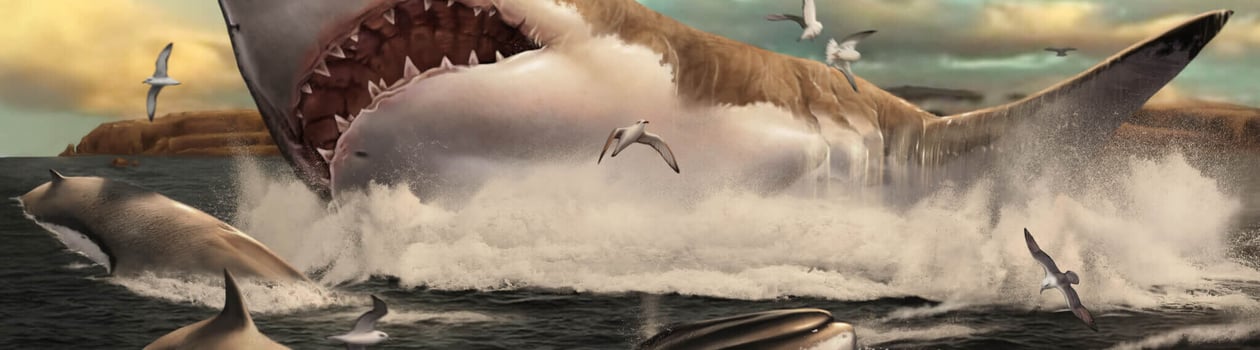
Have you ever thought about the colossal creatures that once roamed our oceans? National Megalodon Day invites everyone to dive into the world of the megalodon, a shark so outsized and so famous that it has become the unofficial mascot of “prehistory was intense.”
Megalodon is most often identified in modern science as *Otodus megalodon*, an extinct species of giant mackerel shark that lived during the Miocene and Pliocene epochs. No one is wheeling a complete skeleton into a museum, because sharks are mostly cartilage and cartilage rarely fossilizes. Instead, megalodon is known best through what it left behind in abundance: teeth. Big, triangular, serrated teeth that look like they were designed by nature after a particularly dramatic brainstorming session.
Celebrating National Megalodon Day is an excuse to indulge that awe, but it can also be a surprisingly educational prompt. Megalodon opens doors to topics like evolution, how scientists reconstruct animals from partial evidence, and how changing oceans can reshape entire ecosystems. It is a day that works equally well for kids who like monsters, adults who like science, and anyone who has ever looked at the sea and wondered what used to live out there.
How to Celebrate National Megalodon Day
Celebrating National Megalodon Day offers a thrilling dive into the world of prehistoric marine giants. The most memorable celebrations tend to mix fun with a little real-world science, so the megalodon becomes more than a pop-culture sea beast. Here are some engaging ways to mark the occasion.
Visit a Maritime Museum
A museum visit is the closest most people get to standing “face to face” with a megalodon, because fossil teeth are often displayed at eye level. Seeing a tooth in person is different from seeing a photo. The serrations are sharper than expected, the enamel can be glossy or mineral-stained, and the size comparison stops being theoretical the moment it is next to a human hand on a label card.
To get more out of the visit, it helps to look beyond the tooth itself. Many exhibits place megalodon in its ecosystem, alongside fossil whales, rays, smaller sharks, and marine mammals that shared the water. That context makes the big shark make more sense. Apex predators do not exist in isolation. They require food webs sturdy enough to support them, and their presence tells scientists something about the productivity and structure of ancient oceans.
If staff or volunteers are available, a simple question can turn into a mini-lesson: How do researchers estimate the body size of a shark from teeth? Why do some teeth look broader or narrower? What makes scientists confident the animal is extinct? Museum educators love questions like these because megalodon is a perfect gateway into how paleontology works.
Host a Megalodon Movie Marathon
A megalodon movie marathon can be equal parts entertaining and revealing, especially if the viewing list includes at least one documentary-style program in addition to fictional thrillers. Fiction tends to exaggerate speed, behavior, and survival into the modern day. Documentaries, at their best, show the detective work: comparing tooth sizes, modeling swimming dynamics, and connecting bite marks on fossil bones to probable predators.
To keep things lively, viewers can play “myth vs. evidence” between films. For example, megalodon was enormous, but it still followed biological rules. A believable megalodon story should acknowledge that it needed substantial prey and suitable water temperatures. A fun megalodon story can still be fun, but talking about what science actually supports makes the marathon feel like an event rather than background noise.
For families, this is also a chance to practice media literacy. The question is not whether a movie is “wrong.” The question is what it is trying to do: scare, entertain, or explain. National Megalodon Day is a great reason to do all three, in that order.
Create Megalodon-Themed Art
Art is an unexpectedly useful way to learn paleontology, because it forces decisions. How long is the body? What shape is the head? How big is the dorsal fin? Where do the eyes sit? Since complete megalodon skeletons are rare to nonexistent, scientific reconstructions rely on comparisons with living sharks and careful interpretation of fossil clues. Making art puts a person right into that same creative, evidence-based problem.
A simple project might be a tooth rubbing or a clay tooth sculpture with serrations. A more ambitious project could be a scale drawing that places megalodon next to modern sharks or common objects to visualize the size. Another idea is to draw an ancient ocean scene filled with creatures from the same time period, turning the shark into part of a community rather than a lone “monster.”
For classrooms or groups, it can be fun to assign roles: one person illustrates the shark, another creates a “museum placard” explaining what evidence supports the design, and someone else draws the prey animals it likely hunted. The result looks like a tiny exhibit, and it naturally encourages research.
Organize a Shark Trivia Night
Trivia is perfect for a day like this because megalodon is surrounded by both solid science and persistent rumors. A well-built trivia night can celebrate the drama while reinforcing what is actually known.
Good question categories include: shark anatomy (cartilage, tooth replacement, senses), fossil basics (how teeth mineralize, where fossils are found), time periods (Miocene and Pliocene), and the difference between evidence and speculation. Megalodon-specific questions can cover its scientific name, what “megalodon” means (“big tooth”), what kinds of prey are indicated by fossil bite marks, and why teeth are the most common fossils.
To keep it accessible, the host can mix easy questions with “bonus round” stumpers, like how scientists use tooth measurements to estimate body length, or why the same animal may appear under different scientific names in older books. The goal is not to gatekeep knowledge. It is to make learning feel like a game with a splash of saltwater.
Read Books on Prehistoric Marine Life
Books are where megalodon becomes more than a headline. A good overview of prehistoric marine life explains why the oceans of the Miocene and Pliocene could support gigantic predators, and how marine mammals were diversifying at the same time. That overlap matters. Megalodon is often associated with ancient whales for a reason: the rise of large marine mammals likely provided rich hunting opportunities.
Reading also highlights what scientists do not know, which is just as important as what they do. Without full skeletons, researchers rely on tooth morphology, fossil distribution, and comparisons to modern relatives. That method can be incredibly informative, but it also requires careful wording. A solid book will show how scientists build and test hypotheses rather than presenting guesswork as certainty.
For younger readers, illustrated paleontology books can make concepts like geologic time and extinction feel intuitive. For older readers, deeper dives into shark evolution can be fascinating, especially when they explain how scientists debate classification, including why the name *Otodus megalodon* is widely used today even though older sources may use different genus names.
National Megalodon Day Timeline
Steno Identifies “Tongue Stones” as Shark Teeth
Danish scientist Nicolaus Steno publishes his work comparing glossopetrae with modern shark teeth, recognizing them as fossil shark remains rather than mythical tongues and laying groundwork for later identification of megalodon teeth.
Agassiz Formally Describes the Megalodon Shark
Swiss naturalist Louis Agassiz describes giant fossil shark teeth as a new species, megalodon, in his monumental work on fossil fishes, establishing the animal as a distinct extinct shark in scientific literature.
Early Jaw Reconstructions Exaggerate Megalodon’s Size
As museums assemble megalodon jaws from large teeth, researchers scale them up from great white sharks, producing dramatic displays and popular claims that the shark may have reached lengths far beyond modern scientific estimates.
Tooth-Based Formulas Standardize Size Estimates
Researchers develop regression equations relating tooth crown height to body length in living great white sharks and apply them to megalodon teeth, converging on widely cited maximum lengths of roughly 50 to 60 feet.
Megalodon Reclassified Away from Great White Lineage
Detailed comparisons of fossil teeth and jaws lead many paleontologists to move megalodon out of the great white shark genus Carcharodon, recognizing it instead as part of a separate megatooth shark lineage.
Otodus Megalodon and Its Ancient Lineage Clarified
New evolutionary work traces megalodon into a long‑lived megatooth shark line, reassigning it as Otodus megalodon and linking it to earlier Otodus and Cretalamna species that stretch back over 100 million years.
Statistical Study Refines Megalodon’s Extinction Window
A PLOS ONE analysis by Catalina Pimiento and Chris Clements applies optimal linear estimation to the global fossil record, concluding megalodon likely went extinct between about 3.5 and 2.6 million years ago, well before modern times.
History of National Megalodon Day
National Megalodon Day officially began in 2021, created by the Aurora Fossil Museum Foundation in Aurora, North Carolina. The day was designed to spotlight the megalodon’s scientific and cultural appeal while also connecting the celebration to the museum’s own story. The chosen date aligns with the Aurora Fossil Museum’s opening to the public, giving the observance a clear institutional anchor rather than a vague “because it sounded fun” origin.
That connection makes sense on multiple levels. The Aurora region is known for fossil-bearing deposits associated with marine environments from the Miocene and Pliocene, and megalodon teeth are among the most iconic finds from such sediments. Fossil teeth are durable, recognizable, and thrilling to hold, even when they are small or worn. They make an immediate impression on visitors, which is exactly what a public-facing science museum wants when it is introducing people to deep time.
The founding organization’s goal was not simply to celebrate a big shark for being big, although that is part of the charm. It was also to encourage curiosity about paleontology and to promote public education around fossils, ancient oceans, and the way ecosystems change over millions of years. In other words, the megalodon is the hook, but the deeper purpose is learning.
The day’s popularity also reflects how megalodon sits at the intersection of evidence and imagination. There is enough fossil material to make it real, but not enough to make it ordinary. People can see genuine teeth and vertebrae, learn how those fossils form, and then still marvel at how enormous the living animal must have been. That balance keeps the topic evergreen for museums, schools, and shark enthusiasts.
National Megalodon Day also benefits from being broad and flexible. It can be celebrated through formal education, like museum programs and classroom activities, or through casual fascination, like movies, crafts, and conversations about what oceans used to contain. That openness has helped it become a recurring annual observance, with a consistent theme: megalodon as a symbol of prehistoric wonder and a reminder that the natural world has always been capable of producing creatures far beyond modern expectations.
On the science side, the megalodon story itself continues to evolve, which keeps the day relevant. Researchers refine estimates of its body size and shape, debate aspects of its classification, and use new analytical methods to interpret old fossils. Even the basics are a lesson in scientific process. Because teeth are the main evidence, size estimates are derived from relationships between tooth dimensions and body length in modern sharks, and then scaled thoughtfully, with room for revision as models improve.
What remains consistent is the sheer impact of the fossils. A megalodon tooth is not just a souvenir of a scary animal. It is a durable artifact from a time when ocean ecosystems were different, climates shifted, and familiar coastlines did not look the way they do now. National Megalodon Day turns that tooth from a curiosity into a conversation starter, and that is exactly the kind of legacy a good awareness day aims for.
Facts About National Megalodon Day
Teeth That Fell Like “Shark Rain”
Because sharks constantly replace their teeth, an individual megalodon is thought to have shed tens of thousands of teeth over its lifetime, which helps explain why megalodon teeth are among the most common large vertebrate fossils worldwide and are frequently found loose in marine sediments rather than attached to jaws.
Newborn Megalodons Were Already the Size of a Car
Growth rings in fossil vertebrae suggest megalodon pups were about 3.6 to 3.9 meters (12 to 13 feet) long at birth, comparable to or larger than many adult great white sharks, which implies embryos likely consumed unfertilized eggs in the womb and were born as unusually large, well-developed predators.
Ultimate Cutting Tools Evolved Tooth by Tooth
Research on the megalodon lineage shows that over millions of years, side cusps on ancestral shark teeth were gradually lost while the main blade became broader, more triangular, and serrated, creating “mega-teeth” specialized for cutting through thick whale bone and blubber instead of just holding onto fish.
Fossil Nurseries Reveal Ancient Shark Daycares
Clusters of relatively small megalodon teeth in certain shallow-water deposits have been interpreted as ancient nursery grounds, suggesting juveniles spent their early years in protected coastal habitats with plentiful small prey and fewer large predators before dispersing into deeper, open-ocean environments as adults.
A Global Super-Predator of Warm Seas
Megalodon fossils, mostly isolated teeth, occur on every continent except Antarctica and are especially common in deposits that formed in warm, shallow seas, indicating the shark had a near-global distribution in temperate to tropical oceans and likely shaped marine food webs across much of the planet.
Whales Grew Bigger After Megalodon Vanished
Studies of Neogene marine fossils show that many baleen whale lineages only reached their largest body sizes after giant predators such as megalodon disappeared, suggesting that the loss of these apex hunters reduced predation pressure and helped open an evolutionary pathway toward today’s enormous filter-feeding whales.
Extinction Likely Came from Overlapping Environmental Pressures
Analyses of late Miocene and Pliocene oceans suggest megalodon’s extinction coincided with global cooling, sea level changes that altered coastal habitats, shifts in the diversity and distribution of medium-sized baleen whales, and the rise of new large predators, indicating that a combination of environmental and ecological stresses probably ended the giant shark’s reign.
National Megalodon Day FAQs



You may also like

Shark Awareness Day
Tackle the stigma and raise awareness about the reality of sharks, which are beautiful creatures that keep the ocean ecosystem running and rarely attack humans.
- Australia
- International
- South Africa
- and 1 more
International Whale Shark Day
Visit the coast or an aquarium to get a glimpse at the remarkable whale shark, or read up about how you can protect these amazing creatures from extinction.
- Australia
- International
- Mexico
- and 2 more

National False Teeth Day
Discover the secret to a confident smile, allowing one to enjoy conversations and favorite foods without worry.
- International
- United Kingdom
- United States

Fossil Fools Day
Fossil Fools Day is an annual event that calls attention to the environmental damage caused by our reliance on fossil fuels. It's a day full of creativity and activism, where people gather to highlight the impact of burning coal, oil, and gas. These activities often use humor and imaginative protests to...
- Australia
- Canada
- South Africa
- and 2 more
National days and holidays on June 15

Nature Photography Day
Celebrate Nature Photography Day by capturing the beauty of landscapes, wildlife, and everyday nature, fostering creativity, awareness, and conservation.
- Australia
- Canada
- United Kingdom
- and 1 more

National Lobster Day
National Lobster Day celebrates this decadent seafood delicacy, its rich history, fun facts, and the fishermen and festivals that bring lobster to the table.
- Australia
- Canada
- United States

Beer Day Britain
Celebrate Beer Day Britain with tastings, pub visits, and the National Cheers to Beer, honoring UK brewing heritage, community spirit, and beer culture.
- Australia
- Canada
- United Kingdom
- and 1 more

National Foam Party Day
Dive into bubbly fun on National Foam Party Day, celebrating joy, dancing, and community with safe, foam-filled events for families, friends, and kids.
- United States
Seize Every Day
Join free for personalised recommendations, email reminders and exclusive guides. Never miss a day.