

Bright colors, soft textures, and a sugary bite, National Peeps Day brings it all together with one simple treat. These marshmallow snacks, shaped like chicks or bunnies, have a way of turning an ordinary candy moment into something a little more playful, especially when the world seems to lean into pastels and sprinkle-covered everything.
They’re more than sweets; they’re a pop of joy in crystal sugar form. Whether perched on cupcakes, tucked into gift bags, or lined up like a tiny flock on a kitchen counter, Peeps invite people to pause and enjoy something intentionally silly and sweet.
What makes this day special isn’t just the candy, it’s the feeling it stirs. Peeps tend to unlock nostalgia for candy-shop excitement, family traditions, classroom parties, and that particular kind of giddy creativity that comes from being handed a bright, squishy object and being told, “Go have fun.”
People craft scenes with them, stack them high, and yes, test how they puff up in the microwave. This isn’t just about taste. It’s about turning something small into a spark of fun that stretches beyond the snack into art projects, friendly competitions, and even a bit of beginner-level science.
How to Celebrate National Peeps Day
National Peeps Day offers a lighthearted excuse to play with food on purpose, preferably with a napkin nearby. Peeps are easy to find, easy to share, and easy to turn into an activity that fits almost any group, from a classroom to a game night to a low-key afternoon at home.
A good rule of thumb: plan for two lanes of enjoyment. One lane is for eating. The other lane is for experimenting, crafting, and giggling at the weird stuff marshmallows can do.
Craft Edible Art
Transform Peeps into colorful centerpieces and edible decorations that look like they belong on a party table. One simple idea is to layer Peeps with other small candies in clear jars or bowls, arranging colors like a rainbow or keeping it monochrome for a more “designer candy” look. The sugar coating on Peeps catches light, so even basic arrangements can look surprisingly festive.
For people who like novelty snacks, “Peepshi” is a classic craft: wrap a Peep with a strip of rice cereal treat, then add fruit leather as an outer wrap to mimic sushi. It is silly, kid-friendly, and actually pretty satisfying to eat because it combines soft, chewy, and fruity textures in one bite.
Other edible art ideas that stay manageable:
- Use Peeps as cupcake toppers, but add a “scene” around them using frosting grass, candy flowers, or cookie crumbs as “soil.”
- Turn them into party place cards by inserting a small paper flag (on a toothpick) with each person’s name.
- Create a quick “bouquet” by skewering Peeps and wrapping the sticks in tissue paper like a real floral arrangement.
If the goal is a cleaner project, the best strategy is to start with a chilled Peep. A slightly firmer marshmallow is easier to handle and less likely to tear when being wrapped or placed.
Conduct Sweet Science Experiments
Peeps are basically a beginner science lab disguised as candy. Their foamy structure is full of tiny air pockets, and their sugar shell reacts quickly to heat and moisture. That makes them ideal for simple experiments that demonstrate big concepts without requiring fancy materials.
One popular activity is the microwave expansion test. Place one Peep on a microwave-safe plate with plenty of space around it, then heat it briefly and watch it balloon dramatically. The science is part heat and part structure: as the marshmallow warms, water inside turns to steam and trapped air expands, inflating the candy’s foam. Let it cool and it often deflates, showing how temperature changes can affect gases and soft solids.
A few easy ways to make this more than just a “wow” moment:
- Time the expansion and compare different colors or shapes to see if they behave differently.
- Heat in short bursts rather than one long blast to observe gradual changes.
- Measure height or width before and after for a simple data table.
Other quick experiments:
- Test dissolving and color movement by placing Peeps in water and watching the sugar coating soften and spread. It is a neat way to talk about solubility and diffusion.
- Compare how Peeps react in different liquids, such as plain water versus carbonated beverages. The goal is observation, not a perfect result, so it stays fun and flexible.
- Explore buoyancy by predicting whether a Peep will float or sink, then testing it and discussing why marshmallows tend to float.
For safety, keep microwave experiments supervised, use a larger plate than seems necessary, and avoid touching hot sugar immediately after heating.
Host a Peeps Tasting Party
A Peeps tasting party is surprisingly entertaining because people have strong opinions about marshmallow texture. Some love a super-soft, fresh Peep. Others prefer one that has sat out a bit and become chewier. A tasting party makes room for both camps, without anyone needing to “win” the debate.
Set up a tasting station with small plates and a simple rating card. Categories can include:
- Sweetness
- Texture (soft, chewy, crunchy sugar shell)
- Flavor (vanilla-forward, fruity, or more subtle)
- Overall fun factor
To keep it organized, sample in a consistent order, like lighter flavors first and stronger flavors later. Provide palate cleansers such as water, plain crackers, or fruit. If the group includes kids, keep portions small so the activity stays enjoyable instead of turning into a sugar overload.
For a quirky twist, include a “mystery Peep” round where the color is hidden in a small paper cup and participants guess the flavor. The guesses will get ridiculous in the best way.
Organize a Peeps Diorama Contest
A Peeps diorama contest turns candy into storytelling. Participants build miniature scenes using Peeps as the characters and any other materials that fit the rules, like paper, cardboard, icing, cereal, pretzels, and small candies. The charm is in the contrast: a dramatic scene acted out by bright, wide-eyed marshmallow chicks.
To make the contest feel fair and fun, choose a theme:
- A favorite book scene
- A movie genre (mystery, space adventure, superhero showdown)
- A “day in the life” setting (at the beach, in a bakery, camping)
Helpful guidelines keep the chaos creative instead of stressful:
- Set a size limit, like “must fit in a shoebox,” so displays are easy to show.
- Require at least one Peep “actor,” but allow as many people as want.
- Encourage labels or short captions, since half the fun is understanding the joke.
Judging can be done with simple categories such as “Most Creative,” “Funniest,” and “Best Use of Candy.” If the group prefers no competition, make it a gallery walk and let everyone vote with small stickers.
Enjoy Peeps-Themed Games
Peeps-themed games work best when they are quick, a little messy, and designed to make everyone laugh. Because Peeps are soft and lightweight, they are great for goofy challenges that do not require athletic skill.
A few crowd-pleasers:
- Spoon relay: participants carry a Peep on a spoon across a room, then tag the next person. It sounds easy until the Peep wobbles.
- Stack challenge: see who can build the tallest Peep tower in one minute. Add a rule that only one hand can be used for extra suspense.
- Target toss: set up cups or bowls with point values and toss Peeps from a distance. Soft candy makes it safer indoors than many other games.
Microwave “Peeps jousting” is often played by placing two Peeps facing each other with toothpicks as lances and heating briefly to see which one “wins” as they expand. It is a dramatic little duel, but it should be done carefully, with short heating times and supervision, since toothpicks and hot sugar can be a tricky combination.
For groups that like cleaner games, keep it simple: decorate Peeps with edible markers, then do a “best dressed” runway judging. It is low-mess, highly photogenic, and gives everyone a creative role.
National Peeps Day Timeline
Modern Marshmallow Recipe Emerges
Candy makers replace plant-based mallow sap with gelatin, sugar, and corn syrup, creating the basis of the modern marshmallow used in later shaped candies.
Just Born Confectionery Is Founded
Immigrant candy maker Sam Born establishes Just Born in New York City, launching the family-owned company that will later take over marshmallow chick production.
Hand-Piped Marshmallow Chicks Appear
E. Rodda Candy Company in Lancaster, Pennsylvania offers three-dimensional marshmallow chicks, painstakingly piped by hand and taking many hours to complete.
Just Born Acquires Rodda Candy Company
Just Born purchases Rodda Candy and its marshmallow chick line, bringing the labor-intensive springtime treat into a growing, innovation-focused candy business.
Bob Born Automates Chick Production
Engineer Bob Born at Just Born invents a machine that deposits marshmallow into chick shapes, cutting production time from about 27 hours to just minutes per batch.
Streamlined Chick Design Introduced
Just Born removes the small wings from its marshmallow chicks, simplifying the shape for faster, more consistent manufacturing and a cleaner, modern look.
From Easter Treat to Pop-Culture Icon
Peeps expand from classic yellow chicks into new colors, shapes, and seasonal themes, inspiring diorama contests, eating competitions, and playful science experiments.
History of National Peeps Day
National Peeps Day began in 2009, with the National Confectioners Association recognizing it as a day to appreciate one of the most recognizable marshmallow treats in American candy culture.
The timing makes sense because Peeps are strongly associated with spring candy traditions, and the day gave fans an official nudge to celebrate the bright little characters that tend to show up in large, irresistible displays.
The story of Peeps themselves goes back earlier than many people realize. Before the brand became a mass-produced staple, marshmallow chicks were being made by hand.
The R. E. Rodda Candy Company, based in Pennsylvania, produced marshmallow chicks that were shaped and decorated through labor-intensive methods. The process was the opposite of speedy: it required many workers and a lot of time to create trays of the candy.
In 1953, the candy company Just Born acquired Rodda Candy, and that purchase became the turning point that transformed Peeps from a regional, handmade novelty into a widely available treat. At the time of the acquisition, making Peeps still involved an enormous amount of effort.
The traditional method could take about 27 hours to complete a batch, largely because shaping, setting, and finishing marshmallow candy is slow when it relies on manual production and long drying times.
That changed quickly thanks to automation. Bob Born, part of the Just Born family, is widely credited with developing a machine that dramatically sped up production. Instead of taking more than a day, a tray of Peeps could be made in minutes.
That leap was not just a convenience for candy fans; it was a big shift in how a seasonal product could be produced at scale while keeping a consistent look and texture. Automation helped the candy become reliable, recognizable, and widely distributed, which is a major reason Peeps became such a lasting part of the candy landscape.
The candy also became more standardized in appearance over time. The iconic chick shape with its simple, cute silhouette and tiny eyes created a strong visual identity. Those little eyes, often made with edible wax, are a surprisingly important detail. They turn a blob of marshmallow into a character, which is why Peeps work so well as decorations and as “actors” in dioramas. A Peep is not just candy. It looks like it has opinions.
As the decades went on, Peeps expanded beyond the original chick. Bunny shapes arrived and became their own classic, and the brand leaned into variety with more colors and flavors.
That variety is part of why National Peeps Day has so much creative potential: a single type of candy can become a palette, a craft supply, a game piece, or a dessert topping. The treat is consistent enough to be familiar, but flexible enough to keep changing.
National Peeps Day celebrates that whole journey: from hand-shaped marshmallow chicks to an icon that inspires crafts, baking projects, playful experiments, and more than a little friendly debate about the best way to eat them.
Some people bite the head first. Some save them like tiny sugary sculptures. Some proudly declare that Peeps are better after they have “aged” a bit and gotten chewier. The day has room for all of it, as long as it stays fun.
Fascinating Historical Facts About Palm Sunday in the Orthodox Church
Palm Sunday in the Orthodox Christian tradition carries centuries of history, symbolism, and remarkable cultural practices.
From dramatic imperial processions in medieval Russia to early pilgrimage accounts from Jerusalem and theological symbolism rooted in ancient Greek language, the observance has developed rich layers of meaning over time.
These facts reveal how Palm Sunday has been celebrated, interpreted, and remembered across different eras of Christian history.
From 27 Hours to 6 Minutes: How Automation Transformed Peeps
When Just Born acquired the Rodda Candy Company in 1953, Rodda’s marshmallow chicks were still piped by hand and required about 27 hours to set.
Bob Born, an engineer and son of founder Sam Born, led the effort to design a mechanized depositor line that automated the piping and curing process.
This cut production time to roughly 6 minutes per chick and turned Peeps from a labor‑intensive novelty into a mass‑market seasonal staple.
A Classic Marshmallow Is Mostly Air, Sugar, and Gelatin
The familiar soft, spongy texture of Peeps comes from the same basic structure as other marshmallows: a foamed sugar syrup stabilized by gelatin.
Hot sugar syrup is whipped to incorporate air bubbles, while gelatin forms a protein network that traps those bubbles as it cools.
The result is a low‑density, aerated candy that can feel light on the tongue even though it is primarily sugar by weight.
Why Peeps Puff Up in the Microwave
When a Peep is heated in a microwave, the water molecules inside vibrate faster and warm the air bubbles distributed throughout the marshmallow.
As the air heats, it expands and pushes against the soft gelatin‑sugar matrix, making the candy balloon increase in size until the structure begins to weaken and collapse.
This behavior illustrates the ideal gas law clearly and is often used in classrooms to show how gases respond to heat.
The Carnauba Wax Behind Those Tiny Eyes
The glossy black “eyes” on Peeps are applied with carnauba wax, a plant‑derived wax also used to give shine to some fruits, pharmaceuticals, and car polishes.
Harvested from the leaves of the carnauba palm in Brazil, this wax has a high melting point and resists moisture, which helps the eyes keep their shape during manufacturing, shipping, and storage without smearing into the sugar coating.
Peeps as a Laboratory Curiosity
In the late 1990s, a group of medical residents at George Washington University became curious about how durable Peeps really were and informally subjected them to various substances, including water, acetone, and diluted sulfuric acid.
The candies proved surprisingly resistant to many solutions, highlighting how concentrated sugar, low moisture, and a gelatin network can make confections more stable than people might expect under everyday conditions.
From Chicks to Pumpkins: Expanding the Marshmallow Mold Library
Although yellow chicks remain the most iconic design, Peeps molds now span multiple holidays and themes, including bunnies, ghosts, pumpkins, hearts, and more stylized shapes.
Each new mold requires engineering the flow of marshmallow foam and the timing of sugar application so that details remain recognizable after setting and packaging, reflecting how confectioners blend artistry with process engineering to keep seasonal candies visually consistent at scale.
A Diorama Contest That Turned Candy into Social Commentary
Beginning in 2007, The Washington Post’s annual “Peeps Diorama Contest” invited readers to build miniature scenes using Peeps as characters, with entries depicting everything from political debates to pop‑culture parodies.
The contest showed how a simple marshmallow candy could become a medium for satire and storytelling, and it helped cement Peeps as a recognizable prop in American visual humor well beyond the candy aisle.
National Peeps Day FAQs

You may also like
National Toasted Marshmallow Day
Picture this: a warm, crackling fire, the cool night air, and a deliciously sweet aroma that fills your senses.
- Australia
- Canada
- United Kingdom
- and 1 more

National Microwave Oven Day
National Microwave Oven Day celebrates the incredible appliance that has transformed kitchens worldwide. This day highlights the microwave's role in making cooking faster and more convenient. The microwave oven is a staple in many households, from reheating leftovers to preparing full meals. Its ability to save time and effort in...
- Australia
- Canada
- United Kingdom
- and 1 more
I Love Reese’s Day
Celebrate I Love Reese’s Day by indulging in Reese’s treats, sharing candy with loved ones, getting creative with recipes, and honoring this iconic chocolate snack.
- Australia
- Canada
- United Kingdom
- and 1 more

National Gumdrop Day
Satisfy your sweet tooth with these colorful, chewy treats that pack a punch of fruity flavor and make the perfect movie snack.
- Canada
- United Kingdom
- United States
National days and holidays on April 5 2027
March Madness
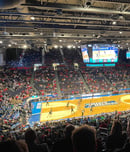
Get your game face on for March Madness! This high-energy tournament is a slam dunk of excitement, passion, and heart-pumping action. So grab your team colors, gear up for the showdown, and let the madness begin!
- United States

National Public Health Week
The well-being of communities — disease prevention, and better living through knowledge and action, towards a healthier world.
- United States

First Contact Day
On April 5th, 2063, Zefram Cochrane makes first contact between man and extraterrestrials: this day is for Trekkies everywhere to let their geekdom out.
- United States

International Day of Conscience
Imagine a world illuminated by the light of conscience, where every thought and action aligns with peace, love, and understanding. International Day of Conscience is a day that shines bright like a beacon, reminding us of our collective journey towards a harmonious world! How to Celebrate International Day of Conscience Celebrating the...
- Brazil
- Canada
- China
- and 4 more
Seize Every Day
Join free for personalised recommendations, email reminders and exclusive guides. Never miss a day.