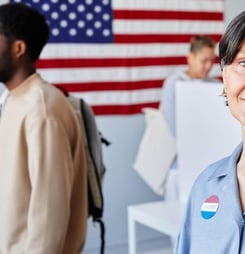

If there’s one day meant to take a break from all sorts of political discussions or talks about elections, then this is that day.
Known as “No Politics Day,” this occasion is meant to unite people with opposing views, getting them together to celebrate and have fun while setting political differences aside!
How to Celebrate No Politics Day
Avoid Political Conversations
This day isn’t a public or national holiday, but it still is a day to step away from one thing—politics.
That means no political activities, statements, speeches, rallies, debates or any kind of conventions in favor of one political party or another.
Set Differences Aside
Everyone can join this celebration by simply avoiding the topic and spreading the word about this unofficial holiday, and urging their local and state politicians to adhere to it.
By setting political differences aside, people can also get together to celebrate with friends or family who don’t share the same opinions. And it’s also a good day to take a break from the news!
What is the Origin of the Word “Politics”?
The word “politics” is derived from the Greek term politiká or polis (Πολιτικά, πόλις,) meaning “the things or affairs that concern the cities.”
The concept was first introduced by famous Ancient Greek philosopher and polymath Aristotle (384 – 322 B.C.) in his classic treatise of the same name, in which the thinker discusses ethics and political philosophy, intended as a guide to rulers and statesmen.
History of No Politics Day
No Politics Day was established in 2017 in Rochester, New York (USA) by a resident called Bob Matthews.
Not much is known about this man, but many believe that the true reason for creating this day stems from a general sentiment of exhaustion and the people’s negative perception of politics and politicians alike.
Politics as a concept and profession has been around for ages, and it was originally seen and thought of as a vital and necessary aspect for modern societies to function in peace, order and to become prosperous.
However, as the years went by, the collective opinion on politics began to drop as crisis after crisis happened.
That, paired with the failure of modern-day politicians to meet the expectations and needs of the citizens they represent, caused a lot of people to become disenchanted and disillusioned with politics in general as well as those who had chosen this career path.
Even worse, since there are usually numerous political parties in a country, each with their own priorities and agendas, some people in line with the ideas of those parties tend to support them no matter what.
This can cause people to turn on each other due to their different political opinions, sometimes placing them on opposing sides and causing rifts between friends or families.
Perhaps with the intention to avoid such a fate and in an effort to put aside the differences, this date was created to return to that semblance of unity and happiness when political disillusionment was not hanging over the society.
Facts About No Politics Day
Politics as a Chronic Stressor
Research in the United States has found that politics itself can function as a long-term source of stress, with an estimated 20 to 33 percent of adults experiencing health impacts such as sleep loss, feelings of failure, and even clinical-level distress related directly to political engagement and news consumption.
Political Disagreements Can Damage Personal Relationships
Survey research highlighted by mental health professionals indicates that more than one in five adults report losing or seriously damaging a friendship over political disagreements, underscoring how ideological conflict can strain close personal relationships far beyond election seasons.
News Cycles and Mental Health
The American Psychological Association reports that frequent exposure to political news and events is associated with heightened negative emotions and worse day-to-day psychological and physical health, while attempts to cope by constantly checking the news can trap people in a cycle of worry and fatigue.
Younger Americans Feel Politics Has Little Impact on Their Lives
Polling by the AP-NORC Center shows that many younger adults are skeptical that politics affects them directly, with a majority of those under 30 saying the political system does not work well for people like them and fewer than half believing election outcomes significantly influence their own lives.
Gen Z’s Uncertainty About Party Identity
National polling of U.S. young adults by the Institute for Citizens & Scholars found that 61 percent of 18- to 24-year-olds do not identify with either major political party, with a large share describing themselves as independent, nonpartisan, or simply unsure, suggesting that many feel alienated from traditional partisan labels.
“Cord Nevers” and Passive News Consumers
Campaign research after the 2023 elections in New Jersey and Virginia identified a sizable group of voters who rarely watch live television, avoid most political news, and are less anchored in party loyalty; these “cord nevers” and disengaged voters made up roughly one-fifth of the electorate and tended to decide later and feel less represented by politics.
Election Silence Traditions Around the World
Many countries enforce an “election silence” period that bans active campaigning or political advertising for a set time before or during voting, based on the idea that citizens should have a calm space, free from last-minute persuasion, to reflect on their choices and reduce tension around elections; examples include 24-hour blackouts in Italy and Poland and 48 hours in Hungary.