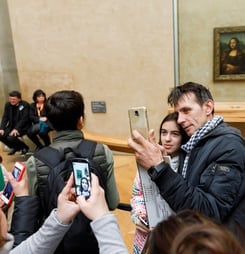

With technology advancing and the birth of Social Media, the selfie has become one of the most uploaded types of photos on a daily basis. New devices have been made to help accelerate its growth, and we can see its effects every time we access social media.
Some people see this growth of the selfie as a bad this and the worst thing to come out of the accessibility of self-photography. While others use this medium to document their changes throughout the years. You change on a daily basis and it may not be immediately evident but taking a selfie every day can help track those changes.
There are people out there that feel that this practise is narcissistic. And to some extent it can be seen this way but it can also be a very liberating process to go through. However, those of us that don’t like the idea of taking a photo of ourselves everyday have a day dedicated to not taking a single one for a whole 24 hours, and it’s No Selfies Day.
How to Celebrate No Selfies Day
Avoid Taking Selfies
This one is a bit of a no-brainer. If you want to participate in No Selfies Day, all you have to do is NOT participate in taking selfies! Set yourself free from judging yourself by the camera’s eye and the approval of your peers through likes and comments on social media by simply choosing not to participate in it. The entire concept of No Selfies Day is to start living your life and being in the moment, rather than trying to capture and edit it.
Use a Real Camera
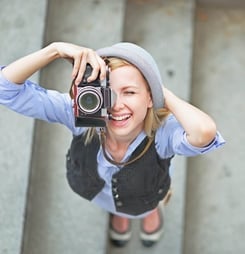
Of course, National No Selfies Day does not mean you cannot take any photographs! Rather than snapping photos of yourself on your phone, why not organize a photoshoot instead? This is something you can enjoy with your friends or yourself. There are lots of different photoshoot studios that are available at low costs.
All you need to do is consider a few small factors, and it’s easy to minimize the expenses involved when it comes to a photoshoot or shooting a film. First of all, when you are deciding which photo studio to choose, you must discover whether they offer different rates on weekdays and weekends.
Usually, the rate per hour is much cheaper if you are going to work on Monday instead of Saturday. The next aspect to consider is transportation links. Some of the cheapest film studios can become very expensive if it is difficult to get to the location.
Thirdly, practicality is vital. Discover what facilities are available, e.g. whether the studio has post-production facilities that can further cut your costs, as you won’t have to buy equipment and software programs later on. The three tips mentioned will be a big help for you when looking to reduce costs without compromising on quality. After all, there is no point in looking for a cheap studio if you then have huge costs in the form of transport and equipment hire.
Learn About National No Selfies Day
Beware of those who are too focused on polishing and beautifying their outer shells. They lack true substance to understand that genuine beauty is reflected from the heart that resides inside.
Suzy Kassem
There is no denying that we live in a world where social media plays a huge part in our everyday life. All you need to do is refresh your Facebook or Instagram feed and you are bound to see plenty of selfies on your screen. Wouldn’t it be good if there were no selfies for one day at least? This is what National No Selfies Day is about. On this day, you are encouraged to refrain from smartphone use.
A lot of people rely on social media for work nowadays, whereas there are those that only use social media to connect with friends and family members. No matter what applies to you, it can certainly be beneficial to have a day away from the selfie stick!
We are sure you have heard many stories about people comparing themselves to what they see on social media. This can cause a lot of people to feel upset because they feel like they are never going to have a life like the people they follow online. However, it is important to recognize that people only show you a very small portion of what they want you to see from their life.
You never know what sort of turmoil they are going through in their own lives, and so it is vital that you never take everything that you see on social media at face value. This is also why National No Selfies Day is vital, as it shows that there is awareness to shift the focus in the world of social media to share a more natural and less polished version of your life.
National No Selfies Day Timeline
Robert Cornelius Made the First Photographic Self‑Portrait
Philadelphia metalworker Robert Cornelius created what is widely regarded as the first photographic self‑portrait, a daguerreotype image of himself taken outside his family’s store, foreshadowing the modern selfie.
Kodak Brownie Brought Casual Self‑Portraits to the Masses
Eastman Kodak released the inexpensive Brownie camera, making personal photography widely accessible and enabling ordinary people to experiment with informal self‑portraits for the first time.
The Word “Selfie” Appeared Online in Australia
An Australian internet forum user named Nathan Hope posted a picture of his injured lip and apologized for the “selfie,” giving one of the earliest documented uses of the now‑ubiquitous term.
Early Front‑Facing Camera Phones Encouraged Self‑Shots
Mobile phones such as the Sony Ericsson Z1010 introduced front‑facing cameras, making it easier for users to photograph themselves at arm’s length and paving the way for habitual selfie‑taking.
Front Cameras and Instagram Supercharged the Selfie
Apple’s iPhone 4 adds a front‑facing camera, and Instagram launches the same year, combining simple self‑photography with social sharing and quickly turning selfies into a dominant social media format.
“Selfie” Became Oxford Dictionaries Word of the Year
Oxford Dictionaries named “selfie” the Word of the Year after documenting a 17,000 percent rise in its usage, marking the selfie’s arrival as a mainstream cultural and linguistic phenomenon.
Psychologists Began Systematic Study of Selfie Culture
Early research, such as a 2014 study from the University of Michigan, linked heavy social media photo‑sharing to self‑objectification and body image concerns, fueling debate about the psychological costs of constant selfies.
History of No Selfies Day
No Selfies Day was established to help cast a light on just how much this has become part of our culture. It’s actually been revealed that the average girl spends 1 hour and 24 minutes each week trying to capture that perfect selfie.
The whole drive seems to be based on our need to be noticed, to feel that we’re special, and so we prepare the perfect picture to get the most likes to help bolster our self-esteem. On the surface, that may seem harmless, until you consider how it further separates us from one another and how damaging posting a selfie without getting any notice can be. After all, if notice = appreciation and self-worth, what does that say about not being noticed?
Further, the need to share the perfect self builds on what the social concept of beauty is. This again sounds like it could be a good thing; if our selfies are taken by amateurs, they aren’t necessarily going to be perfect photo-washed versions of ourselves.
However, like any art, the taking of selfies builds the techniques of making them, and some go so far as to learn how to use photo-editing software. What a relief it must be to the fashion industry to find that they no longer have to promote unrealistic ideals of beauty. We’ve taken the initiative and started doing it ourselves.
National No Selfies Day Facts
National No Selfies Day invites people to step back from the front-facing camera and rethink their relationship with photos, attention, and the digital spotlight.
These facts reveal how selfies evolved from early self-portraits to a global habit—and why taking a break, even for a day, can offer a fresh perspective on how and why we capture ourselves.
Selfies Predate Smartphones by Nearly Two Centuries
The practice of taking photographic self-portraits began long before camera phones.
In 1839, Philadelphia amateur chemist Robert Cornelius created what is widely regarded as the first photographic “selfie” by removing the lens cap, running into the frame, and sitting still for about a minute for a daguerreotype exposure, then writing on the back of the plate that it was the first light picture ever taken.
The Word “Selfie” Started in an Online Forum After a Drunken Fall
The term “selfie” appears to have originated in Australia in 2002, when a man posted about a drunken mishap on an online forum and apologized for the out-of-focus “selfie,” using the characteristic Australian “‑i.e.,” diminutive.
Linguists later traced the rapid global spread of the word from this casual post to mainstream media and eventually to its inclusion in the Oxford English Dictionary.
Selfie Culture Grew Alongside Front-Facing Cameras and Social Apps
Self-portrait photos existed throughout the 20th century, but the explosion of selfies is closely tied to early 2000s mobile technology.
Front-facing cameras began appearing on consumer phones around 2003, and when smartphones, high‑speed mobile internet, and social platforms like Facebook and Instagram converged, posting a selfie became almost instantaneous, which dramatically changed how often and casually people photographed themselves.
Everyday Selfies Can Change How People See Their Own Faces
Psychological studies suggest that frequently viewing one’s own image in selfies can subtly shift self-perception.
Exposure to repeated selfies and filtered photos can make people more critical of their real-life appearance, and some researchers have linked heavy selfie engagement to greater facial dissatisfaction and a desire for cosmetic procedures, especially when images are heavily edited or compared with idealized online standards.
Posting Selfies for “Likes” Is Tied to Lower Self-Esteem in Some Users
Research on social media use has found that people who post selfies primarily to seek feedback or “likes” often report lower self-esteem and greater body image concern.
One study of young adults found that appearance-based photo activities, such as editing and repeatedly checking responses to selfies, were associated with more negative mood and higher levels of social comparison than simply browsing or sharing non‑self images.
Selfies Are Common, but Not Everyone Enjoys Being in Them
Survey-based studies show that while selfies feel ubiquitous online, enthusiasm is not universal.
In one international survey, a substantial share of adults reported disliking how they look in selfies or feeling pressured to pose in certain ways, and many said they preferred taking photos of places, events, or other people rather than themselves, suggesting a tension between social norms and personal comfort with self-photography.
A Significant Share of Social Media Photos Are Self-Focused
Analyses of Instagram and similar platforms consistently find that a notable proportion of shared images are self-focused portraits.
One large content study reported that selfies and other self-focused images were especially prevalent among younger users and often emphasized appearance, fashion, or lifestyle, reinforcing visual norms about how people “should” present themselves, and shaping what many users see as typical daily life.