You know what’s really annoying? People who take selfies all day. They always have these amazing profile pics and look utterly fantastic. It’s like they took thousands of images to get just the right one and it’s so frustrating!
We admit it, we’re jealous we’re not able to take such a perfect selfie, ours always come out looking like they were taken by a pigeon landing on a discarded camera.
That’s ok though! On National Selfie Day you can take the time to take a thousand photos to get just the right one, and not feel ashamed!
How to Celebrate National Selfie Day
Take Some Selfies
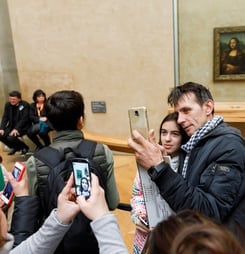
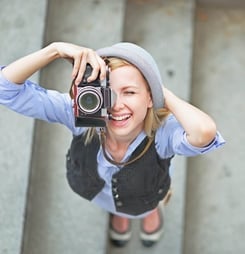
Selfie day is best celebrated by taking tons and tons of selfies in pursuit of the perfect one. So get out there with your camera and take a picture of yourself every time the opportunity presents itself, we won’t judge you!
Grab a Selfie Stick
You can even buy yourself a selfie-stick to take pictures of yourself with (and return it in shame the next day as you realize how it made you a terrible person). For once you don’t have to be embarrassed to take a selfie to post on your profiles, you’ve got one clear excuse and an absolute pass on it for the day.
Make a Joke of It
Another great way to celebrate selfie day is, if you take an abborhent photo that you feel you could not possibly show anyone, you could choose to embrace it and send it as a joke to those you are closest to (and know you the best) to make them laugh!
They truly know how you look, so any bad photo will not disway how they envision you in their minds. Selfie day is a day to celebrate you in all your glory, even if that is dishevelled hair that hasn’t been washed in a week, or hormonal breakouts that just will not disappear.
Or perhaps you want to play around with a new make-up trend, a selfie will capture that decision forever, so make it a good one! Take a selfie, have fun, be wild! It’s National Selfie Day, afterall!
National Selfie Day Timeline
Robert Cornelius’s Early Photographic Self‑Portrait
In Philadelphia, chemistry and lighting expert Robert Cornelius creates one of the earliest known photographic self‑portraits, foreshadowing the modern urge to point the camera back at oneself.
“Selfie” Appears in Australian Online Slang
An Australian forum user posts a self‑shot photo and casually calls it a “selfie,” giving the modern name to a practice that would soon sweep social media worldwide.
First Mobile Phones With Front‑Facing Cameras
Manufacturers begin releasing 3G phones like the Sony Ericsson Z1010 with small front‑facing cameras for video calls, quietly laying the hardware groundwork for effortless digital self‑portraits.
iPhone 4 Mainstreams the Front‑Facing Camera
Apple introduces the iPhone 4 with a built‑in front camera marketed for FaceTime, and users quickly repurpose it for arm’s‑length self‑portraits that become central to smartphone culture.
“Selfie” Named Oxford Word of the Year
Oxford Dictionaries crowns “selfie” its Word of the Year and reports a 17,000 percent surge in usage, cementing the term as a defining feature of early‑2010s life online.
Ellen’s Oscars Selfie Breaks Twitter Records
During the Academy Awards, Ellen DeGeneres and a cluster of Hollywood stars crowd into a smartphone shot that becomes the most‑retweeted tweet of its time and a symbol of selfie culture.
Selfie Sticks and Mass‑Market Self‑Portrait Gear Boom
Extendable monopods such as the Quik Pod and low‑cost smartphone selfie sticks spread globally, making it easier for everyday users to frame themselves and friends against dramatic backdrops.
History of National Selfie Day
Selfies have probably existed as long as hand-held cameras have been a thing. Human vanity is so utterly profound that if we’re given the opportunity to do something self-aggrandizing, we do. This habit, in our defense, doesn’t seem to be strictly human in nature.
Given access to a camera and a little time to figure it out, monkeys will start snapping selfies like no one’s business. In 2014, BBC officially declared a National Selfie Day, which amusingly heralded a sudden decline in selfies.
Interestingly, there was a similar drop after the Oxford English Dictionary added ‘selfie’ to its pages. Apparently making something official is a damned fine way of making sure no one wants to do them anymore.
But don’t let that worry you, we’re pretty sure the selfie is definitely here to stay, especially since there have been a series of inventions to make it easier to do. From the ‘selfie-stick’ to the write mounted drone that will take flight and snap a photo of you on request, selfie technology is getting more advanced every day.
Why Are Selfies Good For You?
Well, maybe, just maybe we can get that golden hour lighting that illuminates our skin taking it to a level of pure flawlessness, then that is certainly something to celebrate.
Many humans look at selfies in shock, “is that really how I look?” and the truth of the matter is that a selfie, just the same as many photos, allows us to see ourselves how we actually look, symmetrically speaking of course.
When we sit down and admire ourselves in the mirror on a morning, we see a mirror image, which is not what our fellow humans see when they look at us.
So it’s a common problem when taking selfies, as we see ourselves the correct way round, leading us to believe that we look totally different, when in fact we look a truer version of ourselves. Ready to pack it all in now? Don’t panic, it gets better.
Cameras afterall are not really a true definition of 3D life, so when we look good in reality and not in photos, it may be down to lighting, the quality of the camera, or just that you’re not that photogenic! Trust us, it is a thing!
When we take selfies, we have the option now to change our faces, add filters, edit our flaws and so on and so forth, but have you ever stopped to really look at the positives of selfies? Not only do they highlight our flaws but also our beauty.
Look at the colour of your eyes, did you realize they were so blue? Did you ever notice the rim of amber in the middle?
Perhaps you might look at your nose and look at how cute and upturned the tip is, or the way your hair falls, these are all things to celebrate about our looks and about our selfies. A selfie is a great way to capture moments when you’re traveling alone also.
It’s safer (and wiser), to take a selfie sometimes than to ask a stranger to take the photo for you.
Most likely they will be a good samaritan and you may even strike lucky and get an ‘Instagram husband’ to take the shot for you, grabbing snapshots at every angle, but taking a photo yourself allows you to remember that moment, of how you were feeling and where you were.
That again, is something to celebrate, is it not? You know it is! 😉
Artists Were Taking “Selfies” Centuries Before Cameras Existed
Long before smartphones, artists used painted self-portraits to explore their identity and status. From the mid‑15th century onward, European painters like Jan van Eyck and Albrecht Dürer increasingly turned the brush on themselves, aided by better mirrors and advances in perspective. Art historians see this boom in self-portraiture as a turning point when representing one’s own face became a distinct and meaningful genre rather than an occasional curiosity.
One Of The Earliest Photographic Self-Portraits Dates To 1839
One of the first known photographic self-portraits was made by American photographer Robert Cornelius in October 1839 in Philadelphia. Using the early daguerreotype process, he uncapped the lens, ran into the frame, and sat still for around a minute before covering the lens again. The image, now held by the Library of Congress, is often cited as both an early selfie and one of the earliest photographic portraits ever taken in the United States.
“Selfie” Became Oxford’s Word Of The Year In 2013
The word “selfie” only entered mainstream English in the 2010s, but its rise was so rapid that Oxford Dictionaries named it Word of the Year in 2013. Oxford traced the earliest known written use to an Australian internet forum post from 2002 and noted that use of “selfie” in English-language texts had increased by roughly 17,000 percent between 2012 and 2013, reflecting how quickly smartphone self-portraits had gone global.
Unedited Selfies May Be Neutral Or Helpful For Self‑Esteem
Psychological studies suggest that merely taking and posting selfies is not automatically bad for self‑esteem and can even correlate with more positive body image in some groups. Research summarized by the British Psychological Society found that frequent selfie sharing was linked with better self-image and less body shame, while the real risk factor was heavy investment in editing and retouching, which was associated with greater self‑objectification, anxiety, and body dissatisfaction.
Motives For Posting Selfies Shape Their Impact On Well‑Being
A 2023 review of selfie research found that why people post selfies matters as much as how often they do it. Using selfies mainly to document experiences or exchange information with friends tends to be associated with better psychological well‑being, while posting for appearance-based validation or constant comparison can be linked with lower self‑esteem and more negative mood. The same behavior can therefore be neutral, beneficial, or harmful depending on the underlying motive.
Hundreds Of People Have Died In Selfie‑Related Accidents
Medical researchers who analyzed global news reports found at least 259 selfie‑related deaths in 137 incidents between October 2011 and November 2017, with the true toll likely higher because “selfie” is not listed on death certificates. Drowning, transportation accidents (often involving trains or vehicles), and falls from heights were the leading causes, and the median age of victims was just 23, underscoring how risky photographing oneself near hazards can be.
India Accounts For The Majority Of Documented Deadly Selfies
The same landmark study on selfie fatalities reported that 159 of the 259 recorded deaths between 2011 and 2017 occurred in India, far more than in any other country. Researchers linked this concentration to a combination of high smartphone adoption, a large youth population, crowded tourist sites, and risky behavior near water and railway tracks. The findings have prompted calls for designated “no selfie zones” and targeted safety campaigns in popular destinations.