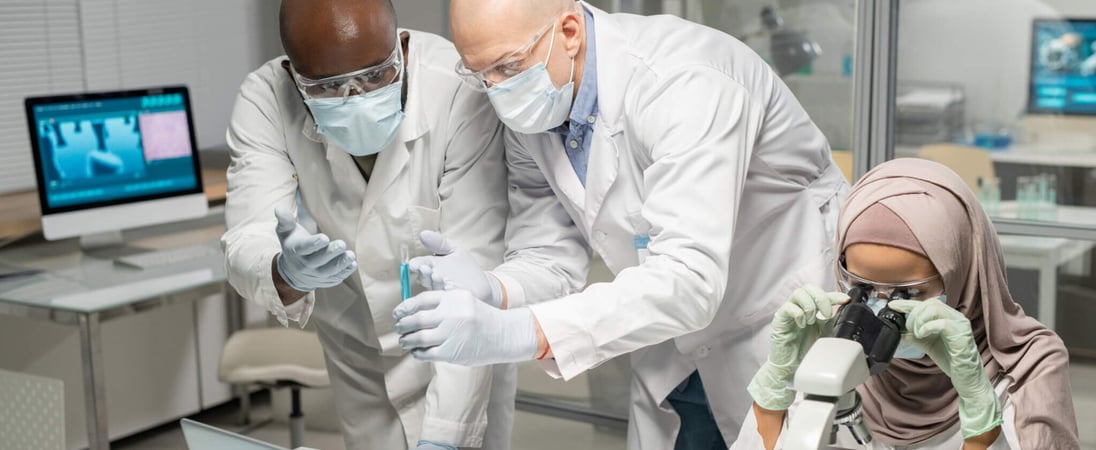
Pathologists’ Assistant Day
Pathologists’ Assistant Day honors the laboratory professionals who work side by side with pathologists to turn complex specimens into clear, usable information. In surgical pathology and autopsy services, time, accuracy, and documentation matter.
A pathologist’s assistant, often called a PA, helps make sure tissue is handled correctly from the moment it arrives, so the medical team can trust what follows.
In a typical workflow, a specimen comes in with identifiers, clinical notes, and special handling needs. The PA is often among the first to receive it in the pathology department.
They verify labeling and requisitions, confirm specimen integrity, and follow the chain of custody procedures that protect patient safety. From there, they orient and describe the specimen, take measurements, note key landmarks, and decide how it should be sampled for microscopic examination.
Much of a PA’s work happens during “gross examination,” the careful inspection and preparation of tissue before it is processed into slides. It is hands-on, detail-driven work that blends anatomy knowledge, lab safety, and practical technique.
They may dissect and ink margins, open and examine organs, identify lymph nodes, select representative sections, and photograph specimens when needed. Their choices can affect how clearly a disease process is characterized and whether the right tissue is available for additional studies.
Many PAs also support frozen section workflow, where rapid evaluation is needed during a procedure. In that setting, the operating team may be waiting on information that influences immediate decisions. A PA helps ensure the specimen is oriented properly, sampled thoughtfully, and moved through the process quickly without compromising identification or quality.
Beyond the bench, PAs often keep the gross room running smoothly. Depending on the workplace, responsibilities may include organizing and maintaining the workspace, helping train students and new staff, assisting with inventory and supply management, and supporting documentation systems.
They may collaborate closely with histology staff so tissue blocks and slides are produced efficiently and correctly. In busy services, that coordination is not a luxury. It is part of what keeps turnaround times realistic and quality standards consistent.
Because patients rarely see this part of healthcare, the role can be easy to overlook. Yet the impact is woven into countless diagnoses, from routine biopsies to complex cancer resections. Pathologists’ Assistant Day brings welcome visibility to a profession built on careful observation, steady judgment, and respect for the specimen and the person behind it.
Pathologists’ Assistant Day Timeline
1543
Publication of Vesalius’s “De humani corporis fabrica”
Andreas Vesalius publishes his landmark anatomy text in Basel, based on systematic human dissection, which helps establish careful gross examination of organs as a foundation for later anatomic and autopsy pathology practice.
1893
Development of Academic Pathology at Johns Hopkins
Under William Henry Welch, Johns Hopkins Hospital organized a modern academic pathology department that integrated autopsy, surgical pathology, and teaching, shaping the laboratory-centered environment in which technical pathology support roles later developed.
1920s–1930s
Expansion of Hospital Clinical Laboratories in the United States
Throughout the interwar period, hospital clinical laboratories expanded rapidly and began handling higher volumes of surgical and autopsy material, with technicians informally performing tasks that anticipate later specialized pathology support positions.
1960s
Emergence of Nonphysician Roles in Surgical Pathology
With rising surgical volumes and increasing use of tissue diagnosis for cancer care in the 1960s, North American academic centers began to formalize nonphysician roles in gross examination and autopsy assistance to support pathologists in their diagnostic work.
1969
Inauguration of the First Pathologists’ Assistant Training Program
Duke University School of Medicine inaugurates a two‑year pathologists’ assistant training program directed by Thomas Kinney, establishing structured graduate‑level education in surgical grossing, autopsy technique, and related anatomic pathology duties for nonphysician professionals.
How to Celebrate Pathologists’ Assistant Day
Here are some fun and meaningful ways to mark Pathologists’ Assistant Day:
Invite the community into the lab
A well-planned educational session can make the PA role real to people who have never heard of it. A tour does not need to involve active patient material to be valuable. A controlled demonstration can use training specimens, de-identified examples, diagrams, photos, and mock containers to show how labeling, documentation, and specimen tracking work.
A PA-led walkthrough can cover the basics in plain language: why tissues are fixed, what “grossing” means, how margins are inked, and why orientation matters.
Even a brief explanation of how a specimen becomes a report can help visitors understand that pathology is not only about microscopes and slides. It starts with careful hands-on preparation and clear documentation.
Write personal thank-you notes
A short, specific note can be more meaningful than a general compliment. Colleagues might mention clear gross descriptions, calm leadership during a busy day, or help with troubleshooting a specimen issue.
Supervisors can recognize consistency and professionalism, especially the unglamorous habits that protect patients, like strict identification checks and meticulous labeling.
Teams can also set up a shared message board in a staff area. When people add quick, concrete examples throughout the day, it creates a record of how the PAs work and supports everyone else. It also helps newer staff learn what the role includes and why it matters.
Feature a story on hospital channels
A short spotlight in internal communications can raise awareness across an organization. Photos of the gross room setup, a short interview, or a simple “day in the life” profile help demystify the work. The most effective stories avoid jargon and focus on what a PA makes possible: reliable specimen handling, smoother workflow, and stronger support for accurate diagnoses.
If a video is not practical, a brief written profile can still do a lot. It can explain how PAs collaborate with pathologists, histology teams, and clinical services. It can also correct a common misconception, which is that pathology begins only when a slide reaches a microscope. The quality of what happens before that point is part of the foundation.
Organize a roundtable with medical students
Many students in medicine and the health sciences have limited exposure to pathology careers. A roundtable or guest talk lets a PA explain the profession, describe typical responsibilities, and answer questions about training and day-to-day work.
This can be useful for medical students, laboratory science students, nursing students, surgical technology students, and pre-professional programs.
A good session includes real scenarios. For example, a PA can describe what happens when a large resection arrives, why lymph node retrieval affects staging, or how communication flows when a specimen needs special testing.
Hearing that practical workflow can help learners appreciate the teamwork behind diagnosis and may help some identify a career fit they had not considered.
Support professional development in their name
A day of recognition can also be a chance to invest in the work. Departments can support continuing education, add an updated reference resource, or fund training materials that improve consistency and safety. Even small upgrades, such as improved storage solutions, better lighting in the gross room, or updated photography tools, can make a real difference.
Outside the workplace, a donation to a school or library program that supports science education can be a thoughtful gesture. The key is to choose something aligned with learning and skill-building, since the PA role depends on both.
Spread the word with clear, simple language
Awareness grows fastest when people can explain the job in one or two sentences. Friends, coworkers, and family members do not need a technical lecture. A straightforward description works: pathologists’ assistants prepare and document tissue specimens so pathologists can diagnose disease accurately.
When appropriate, a few concrete examples make it stick. Mentioning margin inking, lymph node searches, or frozen sections helps listeners understand that the work is not abstract. It is practical, careful, and directly connected to patient care, even if it happens behind laboratory doors.
History of Pathologists’ Assistant Day
Pathologists’ Assistant Day was developed as a way to recognize a specialized profession within pathology that has long been essential to patient care but often invisible to the public.
Pathologists’ assistants support both surgical pathology and autopsy services, and their work helps create the organized, well-documented specimens a pathologist needs for accurate interpretation.
The modern PA profession grew alongside expanding surgical services and rising case complexity. As hospitals and medical centers handled more procedures and more nuanced diagnoses, pathology departments needed trained professionals who could take on the demanding technical work of specimen examination and preparation.
This helped pathologists focus more time on microscopic interpretation, correlation with clinical information, and reporting.
Formal training programs became a key part of establishing the role. Early educational efforts helped define the skills required, including anatomy and pathology fundamentals, safe specimen handling, careful dissection, and consistent documentation. With structured training, the profession could set clearer expectations for competency and quality across different workplaces.
Professional organizations also played an important role in shaping identity and standards. The American Association of Pathologists’ Assistants, commonly known as the AAPA, was founded in 1972. That founding is widely tied to the establishment of a professional home for PAs, created to support education, foster professional development, and strengthen recognition of the role within healthcare teams.
Pathologists’ Assistant Day is associated with that professional history and the desire to shine a light on the people doing this work every day. The observance emphasizes that pathology is a team effort.
It depends on coordination among those who receive specimens, those who prepare and process them, and those who interpret them. PAs sit at a critical point in that system, helping ensure what reaches the microscope is representative, well-labeled, and well-documented.
Over time, responsibilities in many workplaces expanded beyond core dissection tasks. In addition to gross examination and autopsy support, PAs often contribute to workflow planning, training, quality practices, and gross room organization. They may help develop standard templates, support readiness for inspections, and collaborate with histology and laboratory leadership to keep work consistent.
At its heart, Pathologists’ Assistant Day recognizes craftsmanship and judgment. Even a routine-seeming specimen requires careful decisions: how to orient it, what to describe, what to sample, and how to preserve key features for downstream testing.
In complex cases, those choices can influence how fully a disease is characterized and how confidently a care team can move forward.
The day also helps the wider community understand a simple truth about modern medicine: many of the most consequential healthcare decisions depend on behind-the-scenes laboratory work.
By honoring pathologists’ assistants, this observance acknowledges the professionals who help protect specimen integrity, support accurate diagnoses, and strengthen the reliability of pathology services as a whole.
Facts About Pathologists’ Assistants and Their Role in Modern Medicine
Pathologists’ assistants play an important role in diagnostic medicine, helping pathologists examine tissue samples and support accurate disease detection.
These facts highlight how the profession developed, how it is regulated today, and the ways these specialists contribute to complex diagnoses such as cancer. Together, they show how training, certification, and hands-on laboratory work shape this highly skilled medical career.
-
Standardized Training for Pathologists’ Assistants Began in 1969
The first formal educational program for pathologists’ assistants started at Duke University School of Medicine in 1969, designed to train non-physician professionals to perform high‑level tasks in surgical and autopsy pathology that had traditionally been done by resident physicians.
This program became the template for later accredited master’s-level PA programs across North America, emphasizing advanced anatomy, pathology, and gross dissection skills.
-
Accreditation and Board Certification Define the Modern Profession
Today’s pathologists’ assistant programs in the United States and Canada are accredited by the National Accrediting Agency for Clinical Laboratory Sciences (NAACLS), which sets rigorous curriculum and clinical training standards that mirror those for other advanced laboratory professions.
Graduates are then eligible for board certification through the American Society for Clinical Pathology (ASCP), a credential that many hospitals and laboratories require to verify competence in gross examination, specimen processing, and autopsy assistance.
-
Pathologists’ Assistants Extend Pathologist Capacity in Cancer Diagnosis
In surgical pathology, pathologists’ assistants perform detailed gross examinations of complex specimens such as mastectomies, colectomies, and lung resections, documenting tumor size, margin status, and lymph node involvement before tissue is processed for microscopy.
Studies and workforce reports from professional bodies like the College of American Pathologists have noted that using highly trained non-physician personnel in these roles helps manage rising case volumes and allows pathologists to focus more time on diagnostic interpretation and multidisciplinary cancer care.
-
PAs Are Key Players in Intraoperative “Frozen Section” Diagnosis
During many operations, surgeons rely on rapid “frozen section” analysis to decide how far to extend a procedure, such as whether to remove additional tissue around a suspected tumor.
In many institutions, pathologists’ assistants receive and orient the fresh specimen, ink and margin it when appropriate, and prepare sections for freezing and cutting, so a pathologist can render a diagnosis within minutes and guide the surgeon in real time.
-
Autopsy Services Depend on Structured Technical Expertise
Hospital and forensic autopsy suites often use pathologists’ assistants to perform or assist with evisceration, organ dissection, and detailed documentation of findings under a pathologist’s supervision.
The College of American Pathologists’ autopsy guidelines describe how trained non‑physician personnel can safely carry out technical portions of the examination while the pathologist focuses on determining the cause of death, clinicopathologic correlation, and final reporting.
-
Regulation Allows Delegation of Grossing Tasks to Qualified Non‑Physicians
Under the U.S. Clinical Laboratory Improvement Amendments (CLIA), certain high‑complexity testing activities in anatomic pathology, including gross examination of surgical specimens, may be delegated to individuals who meet defined education and training requirements and operate under a laboratory’s credentialing policies.
Many institutions fulfill this requirement by employing certified pathologists’ assistants, whose documented competencies allow laboratories to maintain quality and turnaround time while complying with federal regulations.
-
AAPA Helped Formalize Roles and Scope of Practice
The American Association of Pathologists’ Assistants (AAPA), founded by early graduates of the Duke program, has published detailed practice guidelines that outline what PAs can safely and effectively do in surgical and autopsy pathology, from specimen accessioning through complex gross dissection and photography.
These guidelines, updated over time, have influenced job descriptions, hospital privileging, and educational content, helping to standardize the profession across different healthcare systems.
Pathologists’ Assistant Day FAQs
What is the difference between a pathologist’s assistant, a pathologist, and a physician assistant?
A pathologist’s assistant is an allied health professional who specializes in the gross examination and processing of surgical specimens and in assisting with autopsies under the supervision of a pathologist.
A pathologist is a physician who completes medical school and residency training to diagnose disease by integrating gross findings, microscopic examination, and laboratory data and is responsible for signing out final pathology reports.
A physician assistant is a separate profession whose members practice medicine in clinical settings, such as clinics and hospitals, performing histories, physical exams, and procedures under physician supervision, but they do not typically work in surgical pathology or perform autopsies.
How are pathologists’ assistants trained and certified in the United States?
In the United States, pathologists’ assistants typically complete a two‑year, accredited master’s degree program that combines classroom study in anatomy, pathology, and laboratory safety with extensive clinical rotations in surgical pathology and autopsy service.
Graduates are then eligible to sit for a national certification examination administered by the American Society for Clinical Pathology (ASCP).
Many employers prefer or require ASCP‑certified pathologists’ assistants, and maintaining certification involves continuing education to stay current with advances in pathology practice. [1]
What kinds of specimens and tasks do pathologists’ assistants handle in surgical pathology?
In surgical pathology, pathologists’ assistants receive and verify specimens, describe and dissect tissues such as biopsies, resections, and complex organs, select and submit sections for microscopic evaluation, and sometimes assist with intraoperative consultations like frozen sections.
They follow detailed protocols to ensure that important diagnostic areas, such as tumor margins or lymph nodes, are properly sampled, which supports accurate staging and treatment planning for conditions like cancer.
Their work must comply with institutional policies and regulatory standards for specimen identification, fixation, and documentation.
How do pathologists’ assistants contribute to autopsies and post‑mortem investigations?
During autopsies, pathologists’ assistants help with external examinations, internal organ removal, dissection, and detailed documentation of findings, all under the direction of a pathologist.
They may take photographs, prepare tissue for histologic evaluation, and assist in specialized procedures such as neuropathologic or pediatric examinations.
Their systematic approach helps pathologists determine cause of death, clarify disease processes, and support quality‑assurance efforts for hospitals and public health systems. [2]
How is the role of pathologists’ assistants regulated in different countries?
Regulation of pathologists’ assistants varies internationally. In the United States and Canada, standardized graduate programs and national certification exams define the professional profile, and many institutions incorporate the role into their laboratory staffing models.
In other regions, similar responsibilities may be performed by biomedical scientists, anatomical pathology technologists, or other trained laboratory staff, with titles and scopes of practice shaped by local laws and healthcare structures.
Regardless of the title, these roles are typically supervised by pathologists and are governed by national laboratory standards and accreditation requirements.
What safeguards help ensure quality and patient safety in the work of pathologists’ assistants?
Quality and safety in pathologists’ assistant work rely on strict specimen identification procedures, adherence to written dissection protocols, and thorough documentation in the gross description.
Their activities are integrated into laboratory quality management systems that include competency assessments, case review by supervising pathologists, and compliance with accreditation standards such as those from the College of American Pathologists or national regulatory bodies.
These safeguards help reduce errors in specimen handling and support reliable diagnoses that guide patient care.
Why is the work of pathologists’ assistants important for cancer diagnosis and treatment planning?
For many cancers, critical information about tumor size, margins, lymph node involvement, and spread is first assessed at the gross examination stage handled by pathologists’ assistants.
By carefully orienting, dissecting, and sampling specimens according to established cancer protocols, they help ensure that pathologists receive representative sections from all relevant areas.
Accurate staging based on this tissue sampling directly influences prognosis estimates and treatment decisions, including surgery, radiation, and systemic therapies.
Also on ...
View all holidaysNational Gardening Day
Gardening is a magical escape to a world of color, scents and textures. Planting a seed and watching it grow is a reminder of life's wonders.

National Dolphin Day
Visit an aquarium or ocean, watch Flipper, or read all about the different species of dolphins to celebrate these smart, fun, and unique marine mammals.
National Look Up at the Sky Day
Slow down, take a deep breath, and take a moment to look up at the sky and appreciate the small beauties in an otherwise hectic, fast-paced, sometimes ugly life.

Pecan Day
These buttery, versatile gems can be sprinkled on salads, baked into pies or cakes, or simply enjoyed as a snack.
We think you may also like...

International Day of Medical Transporters
Take some time to appreciate the men and women who get the sick injured to where they can get help. Medical transporters save lives every day, so thank them.
Dental Assistant Recognition Week
Brightening smiles and helping patients achieve healthy teeth, dental assistants make dental visits fun, comfortable, and stress-free!