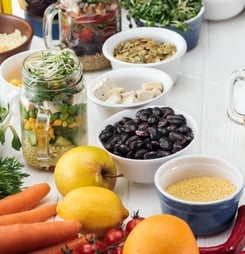

Does anything look as good as a table heaped with real healthy food? From glistening greens to delectable dried fruits, there’s nothing better than getting your five a day while having a delicious meal as part of the deal.
Potentially the best thing about real food is that you can do more than simply eat a plate of veggies to have a healthy meal. Healthy food ingredients can turn into some firm fakeaway favorites, from homemade pizzas to a twist on your staple weekly Chinese.
If you’re looking to make some healthier food choices, Real Food Day is the perfect day for you. Enjoy a healthier lifestyle while still stuffing your face with mouth-watering real food dishes.
How To Celebrate Real Food Day
Eat Real Food
Real Food Day is the perfect way to celebrate that wholesome good food with your family and friends. Splurge on a healthy food shop and throw a dinner party to showcase the deliciousness that is real food eating. Want to distract kids for a few hours? Why not get them involved in the cooking and use some of the Real Food Day website activity packs to throw a little food education into the process.
Enjoy Some New Recipes
If you’re new to the world of real food, why not buy a ‘fakeaway’ recipe book, and replace that weekly takeaway with a cauliflower pizza-base or a real food alternative to your Indian takeaway. If you’re vegetarian, pescetarian, or vegan, there are hundreds of real food recipe books to meet your dietary needs. Not a cook? Well, we’ll forgive you, why not support your local real food restaurant and treat yourself to a real food night out.
Celebrate with Others
You can celebrate Real Food Day with everyone you know, from your kids to your colleagues, by downloading an activity pack and getting involved in the food fun! Packed with recipes, games, and quizzes, you’ll have everything you need for a real food party.
Show Support
Join in the Real Food Day party on social media by posting a photo with yourself, friends, family, or colleagues holding up a sign with the reason why you’re supporting the day. Have fun sharing your love of really good food and real healthy living!
Learn About Real Food Day
Real Food Day is all about celebrating healthier food choices and promoting a healthy, active lifestyle. Run by the Public Health Collaboration (registered charity no. 1171887), it’s a day for showing some love to real food, from the classic leafy greens to some of the healthier natural food we have on the market, like lean meats and lower-fat dairy options. The Public Health Collaboration (PHC), led by Samuel Feltham, spotted that health problems like Type II Diabetes were on the rise, so they wanted to raise awareness and education about what real food means.
The PHC is trying to help people answer the question: what is real food? Some obvious choices, like a big bar of chocolate or your weekly fast-food splurge, would be ‘fake’ food, while vegetables and fruit are clearly ‘real’ foods. But this day is about trying to delve deeper into real food and encouraging people to eat as minimally processed foods as possible, like lentils, fish, and dairy.
Real foods are considered anything that is minimally altered from their original state, while fake foods are highly processed, high in added sugar, and highly processed oil. Fake foods are essentially high in all the things that are bad for you but low in things that will fill your hunger meter up.
The day is for everyone from kids through to adults, and that’s why events are run in schools and workplaces to improve everyone’s awareness of Real Food. There are also activity packs for families, workplaces, and schools, so you’ve got the perfect distraction for a rainy day for the whole family (or office).
Real Food Day is about more than just healthy eating, though, as it aims to raise awareness of how living an active lifestyle and exercising every day can help combat health-related diseases like Type II Diabetes. Check out the Real Food Day blog for some life-affirming stories about how people rediscovered their zest for life through revisiting their relationship with food.
Real Food Day Timeline
Weston A. Price Publishes “Nutrition and Physical Degeneration”
Dentist Weston A. Price documents how traditional diets based on unprocessed, nutrient-dense foods are linked with better dental and overall health, influencing later whole-food and “real food” thinking.
Adelle Davis Popularizes Whole-Food Home Cooking
Nutrition writer Adelle Davis releases “Let’s Cook It Right,” urging Americans to eat more whole grains, fruits, vegetables, and minimally processed foods, helping bring whole-food ideas into popular culture.
Slow Food Movement Begins in Italy
In reaction to the spread of fast food, activists in Italy founded Slow Food to defend regional traditions, “good, clean and fair” food, and seasonal, minimally processed ingredients.
Real Food Challenge Launches on U.S. Campuses
Student activists create the Real Food Challenge to shift college and university purchasing toward “real food,” defined as local/community-based, fair, ecologically sound, and humane.
NOVA System Defines Ultra-Processed Foods
Researchers led by Carlos Monteiro formalize the NOVA classification, highlighting “ultra-processed” products and linking them to poorer diet quality, which strengthens calls to eat more minimally processed “real” foods.
PREDIMED Trial Supports Mediterranean “Real Food” Pattern
The landmark PREDIMED randomized trial shows that a Mediterranean-style diet rich in olive oil, nuts, fruits, vegetables, legumes, and fish reduces major cardiovascular events in high-risk adults.
Study Links Ultra-Processed Diet to Rapid Weight Gain
A tightly controlled NIH inpatient trial finds that people eating an ultra-processed diet consume more calories and gain weight compared with those eating an unprocessed, whole-food diet matched for nutrients.
History of Real Food Day
Real Food Day was launched in 2019 to combat the rise in fast food and health-related conditions. The Public Health Collaboration started the day to show that by making real food and positive lifestyle changes, some conditions can improve and, in some cases, be reversed entirely by living a healthier life. Samuel Feltham, director of the PHC, ran a Fitness Bootcamp for five years, which means he’s no stranger to healthy living.
In 2016, he stopped his Bootcamp business to focus on the Public Health Collaboration. Since then, he’s founded a dream team of leading health professionals, from Cardiologists to Psychiatrists, to dive into and understand why people are living less healthy lives and what they can do to fix it.
But why do we love fake foods so much? From our weekly takeaways to our daily packet of crisps, it’s always hard to put down the packet and pick up a piece of fruit. You might treat fake food as a reward or compensation for a bad day – how many of us order a pizza and put our feet up on a Friday night after a manic week at work?
Scientists also say that the quick-fix sugar-hit you get with your soda gives you a rush, which then is followed by a sugar crash that leaves you craving that feeling again and wanting more. You can also get sugar-fix with fruit, veggies, and dairy, but these are released more gradually, so you can enjoy the feeling without experiencing a rollercoaster of emotions.
The increase in conditions related to an unhealthy lifestyle is a relatively new phenomenon. From 1960 to 1970 conditions like obesity remained pretty stable, but have since increased by 35% for adults and almost 50% for children. Obesity can be related to health conditions like Type II Diabetes and high blood pressure. Both conditions can be improved and even reversed by making real food and lifestyle choices, so it’s no wonder that the PHC is so active in raising awareness.
Traditional Diets That Resemble “Real Food” Patterns
Several of the best-studied traditional eating patterns, such as the Mediterranean, traditional Okinawan, and Nordic diets, are built largely from minimally processed foods cooked at home from basic ingredients. The Mediterranean diet emphasizes vegetables, fruits, whole grains, legumes, nuts, and olive oil with limited processed meats and sweets, while the traditional Okinawan diet centers on sweet potatoes, vegetables, and soy foods, and the Nordic diet focuses on whole grains like rye and oats, root vegetables, berries, and fish. All three have been linked in large studies and trials to better heart health, lower type 2 diabetes risk, and greater longevity, highlighting how “real food” styles of eating can support long-term health.
Ultra-Processed Foods Now Dominate Many Modern Diets
Food processing has existed for thousands of years, but a sharp shift occurred after World War II, when advances developed for military rations and household convenience helped fuel a boom in packaged, ready-to-eat products. In the United States, ultra-processed foods now provide nearly 60% of adults’ calories and close to 70% of children’s calories, according to recent summaries from academic nutrition experts. These products are typically high in added sugars, salt, and unhealthy fats, and low in fiber, crowding out the whole and minimally processed foods that dominated traditional diets just a few generations ago.
How Scientists Classify “Real” vs Ultra-Processed Food
Researchers often rely on the NOVA classification to study food processing, with Group 1 foods defined as unprocessed or minimally processed items like fruits, vegetables, grains, legumes, eggs, milk, and plain yogurt. At the opposite end, NOVA Group 4 “ultra-processed” foods are industrial formulations made mostly from refined ingredients and additives, such as soft drinks, packaged snacks, instant noodles, and many frozen ready meals. This framework helps separate everyday cooking steps like freezing, fermenting, or milling from more intensive industrial processing, and has become central to research showing that diets rich in minimally processed foods are associated with better health outcomes.
Ultra-Processed Diets Can Drive Overeating Even When Nutrients Match
In a tightly controlled inpatient trial at the U.S. National Institutes of Health, adults were randomly assigned to eat either an ultra-processed diet or an unprocessed diet that was carefully matched for calories, macronutrients, sugar, fat, salt, and fiber. Despite similar nutrient profiles on paper, participants naturally ate about 500 extra calories per day on the ultra-processed menu and gained weight over two weeks, while they lost weight on the unprocessed menu.
The study suggests that factors like texture, speed of eating, energy density, and food engineering can push people to overeat ultra-processed foods in ways that do not happen with “real,” minimally processed meals.
Eating More Whole, Minimally Processed Foods Lowers Diabetes Risk
Long-running cohort studies tracking tens of thousands of adults have found that improving overall diet quality toward more whole grains, fruits, vegetables, nuts, and other minimally processed foods can substantially reduce the risk of developing type 2 diabetes. In three major U.S. cohorts, people who improved their Alternative Healthy Eating Index scores by more than 10% over four years had about a 16% lower subsequent diabetes risk, while those whose diet quality worsened by the same amount had roughly a one-third higher risk. These findings held even after accounting for weight change, underscoring that the kinds of foods people eat matter beyond just calories.
Whole-Food, Plant-Based Diets Can Reduce Diabetes Medications
Clinical trials of intensive lifestyle programs built around whole, plant-based foods have shown that “real food” patterns can do more than modestly improve blood sugar. In a randomized controlled trial published in 2024, people with type 2 diabetes who adopted a whole-food, plant-based diet plus moderate exercise saw far larger drops in HbA1c than those receiving standard care, even after adjusting for medication changes. Many participants were able to reduce or discontinue diabetes and heart medications, and some achieved remission of type 2 diabetes, demonstrating the therapeutic potential of diets centered on minimally processed foods when medically supervised.
Public Health Agencies Are Starting to Name Ultra-Processed Foods as a Risk
While classic nutrition advice focused mostly on individual nutrients like fat or sugar, major health organizations are increasingly calling out ultra-processed foods as a category of concern. The Pan American Health Organization, for example, describes ultra-processed products as a major driver of obesity and noncommunicable diseases in the Americas, and Brazil’s official dietary guidelines explicitly urge people to base their diet on unprocessed or minimally processed foods and avoid ultra-processed items altogether. This shift reflects a growing consensus that how food is made, not just its nutrient label, plays an important role in long-term health.