
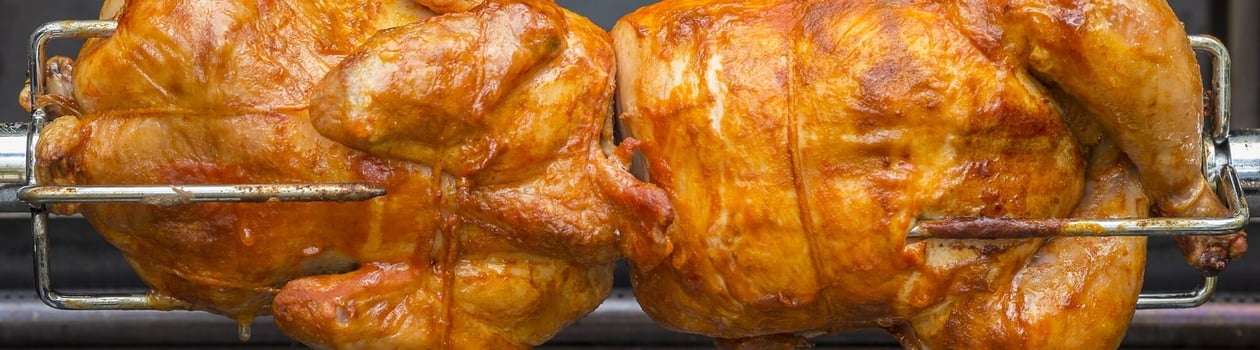
National Rotisserie Chicken Day is an open invitation to follow one of the most irresistible food aromas on earth: chicken slowly turning on a spit, skin bronzing and crisping while the meat stays tender. Rotisserie chicken is humble, practical, and oddly celebratory all at once, the kind of meal that feels like it took hours even when it came home in a paper bag.
Beyond being delicious, rotisserie chicken represents a clever bit of cooking science and a modern convenience ritual. It’s a dish that shows up at family tables, picnics, work lunches, and last-minute dinner plans, bridging cultures and cuisines with the simple promise of juicy roasted chicken and a few good sides.
From its origins at Boston Market to becoming a day celebrated by millions, National Rotisserie Chicken Day connects us through our shared love for a classic, comfort food dish.
How to Celebrate National Rotisserie Chicken Day
National Rotisserie Chicken Day is celebrated because rotisserie chicken has become a rare culinary sweet spot: it’s widely available, budget-friendly, and reliably tasty. The method itself is older than supermarkets and chain restaurants by centuries, but its modern popularity comes from the way it fits real life. It can anchor a full dinner, stretch into multiple meals, or become the protein that makes a fridge full of odds and ends suddenly look like a plan.
Rotisserie chicken also has a surprisingly rich backstory in everyday food culture. Rotisserie-style roasting has been a staple technique for a long time, and it gained a new kind of fame once grocery stores and restaurants began using specialized ovens that could roast multiple birds at once. That combination of theater and practicality made it a standout: people could see the food cooking, smell it in the air, and trust that it would come out evenly done.
Slow rotation is the key. As the chicken turns, fat renders and continually bastes the meat, which helps prevent dry spots and encourages crisp skin. The result is a chicken that tastes seasoned all the way through, even when the ingredient list is simple: salt, pepper, garlic, a few herbs, and steady heat. It’s comfort food with a tiny bit of engineering behind it.
To make National Rotisserie Chicken Day feel like more than “grab a chicken and call it dinner,” lean into the fun and the versatility. A rotisserie bird is not just a meal. It’s an ingredient, a party trick, and a choose-your-own-adventure that can go from cozy to ridiculous in about ten minutes.
To make National Rotisserie Chicken Day truly unforgettable, embrace these suggestions:
Host a Chicken Chase
Not the kind with feathers and squawks, but a scavenger hunt for the best rotisserie chicken around. Friends can form teams and taste-test their finds, but it gets more entertaining with a little structure.
Set a few “judging categories” to keep things playful and fair: skin crispness, seasoning balance, juiciness of the breast meat, tenderness of the thighs, and overall aroma. A simple scoring card turns an ordinary dinner into a low-stakes culinary competition. To keep it inclusive, teams can also bring a “home-roasted” entry made with a rotisserie attachment, air fryer, or oven method.
For an extra twist, add a budget cap or a “mystery side” requirement, where each team has to pair the chicken with a side item chosen at random, like pickles, fruit, or a spicy snack. Rotisserie chicken is forgiving enough to handle the challenge.
Get Saucy
Throw a BYOS (Bring Your Sauce) party. Everyone brings their secret sauce to pair with chicken, turning dinner into a saucy affair.
Rotisserie chicken is basically a blank canvas with good manners. It plays nicely with bright, acidic sauces and with rich, creamy ones. Guests can bring store-bought favorites or homemade versions. A simple sauce “flight” might include something tangy (mustard or vinegar based), something spicy (chili crisp, hot sauce blends), something herbal (chimichurri-style green sauce), and something creamy (yogurt-garlic, ranch, or tahini).
To keep it organized, set out small bowls and labels, plus a few neutral sides like plain rice, bread, or roasted potatoes. The sauces will do the heavy lifting. It’s also a sneaky way to discover new flavor combinations without committing to a whole bottle.
Chicken Hat Parade
Encourage everyone to wear their most outrageous chicken-themed hats. The wackier, the better. It’s fashion with a side of fun.
This idea works for families, friend groups, or office lunches, especially because the props can be as simple or elaborate as people want. Paper crowns with little combs, feather boas repurposed as “plumage,” or a handmade hat shaped like a rotisserie oven window all count.
To add some friendly competition, create titles like “Best Chicken Energy,” “Most Likely to Be Mistaken for Poultry,” or “Best Use of Craft Supplies.” The point is to keep it light and silly, because a rotating chicken is already a little theatrical. The hats just admit it.
Rotisserie Roulette
Spice things up by seasoning different chicken pieces with unexpected flavors. Let guests guess the ingredients for a taste of mystery.
This is easiest with pulled chicken rather than whole pieces, because it lets flavors coat evenly. Shred the meat into a few bowls and season each one differently, then serve them taco-style, bowl-style, or slider-style.
Flavor ideas can lean global without being fussy: smoky paprika and citrus, curry powder and yogurt, sesame and soy, garlic and lemon, or a sweet-and-spicy mix with honey and chili. For a “roulette” element, keep a couple blends secret and let people try to identify what’s in them. It turns dinner into a guessing game, and it shows how one chicken can become five different meals.
Food safety and comfort matter here, so it helps to label spice levels clearly. Nobody wants surprise heat to be the main event.
Cluck and Paint
Combine art and appetite by hosting a paint night where participants draw their ideal chicken while munching on the real deal.
The fun isn’t in making masterpieces. It’s in discovering how many ways a group of adults can interpret “majestic rotisserie chicken.” Provide a simple prompt such as “Design the world’s fanciest rotisserie chicken,” “Draw a chicken superhero,” or “Illustrate the chicken’s journey from spit to plate.”
Keep the setup low-mess and snack-friendly. Finger foods work well: small sandwiches with shredded chicken, chicken salad on crackers, or little cups of broth made from the carcass. This kind of gathering is perfect for people who want a social activity that isn’t too loud or intense, but still feels special.
Chicken Around the World
Celebrate with a potluck that features rotisserie chicken recipes from various cultures. It’s a tasty trip around the globe without leaving the table.
The easiest way to do this is to make the chicken the base and let each guest bring a side or topping inspired by a cuisine they love. One person might bring a garlicky yogurt sauce with cucumber, another might bring a spicy peanut dressing, another might bring a citrusy salsa, and someone else could bring pickled vegetables or seasoned rice.
Rotisserie chicken can be served in many formats: tucked into flatbreads, piled over rice, sliced onto noodles, or folded into lettuce wraps. A “build-your-own” spread helps everyone participate, including picky eaters. It also shows why rotisserie chicken became a global staple: the technique is consistent, but the seasonings and pairings can change endlessly.
Feathered Friends Film Night
Cozy up with chicken-themed movies or documentaries. Whether it’s action-packed or a clucking comedy, it’ll be a bawk-buster event. Embrace these ideas, and National Rotisserie Chicken Day will be nothing short of spectacular.
Film night pairs best with comfort-food extras. A rotisserie chicken can become nachos, quesadillas, ramen upgrades, or a big tray of loaded baked potatoes. For a more relaxed vibe, serve “snack plates” with shredded chicken, olives, cheese, fruit, and crunchy vegetables.
If the group likes culinary learning, make it a mini tasting too. Compare different styles of rotisserie seasoning, or try a “light meat vs. dark meat” tasting with different sauces. The goal is not to get overly serious, but to appreciate that a simple roasted chicken can be a surprisingly satisfying centerpiece for a whole evening.
National Rotisserie Chicken Day Timeline
Spit-Roasted Poultry in Medieval Europe
Illustrated manuscripts like the “Tacuinum Sanitatis” depict poultry being roasted on horizontal spits over open hearths, showing that rotisserie-style cooking was already established in European kitchens by the 1200s.
Earliest Known “Turnspit Dog” Reference
English court records from 1474 mention dogs bred to run in wheels that turned roasting spits, documenting an early solution to the labor of continuously rotating meat such as chickens before the fire.
“Roasting Jack” Described in Print
German engineer Franz Kessler and other early modern writers describe mechanical “roasting jacks” that use weights or springs to turn spits automatically, an innovation that gradually replaces human or animal spit-turners.
Clockwork and Smoke-Jack Rotisseries in Domestic Guides
Victorian household manuals in Britain and America describe clockwork and smoke-powered jacks for turning spits, reflecting how mechanical rotisserie devices were entering middle-class home kitchens.
Electric Rotisserie Attachments for Home Ovens
After World War II, electric rotisserie units and countertop appliances become popular in North America and Europe, letting home cooks roast whole chickens on rotating spits inside modern ovens.
Boston Chicken Opens First Rotisserie-Focused Store
The first Boston Chicken (later Boston Market) restaurant opens in Newton, Massachusetts, centering its menu on rotisserie chicken and helping make spit-roasted birds a mainstream convenience food in the United States.
Supermarket Rotisserie Chicken Becomes a Staple
By the 1990s, major U.S. grocery chains install large gas and electric rotisserie ovens, selling ready-to-eat whole chickens that rapidly grow into a multibillion-dollar segment of prepared foods.
History of National Rotisserie Chicken Day
Boston Market established National Rotisserie Chicken Day in 2015 to honor the delicious, slow-cooked chicken.
As a brand known for rotisserie cooking, Boston Market used the day to shine a spotlight on a method that is both old-fashioned and modern. Rotisserie chicken sits at the crossroads of comfort and convenience, and it’s one of those foods that feels familiar even to people who rarely cook. Creating a dedicated day made sense for a dish that already had a built-in fan club: busy families, meal preppers, and anyone who has ever walked past a rotating oven and changed dinner plans on the spot.
They chose this date to celebrate this method that makes chicken tender and tasty. Since its inception, this day has encouraged people to gather and share their love for rotisserie chicken. It has become a popular event for both individuals and restaurants.
Rotisserie chicken’s popularity isn’t just about taste, though taste is doing plenty of work. The cooking method is inherently efficient for feeding groups. A rotating spit exposes the entire surface of the bird to heat in a consistent way, helping it cook evenly. In many rotisserie ovens, multiple chickens roast at once, making the method ideal for restaurants and stores that need to produce a steady stream of ready-to-eat food.
This special day reminds us of the rich history of rotisserie cooking, which can be traced back to the 1300s. It’s a cooking tradition that has stood the test of time, evolving yet preserving the essence of simplicity and flavor.
Long before countertop rotisserie machines and grocery-store warming cases, spit-roasting was a practical solution to an everyday problem: how to cook meat thoroughly and evenly using an open flame. Turning the food prevented scorching on one side and undercooking on the other. In historic kitchens, this turning could be done by hand, with basic mechanical systems, or by helpers tasked with monitoring the roast for long stretches.
The method spread and adapted across regions because it fits the resources people had. A fire, a spit, and patience can produce something remarkable. Over time, cooks learned to manage heat zones, drip patterns, and timing. They discovered that the rotation wasn’t just for even cooking, but also for self-basting. As fat and juices move across the surface, they help protect the meat and carry flavor into the skin.
The slow rotation of chicken over heat ensures an even cook, locking in flavors and keeping the meat moist. Many cultures, including medieval France, recognized and enhanced this technique, showcasing its global appeal and enduring popularity.
In culinary terms, rotisserie cooking creates a balance that can be tricky to achieve with other methods. The skin has time to dry slightly and crisp, while the interior cooks gently. Because the bird turns, rendered fat repeatedly coats the surface, encouraging browning and giving seasonings a chance to “bloom” as they heat. The result is a texture contrast people love: crisp outside, tender inside.
Modern rotisserie ovens refined the method further by controlling temperature, airflow, and rotation speed. Those improvements made it possible to produce consistent results at scale, which helped rotisserie chicken become a staple in prepared-food sections and quick-service restaurants. In many places, it also became a dependable “starter meal,” something that can be eaten right away or repurposed into soups, salads, sandwiches, and casseroles.
National Rotisserie Chicken Day celebrates that full spectrum: a centuries-old technique, a modern convenience, and a dish that manages to feel both ordinary and special. Whether it’s served with a pile of simple sides or transformed into an elaborate spread of sauces and toppings, rotisserie chicken earns its reputation the old-fashioned way: by being reliably, unapologetically good.



You may also like
National Fried Chicken Day
Make your own, or gather your friends and family around a big bucket of your favorite fried chicken and indulge in the greasy, meaty, tasty goodness.
- Canada
- Japan
- Philippines
- and 2 more
National Fried Chicken Sandwich Day
Picture the crispiest, juiciest, most delicious bite you've ever taken - that's what you'll get with this mouth-watering sandwich!
- Canada
- United Kingdom
- United States
National Chicken Cordon Bleu Day
Cheese + ham + chicken breast, breaded and fried. Chicken Cordon Bleu exists in many cultures and cuisines in different ways, so find your favorite take on it.
- United States

National Heat Awareness Day
National Heat Awareness Day promotes heat safety, education, and community support to prevent heat-related illness and protect vulnerable people and pets.
- United States
National days and holidays on June 2

Vivid Sydney
Vivid Sydney is a dazzling celebration that transforms the city into a vibrant playground of lights, music, and creativity. For weeks, iconic landmarks and urban spaces glow with stunning light installations and 3D projections, captivating both locals and tourists. This festival draws millions of visitors each year, offering an enchanting...
- Australia

American Indian Citizenship Day
Explore the history and impact of American Indian Citizenship Day, honoring Native rights, identity, and ongoing struggles for equality, respect, and recognition.
- United States

National I Love My Dentist Day
Discover National I Love My Dentist Day, celebrating dentists’ dedication, promoting oral health, and inspiring simple ways to say thank you for healthy smiles.
- United States

International Volkswagen Bus Day
Celebrate International Volkswagen Bus Day by honoring the iconic VW Bus, sharing road-trip memories, meeting fellow fans, and exploring its legacy and future.
- Germany
- United States
Seize Every Day
Join free for personalised recommendations, email reminders and exclusive guides. Never miss a day.