
Russia Day is a bright, high-energy annual observance that spotlights modern Russian statehood, civic identity, and the many cultural threads that make up the country. It tends to feel like a big outdoor festival at heart: music drifting from stages, streets filling with families, and plenty of flags, color, and public pageantry.
At its center is a major political turning point. Russia Day commemorates the adoption of the Declaration of State Sovereignty in 1990, a landmark move that asserted the priority of Russia’s own laws and constitution within the then-existing Soviet system. Over time, the meaning of the day has broadened beyond a single document. For many people it has become a general celebration of the Russian Federation and a moment to reflect on how the country has changed, with all the pride, debate, nostalgia, and forward-looking hope that can come with that kind of transformation.
How to Celebrate Russia Day
Light Up the Sky with Fireworks
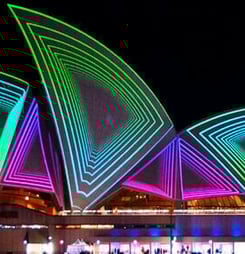
A classic way to mark Russia Day is by leaning into the spectacle. Fireworks are a popular feature of large public celebrations, and they tap into a universal impulse: when something feels important, the sky should probably do something dramatic about it.
For anyone attending a public display, the most enjoyable approach is to treat it like an event rather than a quick look upward. People often arrive early, claim a good viewing spot, and make an evening of it with snacks, warm drinks, or a casual picnic. Photos and videos can be fun, but the best part is usually the shared experience, that collective pause where everyone looks up at the same time and reacts together.
Those celebrating more quietly can still borrow the spirit of the tradition. A “fireworks mood” can be recreated with sparklers where permitted, glow sticks, light-up decorations, or even a playlist that builds to a grand finale. The idea is not the size of the boom. It’s the feeling of a public moment, even if it happens on a balcony or in a living room.
Attend a Patriotic Parade
Parades on Russia Day can be part civic ceremony, part street theater. Marching bands, folk ensembles, and performers in traditional dress often make appearances, and the visuals tend to emphasize unity and national symbols. For spectators, it can feel like watching a moving collage: music and rhythm up front, colorful costumes in the middle, and a rolling reminder of how many regions and communities shape Russian culture.
Enjoying a parade is also a surprisingly good exercise in people-watching and cultural curiosity. The costumes are not just for show; they can reflect regional styles, historical influences, and local crafts. Traditional embroidery, headwear, and dance elements often carry recognizable patterns and meanings, even if viewers don’t know the specifics. Simply noticing the details, the instruments, the choreography, the call-and-response energy of the crowd, adds depth beyond “a parade happened.”
For anyone not near a parade route, the same spirit can be captured by seeking out recordings of performances, learning a few steps of a folk dance, or exploring what a “parade” means in a broader sense: a deliberate public display of identity, pride, and community. Hosting a small get-together where friends share music or stories connected to Russia can echo that communal vibe.
Enjoy Live Concerts
Russia Day celebrations frequently put music front and center, and that makes sense. Music is one of the quickest ways to turn a public square into a shared space. Concerts can range from pop and rock to classical selections and folk traditions, sometimes all within the same program. The variety is part of the point: the day often presents Russia as many voices at once.
Attending a concert, whether it’s a large outdoor stage or a smaller community performance, is a chance to experience how public culture gets curated. Set lists often blend familiar crowd-pleasers with songs that emphasize belonging, resilience, or national pride. Even for people who don’t speak Russian, the emotional cues are easy to read: the sing-alongs, the applause peaks, the quieter moments designed to feel reflective.
At home, a well-built listening session can be its own kind of concert. A balanced Russia Day playlist might mix genres and eras: a little classical (think grand orchestral pieces), a little folk (danceable, story-driven songs), and a little contemporary. Pair it with a short “liner notes” style conversation, where each person shares why they chose a track or what they notice in the sound. It turns background music into a shared activity.
Visit Historical Exhibits
Russia Day is closely tied to questions of statehood and identity, so museums and historical exhibits fit naturally into the way people observe it. Visits can focus on national history, regional traditions, scientific achievements, literature, or art. The goal is often less about memorizing dates and more about understanding the long arc that led to the present moment.
A good exhibit visit can be approached like a scavenger hunt for context. Visitors might look for:
- How different regions and peoples are represented
- What objects are treated as “national symbols” and why
- Which moments are framed as turning points
- How daily life is shown alongside political history
This also provides a practical way to engage with the complicated feelings that can surround Russia Day. Museums are one of the few public spaces built for nuance. They can hold multiple stories at once: triumph and hardship, continuity and rupture, pride and uncertainty. That makes them a fitting companion to a day that remembers major change.
For those without access to a museum, a “home exhibit” can work surprisingly well. Pull together a few books of Russian art, a volume of poetry in translation, or a documentary about architecture or music. Pick one theme for the day, such as space exploration, the Trans-Siberian Railway as an engineering story, or the evolution of folk crafts. A single focused topic can feel more meaningful than trying to cover everything.
Collect Commemorative Souvenirs
Souvenirs are the small, tangible side of big public celebrations. On Russia Day, commemorative items often feature national colors, cultural motifs, famous landmarks, or playful takes on traditional design. The best souvenirs tend to be the ones that age well, not just in durability but in meaning.
A thoughtful approach is to choose items that connect to artisanship and everyday usefulness. Posters and prints, handmade crafts, locally made textiles, or small pieces of folk art can be both beautiful and culturally resonant. Even something as simple as a pin, scarf, or reusable bag can become a memory marker if it is chosen with care.
Food souvenirs count, too. If someone finds a specialty candy, tea, or spice blend, it becomes an experience that can be re-lived later. The key is intention. A souvenir does not have to scream “commemoration” to do its job. It only needs to bring the day back to mind with a little clarity.
Why Celebrate Russia Day
Russia Day is observed as a civic milestone that points to the emergence of the Russian Federation as a modern sovereign state. For many, it is a chance to express pride in the country’s culture, language, and accomplishments, from the arts to science to sport. In public settings, the day can feel like a national open-air festival, designed to bring people together in shared spaces with shared symbols.
It is also a day that invites reflection on the concept of sovereignty itself. In practical terms, the 1990 declaration asserted the primacy of Russia’s own legal framework. In emotional terms, it raised questions that people still wrestle with: What does it mean to belong to a nation? How does a country define itself after a major political shift? What parts of the past are carried forward, and what parts are deliberately left behind?
Public celebrations often include a mix of entertainment and ceremony. In many places, there are official events, speeches, performances, and community gatherings. Cultural programming tends to emphasize unity and shared identity, while also showcasing the diversity of traditions across a vast country. It can be a chance for different communities to be visible together: different dances, costumes, cuisines, and musical styles presented under one national umbrella.
At the national level, Russia Day is also associated with formal recognition of achievement. State awards and honors are presented to citizens who have made notable contributions in areas such as culture, science, public service, and other fields that the country chooses to highlight. This aspect of the observance gives it a “civic spotlight” quality, reminding people that national identity is not only about history but also about what a society values in the present.
At the same time, Russia Day can carry mixed feelings, especially for those who remember the period of transition after the Soviet Union’s dissolution. The 1990s were marked by significant economic and social upheaval for many families. For some, the day is therefore not only celebratory but also reflective, a prompt to think about instability, adaptation, and the cost of transformation.
That complexity does not cancel the observance; it explains why it can feel layered. Russia Day symbolizes modern statehood, but it also serves as a mirror for the complicated journey that led there.
Russia Day Timeline
Traditional Founding of the Rus’ State
The Primary Chronicle describes the “calling of the Varangians” in 862, when the Rus’ leader Rurik was invited to rule in Novgorod, a legendary starting point for organized Rus’ statehood that later Russian historiography treats as the beginning of Russian history.
Christianization of Kievan Rus’
Grand Prince Vladimir I adopted Eastern Orthodox Christianity in 988 and had the population of Kiev baptized, an event that anchors the religious and cultural identity later inherited by the Russian principalities and the emerging Russian state.
Ivan IV Crowned the First Tsar of All Russia
In January 1547 Ivan IV was crowned “Tsar of All Russia,” transforming the Grand Principality of Moscow into a centralized Tsardom and strengthening the notion of a unified Russian sovereign state.
Proclamation of the Russian Empire
On October 22 (November 2, New Style) 1721, after victory in the Great Northern War, Peter I proclaimed the Russian Empire and took the title of Emperor, marking Russia’s rise as a major European power and redefining its imperial statehood.
Creation of the Union of Soviet Socialist Republics
On December 30, 1922, the Treaty on the Creation of the USSR was approved in Moscow, uniting Russia and several neighboring republics into a single federal socialist state and subordinating Russian sovereignty to all‑Union institutions.
Declaration of State Sovereignty of the RSFSR
On June 12, 1990, the First Congress of People’s Deputies of the Russian Soviet Federative Socialist Republic adopted the Declaration of State Sovereignty, asserting the primacy of Russian law over Soviet law and initiating the legal and political process toward a fully sovereign Russian Federation.
Adoption of the Constitution of the Russian Federation
In a nationwide referendum on December 12, 1993, Russia adopted a new constitution that defines the Russian Federation as a democratic, federal state, sets out the division of powers, and codifies its post‑Soviet sovereignty and national symbols.
History of Russia Day
Russia Day is rooted in the turbulent, fast-moving political environment of the late Soviet period. In 1990, as the Soviet Union faced increasing pressure from reform movements and shifting political realities, the Russian Soviet Federative Socialist Republic adopted the Declaration of State Sovereignty.
The declaration asserted that Russia’s constitution and laws would take precedence, a move that signaled a push toward stronger self-governance within a system that had long been centralized.
That declaration mattered because it was not just a symbolic statement. It was part of a broader wave of institutional change, in which republics within the Soviet Union sought greater control over their political and economic decisions. In that context, sovereignty was as much about legal authority as it was about identity. It posed a direct question: where does power ultimately sit, and who gets to define the rules that shape daily life?
The observance began as a formal commemoration of that declaration. Initially, its official name was the Day of Adoption of the Declaration of State Sovereignty of the Russian Soviet Federative Socialist Republic, a title that sounded more like a filing cabinet label than a party invitation. Even so, it marked an important civic idea: a modern Russian state taking shape through laws, institutions, and political restructuring.
The day became an official public observance in 1992, establishing it on the national calendar during a period when the country was redefining itself at almost every level. In those early years, the meaning of the date was not always widely felt in the way older, more established celebrations might be.
Many people were focused on the immediate challenges of changing economic conditions and social life, and a newly created civic observance can take time to find emotional traction.
Over time, the name and framing of the day evolved. The shift to calling it “Russia Day,” formalized in the early 2000s, helped make the observance more accessible and more broadly interpretive. Instead of pointing people back to a long institutional title and a specific legal act, the newer name positioned the day as a general celebration of the country itself. That rebranding also encouraged a wider range of participation, since it allowed communities to emphasize cultural pride and national identity alongside the political history.
Modern Russia Day celebrations typically combine official ceremony with public festivity. Concerts, festivals, and fireworks give the day its festive energy, while speeches and awards underscore its civic character. In practice, it has become a day that serves two roles at once: a reminder of a key step toward sovereignty in 1990, and a broad, public-facing statement of contemporary Russian identity.
Russia Day Facts
Russia’s Sovereignty Declaration Rewrote Its Federal Hierarchy
The 1990 Declaration of State Sovereignty of the Russian SFSR did more than signal political change; it explicitly asserted the supremacy of Russian republican laws over all‑Union legislation, introduced the principle of separation of powers, and promised broader rights to autonomous republics and regions, laying the legal groundwork for a new federal structure later codified in the 1993 Constitution.
The 1993 Russian Constitution Created a Strong Presidential Republic
After the turbulence that followed the collapse of the Soviet Union, Russia adopted a new constitution in December 1993, establishing a presidential republic with a bicameral Federal Assembly, a Constitutional Court, and a clear separation among executive, legislative, and judicial branches, reshaping state power compared with the late Soviet system.
Russia Spans 11 Time Zones Across Two Continents
Modern Russia remains the world’s largest country by land area, stretching from Eastern Europe across northern Asia and encompassing 11 time zones, a geographic expanse that complicates nationwide governance, infrastructure, and broadcasting but also reflects centuries of territorial expansion under the Russian Empire and the Soviet Union.
A Multiethnic Federation With Over 190 Ethnic Groups
The Russian Federation is one of the most ethnically diverse countries on Earth, home to more than 190 recognized ethnic groups, including large minorities such as Tatars, Ukrainians, Bashkirs, Chuvash, Chechens, and many others, a diversity formally reflected in its system of republics and autonomous regions within the federal structure.
Russia’s First Human in Space Cemented Its Role as a Space Power
In 1961, Soviet cosmonaut Yuri Gagarin became the first human to travel into outer space aboard Vostok 1, a milestone of Russian and Soviet science and engineering that not only intensified the Cold War space race but also established crewed spaceflight as a central legacy of Russian technological achievement.
Russian Mathematicians Have Shaped Modern Mathematics
Russian and Soviet mathematicians have had an outsized influence on modern mathematics, contributing foundational work in areas like topology, functional analysis, and dynamical systems through figures such as Andrey Kolmogorov, Israel Gelfand, and Grigory Perelman, whose proof of the Poincaré conjecture earned him a Fields Medal.
A Literary Tradition That Helped Define the Modern Novel
Russia’s literary heritage, particularly in the 19th century, produced novelists like Leo Tolstoy and Fyodor Dostoevsky, whose psychologically complex works and philosophical themes helped shape the development of the modern novel worldwide and remain central to university curricula and literary criticism across the globe.