St. Urho’s Day
Part of the story of the United States begins with the immigration of different cultures. In the U.S., various holidays celebrate these kinds of cultures.
Among those cultures, the Finnish have traditions that keep them proud of their heritage.
Stories inspired one of those holidays, and you guessed it, it’s about the story of St. Urho. Anyone can celebrate this holiday, so let’s learn about the history of this cultural holiday and see how you can celebrate it, no matter where you are or what tradition you follow.
History of St. Urho’s Day
St. Urho is an unusual character; according to legend, he chased the grasshoppers out of Finland shouting at them, “Grasshoppers, Grasshoppers, Go to Hell!” and saved the wine vineyards from destruction, saving the grapes and the worker’s jobs, all while fortified by sour milk and fish soup. From this instance, he became a hero. Sound similar to St. Patrick, doesn’t it?
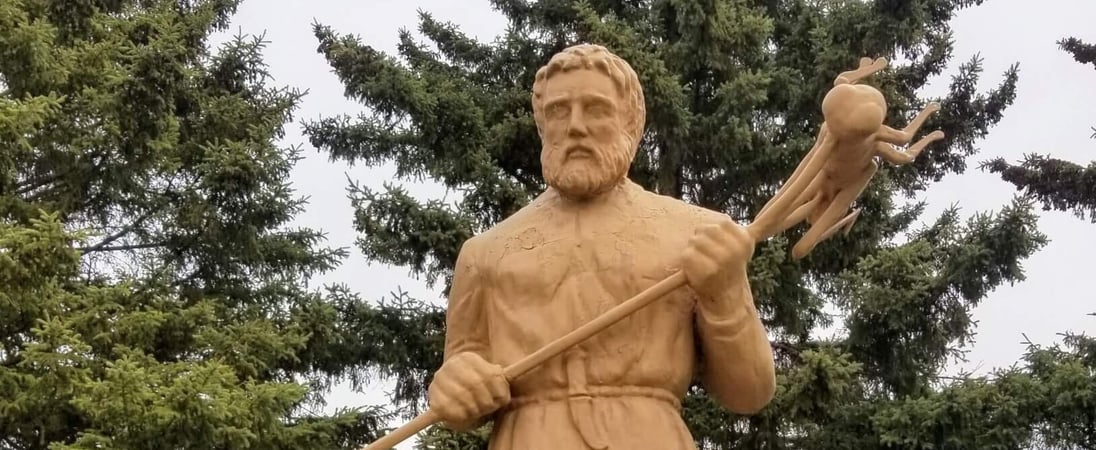
Well, that’s because St. Patrick inspired him. As the Finnish version of the Irish saint, there are statues of him in Minnesota, depicted holding large grasshoppers in honor of his sacrifice. People wear purple and green on this day and celebrate by drinking wine and reciting his story.
The funny thing was is that St. Urho doesn’t exist and never has. He’s a story born out of sheer fascination and humor. Many sources argue that the originator of the story began with department store owner Richard Mattson in Virginia, MN. He alongside some friends created the character as a joke.
However, according to this legend, the story spread nationwide, mostly to the southern states, and the Finnish that occupied the areas would celebrate the saint as part of their national heritage.
Another source also credits Sulo Havumaki, a Finnish resident of Bemidji, MN, which states that the stories of St. Urho were part of his local identity, who is credited from changing the themes from plague to grasshoppers.
How to Celebrate St. Urho’s Day
If you want to celebrate in a holiday that’s quirky and unique, then wear purple and green. Tell people about the story of St. Urho and why you find it interesting.
If you’re daring, take a trip to Minnesota and visit the statue erected in towns such as Virginia and Bemidji. Share this holiday on your favorite social media websites and tell everyone about the story of St. Urho and see what responses you could get.
Facts About St.Urho’s Day
Grapes Are Not a Traditional Finnish Crop
Although the legend behind St. Urho centers on saving Finland’s grape vineyards, Finland’s climate has historically been too cold for large-scale grape production.
Traditional Finnish agriculture focused on hardy grains like rye, barley, and oats, along with root vegetables, while wine grapes remained virtually absent until very recent experiments with cold-resistant varieties and greenhouse growing.
Finnish Immigration Shaped the Mining Towns of the Upper Midwest
The strong Finnish presence in places like northern Minnesota and Michigan’s Upper Peninsula grew out of late 19th and early 20th century labor migration.
Tens of thousands of Finns arrived to work in iron and copper mines and in logging camps, building tight-knit communities that maintained their language, Lutheran faith, and folk traditions for generations in towns such as Virginia, Minnesota, and Hancock, Michigan.
Finnish Americans Preserved Their Language Longer Than Many European Groups
Among European immigrant communities in the United States, Finnish Americans were notable for maintaining Finnish as a community language well into the mid‑20th century.
In some Upper Midwest towns, Finnish-language newspapers, co-operative stores, socialist halls, and churches operated for decades, helping preserve a distinct cultural identity even as later generations shifted to English.
Humorous “Ethnic Saints” Are a Wider North American Tradition
The idea of inventing a tongue-in-cheek patron saint for an immigrant group is not unique to Finnish Americans.
Folklorists note similar playful practices in other North American ethnic communities, where fictional saints, mock titles, and parody rituals serve as a way to express pride, poke fun at stereotypes, and participate in broader holiday cultures while still signaling a distinct heritage.
Urho’s Name Echoes a Real Finnish President and a Finnish Word
The name “Urho” is authentically Finnish and was borne by Urho Kekkonen, the influential president who took office in 1956.
In Finnish, “urho” also means “hero” or “champion,” which makes the name a layered in-joke in Finnish American circles: it sounds like a plausible saint’s name, subtly references a real national leader, and literally labels the character as a hero.
Thunder Bay Illustrates Finnish Influence Beyond the United States
The northwestern Ontario city of Thunder Bay has one of the largest Finnish communities outside Finland, with immigration dating back to lumber and railway work in the early 1900s.
Finnish co-ops, saunas, and cultural clubs became so prominent that the city has been nicknamed “Canada’s most Finnish city,” and Finnish choirs and groups there have long used humorous cultural events to raise funds and keep traditions alive.
Statues and Yard Art Are Common in Finnish American Folk Expression
In several Finnish American settlements across the Upper Midwest, distinctive folk sculptures and yard art are a visible marker of local identity.
From carved wooden figures and chain-saw statues to whimsical metal creatures and oversized roadside monuments, these pieces often draw on Finnish humor and storytelling, turning small towns into informal open-air galleries of immigrant folk art.
St. Urho’s Day FAQs
Is Saint Urho regarded as a real religious figure in Finland or North America?
Saint Urho is treated as a humorous, fictional folk character rather than a genuine religious figure, and he is not recognized as a saint by any church in Finland or North America.
How do folklorists classify stories like the legend of Saint Urho?
Folklorists often use the term “fakelore” for modern stories that are deliberately invented but presented in the style of traditional folklore.
The Saint Urho legend is frequently cited as an example, because it was consciously created in the mid‑twentieth century yet has taken on many features of older folk traditions.
What do the grasshoppers and grapes in the Saint Urho story symbolize?
In the Saint Urho legend, grasshoppers stand in for a destructive plague, while grapes represent a valuable harvest that needs protection.
Scholars note that the pairing mirrors familiar European stories in which a heroic figure drives away a pest and saves an important crop, even though Finland itself has not historically been a major grape‑growing country.
Why are green and purple commonly linked with Saint Urho in popular culture?
Green is associated with the grasshoppers that the character supposedly chases away, and purple is linked to the grapes he is said to save.
Cultural commentators point out that the color scheme also playfully echoes and contrasts with the strong focus on green in celebrations of Saint Patrick.
How does the Saint Urho legend compare with traditional stories about Saint Patrick?
Both Saint Urho and Saint Patrick function as culture heroes who are said to rid a land of a harmful creature, but only Saint Patrick is rooted in Christian hagiography and early historical sources.
The Saint Urho figure was purposefully devised in the twentieth century as a parody of that pattern, copying the “driving out pests” motif in a joking way.
Why do some communities build statues or public art of fictional folk characters like Saint Urho?
Communities sometimes create statues and public art of fictional folk characters to express local identity, attract visitors, and highlight ethnic or regional heritage.
Cultural geographers and historians note that such monuments can become focal points for festivals, storytelling, and tourism even when the figure itself has no historical existence.
What can the Saint Urho legend tell researchers about immigrant communities in North America?
Researchers view the Saint Urho story as an example of how immigrant groups shape new traditions to assert their presence and sense of humor in multicultural settings.
By inventing a tongue‑in‑cheek hero with exaggerated traits, community members create a shared symbol that blends old‑world references with the realities of life in places such as the Great Lakes and northern Midwest.
Also on ...
View all holidays
National Panda Day
Nature's cuddly ambassadors, with a diet that's 99% bamboo and an unmistakable appearance that's sure to melt your heart.



We think you may also like...

Chimborazo Day
Climb a hill or mountain, or set yourself a metaphorical “mountain” goal to honor the tallest mountain the world as measured from the Earth’s core, Chimborazo.

National Tourism Day
Discover the beauty of our world! Take a trip, explore new places, and make unforgettable memories. Pack your bags and let's hit the road.