
Have you ever heard of Chimborazo? It’s a massive volcano in Ecuador. Though not the highest peak by elevation, it’s the furthest point from the Earth’s center due to the planet’s bulge at the equator.
This makes its summit the closest point on Earth to the stars. Adventurers and climbers seek it out for its breathtaking views and challenging ascent.
Chimborazo Day Timeline
Chimborazo as a sacred apu in Andean cultures
Pre‑Columbian peoples of the central Ecuadorian Andes, including Puruhá and later Inca groups, venerated Chimborazo as a sacred mountain spirit, linking it to weather, fertility, and ritual offerings.
Alexander von Humboldt’s Chimborazo expedition
German naturalist Alexander von Humboldt attempts to climb Chimborazo, reaching an unprecedented altitude for the time and collecting data that helped shape early ideas about biogeography and the vertical “zones of vegetation.”
Recognition of Earth’s equatorial bulge
Nineteenth‑century geodesy and increasingly precise measurements of Earth’s shape confirm the equatorial bulge, laying the groundwork for later calculations that Chimborazo’s summit is farther from Earth’s center than Mount Everest’s.
First recorded ascent of Chimborazo
British climber Edward Whymper and Italian guides Louis and Jean-Antoine Carrel make the first documented ascent of Chimborazo, opening the mountain to modern alpinism and detailed scientific observation at its summit.
Ice harvesting by Chimborazo hieleros
For decades, local hieleros regularly extract ice from Chimborazo’s glaciers, hauling blocks by mule to sell in nearby markets, a traditional practice that illustrates the mountain’s role in regional livelihoods before modern refrigeration.
Geodetic calculations confirm “farthest from Earth’s center” status
Using satellite geodesy and GPS data, scientists show that Chimborazo’s position near the equator makes its summit the point on Earth’s surface farthest from the planet’s center, refining its place in geographic records.
Chimborazo as a climate-change observatory
Glaciological studies on Chimborazo document rapid retreat of its tropical glaciers, turning the mountain into an important natural laboratory for understanding high‑altitude climate impacts in the northern Andes.
How to Celebrate Chimborazo Day
Celebrating Chimborazo Day can be a blast with these creative ideas that everyone can enjoy, no matter where they are.
Be an Explorer
Why not embark on a mini-adventure? Lace up your hiking boots and find a local trail to conquer. It’s a nod to the explorers who’ve scaled Chimborazo and a great way to appreciate the beauty of nature.
Host a Party
Alternatively, throw a mountain-themed bash, complete with decorations inspired by the majestic peaks of Ecuador and tasty treats that bring a slice of Ecuadorian flavor to your table. It’s a fun way to bring the spirit of Chimborazo into your home.
Learn More
For those who prefer a cozy day in, indulging in a documentary or book about mountain expeditions can be enlightening. It’s a chance to marvel at the courage of climbers and the mysteries of the mountains they ascend.
Learning something new about Ecuador is another great way to celebrate, whether it’s picking up a few Spanish phrases or exploring the country’s rich cultural heritage.
Get Creative
Or, get your creative juices flowing with a painting session. Gather your friends or family and paint a Chimborazo or any mountain that inspires you. It’s about capturing the essence of adventure and the beauty of the natural world, regardless of your artistic skill level.
Help the Earth
Giving back to nature aligns perfectly with the spirit of Chimborazo Day. Organize a local clean-up or plant a tree to contribute to environmental conservation.
Share with Others
And don’t forget to share your celebration on social media with the hashtag to inspire others. These activities honor the day and promote a deeper connection with our planet and its wonders.
Why Celebrate Chimborazo Day
Imagine a day when mountains whisper tales of adventure, and the air buzzes with tales of daring climbs and majestic views. Enter Chimborazo Day, a celebration not just of a mountain but of the human spirit, nature’s wonders, and the joy of reaching new heights.
Celebrated annually, this day honors Ecuador’s towering pride, Chimborazo, known not just for its sky-piercing peak but as a symbol of exploration, challenge, and the sheer beauty of our planet.
But why do we celebrate this particular peak? Chimborazo isn’t just any mountain. Standing tall at 6,263 meters (about 20,548 feet), it holds the title of Ecuador’s highest peak and a spot in the Andes’ majestic range.
Here’s the twist: due to the Earth’s bulge at the equator, Chimborazo’s summit is the farthest point from the center of our planet, making it closer to the stars than Everest’s peak.
This unique geographical quirk and its rich cultural and natural significance give Chimborazo Day its special flavor.
The day is steeped in history, dating back to 1880, initially honoring Alexander von Humboldt’s climb in 1802. It’s a day to marvel at human achievements, revel in the great outdoors, and pledge to preserve the stunning environments surrounding us.
Whether it’s hiking, learning about Ecuador’s rich culture, or simply enjoying the great outdoors, Chimborazo Day beckons everyone to celebrate the high points in life and the natural wonders that inspire us to reach further.
So, whether you’re an adventure seeker, a nature lover, or someone who appreciates the grandeur of our world from a cozy chair, Chimborazo Day offers a moment to pause, reflect, and celebrate the marvels of our Earth and the explorations that bring us closer to understanding its mysteries.
History of Chimborazo Day
Once upon a time, people decided to celebrate a mountain, and Chimborazo Day was born. This special day pays tribute to Ecuador’s tallest peak, Chimborazo. The history of this celebration is as fascinating as the mountain itself.
The story began with Alexander von Humboldt, an explorer who tried to conquer Chimborazo’s heights in 1802. Although he didn’t reach the top, his journey sparked interest and admiration. Many years later, in 1880, people started celebrating Chimborazo Day to honor his adventurous spirit and the mountain’s natural beauty.
For over a century, Chimborazo Day has grown into a day of wide-ranging activities. It’s not just about climbing; it’s about appreciating the wonders of nature, the thrill of exploration, and Ecuador’s rich cultural heritage. People celebrate by hiking, learning about the mountain’s unique ecosystems, and exploring Ecuadorian traditions.
Chimborazo isn’t just any mountain. Thanks to the planet’s equatorial bulge, its peak is the farthest point from the center of the Earth. This geographical wonder adds a special twist to the day, reminding us of the planet’s mysteries and the joy of discovering them.
So every year on this day, Chimborazo Day invites adventurers, dreamers, and nature lovers to celebrate. It’s a day to reflect on human achievements, connect with the environment, and set goals for personal highs.
Whether you’re at the mountain’s base or halfway across the world, Chimborazo Day is a call to appreciate our world’s towering wonders and the stories they tell.
Facts About Chimborazo Day
Chimborazo’s Summit Really Is Farther from Earth’s Core than Everest
Because Earth bulges at the equator, the planet’s radius is greater in Ecuador than in the Himalayas. Chimborazo sits almost on the equator, so its 6,263‑meter summit starts from a “fatter” part of the planet.
When measured from Earth’s center instead of sea level, calculations using modern GPS and geoid models show Chimborazo’s peak is about 2 kilometers farther from the core than Everest’s, even though Everest is higher above sea level.
Chimborazo Is a Dormant Stratovolcano Shaped by Ice as Much as Fire
Chimborazo is not just a mountain but a massive stratovolcano made of layered lava, ash, and pyroclastic deposits that last erupted roughly 10,000 years ago.
Its broad, rounded shape is the result of both volcanic activity and intense glacial erosion; repeated glaciations carved cirques and valleys into its flanks, leaving a summit dome and multiple ridges that reflect a long history of alternating eruptions and ice cover.
Ancient Ice Harvesters Once Carried Chimborazo’s Glaciers to Market
For centuries, hieleros (ice men) climbed Chimborazo’s slopes to cut blocks of glacier ice by hand, hauling them down on mules to sell in nearby towns for cooling drinks and making ice cream before mechanical refrigeration existed.
Ethnographic accounts from the 20th and 21st centuries describe how this perilous trade shaped local economies and culture, and how only a handful of hieleros remained as the glaciers shrank and modern ice production replaced their work.
Chimborazo’s Glaciers Are Rapidly Shrinking Under Climate Change
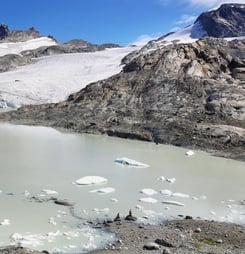
Glaciological studies using satellite imagery and field surveys show that Chimborazo’s glacier area has shrunk dramatically in recent decades, with estimates of more than 50% loss since the mid‑20th century.
Researchers link this retreat to rising air temperatures, altered precipitation patterns, and increased deposition of soot and dust, which darken the ice and make it melt faster, threatening downstream water supplies for agriculture and communities.
A High-Altitude Wildlife Refugio for Vicuñas and Andean Birds
The páramo grasslands and rocky slopes around Chimborazo host specialized wildlife that can survive thin air, cold nights, and strong UV radiation.
Within the Chimborazo Fauna Production Reserve, conservation programs have reintroduced and protected wild vicuñas, whose fine wool was once overhunted, and surveys record species such as Andean condors, caracaras, and hummingbirds that rely on these high-altitude ecosystems.
Chimborazo Anchors a Mosaic of Andean Páramo Ecosystems
The mountain is surrounded by páramo, a unique high-Andean ecosystem of tussock grasses, shrubs, and cushion plants that acts like a sponge for water.
Studies of Ecuadorian páramo show that its deep organic soils and dense vegetation capture mist, regulate runoff, and store significant carbon, making the Chimborazo region important both for regional water security and as a natural carbon sink.
A Landmark of Ecuadorian Nationhood in Anthem and Emblem
Chimborazo features prominently in Ecuador’s national symbolism. The national anthem evokes “Chimborazo en la altura” as a poetic image of the country’s grandeur, and the national coat of arms includes a depiction of a snow-capped Andean peak widely interpreted as Chimborazo.
Historians argue that this visual and literary prominence helped cement the mountain as a unifying emblem in the construction of Ecuadorian national identity in the 19th century.