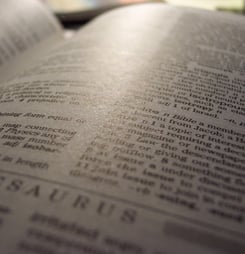

Did you know that there’s a day dedicated to the power of words? A day that celebrates not just any words but those that give our language its color, depth, and emotion. That day is National Thesaurus Day, celebrated each year on January 18th.
This special day is also a tribute to Peter Mark Roget, the mastermind behind the first thesaurus, born on this day in 1779. His creation has since become a key tool for anyone looking to polish their language, whether in writing, speaking, or simply expanding their vocabulary.
Why do we celebrate National Thesaurus Day? It’s all about recognizing the incredible resource that helps us find the right word when needed.
A thesaurus isn’t just a list of synonyms; it’s a bridge to clearer, more vibrant communication. By exploring its printed or digital pages, we unlock a treasure trove of language, allowing us to express ourselves more accurately and creatively.
The benefits of embracing a varied vocabulary are immense. For adults, it can enhance communication skills, boost self-confidence, and even open doors in professional settings.
For children, a rich vocabulary is linked to better reading comprehension and academic success. Through word games, writing exercises, or simply flipping through a thesaurus, we celebrate the words themselves and the ideas, creativity, and connections they enable.
History of National Thesaurus Day
National Thesaurus Day has an interesting history that celebrates the richness of language and the power of finding just the right word. It all began with Peter Mark Roget, a British physician and lexicographer, who was born on January 18, 1779.
Roget started his journey to create the first modern thesaurus in 1848 and completed it by 1852. This groundbreaking book was designed to help writers and speakers by grouping words with similar meanings, making expanding their vocabulary and finding synonyms easier.
The idea of a thesaurus, however, dates back even further. The concept of collecting words of similar meanings can be traced to works as early as the 1st century by Philo of Byblos and the 4th century by Amara Sinha, an Indian poet, and grammarian who wrote a thesaurus in verse form in Sanskrit.
These early attempts at creating repositories of language laid the groundwork for what would become an essential tool in the English language.
Roget’s Thesaurus has left a lasting legacy, continuously updated and revised to stay relevant in the modern world.
It serves as a tool for finding synonyms and a way to explore the depth and breadth of the English language.
National Thesaurus Day Timeline
Birth of Peter Mark Roget
Peter Mark Roget, the creator of the first modern thesaurus, is born in London. His work would later become a seminal resource for writers and linguists.
Publication of Roget’s Thesaurus
Peter Mark Roget publishes the first edition of Roget’s Thesaurus of English Words and Phrases, revolutionizing language reference books and aiding writers in finding more precise words.
Integration of Thesaurus in Word Processors
The integration of thesaurus tools into word processors begins, allowing users to quickly access synonyms and enhance their writing digitally.
Launch of Online Thesaurus Platforms
The rise of the internet leads to the development of dedicated online thesaurus platforms, such as Thesaurus.com, providing users instant access to vast collections of synonyms.
Advent of Semantic Search Technologies
The development and application of semantic search engine technologies improve the functionality of digital thesauri, enabling more context-aware synonym suggestions.
How to Celebrate National Thesaurus Day
Activities on this day often include fun with words, like synonym games or rewriting famous texts, all aimed at celebrating and deepening our appreciation for the richness of language.
Beyond practical benefits, National Thesaurus Day encourages us to delight in the beauty of language and explore and enjoy the myriad ways we can express a single thought or emotion.
Here are suggestions on how to celebrate National Thesaurus Day, bringing out your inner word wizard:
Synonym Scavenger Hunt
Dive into a thesaurus, online or print, and hunt for the most unusual synonyms for everyday words. Think of it as a treasure hunt where “x marks the spot” could also be “an X indicates the location”!
Story Remix
Take a beloved fairy tale or a famous short story and twist it by changing keywords using synonyms. Imagine “Little Red Riding Hood” becoming “Little Scarlet Cloak” or “The Three Little Pigs” turning into “The Trio of Petite Swine“.
Word Duel
Challenge a friend to a synonym duel. Pick a word and take turns finding synonyms without repeating any. The first one to run out of synonyms or repeat a word loses. It’s a thrilling way to expand your vocabulary arsenal!
Synonym Password Game
Partner up and play a game where you guess words based on synonyms given by your partner. It’s like a password game but with a twist, where “fast” could lead to “swift,” “speedy,” or “quick.”
Creative Synonym Art
Choose a word and find a handful of synonyms. Then, create an art piece where each synonym is represented visually. It’s a fun way to explore the nuances of language and express creativity.
Facts About National Thesaurus Day
The Etymology of ‘Thesaurus’
The word ‘thesaurus’ is derived from ancient Greek, meaning ‘treasure’ or ‘storehouse’. This etymology reflects the thesaurus’s role as a repository of language, offering an organized collection of words. This significance aligns with Roget’s goal of facilitating expression through word classification.
Roget’s Legacy in Education
Roget’s Thesaurus has played a critical role in education by helping students and educators expand vocabulary and improve communication skills.
Its conceptual arrangement of words offers a more dynamic exploration of language than traditional dictionaries, thereby enriching the learning process.
Antecedent to Modern Thesauri
Prior to Roget’s Thesaurus, synonym collections like the Amarakosha—a Sanskrit thesaurus dating back to ancient India—demonstrated the pre-existing concept of organizing synonyms.
However, Roget’s work was revolutionary for its detailed classification system that has influenced modern lexicography.
Roget’s Other Contributions
Beyond the thesaurus, Peter Mark Roget was a polymath who invented the log-log slide rule and contributed extensively to the Encyclopaedia Britannica. His work in these fields highlights his versatile intellect beyond lexicography.
The Role of Thesauri in Writing
Roget’s Thesaurus aids in finding precise words, enhancing clarity and creativity in writing. By grouping words conceptually, it allows writers to explore nuanced meanings, supporting literary and rhetorical expression.