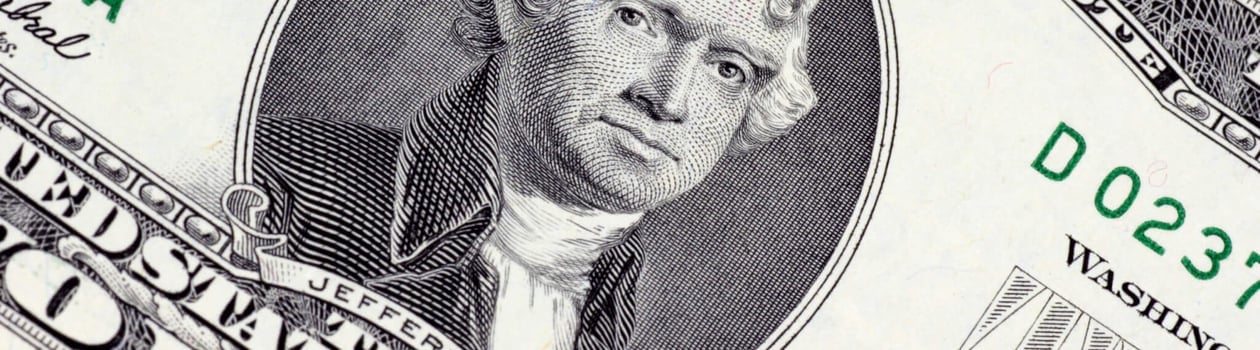
National Thomas Jefferson Day celebrates the birthday of Thomas Jefferson, who was the third President of the United States from 1801 to 1809, the principal author of the Declaration of Independence in 1776, and one of the most influential Founding Fathers for his promotion of the ideals of Republicanism in the United States.
Major events during his presidency include the Louisiana Purchase in 1803 and the Lewis and Clark Expedition.
National Thomas Jefferson Day Timeline
Drafting the Virginia Declaration of Rights
Virginia adopts George Mason’s Declaration of Rights, a key precursor that helps shape Jefferson’s thinking on natural rights and influences the language of the Declaration of Independence and later American rights documents.
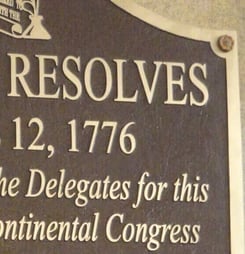
Adoption of the Declaration of Independence
The Continental Congress approves the Declaration of Independence, largely drafted by Thomas Jefferson, formally asserting the American colonies’ separation from Britain and articulating enduring principles of equality and popular sovereignty.
Passage of the Virginia Statute for Religious Freedom
The Virginia General Assembly enacts Jefferson’s Statute for Religious Freedom, ending state-established religion in Virginia and laying an intellectual and legal foundation for the First Amendment’s guarantee of religious liberty.
Louisiana Purchase Treaty Signed
American diplomats in Paris sign the Louisiana Purchase Treaty, secured under President Jefferson, which doubles the size of the United States and dramatically expands the scope of the republic he envisioned.
Lewis and Clark Expedition Departs
Under Jefferson’s orders, the Corps of Discovery led by Meriwether Lewis and William Clark sets out from near St. Louis to explore the newly acquired Louisiana Territory, gathering scientific data and mapping routes to the Pacific.
Jefferson Sells His Library to Congress
Following the British burning of the Capitol in 1814, Congress purchases Jefferson’s personal library of 6,487 volumes to rebuild the Library of Congress, helping to establish it as a comprehensive national research collection.
Chartering of the University of Virginia
The Virginia legislature charters the University of Virginia, a public institution conceived and designed by Jefferson to embody his philosophy of secular, broad-based higher education in a democratic society.
How to Celebrate National Thomas Jefferson Day
There are a number of different ways that you can celebrate National Thomas Jefferson Day. Take a look at a few of these to begin with:
Learn More About Thomas Jefferson
One of the great ways to celebrate this day is by finding out more about one of the former President’s areas of interest and education.
He was a very accomplished man, and this can be a great way to inspire the younger generation.
Needless to say, learning more about the man himself is another way that you can observe National Thomas Jefferson Day.
If you are a teacher or you have children, you can also use the former President’s education and interests to create some educational activities for your kids.
Check Out Books About Jefferson
If you take a look online, you will see that there are a lot of different books and resources that can give you all of the information that you need to know about the man himself.
In fact, some of the books that we would recommend for your reading include the following:
- Friends Divided: John Adams and Thomas Jefferson by Gordon S. Wood
- Thomas Jefferson: The Art of Power by Jon Meacham
- Autobiography of Thomas Jefferson by Thomas Jefferson
Watch a Documentary
There are plenty of documentaries as well, so you should have no trouble finding an educational resource that will help you to learn more about the great president himself!
Spread the Word
You can also take to social media to spread the word about this day, and you will probably find that there are a lot of interesting videos and infographics going around on this date too.
Learn About National Thomas Jefferson Day
As the name indicates, National Thomas Jefferson Day has been designed in order to pay honor and tribute to the former President of the United States.
National Thomas Jefferson Day is known for a lot of different things, but most people will see his most significant achievement as signing the Declaration of Independence.
Not only is this a date for people in the United States to recognize, but we can also use Thomas Jefferson as inspiration to read more and to learn more about some of the different areas he was interested in.
It probably does not come as a surprise to learn that the Former President had a vast library. In fact, it contained 6,500 volumes!
Reading is often a popular pastime of Presidents, and so this date can be used in order to encourage people to learn more about the history of the world through reading.
In fact, in terms of education, Thomas Jefferson had an impressive one. He was a scientist of astronomy, paleontology, and agriculture, as well as being a lawyer. He also kept detailed weather records. These are all sources of inspiration for National Thomas Jefferson Day.
We are sure this will help you to come up with many different activities that you can enjoy on this date to pay tribute to the former President.
History of National Thomas Jefferson Day
In order to understand a little bit more about the history of this date, we first need to understand the history of the man himself.
As a political philosopher, Jefferson was a man of the Enlightenment and knew many intellectual leaders in Britain and France.
He idealized the independent yeoman farmer as exemplar of republican virtues, distrusted cities and financiers, and favored states’ rights and a strictly limited federal government. Jefferson also supported the separation of church and state and was the author of the Virginia Statute for Religious Freedom.
A polymath, Jefferson achieved distinction as, among other things, a horticulturist, statesman, architect, archaeologist, author, inventor and founder of the University of Virginia.
When President John F. Kennedy welcomed forty-nine Nobel Prize winners to the White House in 1962 he said, “I think this is the most extraordinary collection of talent and of human knowledge that has ever been gathered together at the White House—with the possible exception of when Thomas Jefferson dined alone.”
In his early life Jefferson practiced law and served in the Virginia House of Burgesses. In 1774, he wrote A Summary View of the Rights of British America, which was intended as instructions for the Virginia delegates to a national congress.
The pamphlet was a powerful argument of American terms for a settlement with Britain. It helped speed the way to independence, and marked Jefferson as one of the most thoughtful patriot spokesmen.
As the primary author of the Declaration of Independence and a significant contributor to American political and civil culture, the Continental Congress delegated the task of writing the Declaration to a Committee of Five which unanimously solicited Jefferson to write the first draft, which underwent some alteration, but remained largely Jefferson’s work.
Facts About National Thomas Jefferson Day
Jefferson’s Weather Records Aided Early American Climate Study
For nearly 40 years, Thomas Jefferson kept detailed daily weather observations, including temperature, precipitation and wind direction, at Monticello and other locations.
These records, begun in the 1770s, are among the earliest continuous meteorological datasets in North America and have been used by modern climatologists to study long‑term climate patterns in the eastern United States.
Experimental Agriculture at Monticello Influenced American Farming
At Monticello, Jefferson treated his plantation as a vast agricultural experiment station, testing hundreds of varieties of crops such as wheat, peas, and vegetables, along with soil-conservation methods like contour plowing.
He meticulously recorded yields, planting dates and failures, helping to introduce new crops and techniques into American agriculture at a time when most farmers relied on tradition rather than systematic experimentation.
Jefferson’s Fossil Studies Anticipated American Paleontology
Jefferson took an intense interest in large bones unearthed in what is now West Virginia and Kentucky, which he believed belonged to a giant lion-like creature he called “Megalonyx.”
His 1797 paper on these remains, presented to the American Philosophical Society, is considered one of the first significant scientific works on North American fossils and later helped establish the ground for American paleontology, even though the animal was ultimately identified as a giant ground sloth.
Monticello Showcases Jefferson’s Adaptation of Classical Architecture
Jefferson designed Monticello with heavy influence from the Italian architect Andrea Palladio, blending classical Roman forms with local materials and a hilltop Virginia setting.
The house’s octagonal dome, columned porticos, and carefully proportioned rooms reflect Enlightenment ideas about harmony and rational design, making it an early and enduring example of a distinctly American interpretation of European neoclassical architecture.
The University of Virginia Helped Redefine the American Campus
When Jefferson designed the University of Virginia, he rejected the traditional model of a single dominant college building in favor of an “academical village,” a terraced lawn lined with pavilions for professors and housing for students.
This arrangement, centered on the Rotunda rather than a chapel, expressed Jefferson’s belief in secular, public education and influenced the design of later American campuses that adopted landscaped quadrangles and integrated living‑learning spaces.
Jefferson’s Library Became the Backbone of the Library of Congress
After British troops burned the U.S. Capitol in 1814, destroying the original congressional library, Jefferson sold his personal collection of 6,487 volumes to Congress in 1815.
His books covered an unusually wide range of subjects, from law and politics to science, literature and foreign languages, helping shift the Library of Congress from a narrow legislative reference collection into a more comprehensive national research library.
A Cipher Wheel Shows Jefferson’s Interest in Early Cryptography
Around 1795, Jefferson devised a cipher device consisting of 36 wooden disks threaded on an iron spindle, each inscribed with the alphabet in a different scrambled order.
This “wheel cipher” allowed users to create and decode complex substitution ciphers and anticipated similar devices adopted by the U.S. Army in the early 20th century, illustrating how Jefferson applied mechanical ingenuity to secure communication.