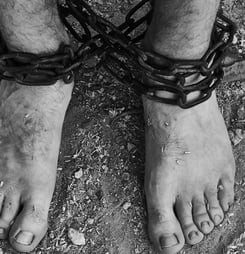

Torture Abolition Day is a significant occasion dedicated to ending torture and supporting its victims. It creates space for public attention on a topic that is often hidden behind prison walls, conflict zones, and closed-door interrogations, even though its effects ripple far beyond any single incident.
People from all walks of life come together to raise awareness and advocate for a future free from torture. The day inspires collective action and solidarity, highlighting the need for ongoing efforts to eradicate this severe violation of human rights and to strengthen the systems that prevent abuse in the first place.
How to Observe Torture Abolition Day
Host a Compassionate Gathering
Invite friends, coworkers, or community members for a meaningful evening that balances learning with care. Torture is a heavy subject, so a “compassionate gathering” works best when it is thoughtfully structured: set a clear purpose, keep the group size manageable, and let people know in advance what will be discussed.
A simple format can help. Start with a short, accessible overview of what torture is and why it is prohibited under international standards. Then share a documentary, recorded talk, or a reading that focuses on survivor resilience and the importance of accountability rather than graphic details.
Afterward, guide discussion with respectful prompts such as: What safeguards help prevent abuse in detention? What does survivor-centered support look like? Where do misinformation and myths about torture show up in pop culture?
Snacks and a cozy setting can lower the emotional temperature, but it also helps to set basic ground rules: no joking about the topic, no pressuring anyone to disclose personal experiences, and no debating someone’s trauma.
If the gathering includes people with lived experience of political violence or detention, a trauma-informed approach matters. This means offering quiet breaks, providing content warnings, and prioritizing consent and dignity in conversations.
Spread the Word
Use social media, newsletters, classroom announcements, or workplace message boards to amplify accurate, human-centered information. Torture is frequently misunderstood because it is portrayed in entertainment as “effective” or “necessary.”
One of the most practical things a person can do is counter those myths with clear language: torture is illegal, it causes profound harm, and it undermines trust in institutions and the rule of law.
Short posts can be surprisingly powerful when they focus on fundamentals. For example:
– Define torture and emphasize that it includes psychological harm and coercion, not only physical injury.
– Highlight that prohibition is meant to be absolute, not dependent on circumstances.
– Share information about survivor rehabilitation needs, such as trauma counseling, medical care, community reintegration, and legal support.
Keep the tone engaging but respectful. Colorful graphics, short videos, and thoughtful captions can broaden reach, but avoid sensational imagery.
A strong awareness post leaves people informed and motivated, not shocked and numb. Encourage sharing practical actions, like learning about oversight in detention settings or supporting survivor services.
Write Letters of Support
A letter-writing activity can be comforting for survivors and grounding for participants because it emphasizes human connection. This works best when it is done through reputable organizations that already have channels for survivor communication, ensuring privacy and safety.
Letters should be warm, non-intrusive, and centered on respect. It is better to write “You deserve safety and healing” than to ask for details.
Avoid questions that could pressure someone to revisit trauma, and avoid language that assumes what they experienced. Simple messages of solidarity, hope, and recognition can carry real weight, especially for people navigating legal processes, resettlement, or long-term recovery.
If organizing a letter-writing party, provide sample prompts and a checklist:
– Keep it short and sincere.
– Do not include personal contact information unless instructed by the organizing group.
– Skip graphic references to torture.
– Focus on dignity, courage, and the right to live free from fear.
Adding creativity, such as decorated envelopes and colorful stationery, can brighten the experience, but the most important ingredient is care. The goal is to communicate, “You are not alone,” without demanding anything in return.
Donate to Support Organizations
Financial support enables organizations to provide the essentials that survivors often need most: specialized medical treatment, trauma-informed counseling, legal advocacy, interpretation services, and practical assistance in rebuilding their daily lives.
Donations also support documentation and prevention efforts, which may include training for professionals, community education, and policy advocacy to enhance safeguards.
People who want to help can choose a giving style that fits their budget and personality. A small recurring donation can be more useful than a one-time contribution because it allows services to be planned over time.
Group giving is another option: friends can pool funds, a workplace can match contributions, or a community group can dedicate proceeds from a bake sale, craft market, or concert.
It also helps to give thoughtfully. Some organizations focus on direct survivor rehabilitation, while others emphasize legal accountability, prevention, or monitoring detention conditions.
Supporting a mix can strengthen the whole ecosystem: prevention reduces harm, and survivor services address the harm that has already been done.
Participate in Awareness Events
Awareness events give people an organized way to learn, show support, and connect their values to action. These can include panel discussions, webinars, community vigils, peaceful marches, film screenings, or trainings on human rights protections.
The most useful events tend to do two things at once: they share credible information and they provide a clear next step.
That next step might be supporting survivor services, volunteering professional skills, or advocating for stronger oversight and accountability measures. Events can also spotlight the roles different professions play, from lawyers and clinicians to journalists and educators.
For participants, a good approach is to attend with curiosity and humility. Listen to experts, especially those with lived experience, and be mindful of how questions are asked.
If a speaker shares personal testimony, it is respectful to avoid turning the conversation into an interrogation. Community solidarity should feel like a safety net, not a spotlight.
Educate Yourself and Others
Learning about torture prevention is not only about knowing that torture is wrong. It also involves understanding how torture happens, how it is rationalized, and what structures reduce risk. Education can cover topics such as:
– The difference between torture and other cruel, inhuman, or degrading treatment
– How secrecy and lack of oversight increase abuse risk
– Why access to legal counsel, medical care, and independent monitoring matters
– The long-term impacts on physical health, mental health, relationships, and employment
– How rehabilitation supports recovery and community stability
People can read books, essays, and survivor memoirs, but selection matters. Responsible materials prioritize survivor agency and avoid voyeurism.
A book club or discussion group can help turn learning into thoughtful dialogue, especially when it includes guidance on respectful conversation.
In classrooms or youth groups, age-appropriate discussions can focus on human dignity, fairness, and the importance of laws and accountability.
Education is also a chance to examine everyday language. Casual jokes about torture or phrases that trivialize pain can be swapped for language that does not normalize cruelty. Small cultural shifts add up, especially when repeated in families, schools, and workplaces.
Volunteer Your Time
Volunteering can support survivors and strengthen prevention work, but it should be done with clear boundaries and realistic expectations. Many organizations need behind-the-scenes support that does not require specialized credentials: event planning, translation, transportation coordination, fundraising, data entry, or community outreach.
People with professional skills can sometimes offer targeted help, such as legal research, counseling services (with appropriate qualifications), medical referrals, or communications support.
Because survivor support is sensitive, reputable organizations typically provide training and supervision. That structure protects both survivors and volunteers by setting confidentiality expectations and trauma-informed practices.
A helpful mindset is to treat volunteering as long-term support rather than a one-time “rescue mission.” Survivors often face complex needs, including health care, housing, family reunification, and immigration or legal processes.
Consistency and reliability matter. Even a few hours a month can be meaningful when it is sustained and coordinated.
Create Art for Advocacy
Art can communicate what statistics cannot. It can honor survivor resilience, challenge indifference, and build empathy without relying on graphic depiction. Paintings, poetry, music, theater, photography, or digital art can all be vehicles for advocacy, especially when created with sensitivity.
A community art show or performance night can raise awareness and funds at the same time. It can also give people a way to participate who may not be comfortable with public speaking or policy discussions. If featuring survivor stories, consent is essential. Survivors should control how their stories are told and whether they are told at all.
Art-making can also be inward-facing, not only public. A classroom mural, a shared poetry project, or a collaborative quilt can serve as a community statement of dignity and nonviolence. The point is to create something that affirms humanity and makes it harder for cruelty to hide in silence.
Significance of Torture Abolition Day
The reasons for observing Torture Abolition Day are deeply rooted in the commitment to human dignity and justice. Torture is not only an assault on a person’s body. It is an attempt to break autonomy, identity, and trust.
Survivors frequently describe impacts that linger long after bruises fade: sleep disruption, chronic pain, anxiety, depression, difficulty concentrating, and heightened vigilance in everyday situations. Families can also be affected through separation, fear, and the long-term work of rebuilding safety.
Torture is also a civic issue. When institutions allow abuse, even in secret, it damages public confidence in law enforcement, courts, and government oversight. It can silence communities, discourage reporting of crimes, and create cycles of retaliation and instability.
Torture Abolition Day helps frame the issue not as a distant problem but as a test of a society’s commitment to lawful process and basic decency.
Observing the day emphasizes the importance of safeguards that prevent abuse before it occurs. Effective prevention is not one magic rule.
It is a network of practical protections, such as transparent detention procedures, access to legal counsel, independent medical examinations, avenues for complaints, and accountability when violations occur. The more closed and unchecked a system becomes, the easier it is for cruelty to become “routine.”
This day also recognizes the resilience and courage of torture survivors. Healing is rarely linear. Many survivors face barriers, including stigma, financial hardship, disability, and legal uncertainty.
Rehabilitation often includes medical care, mental health support, community connection, and legal advocacy. Public recognition of these needs helps shift the conversation from abstract outrage to concrete responsibility.
Finally, Torture Abolition Day invites people to reflect on the kind of world they want to build. A world without torture is not merely the absence of extreme pain.
It is a world where human beings are treated as rights-bearing individuals, even when accused, imprisoned, displaced, or unpopular. That standard is demanding, and that is precisely why it matters.
Torture Abolition Day Timeline
Magna Carta and Limits on Cruel Royal Punishment
England’s Magna Carta requires that punishments be imposed “by the lawful judgment of his peers or by the law of the land,” helping curb arbitrary royal violence and laying the groundwork for later challenges to torture.
Beccaria’s “On Crimes and Punishments” Condemns Torture
Italian jurist Cesare Beccaria publishes “Dei delitti e delle pene,” arguing that torture is unjust, unreliable for discovering truth, and incompatible with a rational criminal justice system, deeply influencing European legal reforms.
Waves of Torture Abolition in Europe
Influenced by Enlightenment thought, several European states formally abolished judicial torture during the late 18th century, including France and territories of the Habsburg monarchy, signaling a shift away from state-sanctioned cruelty.
Universal Declaration of Human Rights Bans Torture
The UN General Assembly adopts the Universal Declaration of Human Rights; Article 5 states “No one shall be subjected to torture or to cruel, inhuman or degrading treatment or punishment,” establishing a global moral and legal benchmark.
Geneva Conventions Prohibit Torture in War
The four Geneva Conventions were adopted; the Fourth Convention’s Article 32 explicitly forbids torture and inhuman treatment of protected civilians, embedding torture’s prohibition in modern international humanitarian law.
The UN Convention Against Torture was adopted
The UN General Assembly adopts the Convention against Torture and Other Cruel, Inhuman or Degrading Treatment or Punishment, giving the first comprehensive, binding international definition of torture and requiring states to criminalize and prevent it.
Convention Against Torture Enters into Force
The Convention against Torture enters into force as sufficient states ratify it, marking a turning point where a universal, absolute legal ban on torture becomes operational in international law and monitoring mechanisms begin.
History of Torture Abolition Day
The history of Torture Abolition Day sits within a broader movement to reject torture as a tool of power and to insist on accountability and rehabilitation for survivors. Across centuries, torture has been used to punish, intimidate, extract confessions, and enforce obedience.
Over time, legal reforms and human rights advocacy pushed back against the idea that suffering could be a legitimate method of governance or justice.
In the modern era, global frameworks strengthened the norm that torture must be prohibited and prevented. One of the most significant milestones is the United Nations Convention Against Torture and Other Cruel, Inhuman or Degrading Treatment or Punishment, which established clear obligations for governments to take torture seriously as a crime and to work to prevent it.
The convention’s influence reaches beyond courtroom language. It helps shape expectations for how detention should be monitored, how allegations should be investigated, and how survivors should be supported.
International attention to the issue is also reflected in an annual United Nations observance dedicated to supporting victims of torture and advancing the goal of total eradication. That wider backdrop matters because Torture Abolition Day, whatever the form it takes in different communities, draws on the same central message: torture is never an acceptable policy choice, and survivors deserve care and justice.
The Torture Abolition and Survivors Support Coalition (TASSC) is one of the leading organizations in this cause. Founded to provide a safe space and community for survivors, TASSC has been instrumental in advocating for legal, medical, and psychological support for those affected by torture.
The coalition also plays a key role in educating the public and policymakers about the importance of treating survivors with dignity and respect.
The Torture Abolition and Survivors Support Coalition (TASSC) reflects an important strand of the day’s story: survivor-led advocacy. Survivor communities and allied organizations have long insisted that anti-torture work must include rehabilitation, not only condemnation.
Survivor-led approaches tend to emphasize dignity, informed consent, and practical support, while also challenging impunity and secrecy.
Organizations such as Amnesty International have also played a notable role in keeping torture in public view through documentation, campaigns, and pressure for legal reforms.
Their efforts, along with those of clinicians, lawyers, journalists, and human rights defenders, contribute to an environment where abuse is harder to hide and easier to challenge.
Taken together, the history behind Torture Abolition Day reflects a steady, determined push: to replace fear with oversight, cruelty with accountability, and silence with survivor-centered support.
Facts About Absolute Ban on Torture in International Law
Modern international law treats the prohibition of torture as an absolute, non-derogable rule—binding on all states at all times. Recognized as a jus cogens norm, it cannot be suspended during war, public emergency, or counter-terrorism operations, and it is firmly embedded in global legal frameworks such as the Universal Declaration of Human Rights, the Geneva Conventions, and the International Covenant on Civil and Political Rights.
Absolute Ban on Torture in International Law
Modern international law treats the prohibition of torture as an absolute rule: it cannot be suspended even in war, public emergency, or terrorism crises, and is widely recognized as a jus cogens norm—one of the highest, non-derogable rules binding all states. This status is reflected across instruments such as the 1948 Universal Declaration of Human Rights, the 1949 Geneva Conventions, and the 1966 International Covenant on Civil and Political Rights, all of which explicitly forbid torture and cruel, inhuman, or degrading treatment.
The UN Convention Against Torture and State Duties
The 1984 UN Convention against Torture (CAT), in force since 1987 and ratified by more than 150 countries, does far more than prohibit torture: it requires states to criminalize it domestically, investigate allegations promptly and impartially, prosecute or extradite suspects under the “aut dedere aut judicare” principle, and provide redress and rehabilitation to victims, including fair compensation. These obligations mean that governments cannot simply deny responsibility; they have a positive duty to prevent, punish, and repair torture.
Global Prevalence Despite Legal Prohibitions
Even with broad legal bans, torture remains widely reported: Amnesty International’s global review found that over a recent five‑year period people reported torture or other ill-treatment in 141 countries—more than two-thirds of the world’s states—often in police stations, prisons, and security operations. This gap between law and practice shows that legal abolition alone does not end torture without independent monitoring, accountability, and cultural change in security institutions.
Health Consequences That Last for Decades
Medical studies on torture survivors show extremely high rates of post-traumatic stress disorder, chronic depression, anxiety, and persistent physical pain, often many years after the abuse. Survivors frequently experience sleep disturbance, flashbacks, cardiovascular and musculoskeletal problems, and functional disability, with symptoms that can worsen when they face uncertainty about legal status, housing, or family safety in exile.
Rehabilitation Centers as a Human Right in Practice
The right of torture survivors to rehabilitation is implemented in practice by specialized centers worldwide, coordinated by the International Rehabilitation Council for Torture Victims (IRCT). Member centers collectively treat more than 80,000 survivors each year—through trauma-focused psychotherapy, medical care, social support, and legal assistance—yet the organization notes this represents only a fraction of those in need, especially in low-income and conflict-affected countries.
Torture as a Tool of Gender-Based Violence
Recent analyses of torture patterns highlight that sexual and gender-based violence is not incidental but often central to torture practices, disproportionately affecting women, girls, and LGBTQ+ people. The World Organisation Against Torture’s Global Torture Index notes thousands of documented survivors reporting rape, forced nudity, and other sexualized abuses in custody, underscoring how misogyny and homophobia intersect with state violence.
Link Between the Death Penalty and Torture
Organizations working on both torture and capital punishment point out that the death penalty frequently involves torture at multiple stages, from coercive interrogations and prolonged solitary confinement on death row to botched executions. The World Coalition Against the Death Penalty argues that the inherent psychological torment of waiting for execution, combined with documented physical and mental abuse in many retentionist states, makes ending capital punishment a crucial part of torture abolition.