
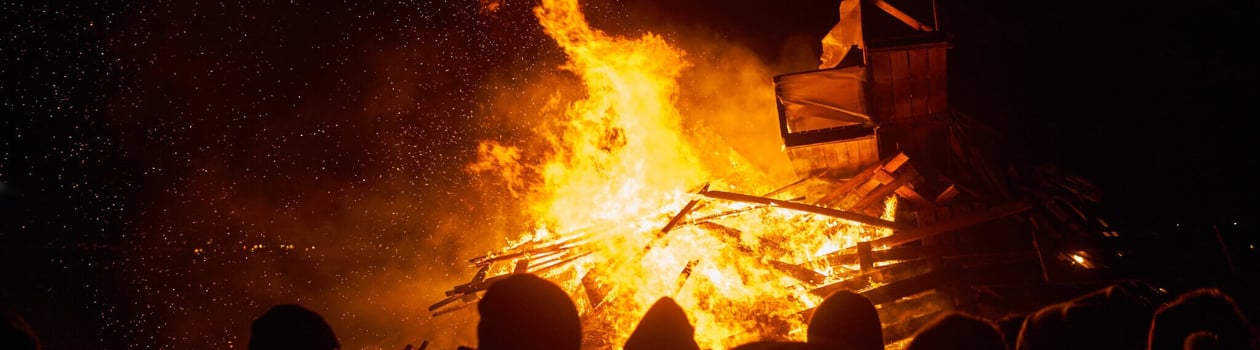
Walpurgis Night is a vibrant celebration filled with music, bonfires, and dancing. It marks the arrival of spring and the end of winter’s long grip. Communities come together to enjoy the warmth and light of the fires, which symbolize protection from evil spirits.
This night is especially lively in Northern Europe, where people gather outdoors to enjoy the festive atmosphere.
The event combines elements of old traditions and modern fun, making it a unique occasion that blends the past with the present.
How to Celebrate Walpurgis Night
Light Up the Night
Gather some friends and family for a bonfire. The bigger the fire, the better the fun! Watch the flames dance and crackle as everyone enjoys the warmth.
Don’t forget to bring marshmallows or sausages to roast over the fire. The cozy glow will keep everyone smiling well into the night.
Make Some Noise
Grab pots, pans, or anything that clatters. This night calls for making some serious noise! Bang, clang, and shout away to scare off any mischievous spirits lingering nearby.
The louder the celebration, the safer you’ll be, or so the old tales say. Plus, it’s just plain fun!
Dress Like a Witch
Get creative with costumes! Dressing up as witches or wizards adds a playful twist to the festivities. Tall hats, flowing capes, and broomsticks are a must.
It’s a chance to embrace the magical side of Walpurgis Night. Don’t forget to cackle like a witch when you’re in full gear!
Host a Spring Feast
Celebrate the season with a delicious spread. Prepare a feast filled with fresh spring foods like salads, baked goods, and fruity drinks. Invite neighbors and friends to join in.
Eating together outdoors or around the fire makes the evening even more special.
Dance Under the Stars
When the fire’s blazing and the music’s playing, it’s time to dance! Let loose with some lively tunes and dance under the night sky.
Just have fun and enjoy the energy of the evening. It’s the perfect way to welcome spring with joy and laughter.
Reasons for Celebrating Walpurgis Night
People celebrate Walpurgis Night for several reasons. First, it’s a way to welcome the fresh energy of spring.
The bonfires, a key feature, are believed to ward off evil and ensure a safe start to the new season. It’s also a time for socializing, bringing communities together after the isolating winter months.
Lastly, the night honors Saint Walpurga, who was believed to protect against witchcraft and evil. These combined reasons make Walpurgis Night a cherished and lively tradition.
History of Walpurgis Night
Walpurgis Night has deep roots in European folklore. The celebration likely started with early pagan rituals to welcome spring and ward off winter’s lingering darkness.
Bonfires played a central role, as people believed fire could chase away evil spirits that were thought to roam freely on the last night of April. These practices spread across regions like Germany, Sweden, and Finland, each adding their unique touch.
In the eighth century, the night took on new meaning with the influence of Christianity. Saint Walpurga, an English nun who worked in Germany, became linked to the event. Famous for her healing abilities and protective powers, she was canonized on May 1, 870.
This connection led people to honor her on the eve of her feast day, blending old traditions with new religious significance.
As a result, Walpurgis Night became a mix of ancient beliefs and Christian practices, making it a unique and enduring celebration across Europe.
Walpurgis Night FAQs
What is the origin of the name “Walpurgis Night”?
The name “Walpurgis Night” honors Saint Walpurga, an 8th-century English missionary.
She became renowned in Germany for her healing abilities and for countering witchcraft. Her canonization on May 1st led to the association of her feast’s eve with existing spring festivals.
How did Walpurgis Night become linked with witchcraft?
Medieval folklore suggested that on April 30th, witches convened on the Brocken, the highest peak in Germany’s Harz Mountains. To protect themselves, villagers lit bonfires and made loud noises to ward off these gatherings.
What unique traditions are observed in Finland during Walpurgis Night?
In Finland, Walpurgis Night, known as Vappu, is among the country’s major holidays. Festivities include carnival-style celebrations, student processions, and the consumption of sima, a traditional mead.
How do Estonians celebrate Walpurgis Night?
Estonians celebrate “Volbriöö” by dressing as witches and roaming the streets in a carnival-like atmosphere. In Tartu, student organizations hold processions, symbolically taking over city governance for the night.
Is there a connection between Walpurgis Night and May Day?
Yes, Walpurgis Night precedes May Day, both marking the transition from winter to spring. Many customs, like bonfires, are shared between the two, celebrating renewal and fertility.
What role does music play in Walpurgis Night celebrations?
In Sweden, choirs welcome spring by singing traditional songs during Walpurgis Night. These performances often occur around large bonfires, enhancing the festive atmosphere.
Are there any modern misconceptions about Walpurgis Night?
Some view Walpurgis Night as merely a “second Halloween” due to its association with witches. However, its primary focus is celebrating spring’s arrival and community bonding.
How is Walpurgis Night depicted in literature?
Johann Wolfgang von Goethe’s “Faust” features a scene set during Walpurgis Night, highlighting its mystical and eerie reputation in German folklore.
What foods are traditionally associated with Walpurgis Night?
In Finland, people enjoy tippaleipä, a type of funnel cake, and sima, a fermented lemon drink, during Vappu celebrations.
How do modern celebrations of Walpurgis Night differ across Europe?
While bonfires are common, traditions vary: Germans may dress in costumes and play pranks, Swedes sing spring songs, and Finns hold carnivals and student events.


You may also like
Spring Fairy Fun Day
Spring Fairy Fun Day is a playful celebration of spring’s fresh-start energy, with a dash of glitter and a wink at folklore. It invites people to notice the small wonders that pop up when the season shifts, like new buds on branches, longer afternoons, and that unmistakable feeling that the...
- Australia
- Canada
- International
- and 2 more

Festa Junina
Discover Festa Junina, Brazil’s vibrant winter festival of corn-based foods, bonfires, forró music, and quadrilha dances that honor rural life and community.
St. John’s Eve
Discover the meaning of St. John’s Eve, a mystical night of bonfires, herbs, dancing, and water rituals that blend Christian, folk, and nature traditions.

Midsummer Day
It's the time of year when the sun shines brighter and the nights grow shorter. Celebrate the season with bonfires, flowers, and fun!
National days and holidays on April 30 2027

Day of the Child
A day filled with laughter, games, and the pure joy of being a kid, where imaginations run wild and smiles shine bright.
- Australia
- Canada
- International
- and 2 more

Orthodox Holy Week
Orthodox Holy Week is a deep and meaningful journey leading up to Easter, which celebrates Christ's resurrection. This sacred week starts with Palm Sunday, marking Jesus’ arrival in Jerusalem, greeted as a king. Each day then carries unique themes and moments of reflection. Early in the week, the parable of...
Orthodox Good Friday
Orthodox Good Friday is a deeply revered day among Orthodox Christians, observed to honor the crucifixion of Jesus Christ. This solemn day falls on different dates each year, adhering to the Julian calendar, unlike many Western Christian churches that use the Gregorian calendar. In 2024, for example, it will be...
- Bosnia & Herzegovina
- Bulgaria
- Cyprus
- and 9 more

International Jazz Day
Join your community in appreciating and recognizing the rich culture and heritage of jazz. Visit a local jazz club, or revisit some of the greatest musicians in history.
Seize Every Day
Join free for personalised recommendations, email reminders and exclusive guides. Never miss a day.