
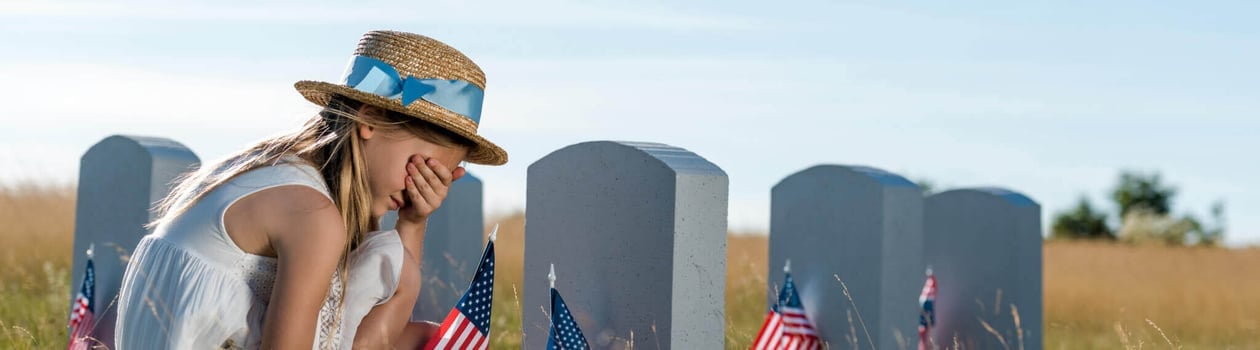
Children of Fallen Patriots Day honors the sons and daughters of military heroes who died in service. These young people carry the weight of loss while still being asked to do all the ordinary growing up that everyone else does: getting through school, making friends, figuring out who they want to become, and imagining a future that suddenly looks different than it once did.
The day brings attention to their strength and the challenges they face. It reminds people that behind every fallen service member is a family learning to navigate life without them, often while dealing with sudden changes in income, routines, and emotional support.
A fallen parent may be celebrated in a ceremony, but their child’s everyday realities happen quietly at home and in classrooms. This observance makes room for those stories, not as tragedy on display, but as lives worth investing in.
Children of Fallen Patriots Day also highlights something practical and urgent: education. For many families, college plans can be thrown into uncertainty when a parent dies in the line of duty. Even when survivor benefits exist, the cost of higher education can be daunting, and the non-financial side of planning for college can be just as overwhelming. Support, guidance, and steady encouragement can be as valuable as money.
The Children of Fallen Patriots Foundation plays a key role in this mission. Since 2002, it has worked to provide college scholarships and educational counseling to children who have lost a parent while serving.
The foundation’s approach recognizes that college readiness is not only about tuition bills. It is also about helping students stay on track academically, explore options that fit their interests, and have someone in their corner who understands the unique pressures that can follow a line-of-duty loss.
These efforts help bridge the financial gap many families face after losing a loved one in uniform. A household can shift overnight from two incomes or two active caregivers to one parent carrying everything alone.
That can mean moving, changing schools, postponing activities, or taking on responsibilities earlier than peers. When the time comes to fill out applications, compare programs, and make big decisions, these students deserve more than sympathetic nods. They deserve concrete support that helps keep doors open.
By easing the burden of college costs, the foundation empowers these children to pursue their goals. Their success stands as a tribute to the parents who gave everything, but it is also a statement about the child: they are not defined by loss alone.
They are students, teammates, artists, future tradespeople, nurses, engineers, teachers, and parents. Children of Fallen Patriots Day encourages communities to see that potential clearly and help protect it.
How to Observe Children of Fallen Patriots Day
Children of Fallen Patriots Day offers a chance to honor the sons and daughters of military heroes who died in service. Observing the day can be quiet and personal or community-focused, but the most meaningful actions tend to be the ones that combine respect with real-world help. It is a day for listening, learning, and supporting educational futures in ways that are thoughtful and appropriate.
A helpful mindset is to remember that children and teens process grief differently, and not on a predictable schedule. Some want to talk about their parent often, and others prefer privacy. Some feel proud and determined, while also feeling angry, anxious, or tired. The best observances leave room for all of it. The goal is not to “fix” anyone’s feelings. The goal is to show up with steadiness and care.
Share Their Stories
Take a moment to learn about the lives of these children. Read their experiences and understand their journeys. Discuss their stories with friends and family. Sharing their narratives helps keep their memories alive.
Support Their Education
Take a moment to learn about the lives of these children. Reading first-person accounts and hearing from Gold Star families can deepen understanding beyond a headline. These stories often include ordinary details that make the sacrifice feel real: a parent who read bedtime stories on leave, a mom who coached a team when she was home, a dad who mailed postcards from training. Small memories tend to be the ones kids hold tightly.
Discuss what is learned with friends, family, classrooms, or community groups, but keep the focus on dignity. Sharing their narratives helps keep their memories alive, and it also reduces the isolation that can come when people feel unsure of what to say.
A respectful way to share is to highlight resilience and goals alongside grief, and to avoid turning a child’s loss into a dramatic anecdote. When a story is told well, it invites others to support the child’s future, not just feel sad for a moment.
For those who know a family personally, “sharing their story” can be as simple as remembering a parent’s name, acknowledging a milestone, or checking in around transitions like graduation. It can mean saying, plainly and kindly, “Your parent mattered, and so do you.”
Attend Community Events
Consider contributing to organizations that provide scholarships to these children. Support can be financial, but it can also be practical. A donation helps bridge the financial gap they often face, especially as tuition, fees, books, and housing add up quickly. Even small contributions can combine into meaningful assistance when given consistently.
Education support can also look like mentorship. Someone with experience in financial aid forms, college applications, apprenticeship programs, or career planning can offer guidance that reduces stress. Many students benefit from help building a résumé, practicing interviews, or exploring paths that match their strengths. Not every student’s goal is a four-year college, and the spirit of this day fits any plan that leads to stability and growth.
Those in workplaces or community groups can consider creating scholarship funds, sponsoring tutoring, or offering paid internships. The best support respects the student’s autonomy. It asks what they want to pursue and helps them get there, rather than deciding for them.
Create a Tribute
Look for local events that honor fallen service members and their families. Participating in these gatherings shows solidarity and respect. Some events are formal, with speeches and ceremonies; others are quiet, such as walks, service projects, or educational workshops. Attendance matters because it signals that families are not carrying the weight alone.
For communities that host events, inclusivity and sensitivity are key. It helps to offer spaces that are welcoming to children and teens, not only adults. When youth are present, activities can be structured around service, learning, or creative expression rather than focusing solely on somber reflection. A balanced tone can feel more supportive, especially for younger children who may not have the words for complicated emotions.
If a community includes Gold Star families, consider asking them what they find meaningful. Some prefer low-key gatherings, and others appreciate public recognition. Let the family guide the level of attention.
Educate the Young
Teach children about the significance of this day in age-appropriate ways. Explaining the importance of remembering those who have lost a parent in service can build empathy without glorifying conflict. The emphasis can stay on values that translate well for young audiences: service, responsibility, community care, and helping classmates who are going through hard things.
In classrooms or youth groups, education can include discussions about different kinds of service, the role of military families, and how communities can support children facing loss. It can also include practical empathy skills, such as how to offer friendship without prying, how to include someone who feels different, and how to be kind when someone’s emotions show up unexpectedly.
One of the most useful lessons is that support is ongoing. A child does not only need kindness on a single day. They need steady inclusion and understanding throughout the year, especially during life transitions.
Children of Fallen Patriots Day Timeline
Establishment of Arlington National Cemetery
The U.S. government designated Arlington National Cemetery as a military burial ground during the Civil War, creating a national place of honor where generations of fallen service members and their families, including children, are later laid to rest.
Birth of the Gold Star Family Symbol
During World War I, American families began hanging service flags with blue stars for each serving member and replacing them with gold stars when a loved one died, giving rise to the term “Gold Star families” and public recognition of surviving spouses and children.
Federal Government Begins Support for War Orphans
Congress authorized the Veterans’ Bureau to provide training and other benefits to widows and orphans of World War I veterans, an early acknowledgment that the nation has a responsibility to support the children of fallen service members.
Servicemen’s Readjustment Act (GI Bill) Enacted
President Franklin D. Roosevelt signed the original GI Bill, providing education and other benefits for veterans. Later amendments and successors to the GI Bill expand eligibility to certain dependents and survivors, laying the groundwork for education support to children of the fallen.
Creation of the Survivor Benefit Plan
Congress establishes the Survivor Benefit Plan, allowing retiring service members to provide a portion of their retired pay to surviving spouses and dependent children, formalizing long‑term income support for families after a military death.
Gold Star Mother and Family Recognition in Law
Congress designates the last Sunday in September as Gold Star Mother’s Day and later expands recognition to Gold Star families, further institutionalizing national acknowledgment of parents and children who have lost a service member in the line of duty.
Post‑9/11 GI Bill Fry Scholarship Established
The Marine Gunnery Sergeant John David Fry Scholarship was created to provide full Post‑9/11 GI Bill education benefits to the surviving spouses and children of service members who died in the line of duty after September 10, 2001, greatly expanding college opportunities for these children.
History of Children of Fallen Patriots Day
Children of Fallen Patriots Day honors the sons and daughters of U.S. service members who died in the line of duty. Observed each year on May 13, the date was chosen because Arlington National Cemetery was established on that day in 1864.
The choice of date connects the observance to a place strongly associated with national remembrance and military sacrifice, while shifting the focus to the next generation living with that sacrifice.
The Children of Fallen Patriots Foundation, started in 2002 by David and Cynthia Kim, created this day in 2014 to raise awareness and support for these children. The foundation’s work grew from the recognition that when a service member dies, the family’s loss is not only emotional. It can also disrupt educational plans for children who may have counted on a parent’s income, guidance, or presence to make college possible.
David Kim served alongside Sergeant William Delaney Gibbs, who was killed in action in 1989, leaving behind a pregnant wife. This loss inspired Kim to help other families facing similar tragedies. That motivating story underscores a central theme of the day: service continues after service. For some, that continued service is carried out through mentorship, fundraising, and building systems that help children thrive.
The foundation provides college scholarships and educational counseling to Gold Star scholars, children who have lost a parent in military service. The term “Gold Star” is widely used to recognize families who have experienced a line-of-duty death, and it has become a shorthand for a particular kind of grief and pride that can coexist in the same household.
Children of Fallen Patriots Day draws attention to the child’s perspective within that family experience. It asks people to consider what support looks like not only in the immediate aftermath, but across the long stretch of a child’s development.
Scholarships can play a crucial role because higher education has become increasingly expensive, and financial pressure can affect everything from what school a student chooses to whether they can attend at all. Costs extend beyond tuition.
Fees, housing, transportation, technology, and books can quickly become barriers, especially for a surviving parent juggling household expenses alone. Educational counseling helps students navigate these realities. It can include planning coursework, identifying programs, exploring careers, and building the confidence that comes from having someone knowledgeable to consult.
Since its inception, the foundation has awarded substantial assistance to thousands of students across all U.S. states and Puerto Rico. Beyond the numbers, the day highlights individual outcomes that are easy to picture: a student staying enrolled because a bill was covered, a first-generation college student finding their footing, a young adult finishing a degree that their parent once talked about at the dinner table.
While not yet a federally recognized holiday, Children of Fallen Patriots Day has been officially proclaimed by governors in multiple states and the District of Columbia. Proclamations and public recognition matter because they help the broader public understand that sacrifice does not end with a flag ceremony.
A fallen service member’s child grows up, goes to school, applies for programs, and tries to build a stable future while carrying a permanent absence. Making space for this day encourages institutions, employers, and neighbors to consider what they can do, not out of pity, but out of shared responsibility.
The day serves as a reminder of the sacrifices made by military families and the importance of supporting their children’s futures. It centers education as a practical promise to keep. Remembering a parent’s service is meaningful, but helping their child become who they are meant to be is a living form of respect.
Honoring the Experiences of Children of Fallen Patriots
Children of fallen service members face unique emotional, social, and educational challenges shaped by loss and change. These facts highlight the realities they navigate—from mental health risks and frequent relocations to evolving support systems—while also recognizing the efforts made over time to provide stability, care, and opportunity.
Gold Star Children Face Elevated Risk of Mental Health Challenges
Research on bereaved military children shows they are at higher risk for depression, post-traumatic stress symptoms, and behavioral problems compared with non-bereaved peers, especially in the first two years after a parent’s death.
A large study of U.S. military-connected youth found that children who lost a military parent reported more school difficulties and emotional distress, though strong family support and access to counseling significantly reduced long-term negative outcomes.
Surviving Military Children Often Relocate and Change Schools Repeatedly
Children who lose a parent in military service frequently experience multiple moves as surviving spouses relocate for family support, employment, or more affordable living situations.
Studies of military-connected students show that repeated school transitions can disrupt academic progress and peer relationships, but stable schooling and targeted school-based support can help these children recover and thrive academically.
Educational Benefits for Children of Fallen Service Members Have Expanded Over a Century
U.S. survivor benefits for children of fallen service members began with modest pensions after the Civil War and significantly expanded after World War I and World War II.
Today, federal programs such as the Fry Scholarship and Survivors’ and Dependents’ Educational Assistance (DEA) can cover substantial portions of college tuition and provide monthly stipends, reflecting a century-long policy shift toward recognizing long-term educational needs of military orphans.
Gold Star Families Grew Out of a World War I Symbol System
The term “Gold Star family” comes from a World War I practice in which families hung service flags with a blue star for each serving member and replaced the blue star with a gold one if that person died in service.
By the 1920s, the gold star symbol had become widely recognized as representing a family that had lost a service member, and it later informed modern organizations and benefits programs that focus on supporting surviving spouses and children.
Children Often Assume Adult Responsibilities After a Military Parent’s Death
When a service member dies, surviving children frequently take on extra caregiving, household, or emotional support roles within the family.
Clinical research on “parentification” in bereaved military families notes that adolescents may manage younger siblings, finances, or household tasks earlier than peers, which can increase stress but can also foster maturity and resilience when adults recognize and appropriately support these added responsibilities.
Peer-Based Camps Help Grieving Military Children Build Resilience
Specialized bereavement programs, such as weekend or weeklong camps for children of fallen service members, use group activities, counseling, and memorial rituals to help participants process grief with others who share similar losses.
Evaluations of these programs show reductions in feelings of isolation and improvements in coping skills, suggesting that peer connection plays a central role in healthy adjustment for military orphans.
Surviving Children of Fallen Service Members Are Protected by Federal Employment Preferences
When they become adults, certain children of service members who died in the line of duty are eligible for federal hiring preferences similar to those given to some veterans.
Under U.S. Office of Personnel Management rules, a surviving child who is unmarried and meets age and other criteria may receive a competitive advantage in federal job applications, recognizing the long-term impact of a parent’s death in service on the child’s economic opportunities.