
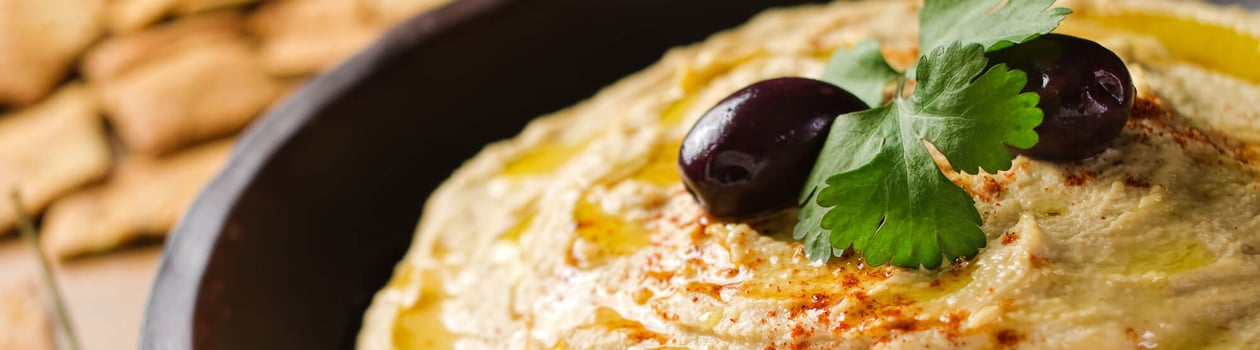
Hummus is an Eastern Mediterranean and Egyptian food. It may come in the form of a dip or a spread that is made from cooked, mashed chickpeas or other beans, and then blended with tahini, olive oil, lemon juice, salt, and garlic.
Today, this delicious dip is popular throughout the Middle East (including Turkey), North Africa (including Morocco), and in Middle Eastern cuisine around the globe.
International Hummus Day is the perfect day to learn more about this delicious treat–and of course spend some time eating it too!
International Hummus Day Timeline
Early Chickpea Cultivation in the Fertile Crescent
Archaeological evidence from Neolithic sites in southeastern Turkey and northern Syria shows that chickpeas were among the earliest domesticated pulses, laying the agricultural foundation for later chickpea dishes such as hummus.
Earliest Recorded Arabic Chickpea Dishes
The Arabic culinary tradition preserves some of the earliest known written recipes using chickpeas, including boiled, mashed, and seasoned preparations that foreshadow later purees and dips found across the Middle East.
Medieval Arabic Cookbooks Describe Chickpea Purees
The Abbasid-era cookbook “Kitab al-Tabikh,” attributed to al‑Baghdadi, includes recipes for mashed or pureed chickpeas seasoned with vinegar, herbs, and spices, indicating that chickpea pastes and dips were established in elite Middle Eastern cuisine.
Hummus Bi Tahini Becomes a Levantine Staple
Across Lebanon, Syria, Palestine, Israel, and neighboring countries, hummus blended with tahini becomes a standard mezze offering in homes and restaurants, firmly associated with regional food culture and identity.
Packaged Hummus Reaches US and UK Supermarkets
Small Middle Eastern businesses and later brands such as Sabra and Tribe introduce refrigerated hummus in tubs to mainstream grocery chains in North America and Britain, helping transform the chickpea‑tahini dip into a popular international food.
How to Celebrate International Hummus Day
Enjoying Hummus Day can be fun, delicious and also a learning experience! Try out these ideas for celebrating the day, or come up with other creative ideas:
Learn to Make Hummus
The fact that hummus is so delicious doesn’t mean it’s difficult to make! Hummus only contains a few ingredients and it is pretty simple for someone with a food processor or high speed blender.
To make it, start with a can or jar of chickpeas (also known as garbanzo beans). Add a little bit of salt, a touch of lemon juice, some freshly minced garlic, and a bit of extra virgin olive oil. Throw it all into the food processor and let it turn into a thing of beauty!
For those who prefer a bit of extra flavor in their hummus, try adding a bit of tahini, which is a paste that is made from sesame seeds and used in traditional hummus recipes.
Taste Different Dipping Options for Hummus
While traditional hummus is fabulous, it is made so much better by the items that are dipped into or poured on top of! Mix it up by adding a few of these to the hummus repertoire:
- Vegetables. Including carrot sticks, celery sticks, cucumber slices, sliced bell peppers, broccoli, cauliflower, zucchini slices or radishes.
- Bread. More than just a boring old slice of toast, bread can be an exciting foray into the world of hummus. Try using pretzel sticks, pita bread slices, bagel chips, crackers, tortilla chips, rice cakes, or crusty bread pieces.
Introduce a Friend to Hummus
Although hummus is pretty common around the world, that doesn’t mean everyone has been introduced to its yummy goodness!
Ask around to find out if there are friends or coworkers who haven’t tried it. This is the perfect day to help them open up their minds and taste buds to explore something new and interesting!
Try Out a Dessert Hummus
Due to its savory flavor, many people haven’t really considered the idea that hummus could also be a solution for those with a sweet tooth! Still made with chickpeas (garbanzo beans) as a base, these types of sweeter dips include ingredients such as almond butter, peanut butter, honey, maple syrup, cinnamon and cocoa.
Although, due to the sugar content, these are probably not quite as healthy as savory hummus, if using these to substitute for a regular dessert, they bring a lot of healthful benefits, and provide much less in the form of empty calories.
Consider trying out a new recipe for one of these types of hummus desserts:
- Peanut Butter Chocolate Chip Hummus
- Pumpkin Pie Hummus
- Sweet Vanilla Bean and Chocolate Peanut Butter Swirl Hummus
- Snickerdoodle Dessert Hummus
These sweet dips can be paired with a variety of fun items such as apples slices, graham crackers, strawberries, biscotti, animal crackers, pretzels, butter cookies or other fruits.
Join an International Hummus Day Event
Groups and individuals throughout the world come together on Hummus Day to enjoy and celebrate this tasty dish. The official Hummus Day website offers information and insight into various places where events are being held.
In the past, events have included a live hummus-making presentation on Instagram, live presentations by the Israel Ministry of Tourism on Instagram, as well as restaurants sponsoring the launching of new hummus flavors
Various festivals are also often scheduled to occur during the week of Hummus Day, including places such as Zatar, Lithuania and Al Maeda, Dubai.
Hummus Day activities have happened all over the world, including Europe, Australia, North America, Africa, Asia and the Middle East. Check out the Hummus Day website to see local events of the region.
Of course, those who don’t have something happening nearby might want to consider hosting their own Hummus Day Event!
Snag Some Free Hummus
Going naturally along with the Hummus Day events come restaurants who are offering free or discounted hummus in celebration of the day. Check out these places that have been known to offer free hummus in the past:
- In Sydney, Australia, Simply Hummus Bar has been known to provide their customers with free samples of new dishes as well as releasing a new menu in honor of Hummus Day.
- In Hermosillo, Mexico, GUT Alimentos has offered Hummus Giveaways for the day on social media.
- In New York City, USA, The Hummus & Pita Co. has seen this as a great opportunity to give a hand to someone else. In 2019 they donated $1 to a food bank for every side of hummus that was sold.
- In Bresica, Italy, I Nazareni offered a free dish of hummus to those customers who donated to a charity to help the needy.
History of International Hummus Day
Many cuisine-related sources describe hummus as an ancient food, and they sometimes also connect it to a famous historical figure, such as Saladin, who was a well-known Muslim leader in the 12th century.
However, many women of the time would probably contest the idea that a man would be credited with inventing this dish when women almost exclusively did the cooking!Other historians believe there does not seem to be specific evidence for this purported ancient history of hummus bi tahini.
Though chickpeas were widely eaten in the region, and they were often cooked in stews and other hot dishes, puréed chickpeas eaten cold with tahini do not seem to appear before the Abbasid period in Egypt and the Levant.
No matter where it came from, the basic ingredients of hummus—chickpeas, sesame, lemon, and garlic—have been eaten in the region for thousands of years! So hummus is certainly not a new kid on the block when it comes to dishes from this area. Hummus can be a healthy part of a tasty Mediterranean diet that provides nutrients, all packed with delicious flavor.
Even though the history of this dish may be a bit fuzzy, what matters the most is that people now have access to it all over the world. It is available globally in kitchens, grocery stores and restaurants to be eaten, enjoyed, and even celebrated, on International Hummus Day!
The beginnings of International Hummus Day are fairly recent, only starting in 2012. But millions of people all over the world now come together to host events, learn to make hummus, and gather with friends to enjoy all it has to offer.
It’s time to celebrate International Hummus Day!
Facts About International Hummus Day
Ancient Chickpea Dishes Preceded Hummus Bi Tahina
Chickpeas have been eaten in the Eastern Mediterranean for thousands of years, but the cold purée with tahini recognized today as hummus bi tahina appears relatively late in the record.
Medieval Arabic cookbooks from the 13th century describe various chickpea stews and purées, while food historians note that a clearly identifiable hummus bi tahina preparation emerges only in later Levantine and Egyptian sources, suggesting that “classic hummus” is a medieval evolution of much older chickpea cookery.
Hummus Consumption Helped Spur Chickpea Production in North America
As hummus became more common in American and Canadian supermarkets, demand for chickpeas expanded far beyond traditional producing regions.
Agricultural economists at the U.S. Department of Agriculture report that by the mid‑2010s, strong growth in hummus and other chickpea-based foods encouraged farmers in the Northern Plains and Pacific Northwest to increase chickpea acreage, turning what had been a minor specialty crop into a more significant part of North American pulse production.
Chickpeas Were Among the Earliest Domesticated Crops in the Fertile Crescent
The chickpea, which forms the base of hummus, belongs to a small group of “founder crops” that were domesticated early in the Fertile Crescent.
Archaeobotanical finds from Neolithic settlements and large-scale genetic analyses indicate that cultivated chickpeas descend from a limited set of ancient wild populations in this region, a history that helps explain both their long association with West Asian agriculture and their relatively narrow genetic diversity today.
Chickpea-Based Foods Can Moderate Blood Sugar and Increase Fullness
Clinical nutrition research has examined how chickpeas and chickpea-based dishes affect metabolism when eaten with carbohydrate-rich foods.
In controlled feeding studies, meals that include chickpeas or hummus tend to produce lower post-meal blood glucose responses and greater feelings of fullness compared with meals based on white bread or other refined grains alone, which has led researchers to explore chickpea ingredients as tools for improving dietary glycemic profiles.
Legume Roots Like Chickpeas Help Fix Nitrogen in the Soil
Chickpea plants, like other grain legumes, form nodules on their roots that host rhizobium bacteria capable of converting atmospheric nitrogen into forms plants can use.
Reports from the Food and Agriculture Organization note that well-managed chickpea crops can leave behind appreciable amounts of residual nitrogen in the soil for subsequent crops, reducing fertilizer needs and supporting more sustainable cereal-based rotations in regions from South Asia to the Mediterranean Basin.
Levantine Chickpea-and-Tahini Dishes Reflect Shared Culinary Heritage
Historians of Middle Eastern foodways point out that chickpea-and-tahini dishes are part of a longer Levantine culinary continuum shaped by overlapping empires and trade routes.
Palestinian, Lebanese, Syrian, Jordanian, and Egyptian sources describe closely related preparations that combine boiled chickpeas, sesame paste, lemon, and garlic, and scholars argue that these recipes evolved collectively under Ottoman and earlier Arab influences rather than originating in a single modern nation-state.
International Hummus Day FAQs



You may also like
National Chickpea Day
National Chickpea Day is all about celebrating one small bean with big impact. Chickpeas star in dishes around the world, from crispy snacks to creamy dips. They bring flavor, texture, and color to every meal they touch. This special day brings attention to their role in cooking and how they...
- United States
World Pulses Day
These plant-based protein sources offer nutrition, sustainability, and versatility, enriching meals and promoting health and wellness.
- Australia
- Canada
- India
- and 3 more
National Peanut Butter Day
Spread this creamy, nutty treat far and wide, experiment with mouthwatering recipes or tuck into a classic peanut butter and jelly sandwich.
- Australia
- Canada
- United Kingdom
- and 1 more
Real Bread Week
Real bread is a joy to behold! Made with natural ingredients and baked to perfection, each bite is a heavenly experience.
- United Kingdom
National days and holidays on May 13

Cannes Film Festival
The Cannes Film Festival is one of the most glamorous and important events in the film industry. Held annually in the beautiful city of Cannes on the French Riviera, this festival draws the biggest names in cinema, from directors to actors. The red carpet is a dazzling display of style...
- France

World Cocktail Day
Host or attend a cocktail party and try out some new flavors, or perfect your hand at mixing any number of drinks, from a White Russian to a classic Cosmo.
- Australia
- Canada
- United Kingdom
- and 1 more

National Stationery Week
Sharpen your pencils and break out your fine pens, and take this excuse to use some fancy stationery. Write a loved one, find a pen pal, or even make your to-do list.

Top Gun Day
Host a watch party, with costumes and topical games, or simply gather your friends to watch the 1986 Tom Cruse classic Top Gun and its sequels.
- Australia
- Canada
- United Kingdom
- and 1 more
Seize Every Day
Join free for personalised recommendations, email reminders and exclusive guides. Never miss a day.