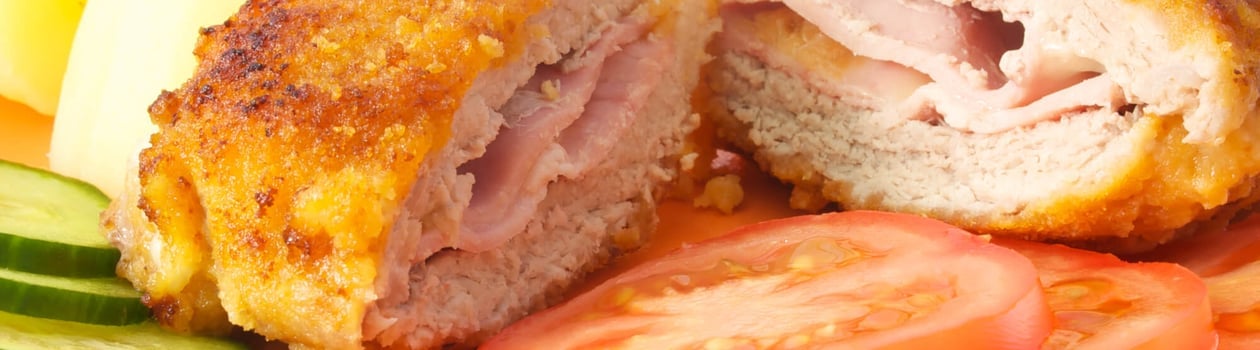
This is the day to celebrate a dish that many people recognize instantly, even if they have never attempted to make it at home. Chicken cordon bleu has a fun magic trick built into it: from the outside, it looks like a simple breaded chicken cutlet, but one slice reveals a savory spiral of meat and melty cheese that feels a little fancy without being fussy.
In its most basic form, chicken cordon bleu is a layer of cheese wrapped with ham, tucked into a butterflied chicken breast, then breaded and cooked until crisp on the outside and juicy within.
The appeal is all about contrast: crunchy coating, tender chicken, salty ham, and a creamy center that stretches just enough to be dramatic, but not so much that it escapes across the plate.
How to Celebrate National Chicken Cordon Bleu Day
Celebrating this day can be as simple as enjoying chicken cordon bleu in any form, from a classic restaurant-style portion to a weeknight baked version. It is also a great excuse to explore how one basic idea has been interpreted around the world: thin cutlets, rolled fillings, different cheeses, different meats, and different cooking methods, all orbiting the same comforting concept of “stuffed, breaded, and satisfying.”
A good starting point is to investigate the many takes on the recipe across cultures. The structure is so adaptable that it travels easily. In places where pork is not used, the ham layer can be swapped for another cured meat or omitted altogether while keeping the core method intact. In other kitchens, the chicken may be replaced with veal, pork, or turkey, depending on local traditions and what feels most “cordon bleu” to the cook.
For anyone who wants to celebrate by cooking, it helps to think of cordon bleu as a technique rather than a strict formula. The technique has a few key goals: keep the filling inside, keep the coating crisp, and cook the chicken safely without drying it out. With those goals in mind, home cooks can pick their preferred level of ambition, from quick-and-cozy to showy-and-impressive.
Learn About Chicken Cordon Bleu
One of the most useful things to know about “cordon bleu” is that it is not a mysterious ingredient or a special kind of cheese. It is a phrase. In French, cordon bleu literally translates to “blue ribbon,” a shorthand for high quality or excellence. Over time, the term became associated with prestigious cooking, which is why it shows up in food culture in ways that feel both culinary and ceremonial.
That translation also explains why the name sounds like a compliment baked right into the menu description. Calling something “cordon bleu” is essentially labeling it prizeworthy. The name signals that the dish is meant to feel elevated, even if the ingredient list is familiar. Chicken, ham, and cheese are not rare, but the assembly and presentation create the sense of a special-occasion entrée.
There is also a common point of confusion worth clearing up: chicken cordon bleu is often mistakenly assumed to come from the famous Le Cordon Bleu culinary institution. The similar wording makes it easy to believe, but the dish is better understood as an evolving recipe tradition rather than something invented by a particular school. Like many beloved classics, it gained momentum because it worked: the flavors were crowd-pleasing, the method was teachable, and the final plate looked like more effort than it really required.
The dish’s story also includes a shift in proteins. “Cordon bleu” preparations have been made with veal and other meats, and chicken versions became especially popular later as chicken became a go-to protein for home cooks and restaurant menus alike. In other words, “chicken cordon bleu” is one branch of a broader culinary family tree, and that flexibility is a big part of its endurance.
History of National Chicken Cordon Bleu Day
National Chicken Cordon Bleu Day spotlights the dish itself more than any single organization or official campaign. It is part of a larger trend of food-themed days that encourage people to cook, share recipes, or order a favorite meal just because it is fun to do so. While the observance focuses on chicken cordon bleu, the celebration naturally invites curiosity about the dish’s longer culinary backstory.
The phrase “cordon bleu,” as “blue ribbon,” is tied to the idea of distinction and high prestige in French cultural history.
That association with excellence is what made the term such a natural fit for food and eventually for recipes that were meant to impress. Over time, “cordon bleu” came to describe preparations that felt refined, even when the ingredients were straightforward.
As for the dish itself, cordon bleu is often discussed as a European-inspired preparation that became widely popular in the United States in the mid-20th century. Printed references to cordon bleu recipes, and the chicken version in particular, show up in that era, reflecting a growing appetite for “restaurant-style” dishes that could be recreated at home.
The method also fits neatly into classic breaded cutlet traditions, which exist in many cuisines: flattening meat for even cooking, adding a flavorful interior, coating it for texture, then cooking until golden.
The recipe’s rise makes practical sense. It uses accessible ingredients, it scales well for feeding a family, and it offers a built-in “wow” factor when sliced. It also adapts to different kitchen setups.
Some cooks fry for maximum crunch; others bake for a lighter approach; some use an air fryer for a crisp finish with less oil. Despite these shifts, the dish keeps its identity because the signature combination remains: a seasoned cutlet with a savory, cheesy center.
National Chicken Cordon Bleu Day, then, functions as a playful nudge to revisit a dish that sits at the intersection of comfort food and special-occasion cooking. It celebrates that satisfying moment when the knife goes through the crust, and the filling is right where it should be.
Enjoy Variations of Chicken Cordon Bleu
A classic celebration move is to try a few popular variations and compare notes. Even small changes can create a noticeably different experience. Switching the cheese changes the melt, saltiness, and aroma. Switching the ham changes smokiness and richness. Even the breadcrumb choice, fine versus coarse, can turn the crust from delicately crisp to audibly crunchy.
One widely enjoyed variation is baking instead of frying. Baked chicken cordon bleu tends to be a little lighter, and it is often easier for home cooks who want less hands-on oil management. A common approach is to set the breaded chicken on a rack or a preheated pan so air can circulate and the bottom does not turn soggy. Some cooks also finish briefly under the broiler to deepen color, watching closely so the crust browns without burning.
Another common tweak is to change the shape. Instead of a rolled cutlet, some versions use a pocket cut into a thick chicken breast. Pocket-style cordon bleu can feel tidier because the filling has fewer routes for escape, but it depends on careful knife work. Rolled versions, on the other hand, cook more evenly when the chicken is pounded thin, which is why many cooks prefer that method when going for a classic, restaurant-like slice.
Cheese choices create their own subculture of opinions. Swiss-style cheeses are popular because they melt smoothly and complement ham without overpowering it. In some regions, cooks lean toward nutty, alpine cheeses like Gruyère or Emmentaler for a richer profile. A sharper cheese can work too, but it changes the balance and may need a lighter hand with salt elsewhere.
One variation not commonly known outside of Switzerland is the schnitzel cordon bleu. Here, the meat is pounded thin and breaded, and two cutlets are paired like a sandwich with ham and cheese in the center. The result is broader and flatter than a roll, with plenty of crust and a generous filling-to-meat ratio.
The choice of cheese often leans toward regional favorites such as Emmentaler or Gruyère, which melt beautifully and give a more pronounced savory depth than mild “sandwich Swiss.”
A similar idea appears in other cuisines with different proteins. In Hungary, for instance, a veal version is often mentioned, using the same filling concept but adapting the format. Some are rolled rather than pocketed, creating neat spirals when sliced.
It is commonly served with familiar sides like mashed potatoes, French fries, or rice, which makes sense because they soak up juices and make the plate feel complete. Vegetables and bread can join the party too, especially if the goal is to balance the richness with something fresh.
For cooks navigating dietary preferences, cordon bleu is surprisingly cooperative. A pork-free version can use turkey ham, smoked poultry slices, or even a seasoned vegetable layer that provides savory depth without cured meat.
A gluten-free version can be breaded with gluten-free crumbs or finely crushed nuts or chips, depending on what texture is desired. A dairy-free version is trickier because cheese is central to the identity, but there are meltable alternatives that can mimic the creamy interior when handled gently.
The real test of any variation is whether it delivers the three essentials: flavorful layers, a secure filling, and a crisp exterior. If it does, it belongs at the cordon bleu table.
Share Chicken Cordon Bleu with Others
Sharing is an especially fitting way to celebrate a food-focused day, because chicken cordon bleu is one of those dishes that sparks instant conversation. Many people have a memory attached to it: a restaurant order that felt “grown up,” a home version made for company, or a frozen entrée that somehow still tasted like a treat. Bringing it into a shared setting invites those stories, along with the inevitable debate about the best cheese.
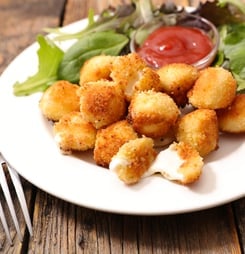
For an office, potluck, or casual gathering, smaller formats work best. “Cordon bleu bites” can be made by building bite-sized rolls or folded parcels, then breading and cooking them until crisp. Toothpicks can turn them into easy finger food.
A good strategy is to keep the filling modest in each piece so the cheese does not leak out before the chicken is cooked. Smaller portions also cook more quickly and evenly, which is helpful when making a large batch.
Another shareable option is a “deconstructed” spread. Instead of asking everyone to commit to stuffed chicken, a host can offer breaded chicken cutlets alongside platters of ham, cheeses, and sauces, letting guests build their own bite.
It keeps the spirit of cordon bleu while making serving simpler, especially if the kitchen does not have the space for careful rolling and breading assembly lines.
Sharing can also mean swapping recipes. Because cordon bleu is technique-driven, small personal tweaks are often the difference between a version that is merely good and one that becomes someone’s signature dish.
Some cooks swear by chilling the rolled chicken before breading so it holds its shape. Others prefer a double breading for extra crunch. In some seasons, the breadcrumbs are aggressively seasoned with herbs and garlic. Others keep the crust neutral and focus on a bold cheese.
With all the varieties of cordon bleu to choose from, it is easy to bring a selection of flavors to the table. One tray might be traditional chicken with Swiss and ham, another might use turkey and a different cheese, and a third could lean into a regional style like schnitzel cordon bleu. The variety helps everyone find a favorite, and it highlights the dish’s surprisingly international personality.
Most of all, sharing chicken cordon bleu is a way to pass along confidence in the kitchen. Despite its fancy-sounding name, it does not have to be complicated. Once people see that it is essentially “stuff, roll, bread, cook,” the dish becomes approachable, and that is a pretty great thing to spread around.
The Origins Behind the Name “Cordon Bleu”
The name “cordon bleu” carries a long history that reaches far beyond the well-known chicken dish.
Originally associated with French chivalric orders and later with culinary excellence, the term gradually evolved into a symbol of high-quality cooking.
Understanding the roots of “cordon bleu” reveals how language, tradition, and European cuisine shaped the famous dish recognized today.
Blue Ribbons and Royal Knights
The phrase “cordon bleu,” meaning “blue ribbon” in French, first referred to the blue sashes and ribbons worn by members of the Order of the Holy Spirit, a chivalric order founded in 16th-century France, and only later became a metaphor for culinary excellence.
From Chivalric Symbol to Culinary Seal of Quality
By the 19th and early 20th centuries, French writers and advertisers were using “cordon bleu” figuratively to describe exceptional cooks and food, transferring the prestige of the royal order’s blue ribbon to dishes and chefs regarded as first-rate.
Stuffed Cutlets in European Cuisine
Stuffed and breaded meat cutlets like chicken cordon bleu belong to a broader Central and Eastern European tradition that includes dishes such as schnitzel and chicken Kyiv, where meat is pounded thin, filled, coated in crumbs, and then fried or baked.
A Swiss Take on Breaded Cutlets
Many food historians trace the immediate culinary roots of modern “cordon bleu” dishes to Swiss-style schnitzel, in which veal or pork is pounded thin, wrapped or filled with cheese and sometimes ham, then breaded and fried in fat until crisp.
Not a Creation of Le Cordon Bleu School
Despite the shared name, chicken cordon bleu does not originate from the famous Le Cordon Bleu cooking school in Paris; the school, founded in 1895, took its title from the older expression for superior cooking rather than lending its name to the dish.
Airline Ads and Mid‑Century Glamour Dining
Archival newspaper research shows that “cordon bleu” dishes appeared on mid‑20th‑century American airline menus and in airline advertisements, where serving a breaded, cheese‑stuffed cutlet signaled continental sophistication to travelers during the jet age.
Restaurant Menus and Newspaper Columns Spread the Dish
Food historians have found that cordon bleu preparations gained traction in the United States through 1950s and 1960s restaurant menus and newspaper food columns, which popularized breaded, cheese‑filled veal and chicken cutlets as impressive yet accessible home‑entertaining dishes.