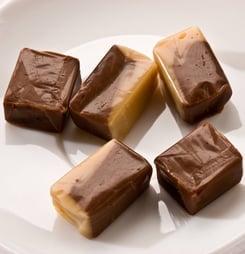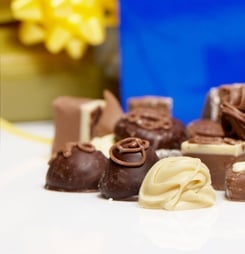

Chocoholics can find countless ways to indulge their passion, but there are those among us who hold a special place in their hearts for cream-filled chocolates. National Cream-Filled Chocolates Day has been created with these special people in mind!
An extraordinary feeling comes from snapping through the outer layer of chocolate and letting the luscious creamy centre melt on the tongue. Nothing else compares!
Whether it is a craving for strawberry, butterscotch, peppermint or another scrumptious flavor, there is bound to be an option to satisfy anyone’s taste.
So is there any reason not to celebrate this most delicious day? We think not!
National Cream-Filled Chocolates Day Timeline
Early European Pralines Documented French confectioners associated with Marshal du Plessis-Praslin create early “pralines,” nuts coated in caramelized sugar that inspire later filled-chocolate ideas.
French confectioners associated with Marshal du Plessis-Praslin create early “pralines,” nuts coated in caramelized sugar that inspire later filled-chocolate ideas.
Rise of Filled and Molded Chocolates
Advances in chocolate molding and fillings in Europe lead confectioners to experiment with soft centers, paving the way for modern cream-filled bonbons.
Mass Production of Boxed Chocolates in the U.S.
Milton Hershey sees German chocolate-making machinery at the Chicago World’s Fair, helping spark large-scale American production of boxed chocolates that later feature assorted creams.
Jean Neuhaus II Creates Modern Cream-Filled Pralines
Belgian chocolatier Jean Neuhaus II develops the hard chocolate shell that can hold soft cream fillings, considered the birth of modern cream-filled chocolates.
Whitman’s Sampler Popularizes Assorted Creams
Whitman’s Sampler boxes, introduced earlier but trademarked in 1923, popularize assorted boxed chocolates with maps showing the locations of creams and other fillings.
Russell Stover Expands Boxed Cream-Filled Chocolates
Russell Stover Candies relocates to Kansas City and grows into a major U.S. producer of boxed chocolates, helping make cream-filled assortments a mainstream gift.
Lindt Introduces the Lindor Truffle
Swiss chocolatier Lindt launches its signature Lindor truffle, featuring a smooth, melting center inside a chocolate shell, reinforcing global demand for creamy filled chocolates.
How to Celebrate National Cream-Filled Chocolates Day
Just like any other type of celebration, National Cream-Filled Chocolates Day may require a bit of planning ahead of time, especially for those who want to try their hand at making their own candies.
But lots of options exist for enjoying this day, particularly for people who are willing to get creative!
Buy and Enjoy Various Cream-Filled Chocolates
The most obvious way to celebrate this day is to fill your mouth and tummy with the yummy goodness of luxury, gourmet chocolates. Many companies have made their chocolates famous around the world, and online purchasing makes it even easier to access them:
- Lindt. This Swiss company was originally known for truffles but is now most popular for its chocolate spheres. Strawberries and Cream is a particularly favorite cream-filled flavor.
- Hershey’s. Around Valentine’s Day especially, this American company often dabbles in cream-filled chocolate hearts.
- Ferrero. Founded in Italy, this purveyor of fine chocolates has gained a worldwide reputation for their hazelnut filled Rocher candies.
- Embaré. From Brazil, this company is particularly adept at creating chocolates filled with exotic fruit flavors.
Enjoy a Chocolate Guessing-Game
Cream-filled chocolates are often included as part of a box of various types of chocolates, which can be purchased at food stores, gift shops, or specialty chocolatiers. Many times, the manufacturer places a guide on the inside of the box so that each type of chocolate can be easily identified and enjoyed.
To make a game of it, buy a couple of boxes of chocolates to take to work or a Cream-Filled Chocolate Day party. But instead of leaving the guide for friends to see, keep it a secret and turn the eating of the chocolates into a guessing game to see who can identify what they get! (Just be careful of nut allergies.)
The winner? Well, of course, the appropriate prize would be a special selection of cream-filled chocolates.
Grab Some Heart Shaped Cream-Filled Chocolates
Since it overlaps with Valentine’s Day, people may find that their favorite cream-filled chocolates are available in heart shapes as well as the standard circles, ovals and squares, which adds something special to the way the candies can be enjoyed.
History of National Cream-Filled Chocolates Day
The interesting concept of cream-filled chocolates was actually based on simple pralines which were originally documented in the 17th century by a sugar industrialist named Marshal du Pessis-Praslin.
At the time, cocoa (and therefore chocolate) was relatively unknown in Europe, so the pralines of the day were mostly just nuts coated in a layer of caramelized sugar. Due to the many new ingredients becoming more readily available from the New World, slowly but surely pralines began to evolve and get ever more creative and fancy as the years went by.
The first cream-filled chocolates as we know them today were believed to be created in 1912 by Jean Neuhaus II, a Belgian chocolatier.
It did not take long for these chocolates to contain everything from various liqueurs to marzipan, from fruits to caramel, and almost anything else you can imagine. But, of course, the most important aspect is that the center is creamy.
Because National Cream-Filled Chocolates Day coincides with another important chocolate-lover’s holiday (Valentine’s Day), it is expected that at least 58 million pounds of chocolate will be purchased on and around this day. Obviously, not all of this chocolate is cream-filled, but a good portion of it will be!
Bonus Recipe: Make Your Own Cream-Filled Chocolates
If you have a hankering for something unique, or a craving hits you in the middle of the night, you can make your own cream-filled chocolates—surprisingly enough, it’s not really that hard at all! Chocolate molds are readily available from companies such as Wilton.
To make these delectable treats, simply line a mold with melted chocolate, let it harden, fill the shells with the filling your heart desires most (or three, or ten, the sky’s the limit), and then cover them with another layer of chocolate. Voila!
You have your own custom-made filled chocolates, anytime you need that cream-filled chocolate fix.
Contrary to popular opinion, one of the easiest and most basic fillings is salted caramel, so when thinking of how to celebrate National Cream-Filled Chocolates Day, it’s time to get to work with the following recipe:
Salted Caramel Filling Recipe
Ingredients: (makes about 1 1/2 cups)
- 200g sugar
- 1 small vanilla bean, seeds scraped
- 100g thickened cream
- 150g unsalted butter, cut into pieces
- 3g salt
Note: Some people tend to complain about how easy it is to burn caramel, which might make it seem scary. But burning is really only likely to happen if a candy maker tries to speed the process up, but making caramel is a slow and deliberate activity. Caramel requires a bit of time and patience, but the wait is more than worth it!
Instructions:
Put the sugar and vanilla bean seeds into a clean saucepan and heat very gently over low heat, letting the sugar take its time to melt. Don’t rush the process, and try not to stir the mixture too much to keep it from clumping. If it does, don’t panic, but simply continue to heat it and the sugar should all eventually melt on its own.
When it melts completely, add the cream and whisk until combined. Reduce the heat even more and add the butter, piece by piece, mixing well after each one is added.
Then, add the salt, stir well again, and allow the mixture to cool and thicken. When it cools completely, place the caramel in a piping bag and get ready to fill those chocolates with sweet, salty, buttery goodness!
One the treats are finished and cooled, don’t forget to share with friends, neighbors and family members to make National Cream-Filled Chocolates Day a time to remember!
Facts About National Cream Filled Chocolates Day
Belgian Pralines Began as a Way to Hide Medicine
Modern cream-filled Belgian pralines grew out of an apothecary trick: in 1857 Jean Neuhaus opened a pharmacy in Brussels and began coating bitter medicines in chocolate to make them easier to swallow.
His grandson Jean Neuhaus Jr. later adapted the idea from medicine to indulgence, developing bite‑sized chocolate shells with soft fillings in the early 20th century, a concept that helped transform Belgian chocolate into a national specialty.
Creamy Centers Rely on Emulsions
Many cream fillings are stable because they are emulsions—mixtures of fat and water held together by emulsifiers like milk proteins or lecithin.
When hot cream is blended with chocolate to make ganache, cocoa butter droplets become finely dispersed in water from the cream, creating a smooth structure that sets as it cools and gives cream-filled chocolates their luxurious, melt‑in‑the‑mouth texture.
Water Activity Determines How Long Filled Chocolates Keep
The shelf life of cream-filled chocolates depends more on “water activity” than on how wet the filling feels.
Ganache and dairy-based creams with higher available water are more prone to mold and bacterial growth, so chocolatiers often add sugar, invert sugar, or alcohol and reduce cream content to lower water activity—allowing some filled chocolates to stay safe and palatable for weeks rather than just a few days.
European Rules Protect the Meaning of “Belgian Chocolate”
The reputation of Belgian cream-filled chocolates is tied to strict labeling rules.
Under Belgian industry codes and EU guidance, products marketed as “Belgian chocolate” are generally expected to be refined and molded in Belgium using traditional techniques, and many praline makers voluntarily follow even tighter standards to preserve the cachet of their filled chocolates in export markets.
Ganache Was Probably Invented by Accident
Culinary historians commonly trace ganache—the classic cream-and-chocolate mixture used in many fillings—to 19th‑century France, where, according to pastry lore, a chef accidentally poured hot cream over chocolate and whipped the mixture smooth rather than discarding it.
That “mistake” produced a stable base that could be piped into shells, revolutionizing the range of flavors and textures possible in filled chocolates.
Filled Chocolates Helped Popularize Bite‑Size Luxury Sweets
The rise of cream-filled chocolates in the late 19th and early 20th centuries coincided with urban café culture and the growth of gift‑boxed confections.
Individually molded pralines with soft centers made it easy to create assortments of contrasting flavors and textures in one box, shifting chocolate from a simple bar or drink into a curated, shareable luxury experience.
Pralines Evolved from Sugared Nuts to Creamy Centers
The word “praline” originally referred in 17th‑century France to almonds coated in caramelized sugar, with no chocolate involved.
As cocoa spread through Europe and chocolate making improved in the 1800s, confectioners began replacing the sugar-only coating with chocolate and experimenting with nut pastes, liqueurs, and finally cream-based ganaches, leading to the modern notion of a praline as a chocolate with a soft, often creamy filling.
National Cream-Filled Chocolates Day FAQs