Create a Vacuum Day
Create a Vacuum Day is a quirky, brain-tickling observance that invites people to explore one of science’s most surprising ideas: “nothing” can be powerful. A vacuum is not just a clean carpet or an empty jar.
It is a space where the amount of matter, especially air, has been reduced so much that pressure and behavior change in ways that feel like magic at first glance.
The day leans into curiosity and hands-on learning. It gives science enthusiasts a playground for pressure experiments and gives everyone else a chance to discover that the invisible air pushing on everything is doing a lot more work than it gets credit for.
Although the name might bring vacuum cleaners to mind, the main event is the science of low-pressure spaces.
Understanding vacuums helps explain why suction cups stick, why sealed jars “pop” when opened, why food stays fresh longer in vacuum packaging, and why certain technologies, from light bulbs to microchips, rely on controlled empty spaces to function.
Celebrating Create a Vacuum Day also highlights a useful idea: “creating a vacuum” usually means lowering the pressure inside a container compared to the pressure outside it.
Nature then does the dramatic part. Higher outside pressure pushes in, moves objects, changes shapes, and sometimes makes a marshmallow look like it is auditioning for a monster movie.
That basic principle, pressure difference, is simple enough for at-home experiments but deep enough to connect to real engineering. In laboratories, vacuums support manufacturing, chemistry, electronics, and even space simulation.
In daily life, vacuums show up in tools, storage, cooking, and medicine. Create a Vacuum Day turns all of that into something approachable and fun.
How to Celebrate Create a Vacuum Day
Try Fun Experiments
A good Create a Vacuum Day experiment does two things: it uses common materials, and it reveals a result that feels slightly unbelievable until the explanation clicks. Many simple demonstrations are really air-pressure demonstrations, but that is the point. A vacuum is rarely “perfect nothing.” It is usually a partial vacuum, where the pressure has dropped enough to see air’s effects.
Here are a few approachable options using household items:
Suction cup test:
Press a suction cup firmly against a smooth surface. Air trapped inside is pushed out, leaving lower pressure under the cup. The higher air pressure outside then presses the cup into the surface and holds it there. In effect, the suction cup becomes a tiny vacuum chamber with a practical job.
Balloon and bottle “pull-in” (safer, no flame):
Place a balloon over the opening of a sturdy plastic bottle. Warm the bottle gently (for example, by wrapping it in a warm towel). As the air inside warms, it expands and may stretch the balloon slightly. When the bottle cools, the air contracts, lowering the pressure inside and pulling the balloon inward. It’s not a dramatic vacuum, but it clearly demonstrates a pressure change.
Jar-and-candle demo (adult supervision):
Place a candle in a shallow dish of water and cover it with a jar. The flame heats the air inside the jar; when the flame goes out, the air cools and the pressure inside drops. Water may rise into the jar as higher outside air pressure pushes it inward. This demonstration is more about temperature and pressure than “using up oxygen,” which makes it a good moment to discuss how multiple factors can affect a single outcome.
Safety note:
Glass containers can crack when heated, open flames require supervision, and experiments involving pressurized containers should be avoided unless proper equipment and experience are available. The best home experiments rely on small pressure differences, not dangerous ones.
Host a Science Party
A science party built around vacuums practically plans itself because everyone can rotate through quick demonstrations and compare results. To keep it engaging, set up a few “stations,” each focusing on a different aspect of vacuum science:
– **Pressure station:** suction cups, syringes (no needles), and small hand pumps show how pulling air out changes resistance and motion.
– **Observation station:** sealed containers with soft items inside, like sponges or balloons, help people notice expansion when the surrounding pressure drops.
– **Prediction station:** before each demo, guests write a quick prediction. Vacuums are great at humbling even confident guesses, which makes the learning feel playful rather than test-like.
A party host can sprinkle in short explanations that sound less like a lecture and more like a magic reveal: “The air is pushing on it,” “Pressure always tries to balance out,” and “Lower pressure means gases take up more space.”
Add snacks, label the stations with silly names like “The Invisible Push,” and the whole gathering becomes a hands-on curiosity lab.
DIY Vacuum Cleaner Challenge
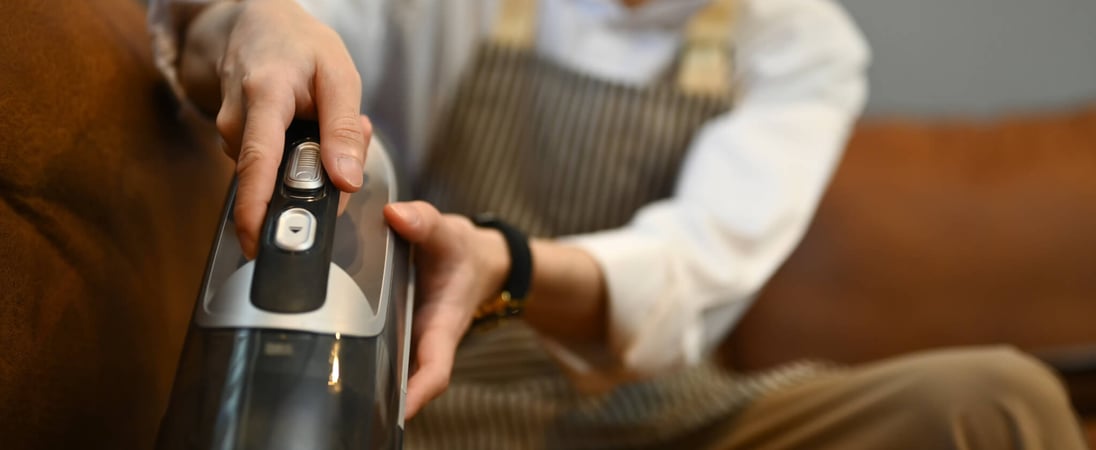
For a more engineering-style celebration, a DIY mini vacuum cleaner challenge shifts the focus from “empty space” to “moving air.” A vacuum cleaner does not create a perfect vacuum.
It creates **lower pressure** inside the intake area, and outside air rushes in to equalize that pressure difference. That moving air carries dust and crumbs along for the ride.
A simple build challenge might use:
– a small motor with a fan or impeller,
– a plastic bottle or container as a body,
– tape, cardboard, and mesh or cloth for a filter,
– batteries and a safe battery holder.
The fun is in the trade-offs. A stronger fan might move more air, but poor sealing reduces the pressure difference. A tighter seal improves suction, but a clogged filter reduces airflow.
Participants quickly discover that “more suction” and “more airflow” are related but not identical, which is a real design consideration in full-size machines, too.
For fairness, agree on a simple test, such as picking up a measured amount of lightweight debris from a smooth surface. Make cleanup part of the process, because it is Create a Vacuum Day, not Create a Mess Day.
Watch Science Videos
Watching well-made science content can turn vacuum concepts from abstract to unforgettable. Vacuums show up in demonstrations that are hard to replicate at home, such as bell-jar experiments and industrial vacuum systems.
Videos also help clarify misconceptions, like the idea that “suction” is a pulling force. In reality, suction is usually the result of **outside pressure pushing** toward a low-pressure region.
Viewing suggestions that pair well with the theme include:
– demonstrations of balloons or marshmallows expanding in a vacuum chamber,
– explanations of how barometers work and what they measure,
– breakdowns of why sound does not travel well in a vacuum (because sound needs matter to carry vibrations),
– examples of vacuum technology in manufacturing and electronics.
To make it interactive, viewers can pause and predict what happens next, then discuss which part was caused by pressure, which by temperature changes, and which by the material properties of the object being tested.
Visit a Science Museum
Science museums and hands-on centers often showcase pressure and vacuum principles with professional-grade displays. Even when the word “vacuum” is not on the label, many exhibits illustrate the same idea: pressure differences can do real work.
Visitors might encounter:
– vacuum pumps and bell jars that show objects changing shape at lower pressure,
– air-pressure demonstrations that lift weights or move platforms,
– exhibits explaining how instruments measure atmospheric pressure,
– engineering displays that show vacuum applications in manufacturing and research.
A museum visit also reinforces that vacuums are not just a parlor trick. They are carefully controlled environments used for specific purposes, such as preventing unwanted chemical reactions, reducing contamination, or simulating conditions found in space.
Create a Vacuum Day Timeline
5th century BCE
Democritus Proposes the Void
Greek philosopher Democritus developed an atomic theory in which indivisible atoms move in a space, or “void,” introducing one of the earliest formal concepts of a vacuum. [1]
4th century BCE
Aristotle Rejects the Possibility of a Vacuum
Aristotle argues that a true void cannot exist and that “nature abhors a vacuum,” a view that dominates scientific thought for nearly two millennia. [2]
1643–1644
Torricelli Demonstrates a Man‑Made Vacuum
Evangelista Torricelli invented the mercury barometer, demonstrating that a column of mercury in a sealed tube leaves a space at the top, experimentally proving both atmospheric pressure and the existence of a sustained vacuum. [3]
1650
Otto von Guericke’s Air Pump and Magdeburg Hemispheres
German engineer Otto von Guericke builds one of the first vacuum pumps and famously shows that teams of horses cannot pull apart evacuated Magdeburg hemispheres, dramatically proving the power of atmospheric pressure. [4]
1800s
Vacuum Technology Enables Incandescent Light Bulbs
In the 19th century, inventors such as Thomas Edison and Joseph Swan utilized evacuated glass bulbs to prevent hot filaments from burning out, making practical electric lighting a possibility. [5]
Early 20th century
Vacuum Tubes Revolutionize Electronics
Thermionic vacuum tubes, such as the triode, became the basis of early radios, amplifiers, and computers, using controlled electron flow in a high vacuum to switch and amplify signals. [6]
Mid–20th century onward
High Vacuums, Power Semiconductors, and Space Science
Advances in pumps and materials make ultra‑high‑vacuum systems standard for semiconductor fabrication, surface science, and particle accelerators, while space itself is recognized as an extreme natural vacuum. [7]
History of Create a Vacuum Day
Create a Vacuum Day draws attention to a topic that has fascinated thinkers for centuries: can “empty space” exist, and if it can, what does it do?
The idea of a vacuum has long sat at the crossroads of philosophy, physics, and technology, evolving from a disputed concept into a measurable and controllable tool.
Long before modern instruments, ancient thinkers debated whether a true void was even possible. Some philosophical traditions accepted empty space as part of how matter behaves, while others argued that nature resists emptiness altogether.
These disagreements mattered because they shaped the questions later scientists would try to answer through experiments rather than abstract reasoning.
A major turning point came when researchers began investigating fluids and air pressure. Their work was often motivated by practical problems, such as why water could only be lifted to a certain height using suction pumps.
That limit suggested that the pump itself was not the issue; instead, something about the surrounding air was setting a boundary.
In the seventeenth century, vacuum research accelerated through a series of experiments that made the invisible atmosphere tangible and measurable:
- Evangelista Torricelli and the barometer: Torricelli is widely credited with demonstrating a vacuum using a mercury-filled glass tube inverted into a dish of mercury. The mercury column fell and stabilized, leaving a space at the top of the tube.
This space, now called the Torricellian vacuum, revealed a crucial insight: the air outside the tube was pressing on the mercury in the dish, holding the column up. The atmosphere had weight and exerted pressure, and the “empty” space above the mercury was not responsible for the effect. - Blaise Pascal and changing pressure: Building on the barometer, Pascal helped show that atmospheric pressure decreases with altitude. If pressure comes from the weight of the air, then there should be less pressure where there is less air above.
This idea transformed the atmosphere from a passive background into something variable, measurable, and physically meaningful. - Vacuum pumps and public demonstrations: As air pumps improved, experiments became both more dramatic and more persuasive. By removing air from sealed chambers, researchers could show flames behaving differently, sounds fading, and soft objects expanding.
These demonstrations made vacuum science visible and memorable, even to audiences uninterested in formal mathematics.
Over time, vacuum technology shifted from curiosity to necessity. Controlled low-pressure environments became essential for scientific instruments, chemistry, and industrial processes. Eventually, vacuum systems entered everyday life in quieter ways. Incandescent light bulbs relied on reduced internal pressure to protect their filaments.
Vacuum tubes powered early electronics and laid the groundwork for modern communication and computing before being replaced by solid-state components. Today, vacuum techniques are critical in microelectronics, coatings, and advanced materials, where even tiny contaminants can cause major problems.
Create a Vacuum Day itself works as a playful educational prompt rather than a formal celebration. It offers teachers, families, and curious minds a reason to revisit a foundational physics concept and notice how often “space” is actually a carefully engineered environment.
The spirit of the day is rooted in experimentation: asking a simple question, trying something observable, watching the result, and enjoying the moment when the explanation finally makes sense.
Facts About Create a Vacuum Day
Create a Vacuum Day highlights one of science’s most intriguing ideas: whether empty space can truly exist and how it behaves when we try to create it. Rooted in centuries of philosophical debate and scientific discovery, the concept of a vacuum has evolved from a thought experiment into a practical tool used in everyday technology. The facts below explore how our understanding of vacuums developed and why this “nothingness” turned out to be something worth studying.
-
Torricelli’s “Void” Proved That Air Has Weight
In 1643, Italian physicist Evangelista Torricelli filled a glass tube with mercury, inverted it in a mercury basin, and saw the mercury fall to a certain height, leaving an apparently empty space at the top. This “Torricellian vacuum” was the first convincing laboratory demonstration that air has weight and exerts pressure, helping overturn the ancient belief that a vacuum could not exist in nature.
-
The Magdeburg Hemispheres Showed How Strong Air Pressure Is
Around 1654, German engineer Otto von Guericke used two large metal hemispheres that could be clamped together and evacuated with an early air pump. Once the air inside was removed, teams of horses pulling in opposite directions could not separate the hemispheres, a dramatic public demonstration that it was atmospheric pressure—not suction—holding them together.
-
Vacuum Quality on Earth Can Exceed Deep Space
Although outer space is often called a “perfect vacuum,” its void is surprisingly “dirty,” with roughly a few atoms per cubic centimeter in interplanetary space and more in low Earth orbit. Modern ultra‑high-vacuum chambers on Earth can reach particle densities far lower than typical space conditions, making some laboratory vacuums “emptier” than the space outside our planet.
-
Semiconductor Chips Depend on Ultra‑Clean Vacuums
Manufacturing computer processors and memory chips relies on high and ultra‑high vacuum systems in tools such as sputter deposition and ion implantation machines. These processes need pressures as low as 10⁻⁶ to 10⁻⁹ millibar to keep stray atoms and molecules from contaminating nanoscale features, ensuring reliable performance in everything from smartphones to spacecraft.
-
Space Agencies Use Giant Vacuum Chambers to Test Spacecraft
Before launch, satellites and crew vehicles are placed in huge thermal‑vacuum chambers that simulate the near‑vacuum and extreme temperature swings of space. NASA’s Space Environment Simulation Laboratory, for example, can pump chambers down to pressures comparable to low Earth orbit while cycling between intense heat and deep cold to verify that hardware can survive in orbit.
-
Quantum Physics Shows “Empty” Space Is Not Really Empty
In quantum field theory, even a perfect classical vacuum is filled with fluctuating fields that constantly create and annihilate “virtual particles.” Phenomena such as the Casimir effect—where two uncharged metal plates in a vacuum experience a tiny attractive force—arise from these vacuum fluctuations, revealing that what appears to be nothing still has measurable physical effects.
-
Vacuum Technology Helped Enable The First Practical Light Bulbs
Early incandescent lamps failed quickly because hot filaments reacted with residual gases in the bulb, burning out. By the late 19th century, improved mechanical vacuum pumps let inventors such as Thomas Edison evacuate bulbs much more thoroughly, greatly extending filament life and making electric lighting commercially viable.
Create a Vacuum Day FAQs
What are some important industrial uses of a vacuum that people rarely notice?
Vacuum technology plays a hidden role in packaging food, forming plastic containers, handling glass and metal sheets in factories, drying pharmaceuticals, degassing molten steel, and distilling chemicals and petroleum products. By lowering pressure, industry can remove moisture and dissolved gases more efficiently, shape materials precisely, and keep sensitive products cleaner and more stable. [1]
Is it safe to do simple vacuum experiments at home, and what precautions are needed?
Simple demonstrations that only slightly lower air pressure—such as using a syringe without a needle or a well‑sealed plastic bottle—are generally safe if glass is avoided and children are supervised. However, using improvised pumps on glass jars, heating sealed containers, or pulling strong vacuums can cause implosions or burns, so home activities should use robust plastic, stay at modest pressure differences, and follow age‑appropriate safety guidance.
What is the difference between the vacuum inside a light bulb and the vacuum in outer space?
Traditional incandescent light bulbs use a partial vacuum or an inert gas at low pressure around the filament to reduce oxidation and extend the bulb’s life, but there are still many gas atoms present. Outer space, by contrast, has far fewer particles per cubic meter than any household device can achieve, yet it is still not completely empty, containing diffuse gas, dust, and high‑energy particles.
Also on ...
View all holidays
National Homemade Soup Day
Savor every spoonful of warm and comforting goodness made with fresh ingredients, perfect for any day or mood. A hug in a bowl!