Egg Cracking Competition
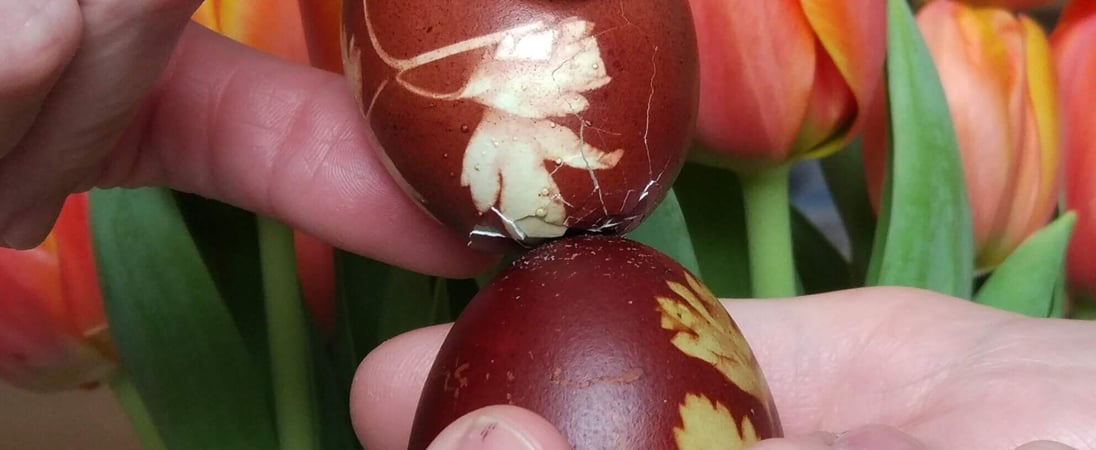
The Egg Cracking Competition, known as tsougrisma in Greek, is a lively tradition celebrated during Greek Easter. Participants hold red-dyed eggs and take turns tapping them against each other. The goal is to crack the opponent’s egg without breaking your own.
This playful event is more than just a game; it represents the victory of life over death and joy over sorrow. The red eggs symbolize the blood of Christ.
In contrast, the cracking of the eggs signifies the breaking open of the tomb and the resurrection of Jesus, making it a meaningful part of the Easter celebration for many families.
The competition is simple but filled with excitement and laughter. Family and friends gather around, exchanging traditional Easter greetings as they play. The winner is believed to have good fortune for the coming year.
Despite the lighthearted nature of the game, it carries deep cultural and religious significance. It’s a cherished way for people to connect, celebrate, and remember the resurrection story.
Whether you win or lose, it’s the shared joy and sense of togetherness that make the day truly special.
Egg Cracking Competition Timeline
4th century
Early Christians adopt red-dyed eggs
Christian communities in Mesopotamia and the Eastern Mediterranean begin dyeing eggs red as a symbol of Christ’s blood and resurrection, tying older egg customs to Easter.
12th century
Eggs firmly linked to Easter in Western Europe
Medieval Western Christians bless and distribute eggs at Easter after Lenten fasting, helping standardize the egg as a central symbol of the feast.
14th century
Recorded egg-tapping in Zagreb
A medieval record from Zagreb, in present-day Croatia, notes Easter games in which people strike eggs together, an early written reference to egg-tapping contests in Central Europe.
15th century
Spread of egg games in Central and Eastern Europe
By the 1400s, egg-tapping and similar contests are documented across parts of Central and Eastern Europe, including Poland and the Balkans, often linked to wishes for health and luck.
19th century
Cajun egg pocking develops in Louisiana
French-speaking settlers in Louisiana adapt Old World Easter egg games into “egg pocking,” a competitive egg-knocking custom that becomes a distinctive Cajun Easter tradition.
Early 20th century
Greek tsougrisma described in ethnographic accounts
Ethnographers recording Greek Orthodox Easter customs detail tsougrisma, in which red-dyed eggs are cracked together to symbolize Christ’s tomb breaking open at the Resurrection.
Late 20th century
Global popularization of egg-cracking games
Migration and media spread egg-tapping, tsougrisma, and egg pocking beyond their original regions, turning traditional Easter egg-cracking contests into shared family games worldwide.
How to Celebrate the Egg Cracking Competition
The Egg Cracking Competition is a delightful Easter tradition that brings laughter and joy to all ages. If you’re looking for creative ways to celebrate this playful event, here are some egg-citing suggestions to make the day unforgettable!
Egg-ceptional Egg Hunt
Put a twist on the classic egg hunt by hiding red eggs in unexpected places. You can use riddles and clues to lead participants from one hidden egg to the next.
Each egg could hold a small puzzle piece, and the final egg reveals a grand prize. This way, the hunt is both challenging and rewarding, ensuring plenty of excitement and friendly competition for everyone involved.
Egg-rolling Relay Race
Spice things up with an egg-rolling relay! Each participant must use a spoon to roll their egg across a designated course without dropping it.
Add obstacles like chairs or cushions to increase the challenge. The fastest egg-roller wins a special prize, and the audience will have just as much fun cheering them on as the players do competing!
Egg-pressive Decorating Contest
Transform plain eggs into works of art! Set up a decorating station with paints, markers, and glitter. Participants can create unique designs, from classic patterns to intricate sculptures.
Have categories for the funniest, most creative, and most elaborate eggs. This is a great way to showcase everyone’s artistic flair and let imaginations run wild.
Egg-streme Egg Toss
Pair up and see who has the best aim! Partners stand a few feet apart and toss a raw egg back and forth, taking a step back after each successful catch.
The goal is to keep the egg intact for as long as possible. The last pair standing with an unbroken egg wins! It’s a messy but memorable way to add some friendly competition to the day.
Egg-citing Charades
Bring some egg-cellent entertainment to the table with themed charades. Act out Easter-related phrases like “egg hunt,” “bunny hop,” or “cracking the egg” while others try to guess. Use props like toy eggs for added hilarity.
This is guaranteed to bring lots of laughter and keep the fun rolling long after the competition ends.
These ideas will make your Egg Cracking Competition a day full of joy and laughter. Whether you’re hunting, rolling, or decorating, everyone’s sure to have a cracking good time!
History of the Egg Cracking Competition
The Egg Cracking Competition, also known as “egg tapping” or “tsougrisma” in Greek, has been a cherished tradition for centuries.
This game likely began with early Christians in Mesopotamia. They painted eggs red to symbolize the blood of Christ shed during his crucifixion. From there, the custom spread to Eastern Europe through the Orthodox Churches and eventually reached Western Europe.
In Greece, this tradition remains strong. People crack red-dyed eggs to symbolize Jesus’s resurrection from the tomb. The hard shell of the egg represents the sealed tomb, and breaking it symbolizes new life emerging from death.
The game involves two players tapping their eggs against each other. The player with the unbroken egg is declared the winner and is believed to have good luck for the year.
In other parts of the world, this game has different names and rules. For example, in Louisiana, it’s called “egg pocking,” derived from the French word paques, meaning Easter.
Here, participants use various techniques to win, including sometimes sneaking in a marble or fake egg! This playful competition has become a significant part of the Easter celebration for many Cajun families.
In Central Europe, records of egg tapping go as far back as the 14th century in Zagreb. It was also popular in Poland during the 15th century, but the custom didn’t survive there.
The game is still widely played in Bulgaria and other parts of Europe, often with different rules and stakes, like promises of good health or longer life.
Each culture adds its unique twist to the tradition, but the core idea remains the same: celebrating life and new beginnings through a fun and competitive game.
Facts About Egg Cracking Competition
Egg Tapping Traditions Span Continents
Egg cracking games are not unique to Greece; related customs appear across Europe and the Middle East, from “ostereier schlagen” in German-speaking regions to “egg jarping” in northern England and elaborate egg-fighting contests in Syrian and Lebanese Christian communities.
Although the rules and names vary, the shared practice of striking hard-boiled eggs together at Easter or springtime reflects a long-standing link between eggs, friendly competition, and the celebration of new life.
Red Easter Eggs Have Deep Roots in Orthodox Devotion
In Eastern Orthodox Christianity, especially in Greece and other Balkan countries, Easter eggs are traditionally dyed a deep red using onion skins or synthetic dyes to represent the blood of Christ and the joy of the Resurrection.
These red eggs are usually the first animal product eaten after the strict Lenten fast, underscoring their role as a liturgical symbol of both sacrifice and renewed life rather than simple decoration.
Ancient Persians Exchanged Eggs at Nowruz
Long before Christian Easter customs, eggs were part of the Persian New Year festival of Nowruz, where families placed decorated eggs on the ceremonial haft-seen table as symbols of fertility and the renewal of nature.
Historical accounts describe rulers exchanging painted eggs at Nowruz as early as the Achaemenid period, which shows that using eggs to mark seasonal rebirth predates, and likely influenced, later springtime religious traditions.
Egg Symbolism Appears in Early Christian Tomb Art
Early Christians adopted the egg as a symbol of resurrection so thoroughly that archaeologists have found images of eggs and even marble “egg” offerings in Roman catacombs and burial sites.
In some early Christian art, an egg appears in scenes of the empty tomb or alongside peacocks and vines, visually linking the idea of a sealed shell that opens to new life with the promise of life after death.
Eggshells Are Stronger Than Their Fragile Appearance Suggests
The reason an egg can survive a well-aimed tap in a game is that its arched, ovoid shape distributes pressure evenly around the shell, which is made mostly of crystalline calcium carbonate.
Under compression from the ends, a hen’s egg can withstand forces of around 50 to 90 pounds before breaking, but is much weaker under a sharp, localized side impact, a quirk of physics that savvy players exploit when they choose which end of the egg to strike.
Microscopic Flaws Decide Which Egg Cracks First
Even when two eggs look identical, subtle differences in shell thickness and microscopic defects determine which one will give way in a tapping contest.
Studies using scanning electron microscopes show that eggshells vary in porosity and in the size of calcite crystals, and cracks almost always start at tiny preexisting weak spots that spread rapidly once the stress from a tap exceeds the shell’s local strength.
Cajun “Egg Pocking” Is a Competitive Easter Sport
In Acadiana in southern Louisiana, the Cajun custom of “egg pocking” turns Easter egg tapping into a community sport, with informal strategies and local bragging rights.
Ethnographers note that some families guard favored “strong egg” bloodlines, test shells in saltwater to judge thickness, or even hard-boil guinea hen eggs, which have denser shells than chicken eggs, all in the hope of ending the day with the last uncracked egg.
Egg Cracking Competition FAQs
What is the religious and cultural meaning of cracking red eggs at Easter?
In many Eastern Christian traditions, especially Greek Orthodox, red-dyed eggs symbolize both mourning and hope: the red color recalls the blood of Christ, while the egg itself represents the sealed tomb and the promise of new life.
Cracking the eggs against one another is understood as a playful re-enactment of the Resurrection, with the broken shell standing for the tomb burst open and the intact egg inside symbolizing renewed life.
This custom is woven into family meals and church celebrations and is treated as a joyful way to express deep theological ideas in everyday practice.
How do egg-tapping games differ between countries that celebrate them?
Egg-tapping, also called egg knocking or egg jarping, appears in many countries but with local twists.
In Greece and other Orthodox countries, people usually tap only the pointed ends of red-dyed hard-boiled eggs, and the winner is often thought to receive good luck.
In parts of the Balkans and Eastern Europe, players may tap both ends, or compete in organized village contests. In England’s North East, “egg jarping” is a formal competition with written rules, while in Cajun Louisiana “pocking” involves family lineups where each person taps an opponent’s egg in turn.
The core idea remains the same, but rules about which end to tap, how many rounds to play, and what the winner receives can vary widely.
Are the eggs used in Easter tapping games safe to eat afterward?
Hard-boiled eggs used in games such as egg tapping can usually be eaten safely if they have been handled like any other perishable food.
U.S. food safety guidelines recommend refrigerating eggs within two hours of cooking or removing them from the refrigerator, and discarding any that have been at room temperature for longer than that.
If dyed eggs are used, only food-safe dyes should touch the shell, and shells should remain uncracked until eating, because cracks can allow bacteria to enter.
Eggs that get visibly dirty, damaged, or that sit outdoors for extended hunts or games are best thrown away instead of eaten.
Do certain kinds of eggs have an advantage in tapping games?
People often claim that brown eggs, smaller eggs, or eggs from particular breeds are “stronger,” but studies that measure shell thickness and strength show that color itself is not a reliable indicator.
Shell strength depends more on factors like the hen’s diet, age, and overall health than on whether the egg is white or brown.
Some competitors informally test eggs by gently tapping them together or against their teeth to feel for hardness, but there is no universally superior shell type, and any perceived advantage usually comes down to individual eggs rather than whole categories.
What techniques do people use to improve their chances in an egg-tapping game?
Experienced players often rely on small practical tricks rather than brute force.
Many try to choose eggs with a more pointed end, as this area can be slightly stronger, and they aim their opponent’s broader end with their own point.
Some tap with a controlled, glancing blow rather than a straight-on hit to reduce stress on their own shell. Others quietly test several eggs first to find one that “sounds” solid when tapped.
While folklore suggests special boiling methods, such as adding salt or boiling longer, these have little effect on shell strength because the shell is formed before the egg is laid.
How did decorated eggs become part of Christian Easter traditions in the first place?
Eggs were associated with spring and rebirth in pre-Christian cultures, and early Christians adopted the egg as a natural symbol of the empty tomb and Resurrection.
Historical accounts from the early centuries of the church describe Christians in Mesopotamia coloring eggs red in memory of Christ’s blood and exchanging them as gifts during Easter.
Over time, this practice spread across Europe, where different regions added their own styles of decoration, from intricate wax-resist patterns in Ukraine to richly painted eggs in Central and Eastern Europe, eventually blending folk art with religious symbolism.
Also on ...
View all holidays
National Grilled Cheese Sandwich Day
Melty and hot, cheesy and greasy…show your love for one of mankind’s tastiest inventions. Try tossing a tomato in it; that makes it healthy, right?


Yuri’s Night
The first person to orbit the Earth, this trailblazer showed us the potential of humanity's spirit and our drive to explore the unknown.
We think you may also like...
Candlemas Day
It's a day to celebrate light and hope, with origins tracing back to ancient times. Get ready to light some candles!