
Every year on March 11th, people around the globe celebrate the World Day of Muslim Culture, Peace, Dialogue, and Film.
At its heart, this observance invites curiosity. It asks people to look beyond headlines and assumptions and instead meet Muslim cultures through creativity, everyday life, and conversation.
The “film” part matters for a practical reason: stories told on screen are often the fastest way to recognize someone else’s hopes, worries, humor, and family dynamics as surprisingly familiar.
This special day shines a light on the rich cultural tapestry of the Muslim community. It encourages everyone to learn about and appreciate the diversity within the Muslim world through films, art, and discussions.
“Muslim culture” is not a single style, language, or cuisine. Muslims live across continents and belong to countless ethnicities and local traditions. That variety shows up in architecture and textiles, in poetry and pop music, in wedding customs and lullabies, and in the way communities mark life events like births, coming-of-age celebrations, and funerals.
Some communities are deeply shaped by local history and indigenous traditions; others are shaped by migration and diaspora. A day focused on culture creates room for all of it, not only what outsiders assume they will see.
The day was founded in 2010 by Javed Mohammed. He envisioned it as a way to foster understanding and peace by sharing Muslims’ vibrant and diverse cultures worldwide. The focus is not just on religion but on the artistic and societal contributions of Muslims.
That distinction is important. Religion is one part of identity, but culture includes language, food, humor, craftsmanship, clothing, family structures, and the arts. Film, music, literature, and visual art make those elements accessible without requiring anyone to be an expert.
A thoughtful screening, an exhibit label, or a moderated discussion can open a door that a formal lecture sometimes cannot.
The celebration of this day is crucial because it opens doors to dialogue among different cultures and faiths.
Dialogue does not have to be grand or complicated. It can be a classroom conversation about a short film, a community center panel on belonging, or a book club discussing how a character navigates family expectations.
The goal is not to force agreement on every topic. The goal is to practice listening with care, asking better questions, and treating others’ stories as genuine.
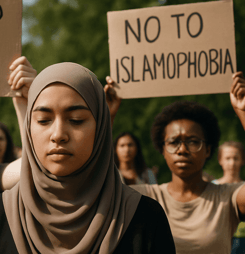
It helps break down the stereotypes and misconceptions that sometimes divide us. By participating in this day, people can gain a deeper appreciation for Muslim culture.
Stereotypes tend to flatten people into categories: one “type” of family, one “type” of clothing, one “type” of belief. Culture-focused events do the opposite. They introduce specific voices and specific experiences, which is where nuance lives.
Someone might recognize that Muslims can be rural or urban, conservative or progressive, secular-minded or devout, artists or engineers, comedy lovers or poetry fans, and sometimes all of the above in one extended family.
World Day of Muslim Culture, Peace, Dialogue and Film Timeline
First Muslim film screening in Cairo
The Lumière brothers’ cinematograph is shown in Cairo, helping to introduce motion pictures into a predominantly Muslim society and laying the groundwork for later Arabic and Islamic cinemas.
The first Egyptian feature film and the rise of Arab cinema
The Egyptian feature film “Layla” was released, marking a turning point in Arab cinema and helping establish Egypt as a major center of film production in the Muslim world.
The founding of FESPACO amplifies African and Muslim filmmakers
The Pan-African Film and Television Festival of Ouagadougou (FESPACO) was launched in Burkina Faso, later showcasing many directors from Muslim-majority countries and encouraging socially engaged cinema.
The Organization of Islamic Cooperation promotes cultural ties
The Organization of Islamic Conference (now OIC) was founded, with cultural cooperation and the promotion of Islamic arts and heritage among its core objectives, encouraging exchanges in literature, art, and media.
“The Message” brings the Prophet’s era to global audiences
Syrian‑American director Moustapha Akkad’s film “The Message,” first released in the 1970s, continued to circulate internationally by the mid‑1980s, sparking debate yet opening space for large‑scale cinematic portrayals of early Islamic history.
UNESCO launches the “Culture of Peace” program
UNESCO’s Culture of Peace initiative was formally launched, promoting intercultural dialogue, respect, and non‑violence, and encouraging the use of culture and media as tools to build understanding among different communities, including Muslims.
“Islamic World” galleries open at the British Museum
The British Museum inaugurates a major permanent gallery of Islamic art and artifacts, offering a broad public view of Muslim cultures and contributing to greater awareness of their artistic and historical achievements.
History of World Day of Muslim Culture, Peace, Dialogue and Film
The World Day of Muslim Culture, Peace, Dialogue, and Film was established on March 11, 2010, by Javed Mohammed, a writer and producer from California.
His goal was to use various forms of art and media to foster dialogue and understanding of Muslim cultures across the globe. This day aims to highlight the diversity within Muslim communities and promote peace through cultural exchange and dialogue.
The decision to frame the observance around peace and dialogue alongside culture and film is a clue to its practical purpose. Cultural appreciation is not only about admiring patterns on ceramics or learning the name of a musical instrument, though those are enjoyable entry points. It is also about enhancing the way communities coexist.
When people feel seen and understood, public conversation gets less brittle. When they feel caricatured, mistrust grows. This observance leans toward the first outcome by encouraging people to meet each other through art, which often communicates emotions more effectively than debate.
Since its inception, the observance has focused on using art, film, and discussions to bridge cultural gaps. It also provides insights into the lives and traditions of Muslim people worldwide.
Film is especially well-suited for this mission because it carries small, telling details: a family meal, a street market, a parent’s advice, a joke that only makes sense in context. Even documentaries that tackle serious issues often include moments of ordinary life that remind viewers that people are not defined solely by conflict or politics.
Fiction films, meanwhile, can explore identity and belonging without turning any community into a “lesson.” They simply tell a good story, and the cultural learning comes along naturally.
Events typically include film screenings, art exhibitions, and educational discussions organized in various settings like community centers, schools, and places of worship.
These settings matter because they reach different audiences. Schools and libraries tend to be ideal for introducing basic cultural literacy: geography, languages, and the many ways people practice daily life.
Community centers are great for hands-on experiences like cooking demonstrations, craft workshops, or conversation circles. Places of worship, when they choose to participate, can help model respectful visitation and explain etiquette in a welcoming way. No single venue can do everything, but together they create a broader, more human picture.
These activities are designed to encourage interactions among people of different faiths and cultural backgrounds, fostering a more inclusive and peaceful global community.
In practice, “inclusive” often comes down to the smallest design choices. Is the event accessible to people who have never attended something like it before? Are there clear introductions, a friendly moderator, and space for questions? Is the content curated to show variety instead of a single storyline?
The strongest programs avoid treating Muslims as a monolith and avoid positioning any group as the “default” audience. Instead, they build a room where multiple communities can recognize themselves and one another.
The celebration of this day contributes significantly to cultural diplomacy by showcasing the richness of Muslim cultural heritage, including literature, arts, and cinema, which are often overshadowed by geopolitical discussions in mainstream media.
Cultural diplomacy does not require official speeches or formal institutions. It can be as simple as a film festival lineup that includes comedies, romances, coming-of-age stories, and historical dramas, not only serious political narratives.
It can also show the many cultural “centers” of Muslim life: from Arab cultures to Persian-influenced traditions, from South and Southeast Asian communities to African and European Muslim experiences, and from long-established communities to more recent immigrant and refugee stories. A varied program gently teaches the lesson that “Muslim culture” has many accents.
This observance not only enhances understanding but also combats stereotypes by presenting a more nuanced view of Muslim societies.
Nuance grows when people see contradiction and complexity: a character who is traditional in one way and unconventional in another, a family that argues and laughs like any other, a community that contains multiple generations with different views.
Art makes room for that complexity without turning it into an argument to win. In that sense, the observance functions like a cultural reset button, encouraging people to replace vague impressions with real examples.
How to Celebrate World Day of Muslim Culture, Peace, Dialogue, and Film
Dive Into Muslim Cinema
Embrace the World Day of Muslim Culture, Peace, Dialogue, and Film by setting up a movie marathon. Grab some popcorn and stream films made by talented Muslim directors.
This not only entertains but also educates viewers about diverse Muslim experiences and narratives.
To make a home screening more meaningful, it helps to program it like a miniature festival rather than a random playlist. A simple theme can guide choices, such as “family stories,” “migration and belonging,” “women behind the camera,” “comedies and everyday life,” or “documentaries that follow artists.” Mixing genres is a smart move because it avoids the trap of presenting Muslim life as only serious or solemn.
A good screening also benefits from a short discussion afterward. Keeping it friendly and low-pressure works best: What scene felt most familiar? What felt new? What did the film assume the audience already knew?
]If the group includes Muslims, participation should always be optional, not a requirement to “explain” anything. The point is shared reflection, not putting anyone on the spot as a spokesperson.
For group events, simple viewing etiquette helps: introduce the film, share content notes if needed, and allow people to sit with complicated feelings. Some stories are light; others are heavy. Both can support dialogue when handled with care.
Explore the Art of Calligraphy
Why not try your hand at Islamic calligraphy? This art form is popular for its beauty and precision. Workshops or online tutorials can guide you through the basics.
It’s a relaxing and artistic way to connect with the culture.
Calligraphy has a special place across many Muslim cultures, partly because the written word is treated with respect and partly because calligraphy became a celebrated visual art in its own right. Styles vary widely, and the tools can be wonderfully tactile: a broad-nibbed pen, a reed pen, ink with a satisfying depth, and paper that rewards patience.
For beginners, the most enjoyable approach is to start with shapes before words. Practicing straight strokes, curves, and spacing builds control. If a workshop is available, an instructor can explain posture, angle, and pressure, which are the secret ingredients behind those graceful lines.
If it is a self-guided project, it helps to choose a single short phrase and practice it slowly, treating the page like a sketchbook rather than a final performance.
People who want to keep the activity culturally respectful can focus on learning the craft without turning sacred text into décor. Creating abstract patterns, learning the names of calligraphy styles, or practicing letters and basic words is a thoughtful way to appreciate the art form while staying mindful of context.
Attend a Cultural Exhibition
Local museums or cultural centers often host exhibitions on this special day. These can be wonderful places to see Islamic art, from intricate textiles to detailed architectural models. It’s a visual feast that promises new insights.
Exhibitions can be especially powerful because they show culture as something made by human hands. Textiles and ceramics reveal trade routes and local materials. Architecture models and geometric designs show the marriage of math, aesthetics, and craftsmanship. Miniature paintings, metalwork, and manuscripts demonstrate the patience and skill embedded in objects that were created to last.
Visitors can deepen the experience by looking for the story behind the object: Who made it? What was it used for? Was it for everyday life, for a ceremony, or for a public space? If the exhibit includes contemporary artists, that is a chance to see how tradition evolves rather than freezes in time. Contemporary work often responds to modern questions about identity, migration, and belonging, which fits perfectly with the “dialogue” part of the day.
If no formal exhibition is available, a do-it-yourself version can work. A community group can display photography, textiles, calligraphy practice pages, recipes with family notes, or short written reflections about what “home” means. A small, well-curated display can spark conversation just as effectively as a major gallery.
Host a Cultural Potluck
Organize a potluck featuring dishes from various Muslim countries. This tasty gathering is a chance to savor flavors from around the Islamic world. You could try Moroccan tagine or Iranian biryani and learn about the rich culinary traditions.
A potluck works best when it is framed as “regional foods from Muslim-majority cultures and Muslim communities worldwide,” rather than implying a single cuisine. That opens the table to everything from West African peanut stews to Turkish meze, from Indonesian rice dishes to Lebanese pastries, from Central Asian dumplings to East African spiced tea. It also makes space for diaspora cooking, which often blends family traditions with local ingredients.
To turn eating into learning, each dish can come with a small card: the name of the dish, a place it is associated with, and one sentence about when people might serve it. Some dishes are celebratory; others are comfort food; others are the kind of snack grabbed on a busy afternoon. Those details make culture feel lived-in, not museum-like.
Thoughtful hosting also means being considerate about dietary needs. Many Muslims eat halal, some are vegetarian, and many guests may have allergies. Labeling ingredients and avoiding cross-contamination helps everyone relax and enjoy the meal. If the group is comfortable, hosts can invite people to share family stories connected to certain foods, which is often where the best dialogue begins.
Engage in Interfaith Dialogues
Participate in or organize interfaith dialogue sessions. These discussions are valuable for building bridges between different religious communities. They foster a deeper understanding and respect for each other’s beliefs and traditions.
Successful dialogue tends to be structured, not improvised. A good format includes a clear topic, a skilled moderator, and a few shared agreements, such as listening to understand, speaking from personal experience, and avoiding broad claims about entire groups.
The most productive conversations often start with everyday themes: hospitality, charity, family obligations, work life, grief, or celebrations. Those topics allow people to connect before moving into more complex questions.
Film can be a helpful “third thing” in the room. Rather than debating abstract ideas, participants can talk about a character’s choices, a cultural tradition shown on screen, or a scene that surprised them. That approach lowers defensiveness and keeps the discussion grounded in real human behavior.
It also helps to make space for the idea that Muslims are not all the same, and neither are members of any other faith or worldview. Interfaith dialogue is not about finding one representative voice per group.
It is about learning how to disagree respectfully, how to ask questions without interrogating, and how to leave with a fuller understanding than when the conversation began.
Celebrating the World Day of Muslim Culture, Peace, Dialogue, and Film can be both educational and enjoyable.
Each of these activities offers a unique pathway to deepen your appreciation and understanding of Muslim cultures worldwide.
World Day of Muslim Culture, Peace, Dialogue and Film Facts
These facts highlight the depth, diversity, and global influence of Muslim culture across history and regions. From early achievements in film and the artistic beauty of calligraphy to the wide geographic spread of Muslim communities, they reveal how tradition, creativity, and cultural exchange have shaped a rich and lasting legacy.
Cinema in Muslim‑Majority Countries Long Predates Hollywood Talkies
The first public film screening in the Muslim world took place in Egypt in 1896, just one year after the Lumière brothers’ debut in Paris, and by the 1920s, countries such as Egypt, Turkey, and Iran had domestic film industries experimenting with silent features and newsreels.
Egypt in particular became known as the “Hollywood of the Arab world,” producing hundreds of films between the 1940s and 1960s that circulated widely across the Middle East and North Africa and helped shape a shared popular culture.
Islamic Calligraphy Grew Out of a Religious Ban on Figural Imagery
Because many Islamic legal and theological traditions discouraged religious art that depicted human or animal figures in sacred contexts, artists turned writing itself into a primary visual art form.
From the ninth century onward, calligraphers working in scripts such as Kufic, Naskh, and Thuluth transformed verses of the Qur’an and poetic texts into elaborate designs that adorned architecture, ceramics, textiles, and manuscripts, helping to standardize Arabic scripts across empires while also signaling piety and learning.
The World’s Largest Muslim‑Majority Country Is Not in the Middle East
Indonesia, an archipelago in Southeast Asia, has the largest Muslim population of any country, with roughly 231 million Muslims, or about 87 percent of its people, according to 2020 estimates.
This demographic reality highlights how Muslim cultures extend far beyond the Arab world, blending Islamic traditions with local customs from Javanese, Sundanese, Acehnese, and many other ethnic groups.
Muslim‑Jewish Interfaith Dialogue Has Deep Roots in Medieval Spain
In medieval al‑Andalus (Islamic Spain), cities such as Córdoba and Toledo hosted communities where Muslims, Jews, and Christians interacted in courts, markets, and scholarly circles, leading to shared philosophical and scientific traditions.
Jewish thinkers like Maimonides wrote in Arabic and participated in intellectual life shaped by Muslim philosophers such as Averroes, creating a legacy that modern interfaith dialogue projects often cite as a historical example of coexistence and cross‑cultural exchange.
Iranian New Wave Cinema Turned Everyday Life into Political Critique
Beginning in the late 1960s, Iranian filmmakers such as Forough Farrokhzad, Abbas Kiarostami, and Dariush Mehrjui pioneered a style often called the Iranian New Wave, which used nonprofessional actors, location shooting, and seemingly simple stories about children, villagers, or ordinary city dwellers.
These films smuggled complex reflections on morality, class, and authority past censors, and after the 1979 revolution, Iranian cinema continued to win major prizes at Cannes, Venice, and Berlin, challenging Western stereotypes about Muslim societies.
Ottoman Architecture Spread a Distinctive Mosque Style Across Three Continents
From the fifteenth to the seventeenth centuries, architects of the Ottoman Empire, most famously Mimar Sinan, refined a mosque design that combined large central domes, semi‑domes, and slender minarets arranged in visually balanced compositions.
Buildings such as the Süleymaniye Mosque in Istanbul influenced religious architecture from the Balkans to North Africa, and their blend of engineering innovation and decorative tilework became a hallmark of Muslim urban skylines far beyond present-day Turkey.
Global Surveys Show Most Muslims View Religious Diversity Positively
A large cross‑national study by the Pew Research Center found that in many Muslim‑majority societies, including Indonesia, Nigeria, and Lebanon, majorities or large pluralities of Muslims say that religious diversity is a positive thing for their country.
While attitudes vary by region, these findings complicate common stereotypes by showing that large segments of Muslim publics support coexistence and see pluralism as compatible with their values.