
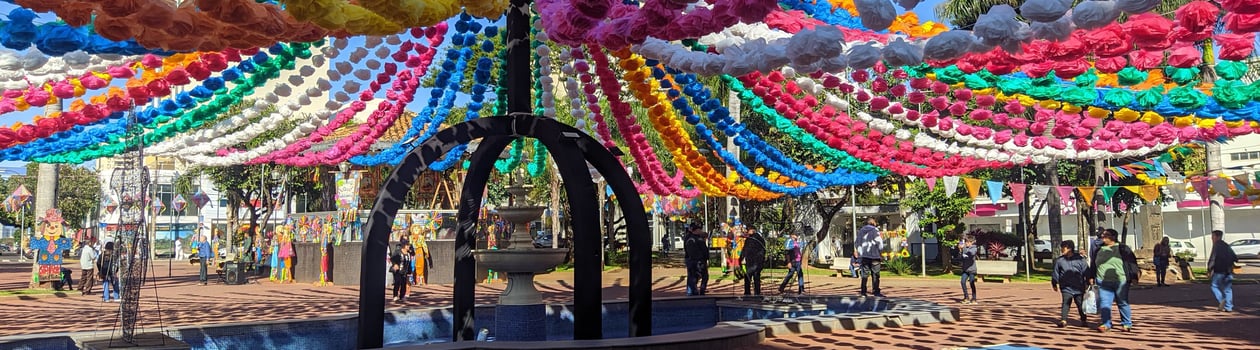
Festa Junina is a lively, colorful celebration that fills Brazil with music, dance, and a very specific craving for corn. It is often described in the plural, Festas Juninas, because it can span multiple gatherings tied to June traditions and the feast days of well-known saints. What makes it instantly recognizable is the cheerful “country party” atmosphere: strings of tiny flags overhead, a crackling bonfire at the center, forró rhythms in the background, and tables crowded with homey dishes built around local harvest staples.
At the heart of Festa Junina are the shared meals, where families and friends gather to enjoy comforting food and easy conversation. The menu leans rustic on purpose, echoing countryside life even when the party is held in a school gym, a church courtyard, or a city neighborhood. Add a group dance that turns a mock wedding into a comedy sketch, and it becomes clear why this celebration feels both theatrical and deeply communal.
How to Celebrate Festa Junina
Looking to dive into the fun and festivity of Festa Junina? From food to fashion, there are plenty of ways to bring this Brazilian celebration to life. Here’s a quirky little guide to get started and celebrate in style.
Cook Up Some Corny Goodness
Corn takes center stage at Festa Junina, and it is not subtle about it. Many of the classic treats revolve around fresh corn, cornmeal, or hominy, prepared in ways that feel like comfort food with party energy. A good starting point is pamonha, a corn mixture that can be sweet or savory and is traditionally wrapped in corn husks. It has the charm of an edible present: unwrapped at the table, warm and fragrant, and usually gone faster than expected.
Another staple is canjica, a creamy, spoonable dish typically made with hominy corn simmered with milk and sugar, often finished with cinnamon. Depending on the region, similar corn desserts may be called by different names, and recipes can vary from thick and pudding-like to looser and porridge-like. For an at-home celebration, the goal is not perfect regional accuracy as much as honoring the idea: simple ingredients turned into something cozy.
To round out the spread, add a corn cake such as bolo de milho or bolo de fubá (cornmeal cake). These cakes are crowd-pleasers because they are easy to slice and serve, and they pair well with coffee or warm spiced drinks. Then come the crunchy sweets. Pé-de-moleque, a peanut candy similar to peanut brittle, brings that caramelized snap that screams “festival table.” Paçoca, another peanut-based sweet with a crumbly texture, is equally at home beside it. If the party includes kids, popcorn and candied treats fit right in with the playful fairground vibe.
For hosts aiming for authenticity, the best “secret ingredient” is variety. Festa Junina tables tend to look abundant, with small portions of many items rather than one centerpiece dessert. Even a modest spread feels festive if it offers different textures: creamy, crunchy, cakey, and warm.
Dance Like Nobody’s Watching
What’s a party without dancing? Festa Junina brings movement front and center, especially through the quadrilha, a traditional group dance performed in pairs. At a glance it can resemble a square dance, but it comes with its own personality: a caller helps guide the group through steps, and the choreography often includes comedic bits that mimic a countryside wedding.
That wedding theme is part of the fun. In many versions, there is a playful reenactment featuring exaggerated characters like a bride and groom, plus assorted friends and relatives acting out a dramatic, silly storyline. It is theater you can dance to, and it gives even shy guests a role to play. The key is to keep it welcoming: teach a few simple formations, let people rotate partners if they want, and treat mistakes as part of the entertainment.
For the soundtrack, forró is a natural fit, especially the accordion-driven styles that create an irresistible bounce. Even without a live band, a curated playlist can capture the feel. Forró dancing is often partner-based and social, so the mood stays warm and inclusive. The celebration does not require professional moves, just a willingness to step into the rhythm and laugh through the learning curve.
Dress the Part
Costumes help Festa Junina feel like a cheerful trip to the countryside, even if it is celebrated far from farms. The traditional look is known as caipira, a playful rural style that leans into nostalgia. The classic outfit formula is easy: plaid shirts, denim, a straw hat, and sometimes patches sewn onto clothing to mimic well-worn workwear.
Hair and makeup complete the character. Pigtails, braids, and ribbon ties are common choices, along with painted freckles on cheeks. Some outfits include drawn-on mustaches or comedic details like a little “gap tooth” effect. The spirit is intentionally exaggerated, like stepping into a folk story.
A thoughtful approach keeps the fun without turning people into props. The best costumes celebrate rural aesthetics, not stereotypes. Lean into color, patterns, and handcrafted details, and skip anything that feels like it mocks real communities. A good rule is to dress as though attending a festive country fair: practical, playful, and bright.
Host Fun and Games
Festa Junina often feels like a mini fair, complete with booths, small challenges, and prizes that range from candy to bragging rights. One of the most recognizable games is pescaria, the fishing game. It is simple to set up: cut out paper fish, label them with point values or small prizes, and let guests “catch” them using a rod with a hook or magnet. It is charmingly low-tech, which is part of why it works.
Another common tradition is a humorous mock jail, where guests can “arrest” friends for silly reasons and then charge a symbolic “bail.” The point is laughter and interaction, not competition. This kind of game is especially useful at parties where not everyone knows each other, because it creates instant conversation.
For a more social activity, a host can borrow the spirit of correio elegante, a tradition where guests send playful, friendly notes to each other. Messages can be anonymous, signed, or delivered with a flourish by a volunteer “mail carrier.” It is a gentle way to add warmth to the party, and it can be adapted easily for families by keeping the notes encouraging or humorous rather than romantic.
When organizing games, the best Festa Junina setup resembles a loop. Guests should be able to wander between food, music, and activities without feeling like they are stuck in one place. The constant motion is part of the atmosphere, like a neighborhood fair that happens to feature excellent corn pudding.
Set the Mood with Bonfires and Lanterns
A bonfire is one of the most iconic Festa Junina symbols. Traditionally, people gather around it to talk, warm up, and enjoy the glow that makes nighttime celebrations feel extra magical. The bonfire also reflects older European midsummer traditions that became part of Brazilian festivities through Portuguese cultural influence, later taking on a distinctly Brazilian character.
For modern celebrations, safety and practicality come first. If a full bonfire is not possible, the mood can be recreated with a fire pit, candles in lanterns, or even warm string lights that mimic the golden flicker of flames. What matters is the central “gathering point,” a cozy visual anchor that draws people together.
Decorations do a lot of heavy lifting here. Bandeirinhas, strings of small colorful flags, are practically the official language of Festa Junina decor. Hung across ceilings, fences, or doorways, they immediately signal that this is not an ordinary get-together. Add paper lanterns, checkered tablecloths, and rustic touches like straw bundles or faux wildflowers, and the setting starts to feel like a countryside celebration.
There you go! From food to fun, this guide has all the essentials to create a Festa Junina experience no one will forget.
Reasons to Celebrate Festa Junina
Festa Junina is a celebration that knows its strengths and leads with them: warmth, community, and food that tastes like it was designed to make people linger. The cuisine is one of the biggest reasons it remains so beloved. Corn-based dishes such as pamonha, canjica, curau-style puddings, popcorn, and corn cake show how a single ingredient can transform into dozens of textures and flavors. Peanuts appear in multiple forms too, especially in pé-de-moleque and paçoca, adding richness and crunch that balance the creamy desserts.
Warm drinks deepen the cozy mood, especially in parts of Brazil where June evenings are cool. Quentão is a classic choice, typically made with cachaça and warming spices like ginger, cinnamon, and cloves. Vinho quente, a mulled wine-style drink, also appears at many celebrations. These beverages do more than warm hands. Their aroma becomes part of the atmosphere, mixing with the scent of roasted corn and sweet caramel.
Beyond the menu, Festa Junina is packed with sensory details that make it memorable. The flutter of flags overhead, the bright colors and patterned fabrics, the chatter of a crowd moving between food stalls, and the sudden swell of music as the quadrilha begins all combine into something that feels bigger than an average party. Even smaller gatherings carry that feeling because the traditions are participatory. People do not just attend; they dance, cook, send notes, and play games.
It also offers a way to celebrate rural traditions without requiring rural life. Many Festa Junina events are held in urban settings, hosted by schools, churches, and community groups. The rural theme becomes a shared cultural reference point. People dress in caipira style, decorate with farm-inspired touches, and perform dances that wink at countryside stories. The result is both nostalgic and theatrical, a reminder that cultural memory can be playful.
Music is another major reason to celebrate. Forró, with its lively rhythms and social partner dancing, gives the event a heartbeat. Even when the dance floor is informal, the music invites people to join in, and it tends to pull different generations into the same space. Festa Junina is one of those celebrations where children, parents, and grandparents can all participate without the event needing to be “for” just one age group.
Finally, Festa Junina often doubles as a community-builder. Traditional games and shared food stations are naturally social, and many celebrations include fundraising components for schools or local organizations. The format encourages cooperation and generosity: people donate time, bring dishes, help decorate, and teach dances. In a world full of isolated entertainment, Festa Junina insists on togetherness, one paper flag at a time.
Festa Junina Timeline
Solstice Rites and Early Midsummer Feasts in Europe
Pre‑Christian European communities mark the summer solstice with bonfires, fertility rites, and rural gatherings, customs that later inform Christian June festival practices carried to Portugal and, eventually, Brazil.
St. John’s Feast Recognized in Western Church
The Council of Agde in southern Gaul formally records the Feast of the Nativity of St. John the Baptist on June 24, helping fix a major June saint’s day that later becomes central to Portuguese and Brazilian June festivals.
Portuguese June Saints’ Festivals Take Shape
In Portugal, popular June celebrations for St. Anthony, St. John, and St. Peter develop into lively street feasts with bonfires, processions, music, and rustic food, establishing the Santos Populares model that colonists later bring to Brazil.
Portuguese June Traditions Arrive in Colonial Brazil
During the Portuguese colonial period, Catholic June saints’ feasts are transplanted to Brazil, where they gradually blend with Indigenous and African practices and local agricultural cycles, forming the basis of what becomes known as Festa Junina.
European Quadrille Dances Enter Brazilian Social Life
Contredanses and quadrille dances fashionable in 19th‑century Europe spread among Brazilian elites, then popular classes; adapted forms evolve into the quadrilha caipira that becomes the signature choreographed dance of Brazilian June festivals.
Forró Music Popularizes Northeastern Festa Junina Sounds
Northeastern musician Luiz Gonzaga and others popularize baião and related rhythms nationwide, shaping the accordion‑driven forró style that becomes closely associated with São João and other June festivities in Brazil’s Northeast.
Northeastern São João Becomes a Mass Urban Spectacle
Cities like Campina Grande and Caruaru turn traditional rural‑style June feasts into large urban festivals featuring professional forró shows, quadrilha competitions, and themed “villages,” cementing Festa Junina as one of Brazil’s biggest cultural seasons.
History of Festa Junina
Festa Junina developed in Brazil through a blend of European tradition, Catholic feast-day celebrations, and local cultural adaptation. The foundations arrived with Portuguese settlers during the colonial period, bringing customs connected to June festivities in Europe. In the Northern Hemisphere, many mid-year celebrations were tied to the summer solstice and seasonal abundance. Over time, those older customs became closely associated with Catholic observances, especially the feast days of Saint Anthony, Saint John the Baptist, and Saint Peter.
In Brazil, these traditions found new meaning. June occurs during the Southern Hemisphere winter, and the celebration’s emphasis on warmth, bonfires, and hearty food fits the season perfectly. Instead of reflecting European summer landscapes, Festa Junina took on a Brazilian countryside aesthetic, with rustic decorations and “farm” imagery that resonated with rural communities. The celebration also aligned with agricultural rhythms in many regions, particularly the importance of corn harvests, which helps explain why corn became the star ingredient of the festival table.
As Festa Junina spread, it absorbed influences from the diverse cultures that shape Brazil, including Indigenous and African heritage. This blending is one of the reasons the celebration feels so distinctly Brazilian rather than simply imported. Music and dance evolved too. The quadrilha traces inspiration to European group dances but became something uniquely local through humor, storytelling, and rural wedding themes. Meanwhile, regional sounds, especially forró from the Northeast, became strongly linked to the season’s festivities.
Historically, many celebrations grew out of community gatherings and church-centered events, sometimes organized as fairs with food stalls, games, and social dancing. Those “quermesse” style events helped the celebration thrive because they were accessible. People could participate even without elaborate resources, contributing a dish, lending a hand with decorations, or joining the dance. Over time, schools and civic organizations also adopted Festa Junina as a major communal event, with students learning dances and performing them for families and neighbors.
The celebration’s popularity expanded nationwide, and Festa Junina became one of the most significant cultural events in Brazil, often described as second in scale only to Carnival. Even as it grew, it kept its signature mix of the familiar and the festive: rural-themed costumes, a busy food table, games that invite everyone in, and music that can turn any open space into a dance floor.
Although its roots are Catholic, Festa Junina in contemporary practice is often experienced as a broad cultural celebration. It continues to honor traditional symbols such as the bonfire and the saint-day associations, while also functioning as a cheerful community gathering where people come together to eat, dance, and keep well-loved customs alive.
Facts About Festa Junina
Rural Costumes Started as an Elite Fashion Import
The “country bumpkin” outfits worn at Brazilian June festivals trace their origins to European aristocratic fashion rather than peasant wardrobes.
Historians note that in the 19th century the quadrille, a French salon dance of the elites, arrived in Brazil with formal gowns and suits.
Only later, as the dance spread inland and became part of rural parties, did Brazilians flip the imagery and turn quadrilha into a playful caricature of farm life with patched clothes, straw hats, and painted freckles.
A European Summer Rite Turned into a Brazilian Winter Harvest Party
In Portugal and other parts of Europe, June saints’ festivals were tied to the summer solstice and included bonfires meant to protect crops and mark the longest days of the year.
When these celebrations crossed the Atlantic with colonizers, Brazil’s opposite seasons meant that the same calendar dates fell in the cool, dry period associated with corn harvests.
Scholars point out that this inversion helped transform the imported midsummer rites into Brazilian midwinter, harvest-centered gatherings grounded in maize-based foods.
Quadrilha Kept the Square but Changed the Story
The Brazilian quadrilha preserves the basic square formation of its European ancestor, the quadrille, with four couples arranged in a square and performing coordinated figures.
Academic studies show that Brazil radically changed everything else: instead of polite French figure names and silent choreography, a loud “marcador” (caller) narrates a comic plot, often a chaotic country wedding, while dancers act, shout, and improvise, turning what was once a refined ballroom dance into popular street theater.
Corn’s Central Role Reflects a Broader Brazilian Agricultural Shift
Brazilian reference works explain that corn became the star ingredient of June festival foods because the celebrations align with the period when maize is harvested in much of the country.
Over the 19th and 20th centuries, as small farmers adopted corn for both subsistence and animal feed, dishes like pamonha, canjica, and boiled corn turned into markers of rural abundance, turning what was once a colonial import crop into a powerful symbol of Brazilian interior life.
Saint John’s Fires Carry Layers of Ancient and Christian Symbolism
Academic research on June festivals in Brazil notes that the bonfires associated with Saint John’s Day preserve centuries-old European ideas about fire as a purifying and protective force for people and crops.
In Catholic adaptation, these flames also came to represent the “light” of Saint John the Baptist preparing the way for Christ.
In Brazilian rural communities, gathering around the fire blends these religious meanings with very practical ones, such as warmth during the winter nights and a focal point for communal storytelling and music.
June Festivals Help Produce a Romantic Image of the Countryside
Sociologists studying Brazilian June celebrations argue that the events do not simply reflect rural reality but actively construct a nostalgic, idealized image of the countryside.
In big cities, staged “country” weddings, fake wooden barns, and exaggerated accents allow urban participants to play at being caipira for a night. This playful performance helps reinforce national narratives about a simple, joyful rural Brazil, even as many real farming communities face economic hardship and migration pressures.
A Single European Dance Form Spawned Distinct Creole Traditions
The European quadrille that underlies Brazil’s quadrilha also shaped folk dances far beyond South America. In Guadeloupe, for example, official cultural histories describe how the same French contredanse-based quadrille was blended with African rhythms and local instruments to create a thoroughly Caribbean quadrille tradition.
Comparing these cases shows how one fashionable European dance was repeatedly reworked in colonial societies, with Brazil’s June quadrilha just one branch of a much larger global family of square dances.
Festa Junina FAQs


You may also like

National Corn on the Cob Day
Celebrate National Corn on the Cob Day with grilling tips, seasoning ideas, fun corn facts, and global recipes that honor this sweet summer favorite.
- Canada
- Mexico
- United States
National Corn Chip Day
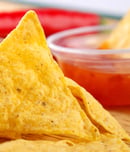
Corn chips have long been a beloved snack, satisfying cravings with their distinctive crunch and bold corn flavor. Typically crafted from ground cornmeal, shaped and then fried or baked, these bite-sized morsels have made their mark as one of the most versatile and accessible snack foods on the market. National...
- United States

Rural Life Sunday
Celebrate Rural Life Sunday by honoring farmers, rural communities, and land stewardship with farm-to-table feasts, nature walks, fairs, and local farm visits.
- Canada
- United States

National Corn Dog Day
Get ready to enjoy a delicious snack on a stick! This crispy and savory treat will make your taste buds dance with joy.
- Canada
- United Kingdom
- United States
National days and holidays on June 24

Midsummer Day
It's the time of year when the sun shines brighter and the nights grow shorter. Celebrate the season with bonfires, flowers, and fun!
- Denmark
- Estonia
- Finland
- and 3 more

St. John’s Day
St. John's Day marks a day of great significance for many around the globe. This day commemorates the birth of John the Baptist, a key figure in Christian tradition known for his role in preparing the way for Jesus Christ. Born in the 1st century B.C., John the Baptist was a...
- Brazil
- Poland
- Portugal
- and 3 more

Swim a Lap Day
Swimming is great for your physical health, giving you cardio and strength training in one. Take a Lap around the pool to boost your both your health and mood.
- Australia
- Canada
- United Kingdom
- and 1 more

Reserves Day
Honor reservists who balance civilian careers with military service. Discover Reserves Day traditions, ways to show support, and why these forces matter.
- Australia
- Canada
- United Kingdom
- and 1 more
Seize Every Day
Join free for personalised recommendations, email reminders and exclusive guides. Never miss a day.