
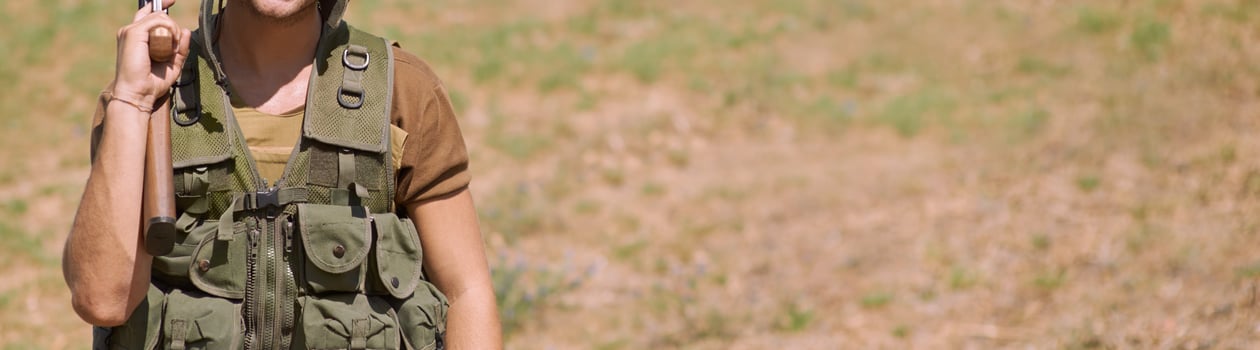
Reserves Day is a spirited celebration that shines a spotlight on reservists: people who manage to be both everyday civilians and trained military personnel, sometimes within the same week. They build careers, raise families, study for degrees, and still find time to train, stay ready, and step forward when extra support is needed.
While the day is most closely associated with the United Kingdom, the idea behind it travels well. Every country that relies on reserve components understands the unique “two-worlds” life reservists lead.
Reserves Day invites the public, workplaces, and communities to notice that service, learn what it actually involves, and offer the kind of practical appreciation that goes beyond a quick thumbs-up.
How to Celebrate Reserves Day
Wear Your Uniform with Pride
For reservists, one of the signature ways to mark Reserves Day is wearing a uniform in a civilian setting, especially at work, when it is permitted and appropriate. It is a simple act, but it does a lot of heavy lifting. It makes service visible, invites respectful questions, and helps colleagues connect the idea of “the reserves” with a real person they already know.
For non-reservists, the spirit of this idea can still work without any official uniform involved. Wearing military-themed colors, a supportive pin, or even a camouflage accessory can be a conversation starter, especially when paired with a willingness to listen and learn. If the goal is awareness, then the best outfit is the one that leads to a meaningful chat, not a costume contest.
A quick note of common sense fits here too: uniforms and insignia can carry rules and sensitivities depending on a country’s regulations. The celebratory approach is to focus on respect, accuracy, and the reservist’s own comfort level. And yes, pets can still participate in tiny camouflage bandanas, because morale is an important capability.
Host a Themed Party
A themed gathering can be playful without being cheesy, and informative without turning into a lecture. The best Reserves Day parties tend to borrow the “team” feeling that military units thrive on: shared food, shared stories, and activities that get people working together.
Decorations can be subtle: greens and neutrals, simple flag colors, or table cards that highlight different reservist roles like logistics, engineering, medical support, communications, or disaster response. A trivia game becomes more interesting when it goes beyond famous battles and focuses on what reservists actually do: training schedules, how mobilization works, and the variety of jobs that exist in modern forces.
If the group is up for it, a mini “challenge course” can be a hit, especially for kids and families. Keep it safe and silly: timed sock-folding “deployment packing,” a relay that involves carrying water jugs, or a map-reading scavenger hunt. The point is not to imitate military training, but to appreciate the readiness mindset and teamwork that reservists practice year-round.
Share Stories
Reserves Day is tailor-made for storytelling because reservist life is full of contrasts. One person might be an IT professional during the week and a cyber specialist in uniform on the weekend. Another might work in healthcare and bring that expertise into military medical support. Many reservists also develop leadership skills that carry back into civilian workplaces, which is one reason employers often value them.
Sharing stories on social media can be as simple as a thank-you post, but it becomes more meaningful when it is specific. Highlight the “why” of reserve service, what training involves, what skills carry over, or how a reservist’s unit supports broader operations. If posting about someone else, it is wise to ask permission first, keep personal details limited, and avoid sharing sensitive information about locations or schedules.
Hashtags like #ReservesDay can help posts travel. Just as important is the tone: respectful, practical, and human. Reservists are not movie characters. They are people who commit their free time to being ready, and that readiness has real value even when it is not visible.
Visit a Military Museum
Military museums are great at turning big concepts into tangible reality. A museum visit can show how armed forces are structured, how roles have evolved, and how support services, engineering, logistics, communications, and medicine have always mattered alongside frontline duties.
To connect the visit to Reserves Day, visitors can focus on exhibits that explain citizen service, mobilization, or home-front contributions. Many museums also highlight everyday items that tell a reservist-like story: field kits, radios, medical equipment, navigation tools, and uniforms across eras. Those objects make it easier to imagine the discipline behind “part-time” service and the training required to use specialized equipment responsibly.
If a museum offers talks, demonstrations, or veteran and service member stories, those are worth prioritizing. The best takeaway is not a list of dates, but a clearer understanding of how reservists fit into the larger defense picture and why their mix of civilian and military skills can be such a powerful combination.
Volunteer Together
Volunteering is a solid Reserves Day activity because it matches the day’s theme: service that strengthens a community. It also offers a way for people without a direct connection to the military to participate meaningfully.
A group can volunteer with a veterans organization, help with a community clean-up, assemble care packages, support a food pantry, or assist a local shelter. The most respectful approach is to choose a project based on real community needs, not on optics. Reservists and veterans tend to recognize genuine effort quickly, and they appreciate it far more than a performative gesture.
For workplaces, a volunteering event can double as education. A short introduction at the start, explaining why reservists matter and what kinds of support help them most, can turn a few hours of volunteering into a lasting shift in awareness. Small changes at work, like flexibility for training days or a supportive team culture, can be just as valuable as a public thank-you.
Fly the Flag
Flags are an easy symbol, and that simplicity is part of their usefulness. Flying a national flag at a home, business, or community building signals recognition, and it can prompt questions from neighbors and coworkers who might not otherwise think about reserve service.
For groups that want to go a step further, the flag can be paired with a short message: a sign in a window, a note on a community board, or a workplace announcement thanking reservists and recognizing the behind-the-scenes support of families and employers.
Reservist service rarely happens in isolation. It often depends on partners who take on extra responsibilities during training periods, friends who show up for childcare, and managers who plan around absences with goodwill rather than resentment.
The most effective flag display is the one that feels welcoming rather than political. The focus stays on people and service, not on debate.
Bake Military-Themed Treats
Food is the universal morale booster, and Reserves Day treats can be fun while still staying tasteful. Camo cupcakes, star-shaped cookies, or simple “thank you” brownies can brighten a workplace break room and open the door to conversation.
For anyone baking with reservists in mind, the best move is to keep it inclusive: label ingredients for allergies, offer a non-sugary option, and avoid jokes that could trivialize service. Lighthearted is good. Thoughtless is not.
Treats can also be paired with a small educational touch. A card that says “Thanks to our reservists” is nice. A card that adds “Thanks to reservist families and supportive employers too” shows a deeper understanding of what reserve service requires.
Engage Kids with Crafts
Craft activities can help kids understand Reserves Day without oversimplifying it into “soldiers and battles.” The emphasis can be on service, teamwork, readiness, and helping in emergencies.
Kids can design “support badges” for reservists, make thank-you cards, or create paper flags and posters that highlight helpful values like courage, responsibility, and community care.
A simple craft station can also include age-appropriate explanations: reservists train regularly, they can be called up to assist, and they often use skills they learn in civilian life.
For families, it can be meaningful to connect crafts to real-life gratitude. If a child knows a reservist, a handmade card can mean a lot, especially when it acknowledges the whole balancing act: work, training, and family time.
Why Celebrate Reserves Day
Reserves Day exists because reservists are often easy to overlook. Regular armed forces are visible by design, but reserve forces can be quietly woven into civilian life. A reservist might be a coworker who disappears for training weekends, a neighbor who leaves early for drills, or a friend who suddenly needs to prepare for a period of full-time service. Reserves Day encourages people to notice that commitment and understand what it takes.
Reservists provide essential depth to national defense. They can reinforce the regular forces during periods of increased demand, fill specialized roles, and support operations ranging from security to peacekeeping to humanitarian assistance. In many countries, reservists also contribute to domestic resilience by supporting civil authorities during emergencies, bringing trained coordination, logistics, and communications skills to high-pressure situations.
One of the most distinctive strengths of reservists is the expertise they carry from civilian life. Engineers, nurses, paramedics, mechanics, pilots, project managers, language specialists, and tech professionals often bring up-to-date experience from their everyday work into military roles that need exactly those skills. That cross-pollination works both ways. Reservists frequently bring leadership training, crisis decision-making, and structured teamwork back into their civilian workplaces.
Reserves Day also recognizes the support systems around reservists. Employers who make room for training schedules and mobilization requirements are part of the story. Families who shoulder extra responsibilities during absences are part of the story too. Celebrating the day is not only about applause. It is about understanding the practical realities of reserve service and encouraging a culture that supports it.
Reserves Day Timeline
Creation of the Territorial Force
The Territorial and Reserve Forces Act 1907 took effect on April 1, 1908, uniting volunteer units and yeomanry into the Territorial Force, a structured part‑time home defense reserve for the British Army.
First World War Mobilization of British Reservists
At the outbreak of World War I in August 1914, Army reservists and territorial units were rapidly called up, filling out regular battalions and forming new divisions that deployed to reinforce the British Expeditionary Force.
Territorial Force Becomes the Territorial Army
The Territorial Army and Militia Act 1921 reconstitutes the wartime Territorial Force as the Territorial Army, confirming its role as Britain’s primary volunteer reserve land force between the world wars.
Auxiliary Air Force Squadrons Instituted
Parliament authorizes the Auxiliary Air Force as a reserve for the Royal Air Force, and on 9 October 1924, the first city and county squadrons are instituted, creating a formal air reserve tradition.
Reserve Forces Act Modernizes UK Reserves
The Reserve Forces Act 1996 overhauls earlier legislation, defining categories of reservists and making it easier for the government to mobilize volunteer and regular reserves for a wider range of operations.
“Reserves in the Future Force 2020” White Paper
The UK Ministry of Defence publishes the “Reserves in the Future Force 2020: Valuable and Valued” White Paper, setting out plans to expand and more fully integrate reserve forces within a Whole Force concept.
Territorial Army Renamed the Army Reserve
On January 1, 2014, the long‑standing Territorial Army was redesignated the Army Reserve as part of the Future Reserves 2020 reforms, signaling a shift toward using reservists as an integrated, routinely deployed component of UK land forces.
History of Reserves Day
Reserves Day was established in the United Kingdom in 2015 as part of the wider Armed Forces Week activities, created to highlight and recognize the contribution of reservists. It developed from an earlier awareness effort commonly known as “Uniform to Work Day,” which encouraged reservists to wear their uniform in civilian workplaces.
The change in name helped broaden the focus from the visible act of wearing a uniform to the larger purpose: appreciating reservists’ role and encouraging public, employer, and community support.
From the beginning, the day aimed to explain what reservists are and what they are not. They are not simply “on standby” in a vague sense. They train deliberately, maintain standards, and can be mobilized to serve when needed.
Reserves Day was designed to make that commitment easier to recognize by bringing it into everyday places like offices, schools, shops, and public services, spaces where military service is not always immediately apparent.
Over time, the observance has grown to include a variety of activities, often led by reserve units, workplaces, and community organizations. Some mark the day with formal events; others keep it simple with workplace recognition, local gatherings, or storytelling campaigns.
The consistent thread is visibility and appreciation: making reserve service easier to understand, and making reservists feel seen for the effort it takes to balance two demanding roles.
Although the UK version has a specific structure within Armed Forces Week, the heart of Reserves Day is broadly relatable. Any community that benefits from reservists can use the occasion to learn more about them, recognize their readiness, and support the people who quietly do the extra work required to serve.
Reserves Day Facts
Citizen-Soldier Tradition Dates Back to 19th-Century Prussia
Modern reserve forces grow out of the “citizen-soldier” model developed in 19th-century Prussia, where short periods of active conscription were followed by long obligations in the reserves.
This system created a large pool of trained civilians who could be rapidly mobilized, and it strongly influenced later reserve structures in countries such as the UK and the United States.
The UK’s Army Reserve Traces Its Roots to 1908 Reforms
The United Kingdom’s modern Army Reserve evolved from the Territorial Force, created on 1 April 1908 by the Territorial and Reserve Forces Act 1907.
This reform reorganized various volunteer and militia units into a structured part-time force intended for home defense, establishing the basic template for today’s volunteer land reserve.
UK Reserve Forces Provide Around One-Sixth of Military Personnel
Official UK Armed Forces communications state that reservists make up “around one sixth” of all Armed Forces personnel.
Although exact ratios fluctuate, this indicates that a significant share of the country’s military strength depends on people who normally live and work as civilians but can be called up when needed.
Canadian Reservists Form a 44,000-Strong Force
The Canadian Armed Forces report a total Reserve Force of 44,482 personnel, including the Primary Reserve, Canadian Rangers, Cadet Organizations Administration and Training Service, and the Supplementary Reserve.
With a median age of about 32, this large, relatively young cohort provides domestic support, augments overseas missions, and links the military closely to civilian communities across Canada.
Reservists Often Bring Specialist Civilian Skills into Uniform
Many modern militaries rely on reservists for high-skill capabilities that are hard to sustain in regular forces alone.
UK government material highlights medical and cyber roles in particular, where doctors, nurses, IT specialists, and cybersecurity professionals serve part-time, combining current civilian expertise with military training to fill specialist posts on operations.
US Army Reserve Service Commonly Follows a “Weekend a Month, Two Weeks a Year” Pattern
The U.S. Army describes typical Army Reserve participation as at least one weekend of training per month and about two weeks of annual training, within an eight-year service obligation that often ends with time in the Individual Ready Reserve.
This model allows people to maintain civilian careers while keeping military skills sharp enough for rapid mobilisation.
UK Law Protects Reservists from Losing Their Jobs Because of Service
In the United Kingdom, government guidance makes clear that employers must not dismiss or select someone for redundancy just because they are a reservist, need to train, or are mobilized.
After a period of mobilization, eligible reservists generally have the right to be re-employed in the same type of job, on terms no less favourable than if they had not been called out.
Reserves Day FAQs



You may also like

Navy Reserve Birthday
The Navy Reserve Birthday is a special occasion that honors the dedication and service of the Navy Reserve, a force built for flexibility, expertise, and readiness. This day celebrates the vital contributions of Reserve Sailors who support the active-duty Navy. These reservists step in to fill critical capability gaps, reinforce units...
- Australia
- Canada
- United Kingdom
- and 1 more

U.S. Coast Guard Reserve Birthday
The U.S. Coast Guard Reserve Birthday is a special day honoring the vital contributions of the Coast Guard Reserve. This day celebrates the dedicated individuals who support national security, maritime safety, and disaster response. Their work ensures that our waterways remain safe and that the Coast Guard can fulfill its mission...
- United States
Air Force Reserve Birthday
The Air Force Reserve Birthday celebrates the essential role of the Air Force Reserve in the United States defense strategy and recognizes the contributions of Reserve Airmen who serve both domestically and internationally. They play a vital part in supporting the Air Force's mission to fly, fight, and win. The...
- United States

Army Birthday
Honor the legacy and service of the U.S. Army, from its 1775 founding to today, with traditions, ceremonies, and ways to thank soldiers on Army Birthday.
- Canada
- United Kingdom
- United States
National days and holidays on June 24

Midsummer Day
It's the time of year when the sun shines brighter and the nights grow shorter. Celebrate the season with bonfires, flowers, and fun!
- Denmark
- Estonia
- Finland
- and 3 more

St. John’s Day
St. John's Day marks a day of great significance for many around the globe. This day commemorates the birth of John the Baptist, a key figure in Christian tradition known for his role in preparing the way for Jesus Christ. Born in the 1st century B.C., John the Baptist was a...
- Brazil
- Poland
- Portugal
- and 3 more

Swim a Lap Day
Swimming is great for your physical health, giving you cardio and strength training in one. Take a Lap around the pool to boost your both your health and mood.
- Australia
- Canada
- United Kingdom
- and 1 more

National Patch Day
National Patch Day celebrates sending fabric patches to kids facing serious illness, turning small handmade gifts into powerful symbols of hope, care, and connection.
- United States
Seize Every Day
Join free for personalised recommendations, email reminders and exclusive guides. Never miss a day.