Golfer’s Day
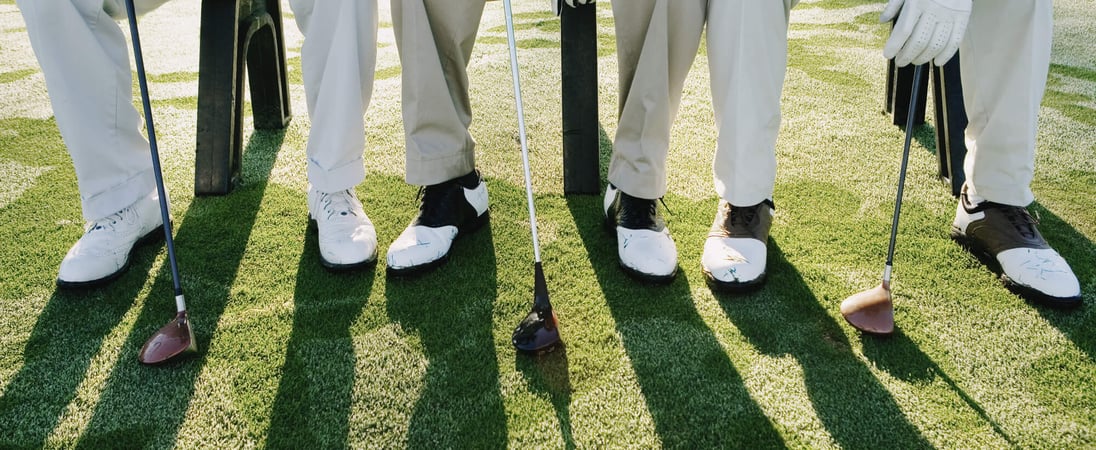
Hit the green and practice your swing. Never played golf, or have terrible weather? Find a mini-golf course, or even fire up a golfing video game at home.
Some people believe that the word “golf” is derived from the phrase “gentlemen only, ladies forbidden.”
However, very few words commonly used in the English language today gained their origins from acronyms.
Other possibilities include the Dutch word “kolf,” a kind of stick or club, or “goulf,” a Scottish word meaning “to strike or cuff.”
Golfer’s Day Timeline
1457
Scottish Parliament Bans Golf
King James II of Scotland issues an act banning “gowf” and football, fearing they distract men from archery practice, providing the earliest known official reference to golf as a game.
1552
St Andrews Links Receives Charter for Public Golf
Archbishop John Hamilton grants the people of St Andrews the right to play golf on the Links, establishing what becomes known as the “Home of Golf” and one of the world’s oldest golf courses.
1764
St Andrews Adopts the 18-Hole Course
The Old Course at St Andrews is redesigned from 22 to 18 holes, a layout that later becomes the standard for championship golf courses around the world.
1860
First Open Championship Is Played
Professional golfers compete at Prestwick Golf Club in Scotland in what becomes The Open Championship, the oldest continually run golf tournament, helping establish professional tournament golf.
1894
United States Golf Association Is Founded
Representatives from five American clubs meet in New York to form the USGA, creating a national governing body that standardizes rules and organizes major competitions in the United States.
1916
Professional Golfers’ Association of America Forms
The PGA of America is founded in New York City to promote the interests and professionalism of golf instructors and club pros, shaping the modern profession of the golfer.
1950
Ladies Professional Golf Association Launches
Thirteen women golfers establish the LPGA in the United States, creating one of the longest-running women’s professional sports organizations and expanding opportunities for women in golf.
How to Celebrate Golfer’s Day
On Golfer’s Day we celebrate, not the game itself, but the men and women who play it, even the lowliest duffer who shanks their ball all the way into the jungle.
Clearly the best way to celebrate is to hit the links yourself, but that may not always be an option for you. Perhaps you do not live near one of the approximately 31,000-32,000 golf courses in the world.
Enjoy Some Golfing Hijinx
For the more inventive celebrant, there is the option of another sort of “game.” Walk up behind friends or co workers and pretend to narrate their actions as if you were a golf announcer.
Go online and learn some golf slang and try to work it into everyday conversations. Do you best Bob Hope impression and carry a club around with you all day. Or, at least work on your imaginary golf swing.
Drink a Golfer’s Beverage
If you are still looking for something to do, why not kick back and drink an Arnold Palmer, a drink made of half lemonade and half iced tea made famous by the golfer of the same name.
The best time to do this is while sitting down to watch a golf movie. There are dozens to choose from, from comedies like the classic Caddyshack or Happy Gilmore, to more dramatic films like Tin Cup or The Legend of Bagger Vance.
Get Together with Golfing Friends
As the day comes to a close and you watch your balls sailing over water hazards and past bunkers, pause to reflect on the day.
Golf may not be a team sport, but it is best enjoyed with friends and family. In the end, enjoying Golfer’s Day is a good excuse to get together with the people you care about and spend time enjoying one another’s company.
Turn to your loved ones and say, “Hey, you can be my caddy any day.” Then softly clap as the sun slowly dips below the horizon.
Play Golf Video Games
So, you want to enjoy playing golf without leaving your home? That’s fine too.
The history of golf in video games goes all the way back to 1979 when Magnavox released a game simply called “Golf” for their Magnavox Odyssey2 console.
Since then, there have been over eighty different versions of the sport to pp up on computers and gaming systems. Video game golfers have included everyone from Tiger Woods to the characters from Adult Swim’s Aqua Teen Hunger Force.
History of Golfer’s Day
No matter what the origin of the word, the game we currently recognize as golf originated in Scotland, somewhere in the 14th century.
The earliest recorded use of the term in reference to the game was a ban enacted by King James II in 1457, who thought that young men spent too much time golfing, and not enough time practicing archery!
The earliest golf club (building, not stick) was established in 1552, after the ban was lifted in 1502. J.R.R Tolkein, author of the Lord of the Rings books, had a different opinion. According to him, the game was invented when a hobbit used a club to knock the head off of the goblin Golfimbul, which sailed through the air and landed in a hole!
Or maybe you just don’t enjoy the full-sized game yourself? Fear not! For you, there is the game of miniature golf!
That game was created in 1916 when the first minigolf course was built in Pinehurst, North Carolina. While it lacks the long distance shots and wide, grassy fields, minigolf has unique challenges and features all its own, such as complicated bank shots and ramps.
It even has its own international regulatory body, The World Minigolf Sport Federation (WMF).
National Golfer’s Day was founded to celebrate the love of golf. It takes place on this date as a nod to the founding of the Professional Golfers’ Association (PGA), which took place on April 10, 1916.
Facts About Golfer’s Day
Golf’s Medieval Scottish Origins
Most historians agree that modern golf developed in Scotland during the late Middle Ages, where people in coastal towns around Edinburgh and St Andrews played stick‑and‑ball games on natural linksland, the sandy, wind‑shaped terrain between farmland and the sea.
Parliament grew concerned enough about the pastime that in 1457 King James II of Scotland issued an act banning “fute-ball and golfe,” worried that young men were neglecting archery practice required for national defense.
How Golf Helped Shape St Andrews
The town of St Andrews in Fife, Scotland, became so closely tied to golf that by 1552 a royal charter explicitly granted townspeople the right to play on the links, turning common coastal land into a recreational resource that anchored the local economy.
The Old Course at St Andrews later standardized the now‑familiar 18‑hole layout in the 18th and 19th centuries, which influenced course design worldwide and helped cement the town’s reputation as the “Home of Golf.”
The Dimples That Changed the Golf Ball
Early golf balls were smooth, but players noticed that older, scuffed balls flew farther and more predictably than new ones.
Engineers eventually learned that adding dimples artificially creates a thin, turbulent layer of air around the ball that reduces drag and increases lift, allowing it to travel significantly longer distances.
Modern balls typically have between 300 and 500 precisely engineered dimples whose size, pattern, and depth are tuned to optimize flight characteristics.
Golf Courses as Major Land Users
Golf occupies more land worldwide than many people realize, with more than 38,000 courses across over 200 countries, heavily concentrated in the United States, Japan, Canada, England, and Australia.
Researchers estimate that in some regions, especially in parts of Asia and North America, golf courses can account for several percent of all urban green space, making their design decisions important for biodiversity, water use, and local environmental quality.
Water and Environmental Pressures on Golf
In arid and Mediterranean climates, golf courses can be intensive water users, with some facilities historically requiring hundreds of thousands of gallons per day for irrigation at peak season.
In response to regulatory pressure and drought, many courses now adopt measures such as using drought‑tolerant grass species, recycled or desalinated water, precision irrigation systems, and reduced‑turf “naturalized” areas, a shift encouraged by initiatives like the Golf Environment Organization’s sustainability standards.
Women Breaking Barriers in Golf
Although women have played golf for centuries, formal opportunities lagged behind men’s until the 20th century, when organizations such as the Ladies Professional Golf Association (LPGA), founded in 1950, created a stable professional tour in the United States.
Landmark moments, including the R&A’s 2014 vote to admit women members at the historically male‑only Royal and Ancient Golf Club of St Andrews and the Augusta National Women’s Amateur first played in 2019, signaled ongoing shifts toward greater gender inclusion at golf’s most traditional institutions.
Miniature Golf’s Serious Competitive Side
Miniature golf, often seen as a lighthearted family activity, has developed its own highly structured competitive scene, particularly in Europe.
The World Minigolf Sport Federation governs international play, organizes world and continental championships, and recognizes standardized course types such as concrete “Miniaturegolf,” felt courses, and Swedish‑style “Bongni,” with elite players honing precise putting techniques and course‑mapping strategies comparable to those used in full‑scale professional golf.
Golfer’s Day FAQs
Is golf actually good exercise or is it too low intensity to matter?
Walking an 18‑hole course can cover four to eight miles and burn hundreds of calories, especially when players carry clubs or walk hilly terrain, so many health organizations consider golf a form of moderate‑intensity physical activity for most adults.
Studies have linked regular golf participation with improved cardiovascular fitness, balance, and strength in older adults, although using a cart and avoiding walking reduces these benefits.
Is it true that “golf” stands for “gentlemen only, ladies forbidden”?
Linguists and historians agree that the phrase “gentlemen only, ladies forbidden” is a modern joke and not the origin of the word “golf.”
The term is documented in Scotland several centuries before acronym-style word formations became common, and most scholars trace it back to older Dutch or Scots words for “club” or “to strike” rather than any phrase about excluding women.
Why has golf historically been seen as a sport for wealthy people?
Golf gained a reputation as an elite pastime because early clubs often required expensive memberships, large amounts of land, and strict dress or social codes that limited who could play.
In many countries, private country clubs and resort courses reinforced this image.
Over time, the growth of public and municipal courses, driving ranges, and pay‑per‑round facilities has broadened access, but significant costs such as equipment, green fees, and travel still influence who participates regularly.
How are organizations working to make golf more inclusive and accessible?
Golf bodies and nonprofits are expanding junior programs, offering low‑cost introductory lessons, and supporting public facilities in underserved areas to reduce financial barriers.
Many also run initiatives for women, girls, and people with disabilities, including adaptive equipment and coaching, relaxed dress codes, and flexible formats like shorter loops of holes, all designed to make the game feel more welcoming to new and diverse players.
What are some key differences between traditional golf and miniature golf?
Traditional golf is played on large outdoor courses with longer holes, varied terrain, and a full set of clubs, where players aim for the lowest number of strokes from tee to green.
Miniature golf uses much shorter, usually putting‑only holes with artificial surfaces, obstacles, and themed designs, so the focus shifts toward precision putting and bank shots rather than distance and club selection, and it often appeals to families and casual players who might not play full‑course golf.
How do professional golfers prepare mentally compared with casual players?
Elite golfers typically work with coaches and sports psychologists on structured routines, visualization, and strategies for managing stress and distractions before every shot.
They practice breathing techniques, focus cues, and post‑shot “resets” to stay composed over long rounds, while casual players often rely more on natural reactions and may not use formal mental strategies, which can make their performance more variable under pressure.
Why is pace of play such a big issue in golf?
Slow rounds can reduce enjoyment, cause backups on the course, and limit how many golfers a facility can accommodate in a day, which affects both satisfaction and revenue.
To address this, many courses and golf organizations promote time‑saving habits such as playing “ready golf,” choosing appropriate tee boxes, limiting practice swings, and being prepared to hit, which together help keep the game moving for everyone.
Also on ...
View all holidays
National Hug Your Dog Day
Give that furry creature a special celebration by enjoying National Hug Your Dog Day with them.


National Siblings Day
Show your siblings you appreciate them, even if you sometimes want to kill them, or volunteer to adopt-a-sibling and enrich some else’s life on Siblings Day.

We think you may also like...

Indianapolis 500
Get yourself some tickets to the Indy 500 and see some of the fastest racing in-person. Otherwise, get your friends together and watch the broadcast.