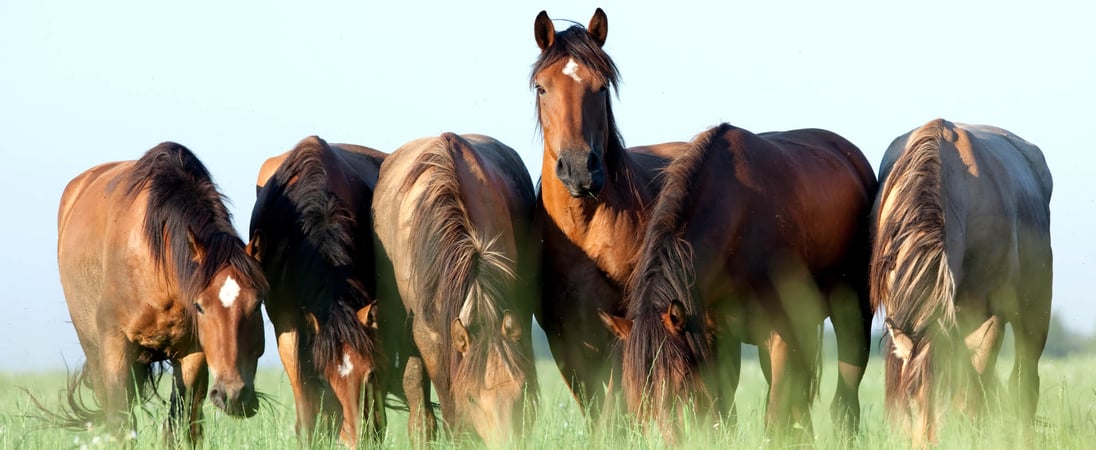
National Horse Protection Day
Giving a second chance to majestic creatures that were once overlooked and neglected is both rewarding and inspiring.
The majestic horse has long been considered a close companion of humans and a vital contributor to our species’ progress. National Horse Protection Day is all about returning the love of our four-legged friends by raising awareness of the various plights that horses face and by protecting them from abuse, exploitation and neglect.
How to Celebrate National Horse Protection Day
National Horse Protection Day is a day to be mindful of the trials and tribulations of horses without a home, without companionship and without love. Horse lovers will often say that these creatures are just as much our four-legged friends as cats and dogs are – and if you have ever been lucky enough to know these shy and gentle animals, you’ll know this to be true.
There are plenty of ways you could observe National Horse Protection Day. Check out a few of these to get started with:
Visit a Horse
Of course, not everyone has the space to adopt a horse and keep one to look after, but if you live close to a stable, offering a helping hand with the horses or dropping off food and bedding would certainly be appreciated.
Donate to a Horse Charity
Perhaps you could think about supporting a horse through a charity or donating to your local horse sanctuary. By supporting organizations such as these, you’ll be contributing to a whole range of activities aimed at improving the lives of horses everywhere, from rehoming and rehabilitation to educating and supporting owners and breeders.
Stand Up for Horse Welfare
If you spot a horse that seems neglected or abandoned, don’t be afraid to call an animal welfare charity or equine sanctuary for help. And if you’re especially passionate, you could even get involved in lobbying efforts to improve legislation on animal welfare, livestock protection and responsible breeding.
While sports can be a great way for people and horses to bond, the equine’s wellbeing isn’t always given the priority it deserves. Horses may be overworked, maltreated and injured, sometimes fatally, in the pursuit of glory in the sports stadium.
Ride a Horse
National Horse Protection Day is also a great opportunity to connect with these amazing animals. Why not go on a trail ride or take up a sporting activity involving horses such as polo or showjumping? You can also venture into the great outdoors to places where wild horses can be found roaming freely!
However, you decide to celebrate, remember to spread the word on social media, and be sure to find out more about this important observance by visiting the National Horse Protection Day website.
Why Celebrate Horse Protection Day
There are a whole host of reasons why horses around the world need our protection!
Because of the resources and expense needed to care for them, horses are especially at risk of a poor quality of life, neglect and abandonment, even by well-intentioned owners who lack sufficient knowledge or simply fall upon hard times.
However, there are also many horse breeders and dealers who care not about animal welfare but rather about generating a profit. This can lead to large numbers of horses living in poor conditions and even suffering from abuse.
Although horse meat is consumed in various parts of the world and often considered a delicacy, there are also many who are against horses being treated as a food source. Horses that are slaughtered for meat often come from auctions, but sometimes they are abandoned pets, retired working animals, bought from private sellers or captured from wild herds.
With the horse considered an American icon, the US is particularly averse to horse meat – it’s illegal to sell or eat horse meat in some states such as California and there’s a movement to make this the case across the country.
And even wild horses (known as mustangs in the US) require our protection. Finding a humane solution to the problem of overpopulation in America is a real challenge. While many consider the rounding up of wild horses to be cruel, with a small number adopted but most living out the rest of their lives in holding pens, if numbers aren’t properly handled this could lead to drought and starvation for thousands. Humane management is therefore key to their flourishing.
National Horse Protection Day Timeline
1641
First Anti‑Cruelty Law in Colonial America
The Massachusetts Body of Liberties includes clauses 92 and 93, prohibiting “any Tyranny or Crueltie towards any brute creature which is usually kept for man’s use,” an early legal protection that covered working animals such as horses.
April 10, 1866
ASPCA was founded to Police Cruelty to Horses
New York passes an act incorporating the American Society for the Prevention of Cruelty to Animals, giving it authority to enforce anti‑cruelty laws against abuse of horses and other animals in the streets of the city. [1]
1877
“Black Beauty” Sparks Public Concern for Working Horses
Anna Sewell’s novel “Black Beauty” was published in Britain, vividly portraying the suffering of cab and carriage horses and helping to drive public support for humane treatment and anti‑cruelty reforms.
December 15, 1971
Wild Free‑Roaming Horses and Burros Act Protects Mustangs
The United States enacts the Wild Free‑Roaming Horses and Burros Act, declaring wild horses “living symbols of the historic and pioneer spirit of the West” and placing them under federal protection from harassment, capture, and death.
November 9, 2005
European Union Sets Rules for Horse Transport Welfare
The EU adopts Council Regulation (EC) No 1/2005, establishing detailed welfare standards for the transport of live animals, including horses, to reduce suffering during long journeys to slaughter or sale. [2]
2007
Closure of the Last U.S. Horse Slaughter Plants
Following state-level bans on horse slaughter in Texas and Illinois, the final three horse slaughter plants in the United States shut down, ending domestic commercial slaughter and increasing scrutiny of live exports for slaughter abroad.
2011
U.S. GAO Highlights Welfare Concerns After Slaughter Halt
A Government Accountability Office report on horse welfare finds that, after the end of domestic slaughter, more American horses are shipped to Mexico and Canada for slaughter, raising new welfare concerns and fueling debate about humane policy solutions. [3]
History of National Horse Protection Day
Throughout the centuries, equines have carried us on their backs, pulled our carriages, fought in our wars, tilled our fields and traveled miles and miles across our countries. They have been a key part of human civilization for over 5,000 years and have cultural significance all over the world. In the US, for example, the horse has a legendary status as an icon of the American spirit, a symbol of freedom in the West.
Although the advent of the automobile and various other technological advances has meant that these creatures are no longer required as frequently on the roads or as laborers, today horses still remain a steadfast companion to animal lovers and equestrian fans alike.
As well as being great pets, they are a beloved therapy animal, often providing support to people with disabilities, assist with important work such as policing and cattle ranching and have become a key part of some popular sports.
Yet despite the wonderful loyalty and dedication of horses, they are frequently mistreated, exploited and abandoned.
National Horse Protection Day was first observed in 2005 when it was founded by pet lifestyle expert and animal behaviorist Colleen Paige. Having grown up around horses, Paige created the day to make others mindful of the plight of unwanted and neglected horses, those that end up being slaughtered or served as food and those that are abused and exploited. The day aims to encourage the rescue, rehabilitation and rehoming of horses.
Although National Horse Protection Day began in the US, it has since spread and is celebrated elsewhere too – a testament to how universally valued these animals are.
Key Facts About Horses and Their Impact on Human History
These facts highlight the many ways horses have shaped human societies over time. From powering early trade networks and influencing the settlement of entire regions to undergoing significant genetic changes and supporting modern mental-health therapies, each fact reflects a different stage in the long and complex relationship between humans and horses.
-
Horses Helped Build Early Global Trade Networks
Long before trains and trucks, horses powered commerce by pulling heavy freight wagons and stagecoaches overland, allowing perishable and high‑value goods to move much farther and faster than human porters or oxen.
In the 18th and 19th centuries, draft horses on “turnpike” and later plank and macadam roads dramatically reduced travel times for mail, textiles, and manufactured goods, helping knit together national markets in Europe and North America and laying the groundwork for modern supply chains.
-
Wild Horses in the American West Mostly Descend from European Stock
Despite their iconic status as symbols of untamed America, most “wild” mustangs in the western United States are actually feral descendants of horses brought by Spanish explorers beginning in the 1500s.
Genetic and historical studies show that these animals trace largely to Iberian and later European breeds that escaped or were released from missions, ranches, and cavalry units, then adapted to harsh rangeland conditions over generations.
-
Modern Horse Breeds Are Much Less Genetically Diverse Than Ancient Ones
Large-scale DNA analyses of ancient and modern horses have found that selective breeding over the last 200 years sharply reduced genetic diversity compared with ancient populations.
As breeding focused on speed, appearance, or specialized work traits, many local lineages disappeared, which can increase the risk of inherited diseases and make some modern breeds more vulnerable to environmental change.
-
Equine-Assisted Therapy Has Measurable Benefits for Mental Health
Controlled studies of equine-assisted services show that interacting with horses can significantly reduce symptoms of post-traumatic stress, anxiety, and depression in some participants, including veterans and at-risk youth.
Programs that combine groundwork, riding, and structured psychotherapy report improvements in emotional regulation and trust-building, although researchers note that consistent standards and long-term follow-up are still needed to fully quantify the effects.
-
The U.S. Has Not Had a Domestic Horse Slaughter Plant Operating Since 2007
While horse slaughter is not federally outlawed outright, Congress has repeatedly blocked funding for mandatory USDA inspections of horse slaughter facilities, which has effectively halted commercial horse slaughter within the United States since 2007.
As a result, tens of thousands of American horses each year are instead transported to slaughter plants in Mexico and Canada, raising additional welfare concerns about long-distance transport and oversight in foreign facilities.
-
Tens of Thousands of American Horses Are Sent to Slaughter Abroad Each Year
Animal welfare organizations estimate that more than 20,000 American horses annually are shipped across U.S. borders to be killed for meat, often after being purchased through low-end auctions.
Many of these animals are former pets, racehorses, or working horses that enter what advocates call the “kill pen” pipeline, illustrating how gaps in long‑term care planning and identification systems can lead to severe welfare outcomes late in a horse’s life.
-
The U.S. Government Actively Manages Tens of Thousands of Wild Horses and Burros
Under the Wild Free‑Roaming Horses and Burros Act of 1971, the Bureau of Land Management is required to manage wild herds on designated public lands, balancing animal numbers with available habitat.
The agency estimates that more than 70,000 wild horses and burros currently live free on the range, with additional tens of thousands held in off-range pastures and corrals, making long‑term, humane population control and adoption programs a major federal land-management challenge.
National Horse Protection Day FAQs
What are the most common welfare problems domestic horses face worldwide?
Common welfare problems for domestic horses include chronic underfeeding or poor-quality feed, lack of clean water, inadequate shelter from extreme weather, and delayed or absent veterinary and dental care.
Many horses also suffer from overgrown or neglected hooves, painful tack or ill‑fitting saddles, social isolation from other horses, and overwork or inappropriate training methods.
These issues tend to arise where owners lack knowledge, resources, or access to qualified equine professionals, and they are reported in both leisure and working horse populations.
How can someone with little horse experience tell if a horse might be neglected or in distress?
Veterinary and welfare organizations advise looking for a combination of physical and behavioral signs rather than a single clue.
Red flags include visible ribs or hip bones, a rough or patchy coat, long or cracked hooves, untreated wounds, chronic coughing or nasal discharge, and a consistently dirty living area with accumulated manure.
Behaviorally, a neglected or stressed horse may seem listless, stand apart from companions, show repeated stereotypic behaviors like crib-biting or weaving, or react with extreme fear or aggression to normal handling.
Anyone who suspects neglect is encouraged to document what they see and contact a local animal welfare authority or veterinarian for assessment.
Why is managing wild horse and burro populations considered so controversial?
Wild horse and burro management is controversial because it involves balancing animal welfare, ecological health, and land-use interests. In the United States, for example, the Bureau of Land Management is legally required to maintain “appropriate management levels” on public rangelands.
Critics argue that helicopter roundups and long‑term holding facilities cause stress and can separate family bands, while others contend that leaving rapidly growing herds unmanaged can lead to overgrazing, habitat degradation, and starvation during drought.
Debates also center on whether more fertility control, habitat protection, or reduced livestock grazing should be used instead of removals, making it an ongoing ethical and policy challenge. [1]
Is horse slaughter legal everywhere, and why is it so ethically disputed?
Horse slaughter and horse meat consumption are legal in some countries and restricted or effectively banned in others, and these differences fuel strong ethical debate.
In parts of Europe, Asia, and South America, horse meat is regulated as a food animal product, while in the United States no horse slaughter plants are currently operating for human consumption, although horses may be exported to other countries for slaughter.
Opponents cite concerns about transport conditions, the stress of auctions, inconsistent stunning and killing methods, and the fact that many horses come from backgrounds where they were never raised as food animals and may have drug residues.
Supporters tend to frame the practice as a way to deal with unwanted horses and provide meat in cultures where it is accepted, which keeps the issue contentious.
What does humane management of wild horses actually involve in practice?
Humane management of wild horses typically combines nonlethal population control with efforts to safeguard habitat and minimize stress.
Wildlife and land agencies increasingly explore fertility control vaccines that can reduce foaling rates without removing animals from the range, along with careful monitoring of herd health and forage conditions.
When removals are deemed necessary, agencies are expected to use low‑stress handling methods, provide veterinary care, and place removed horses into adoption or long‑term pasture programs rather than crowded feedlots whenever possible.
Advocacy groups argue that humane management also requires revisiting overall land-use plans so that wild equids are given adequate, sustainable habitat alongside livestock and other wildlife.
Are equine-assisted therapy programs beneficial for people, and how do they protect the horses involved?
Research on equine-assisted services suggests potential benefits for people with conditions such as autism, PTSD, and physical disabilities, including improvements in balance, communication, and emotional regulation, although scientists note that more high‑quality studies are still needed.
Reputable programs follow strict welfare standards for the horses: they select suitable temperaments, limit session lengths, rotate animals to prevent fatigue, provide regular veterinary, hoof, and dental care, and allow ample turnout and social contact with other horses.
Professional bodies emphasize that therapy horses are not “tools” but sentient partners whose workload, tack, and environment must be continually adjusted to keep them physically comfortable and mentally engaged.
What welfare concerns exist in horse sports, and how do governing bodies try to address them?
Horse sports raise concerns about overuse injuries, drug misuse, harsh training methods, and pressure to compete despite pain or fatigue.
In racing, for instance, breakdown injuries and the use of medications are closely scrutinized, while in disciplines like show jumping or dressage, questions arise about training intensity and equipment that may cause discomfort.
Governing bodies respond with rule books that set limits on whip use, mandate pre‑competition veterinary inspections, prohibit certain substances, and allow officials to remove lame or distressed horses from competition.
Many federations also require protective gear, licensed veterinarians on site, and penalties or suspensions for welfare violations, although critics argue that enforcement and cultural change are still uneven across disciplines and countries.
Also on ...
View all holidays
National Barista Day
They create magic in a cup, transforming simple beans into a delicious pick-me-up. From latte art to custom blends, they're the coffee wizards!

Share a Smile Day
Spreading happiness with a simple, friendly expression, lighting up someone's day with warmth and positivity.

St. David’s Day
Embracing traditions with daffodils and lively festivities — a celebration weaving Welsh culture into joyous community gatherings.

International Wheelchair Day
Honoring the vitality of those who rely on wheelchairs, acknowledging resilience, and fostering inclusivity in communities.
We think you may also like...
Horse Rescue Day
Supporting equine welfare, contributing to the care and rehabilitation of horses in need, fostering a brighter future for them.

National Help A Horse Day
On of mankind’s closest companions, horses require lots of gentle, loving care to thrive, which is why horse lovers take part in National Help a Horse Day.
National Holistic Pet Day
Consider your pet’s health in a new way on National Holistic Pets Day, a time to consider all aspects of your pet’s health at the same time, not symptom by symptom.