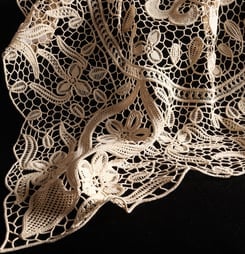
International Tatting Day celebrates the art of tatting, a delicate form of lace-making built from tiny knots and loops that somehow add up to airy, intricate beauty.
Tatting enthusiasts across the globe use the day as a friendly excuse to show off works in progress, swap patterns, compare tools, and invite curious newcomers to try a craft that looks far more complicated than it actually is once the basics click.
The occasion is lighthearted but skill-forward: tatting rewards patience, good tension control, and a willingness to count stitches without losing one’s place. It also rewards anyone who loves the satisfying moment when a ring closes neatly, and a row of picots lines up like little lace punctuation marks.
How to Celebrate International Tatting Day
Get Crafty
Celebrate International Tatting Day by starting a new tatting project, especially one that can be finished in a sitting or two. Quick projects are ideal because tatting has a learning curve, and early wins help. A simple edging strip can be stitched onto a handkerchief, a pillowcase, a cloth napkin, or even a canvas tote for a mix of old-world and modern. Bookmarks are another classic: they show off picots and rings beautifully, lie flat, and do not demand perfect sizing.
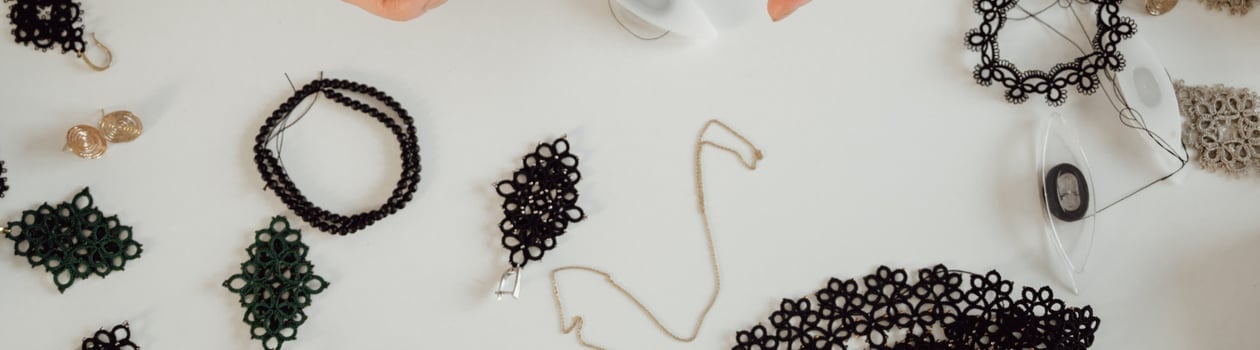
For those who want something a bit flashier, small jewelry pieces are surprisingly approachable. Tatting lends itself to earrings, pendants, and bracelets because motifs are lightweight but structured. A small snowflake-style medallion, a heart motif, or a circular rosette can be stiffened and paired with findings. Another crowd-pleaser is a set of coasters or a mini doily, which can be practical without requiring the commitment of a table centerpiece.
The tools are minimal, which is part of the charm. Shuttle tatting typically uses a small shuttle wound with thread, plus a crochet hook or a tiny pick for joining picots. Needle tatting replaces the shuttle with a long needle, and many beginners appreciate being able to “see” the stitches stacked on the needle before sliding them off.
Either way, thread choice matters. A smooth cotton thread in a light color makes the stitches easier to read while learning. Once comfortable, experimenting with variegated thread, metallic thread, or silk can change the entire mood of the lace.
It also helps to set up a pleasant workspace. Good lighting makes counting and spotting twists easier. A small pincushion or magnetic dish keeps tiny notions from vanishing. Many tatters keep a notebook with pattern notes, especially for repeated motifs where a single missed picot can throw off the symmetry.
When finished, taking photos of the work on a contrasting background makes the texture pop, and sharing the results can nudge another hesitant crafter into giving tatting a try.
Host a Tatting Party
Gather friends, family, or fellow crafters for a tatting get-together. The best tatting parties are low-pressure: people can bring whatever they are working on, from a first practice chain to a complex, multi-round doily. A table with snacks and drinks keeps the mood social, and a second table or tray for tools prevents thread tangles from becoming a group sport.
A simple structure can make the gathering more helpful. One corner can be a “help desk” where a more experienced tatter demonstrates how to close rings, make joins, or fix common mistakes like flipped stitches. Another area can be a “show and tell” station for finished items, antique lace, or modern adaptations such as tatted appliqués on denim jackets or greeting cards.
If the group includes beginners, it is useful to start with shared vocabulary. Tatting instructions often rely on abbreviations and concepts like double stitch, ring, chain, picot, join, and shuttle reversal.
Even a quick demonstration of how stitches sit on the thread, and how tension changes the final size, can prevent frustration. Parties are also perfect for trading leftover thread, extra shuttles, or spare needles, since many crafters end up with duplicates as they test what they like.
For a quirky touch, some hosts add a “lace buffet” theme: everyone brings something snackable that is delicate, lacy, or full of holes, such as wafer cookies, pretzels, lattice-topped pastries, or even a cheese board arranged like a doily. It is silly, but it fits the spirit of a craft built on airy patterns.
Share Your Skills
Teaching someone tatting is one of the most practical ways to celebrate. The craft is traditionally passed along through hands-on demonstration, and even a short lesson can plant the seed for a lifelong hobby.
A good first lesson focuses on one win: making a stable double stitch and understanding how the stitch “flips” onto the core thread. That flip is the lightbulb moment. Without it, stitches lock up and nothing slides. With it, the whole technique suddenly behaves.
After the first stitches, the next satisfying milestone is closing a ring. Rings are iconic in tatting because they create that crisp circular motif that looks like it belongs on a vintage collar.
Once a learner can close a ring without twisting, adding picots becomes the fun part. Picots are those small loops that act as both decoration and connection points. They can be tiny and neat for a refined look, or larger for a more playful, ruffled style.
For people who learn differently, it helps to offer options. Shuttle tatting is traditional and fast once mastered, but needle tatting can feel more intuitive at first. Some learners also benefit from slightly thicker thread and an oversized shuttle or needle, at least until the hand movements feel natural. The goal is not speed. It is building muscle memory and confidence.
Sharing skills can also mean sharing patterns responsibly. Many tatting patterns are designed by individual artists and circulated in books, magazines, or paid downloads.
A thoughtful celebration respects designers’ work while still encouraging learning, for example, by pointing students toward public-domain or freely shared beginner patterns, or by helping them draft their own simple motifs.
Join a Tatting Group
Participating in a local or online tatting community adds a strong social layer to a craft that often happens quietly. Groups frequently organize stitch-alongs, technique challenges, motif swaps, and themed projects. For a solitary crafter, a group can supply motivation and gentle accountability, plus the reassurance that even experts sometimes have to unpick a row.
Online communities are especially useful for troubleshooting because tatting problems are often visual. A photo of a ring that will not close, a chain that curls oddly, or picots that refuse to line up can be diagnosed quickly by someone who has made the same mistake. Many groups also keep albums of step-by-step demonstrations for joins, split rings, mock rings, and other intermediate techniques that let lace grow in more directions.
Groups are also great for exploring how tatting overlaps with other fiber arts. Crocheters may enjoy cro-tatting, which uses a small hook-like tool. Lace knitters may appreciate tatting’s structured geometry. Embroiderers often use tatted motifs as appliqués or as decorative elements on linens. These crossovers keep the craft from feeling boxed into one aesthetic.
Connecting with others also supports the preservation side of International Tatting Day. Tatting is not merely decorative; it is part of textile history, and communities help keep the techniques standardized enough to pass along while still leaving room for creativity. When patterns are tested, mistakes are corrected, and variations are shared, the craft stays lively rather than fossilized.
Indulge in Chocolate
Tradition says to enjoy some chocolate while tatting, which feels like a practical rule disguised as a treat. Tatting requires focus and fine motor control, and a small piece of chocolate is a pleasant pause between rounds.
It can also become a playful pairing exercise: a dark chocolate for bold geometric motifs, a milk chocolate for soft floral edgings, or something filled and fancy for a project that has been languishing in the workbasket.
The easiest way to make this tradition feel intentional is to plan “chocolate checkpoints.” Finish a set number of rings, complete a motif, or solve a tricky join, then take a bite. It adds rhythm to the work and can make longer sessions feel less like squinting and more like a cozy ritual.
Of course, chocolate and thread have one basic rule: clean hands. Keeping a napkin nearby or choosing wrapped pieces prevents smudges, especially on light-colored thread. The goal is indulgence, not a mysterious brown stain that looks like a design choice.
Reasons for Celebrating International Tatting Day
International Tatting Day is celebrated for several reasons, and the first is pure creativity. Tatting turns a spool of thread into something that looks architectural: arches, rings, scallops, and tiny bridges of joins.
It offers the satisfaction of making a functional object, such as an edging or a lace insert, while also delivering the pleasure of creating something simply because it is beautiful.
Another reason is the mindful pace of the craft. Tatting is repetitive enough to be calming but not so automatic that attention can disappear completely. Counting stitches, managing tension, and planning joins keep the brain engaged. Many crafters like that balance: it is soothing without being dull, and it can be picked up for ten minutes or enjoyed for an entire afternoon.
Preservation is also a major motivation. Tatting sits in the broader tradition of lace-making, a category of textile work that has decorated clothing and household linens for centuries.
Unlike mass-produced lace, hand-tatted lace carries the imprint of the maker. Each piece reflects choices about thread size, picot spacing, and pattern interpretation. Celebrating the day encourages people to learn, teach, and document techniques so the knowledge does not fade.
Community matters, too. Fiber arts can be wonderfully social, and tatting communities tend to be generous with encouragement because everyone remembers the early stage when stitches refused to cooperate.
International Tatting Day gives these communities a reason to welcome newcomers, highlight diverse styles, and remind experienced tatters that their skills are worth sharing.
Finally, there is a practical reason: tatting is portable. A shuttle, a small ball of thread, and a pattern fit in a pocket or pouch. That portability makes it easy to incorporate into daily life and easy to introduce to people who think they do not have time for a craft. A day dedicated to tatting can be the nudge that turns “someday” into “why not now?”
International Tatting Day Timeline
Emergence of Tatting from Knotting
Textile historians find no documented examples of tatting before 1800, concluding that the craft developed in the early 19th century out of earlier decorative knotting techniques used for trimming garments.
One of the Earliest Printed Mentions of Tatting
An 1843 German book on needlework is among the earliest known publications to describe tatting, helping to distinguish it from older knotting work and bringing the technique into the realm of formal needlework instruction.
Éléonore Riego de la Branchardière Publishes Influential Tatting Book
Irish needlework designer Éléonore Riego de la Branchardière issues one of the first major tatting pattern books, popularizing decorative picots and chains and spreading tatting across fashionable circles in Britain and beyond.
Victorian Craze for Tatting Lace
During the Victorian era, tatting became a favored pastime among women in Europe and North America, with ornate shuttles made of bone, ivory, or metal and patterns for collars, edgings, and doilies appearing in ladies’ magazines.
Tatting as a Domestic Handcraft and Cottage Industry
As machine-made lace undercuts handmade bobbin and needle lace, tatting survives as a relatively simple home craft, taught in needlework manuals and sometimes produced for sale within small-scale cottage industries.
Development and Spread of Needle Tatting
Needle tatting, which mimics shuttle tatting but uses a long needle instead of a shuttle, is systematized and taught as an easier entry point for beginners, helping maintain interest in the craft as traditional shuttle skills decline.
Online Revival of Tatting Communities
With the rise of the internet, tatters around the world share patterns, tutorials, and photographs online, leading to a noticeable revival of interest in both shuttle and needle tatting among new generations of lace makers.
History of International Tatting Day
International Tatting Day began in the 1990s as a way to honor the craft of tatting, which involves creating intricate lace using knots and loops.
While the exact individual or group responsible for establishing the observance is not consistently documented, its purpose is clear: to gather tatting enthusiasts under one banner and give extra visibility to a technique that can be overshadowed by more widely known crafts.
To appreciate why tatting deserves its own day, it helps to understand what tatting is and how it fits into textile history. Tatting is a form of knotted lace. Rather than weaving threads on a loom or building fabric with needles, tatting constructs lace by tying a sequence of double stitches along a core thread.
These stitches are arranged into rings and chains, then connected through joins, often using picots as both decoration and anchor points. The result is lace with a distinctive, slightly raised texture and crisp outlines.
Tatting is commonly associated with shuttle lace, since the classic method uses a small shuttle to carry thread. The shuttle is not just a cute accessory; it helps maintain tension and speed, especially when making long chains or repeated rings. Over time, other approaches developed.
Needle tatting uses a needle to form the double stitches before sliding them onto the thread, which some learners find easier to control. Cro-tatting uses a hook-like tool and can appeal to those with crochet experience. These variations show that the craft is adaptable, not fixed in one historical posture.
Historically, tatting rose to prominence as a fashionable domestic craft, particularly in the 19th century when decorative needlework played a visible role in clothing and home décor. Lace collars, cuffs, edgings, and inserts were popular embellishments, and tatting offered a way to produce ornate trim without the specialized equipment required for some other lace traditions.
Pattern books and magazines helped spread the technique, and finished tatted pieces often became treasured household items, brought out for special occasions or carefully stored as heirlooms.
The imagery of tatting is sometimes linked, in a general sense, to older knotting traditions, including practical knotwork used in nets and cordage. That connection makes intuitive sense when one watches the thread form loops and knots in a controlled rhythm.
Whether or not every element can be traced directly to a single source, tatting clearly belongs to a long human fascination with turning string into structure.
International Tatting Day, emerging in the late 20th century, reflects a newer chapter: crafters organizing across distances. As communities formed through guilds, newsletters, and later online forums and social media, it became easier to coordinate shared celebrations, teach remotely, and spotlight finished work.
The day’s traditions, including the cheerful suggestion to enjoy chocolate while tatting, fit this community-driven spirit. They make the craft feel welcoming rather than intimidating, and they reinforce the idea that skilled handwork can be both serious and playful at the same time.
In that sense, International Tatting Day does not just honor past lace. It also highlights the living craft: modern tatters designing new patterns, adapting motifs for contemporary fashion, and proving that a tiny shuttle and a length of thread can still compete with the endless distractions of the modern world.