Liberace was a groundbreaking entertainer who blended classical piano, pop music, and showmanship to reach massive audiences. Known for his flamboyant style and technical skill, Liberace helped shape modern Las Vegas residencies and brought piano music into homes through early television, becoming one of the highest-paid performers of his era.
Liberace Day
Liberace Day celebrates one of the most flamboyant entertainers in American pop culture: a classically trained pianist who turned the concert stage into a glittering spectacle and made “showmanship” feel like a musical instrument of its own.
The day honors Liberace’s unique blend of classical technique and crowd-pleasing favorites, along with his unapologetic extravagance in fashion, lighting, and stage design.
He could glide from Chopin to a sing-along standard with a wink, then top it off with a cape that looked like it belonged to royalty.
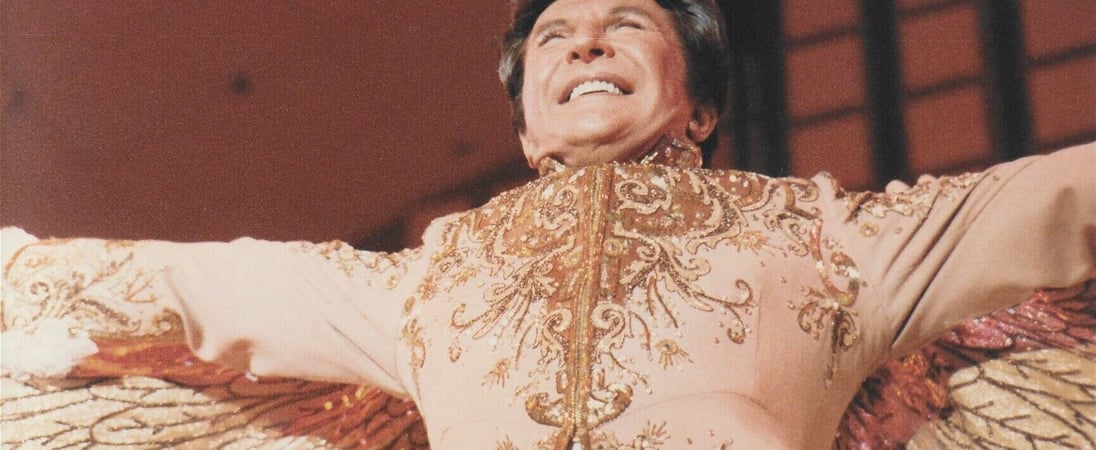
Fans remember his ability to captivate audiences with over-the-top shows, sparkling costumes, and the signature candelabra perched on his piano. It was a visual calling card that said, before the first note even landed, that this performance would be more than a recital.
Whether someone loves music, fashion, or sheer theatrical nerve, Liberace Day offers a reason to appreciate a performer who understood that entertainment is a full-body experience.
Beyond his musical talent, Liberace became a symbol of individuality and a carefully crafted persona. In an era that often prized restraint in “serious” music, he treated joy and accessibility as virtues, not compromises.
He also navigated public life with intense privacy about parts of his identity, while still presenting a stage character that was daring, playful, and unmistakably his own.
His performances were more than concerts. They were pageants of sparkle and charm, built around a real musician with formidable chops.
From television appearances that brought piano music into living rooms to long-running headliner status in major venues, he turned himself into a household name and helped define what it meant to be a star pianist in the age of mass entertainment.
Liberace Day is not only about remembering a gifted keyboardist. It’s a tribute to the power of authenticity, spectacle, and delight, celebrating a man who insisted that art could be both skillful and wildly fun, and who inspired generations of performers to embrace their own brand of bold.
How to Celebrate Liberace Day
Celebrating Liberace Day can be as flamboyant, funny, and surprisingly musical as the man himself. The goal is not to imitate every rhinestone, but to borrow his spirit: treat the moment like an event, add a touch of sparkle, and leave room for genuine artistry.
Play Liberace’s Greatest Hits
A Liberace-inspired music session can be as simple or as ambitious as a person wants. Those with a piano or keyboard can start with familiar melodies and focus on what Liberace did best: making music feel welcoming.
He often favored clear tunes, strong rhythm, and dramatic flourishes, so even a basic arrangement can feel “Liberace-ish” with a few playful touches like big endings, rolled chords, or a showy glissando if fingers are feeling brave.
Listeners can also create a playlist that mirrors his range rather than sticking to a single style. Pair a classical selection with a pop standard, then add a bit of easy listening or a sing-along favorite.
The contrast is part of the point. Liberace built a career on the idea that musical taste does not have to stay in one lane.
For groups, it can be fun to run a mini “request hour,” inviting everyone to suggest a song they would love to hear, dressed up with a theatrical piano.
One person plays, another “announces” the selection with mock grandeur, and suddenly the living room feels like a tiny showroom.
Host a Glamorous Fashion Show
Liberace’s wardrobe was not background decoration. It was a co-star. Capes, sequins, faux fur, satin, glittering jewelry, dramatic collars, and bold color choices helped transform the stage into a fantasy space where ordinary rules relaxed.
A Liberace Day fashion show does not require expensive costumes. The point is confidence and creativity.
People can raid closets for anything shiny or dramatic: metallic scarves, costume jewelry, velvet jackets, beaded tops, bright socks, feather boas, or even a bathrobe repurposed as a “cape” with a brooch. The more imaginative the styling, the closer it gets to the spirit of Liberace’s unapologetic flair.
Add a runway soundtrack, assign a playful commentator, and encourage each participant to give their outfit a name, as if it were a headline act.
Even pets can be “styled” with a sparkly bandana or a safe, comfortable accessory for a cameo appearance. Liberace loved a bit of humor with his glamour, so leaning into the fun is encouraged.
Watch a Liberace Documentary
Liberace is best understood when seen, not just described. Watching a documentary, concert footage, or a dramatization helps explain why audiences were captivated.
It is one thing to hear that he was extravagant. It is another to watch him combine polished technique with a grin that tells the audience they are in on the joke and the magic at the same time.
A viewing night can be made more engaging by treating it like a “performance study.” Notice how he enters, how he addresses the crowd, how he builds a set list, and how the camera lingers on costumes and hands at the keyboard.
His career also offers a look at the mechanics of stardom in the television era, when a charismatic performer could become a regular presence in homes far beyond the concert hall.
Pair the viewing with themed snacks, such as finger foods arranged on a tray like a miniature buffet, or desserts topped with edible glitter. The menu does not have to be elaborate. It just has to feel a little extra.
Decorate a Space with Candelabras
The piano candelabra is one of the most recognizable props in entertainment history, partly because it is both elegant and slightly mischievous.
Candles suggest refinement and tradition, yet on a piano in a pop show, they become a wink: yes, this is “classy,” but also knowingly theatrical.
To celebrate, decorate a small space with the Liberace mindset. A candelabra or candleholders on a table instantly shifts the mood. Add reflective elements that catch light, such as metallic fabric, mirrored trays, glass bowls, or crystal-like decorations.
Fresh flowers or dramatic artificial blooms make it feel like a dressing room. If a piano is not available, a small “performance corner” works just as well: a chair, a music stand, and a few sparkling accents can create an inviting mini-stage.
Safety matters, of course. Flameless candles can provide the look without worry, especially in homes with kids, pets, or limited space. Liberace loved the illusion of luxury, and illusions can be wonderfully practical.
Visit a Virtual Liberace Museum
Liberace’s legacy includes not only recordings and footage but also a dazzling collection of costumes, instruments, and memorabilia that highlight the sheer craftsmanship behind his image.
Exploring virtual exhibits, photo galleries, and online collections is a satisfying way to see details that would be missed onstage, such as intricate beading, ornate tailoring, and the way accessories were chosen to amplify movement under lights.
A virtual “museum visit” can become an activity rather than a quick scroll. Pick a theme to focus on, such as capes, rings, pianos, or stage entrances.
Then discuss what makes each item effective. What textures stand out? How does the design communicate a character?
Liberace treated every element as part of the performance, and examining these pieces reveals the planning behind the sparkle.
This is also a good way for creative people to gather inspiration.
Costume designers, musicians, and performers can use the visit as a prompt: sketch a cape concept, design a concert poster, or create a playlist that matches the vibe of a particular era of his career.
Liberace Day Timeline
1919
Birth of Władziu Valentino Liberace
Future “Mr. Showmanship” is born in West Allis, Wisconsin, to Polish and Italian immigrant parents, beginning a life shaped by classical music and performance.[1]
1934–1940
From Prodigy to Concert Soloist
A teenage Liberace earns money in clubs and theaters and, at 16, appears as a soloist with the Chicago Symphony Orchestra, confirming his status as a classical piano prodigy.[2]
1944–1947
Creation of the Liberace Stage Persona
After early struggles as a straight classical pianist, he begins mixing classical pieces with pop tunes, jokes, and audience banter, billing himself by 1947 as “the most amazing piano virtuoso of the present day.”[3]
Early 1950s
Television Stardom and “Mr. Showmanship”
Liberace’s Los Angeles TV program becomes a surprise hit, is syndicated nationally, and turns him into a household name, showing how solo piano, comedy, and spectacle can anchor mass-audience variety television.[4]
1954
Las Vegas Residencies Redefine Glamour Entertainment
Signing a record-breaking $50,000‑per‑week contract at the Riviera Hotel, Liberace uses Las Vegas showrooms as a laboratory for ever more elaborate costumes, entrances, and staging, helping define the city’s showroom style.
Late 1950s–1960s
Candelabras, Capes, and Camp Aesthetic
Liberace popularized the image of the rhinestone‑studded pianist at a grand piano topped with a candelabra, wearing sequined capes and tails, cementing campy, over-the-top glamour as a legitimate entertainment style.[5]
1978
Opening of the Liberace Museum in Las Vegas
Liberace establishes a museum to display his pianos, cars, jewelry, and costumes, transforming his own flamboyant persona into a curated cultural legacy of theatrical excess and showmanship.[6]
History of Liberace Day
Liberace Day grew from the desire to honor a performer who made an outsized imprint on music and entertainment, especially in the world of headliner stage shows. Liberace, born Władysław Valentino Liberace, was not simply a flashy personality.
He was a rigorously trained pianist who understood the classical tradition and then deliberately expanded it for mass audiences. That combination helped him become a rare figure: a serious musician whose fame was built on being accessible, humorous, and visually unforgettable.
Early in his career, Liberace proved he could handle demanding music and large venues, but he also sensed that many people wanted concerts to feel less formal and more personal.
He began speaking directly to audiences, telling stories, and shaping performances around emotional variety rather than strict program notes. The result was a style that felt intimate even in huge rooms, with a host-like warmth that made listeners feel included.
A major part of his legend developed through long-running appearances in high-profile entertainment centers and through the rise of television.
Liberace’s TV presence helped turn piano music into mainstream viewing, and his stage career demonstrated that a single performer, anchored at an instrument, could command the same excitement as a full production.
Over time, his shows grew increasingly elaborate, integrating spectacle into the identity of the musician rather than treating it as a separate layer. The candelabra, the costumes, the grand entrances, and the comedic asides were not distractions from the music. They were the frame that made the music feel like a celebration.
The most influential chapter of his performing life was his reign as a top-billed headliner in major venues, particularly in the era when destination entertainment was becoming a defining feature of American nightlife.
Liberace helped set expectations for what a residency-level production could be: consistent excellence, recognizable branding, and a stage persona so clear that audiences felt they knew him.
His ability to draw crowds made him one of the highest-paid entertainers of his time, reinforcing the idea that piano performance could be commercially massive when paired with a strong identity and unforgettable presentation.
Liberace also built a philanthropic legacy connected to the performing and creative arts, supporting education and opportunities for emerging talent.
That charitable dimension is a key reason his memory continued to be actively cultivated, not only through nostalgia but through ongoing support for the arts. When admirers celebrate him, they are often celebrating both the entertainer and the idea that artistic training and opportunity should be encouraged.
Liberace Day is commonly observed in connection with the anniversary of his death, serving as a yearly prompt for fans to revisit his recordings, his showmanship, and the cultural space he carved out for flamboyance and fun.
Over time, tribute events helped keep that spirit alive. One of the most notable was the Liberace Play-A-Like tradition, in which performers channeled his style, music, and comedic timing, proving that his impact was strong enough to inspire not only appreciation but active reinterpretation.
Importantly, Liberace Day endures because his legacy is unusually multi-layered. He represents technical skill, pop accessibility, and a brand of theatrical confidence that invites people to be bolder than they expected to be.
For performers, he is a case study in how to build a stage persona without losing musical integrity. For audiences, he remains a reminder that elegance can be playful, that talent can be generous, and that a little sparkle can make an ordinary night feel like opening night.
Facts About Liberace
-
Liberace Helped Invent the Modern Las Vegas Residency
When Liberace began headlining in Las Vegas in the 1940s and 1950s, he turned relatively simple lounge bookings into lavish, long-running showroom engagements, helping to establish the high-paying “residency” model that later drew stars like Elvis Presley, Celine Dion, and Elton John. By the mid‑1950s, he was reportedly earning $50,000 a week at the Riviera—astronomical for the time—and his glittering, prop‑filled productions set a template for the spectacle‑driven Strip shows that followed.
-
A Classically Trained Prodigy Turned Pop Showman
Long before the rhinestones, Liberace was a serious classical prodigy who studied piano from age four, spent about a decade under teacher Florence Kelly, and performed with the Chicago Symphony Orchestra in 1940, playing Liszt’s Second Piano Concerto. In the early 1940s he pivoted from straight classical concerts to a crossover style he called “classical music with the boring parts left out,” mixing Chopin and Liszt with pop tunes and patter to reach mass audiences.
-
Television Stardom Brought Classical Piano into American Living Rooms
“The Liberace Show,” which debuted in 1952, became one of U.S. television’s earliest syndicated hits, airing on more than 200 stations and drawing over 30 million regular viewers at its peak. At a time when classical piano was largely confined to concert halls, his chatty, variety‑show format introduced millions of Americans—many for the first time—to famous classical melodies dressed up with jokes, costumes, and pop arrangements.
-
The World’s Highest‑Paid Entertainer for Decades
By blending virtuoso piano playing with comedic banter, television exposure, and ever‑bigger Las Vegas productions, Liberace became, according to multiple biographical sources, the highest‑paid entertainer in the world from the 1950s through much of the 1970s. His contracts, merchandising, and TV income exemplified the postwar rise of celebrity branding long before it became standard in the entertainment industry.
-
Flamboyant Costumes as a Business Strategy
Liberace’s famously over‑the‑top wardrobe—sequined tuxedos, floor‑length fur coats, feathered capes, and outfits embedded with lights and mirrors—was not just personal taste but a deliberate branding tool. Museum exhibits and contemporary reporting describe signature pieces like “The Flame” cape and sequined patriotic hot pants, which made his piano shows visually unforgettable and turned his image into a marketable icon on stage, television, and in advertising.
-
Stagecraft Innovations Included Flying Entrances and Rhinestone Pianos
His concerts were early experiments in immersive stagecraft: Liberace arrived onstage in Rolls‑Royces, on mirrored platforms, and even “flew” in with the help of theatrical rigging pioneered by special‑effects designer Peter Foy. He played on grand pianos covered in rhinestones and sequins, integrating props, lighting effects, and choreography in ways that anticipated the multimedia concert productions of modern pop superstars.
-
A Complicated Milestone in LGBTQ Visibility
Although he consistently denied being gay and sued publications that suggested otherwise, Liberace’s camp aesthetics and romanticized persona made him an early, if ambiguous, queer icon in mainstream American entertainment. After his death from AIDS‑related illness in 1987, subsequent biographies and the film “Behind the Candelabra” helped reframe his story within LGBTQ history, highlighting how a closeted star could both challenge and reinforce mid‑20th‑century norms about sexuality and gender expression.
Also on ...
View all holidays
National Homemade Soup Day
Savor every spoonful of warm and comforting goodness made with fresh ingredients, perfect for any day or mood. A hug in a bowl!