

The National Day of Solidarity with Muslim, Arab, and South Asian Immigrants is vital in the United States.
This day serves as a powerful reminder of the importance of unity and support for these communities, especially given the prejudice they have faced.
The September 11 attacks led to a rise in anti-Muslim sentiment and unjust policies targeting these communities.
This observance aims to counteract this negative bias and promote justice and equality for all individuals, regardless of their background.
National Day of Solidarity with Muslim, Arab, and South Asian Immigrants Timeline
Naturalization Act Limits Citizenship to “Free White Persons”
The first U.S. naturalization law restricts citizenship to “free white persons,” excluding nonwhite immigrants, including most people from Asia and many from Muslim-majority regions, from naturalization.
Executive Order 9066 Authorizes Mass Removal of Japanese Americans
President Franklin D. Roosevelt signs Executive Order 9066, leading to the forced removal and incarceration of about 120,000 people of Japanese ancestry, a precedent later cited by advocates warning against wartime targeting of Muslim, Arab, and South Asian immigrants.
Immigration and Nationality Act Ends Race-Based National Quotas
The Immigration and Nationality Act of 1965 abolishes the national-origins quota system, enabling larger immigration flows from Asia and the Middle East and paving the way for growing Muslim, Arab, and South Asian communities in the United States.
Attacks Trigger Backlash Against Muslim, Arab, and South Asian Communities
After the 9/11 attacks, Muslims, Arabs, South Asians, and Sikhs in the United States experience a sharp rise in hate violence, harassment, and racial profiling, as documented by scholars and civil rights advocates studying post-9/11 racial violence.
NSEERS Special Registration Targets Visitors from Muslim-Majority Countries
The National Security Entry-Exit Registration System requires certain noncitizen men and boys from predominantly Muslim countries to register, be fingerprinted, and interviewed; government and advocacy reports note thousands of deportations and widespread fear among Muslim, Arab, and South Asian immigrant communities.
How to Celebrate National Day of Solidarity with Muslim, Arab, and South Asian Immigrants
Each year, people observe this day through various activities. They participate in rallies, educational events, and community gatherings.
Take a look at a few of these ideas when making plans to celebrate:
Join a Vibrant Rally
Grab a sign and head to a local rally! Express support for Muslim, Arab, and South Asian immigrants. Marching with others can be energizing and fun.
Chants, banners, and friendly faces make rallies memorable. Share your experiences on social media to spread the word further.
Host a Cultural Potluck
Food brings everyone together. Invite friends, neighbors, and co-workers to a potluck. Ask everyone to bring a dish from a Muslim, Arab, or South Asian cuisine.
Share stories about the food and its cultural significance. Enjoy delicious meals while fostering understanding and friendship.
Attend a Teach-In
Learning can be fun! Attend a teach-in or organize one at your local community center or school. Invite speakers who can share personal experiences and knowledge about these communities.
Interactive discussions and Q&A sessions make learning engaging and insightful.
Write Letters to Leaders
Get those pens or keyboards ready! Write letters to local and national leaders. Express the need for fair treatment of these immigrant groups.
Encourage friends and family to join in. Personal letters can make a big impact on policy decisions.
Spread the Love Online
Use social media’s power to raise awareness. Post informative articles, personal stories, and positive messages.
Create or share eye-catching graphics and videos. Use hashtags to connect with a broader audience and make the movement visible.
Organize a Neighborhood Meetup
Bring your community together with a neighborhood meetup. Plan an event at a local park or community hall.
Activities include games, storytelling, and sharing personal experiences. Building connections in your neighborhood can foster long-term solidarity and support.
Support Local Businesses
Show your love by supporting businesses owned by Muslim, Arab, and South Asian immigrants. Visit restaurants, shops, and services, and encourage friends to do the same.
Your patronage helps sustain these businesses and demonstrates community support.
History of National Day of Solidarity with Muslim, Arab, and South Asian Immigrants
The National Day of Solidarity with Muslim, Arab, and South Asian Immigrants began in response to the 9/11 attacks.
After the attacks, these communities faced increased discrimination and racial profiling. To combat this, activists and supporters created a special day to show unity and support for these groups.
In 2002, the first observance of this day took place. Organizers aimed to raise awareness about the unfair treatment of these immigrants.
They wanted to highlight the positive contributions these communities make to society. Many people wore blue triangles as a symbol of solidarity, echoing symbols used in history to identify and support marginalized groups.
These actions help promote justice and equality, ensuring that the voices of Muslim, Arab, and South Asian immigrants are heard and respected.
This day is celebrated to address the unfair treatment that Muslim, Arab, and South Asian immigrants have experienced, particularly following significant events that heightened racial profiling and discrimination.
In addition, it is a chance for people to come together and show their backing for these groups, highlighting their contributions to society and acknowledging the challenges they encounter.
Recognizing this day helps foster a sense of inclusion and support. It encourages people to stand up against discrimination and advocate for fair treatment.
Activities on this day often include rallies, educational events, and community support initiatives. These actions underscore the shared values of compassion and justice, reminding everyone that diversity strengthens society.
Facts About National Day of Solidarity with Muslim, Arab, and South Asian Immigrants
Growing Numbers, Deep Roots
Arab, Muslim, and South Asian communities in the United States have grown rapidly in recent decades while also having migration histories that stretch back more than a century.
Arab American numbers have nearly quadrupled since 1980, and by 2010 more than 1.6 million people reported Arab ancestry, with Lebanese, Egyptian, and Syrian Americans among the largest groups.
South Asian migration accelerated after the 1965 Immigration and Nationality Act ended racist national-origin quotas, and today more than three-quarters of South Asians in the United States are foreign-born, reflecting how recent and fast their growth has been.
Muslim America Is Largely Immigrant and Remarkably Young
Most Muslim adults in the United States are immigrants, and the community skews much younger than the overall population.
A 2017 Pew Research Center study found that 58% of Muslim adults were born outside the country, with major sending regions including South Asia, the Middle East, and North Africa. About 60% of Muslim adults were between 18 and 39 years old, compared with just 38% of all U.S. adults, which shapes everything from mosque life to civic engagement and school climates.
South Asians Form a Major Segment of Muslim Immigration
Within the broader Muslim American population, South Asians make up the single largest regional group of immigrants.
Research on Muslim immigration has found that migrants from Bangladesh, India, and Pakistan constitute the largest bloc of foreign-born Muslims in the United States, ahead of those from the Middle East and North Africa.
This pattern helps explain why Urdu, Bengali, and other South Asian languages are commonly heard in American mosques and Muslim community centers.
Post‑1965 Laws Reshaped Who Could Come to the U.S.
The legal architecture that made large-scale Muslim, Arab, and South Asian immigration possible was laid in 1965, when Congress abolished racially biased immigration quotas.
The Immigration and Nationality Act shifted admissions toward family reunification and skilled workers, opening doors to regions that had been heavily restricted.
Organizations documenting South Asian American history point to this law as the turning point that “forever changed” the demographic makeup of the United States by enabling more migration from South Asia and other parts of Asia.
South Asians in the U.S. Are Predominantly Foreign‑Born
Compared with many other racial and ethnic groups, South Asian communities in the United States are strikingly immigrant-heavy. Advocacy and research group South Asian Americans Leading Together estimates that more than 75% of South Asians living in the country were born abroad.
This high share of first-generation immigrants affects issues like language access, immigration status vulnerabilities, and the need for culturally competent services in schools, workplaces, and health care.
Arab American Growth Outpaces Many Other Groups
Arab Americans are among the fastest-growing ancestry groups in the country.
According to the Arab American Institute, the number of people reporting Arab ancestry has nearly quadrupled since the U.S. Census Bureau began tracking this category in 1980, and the population continued to grow by over 40% between 2010 and the mid‑2020s.
This growth reflects both continued immigration from countries such as Lebanon, Egypt, Iraq, and Syria and higher rates of U.S.-born children identifying with Arab heritage.
Backlash After 9/11 Targeted Multiple Communities, Not Just Muslims
Scholars who studied racial violence after the September 11 attacks found that the backlash did not fall only on Muslims but also swept in Arabs, South Asians, and Sikhs regardless of their actual religion.
Ethnic studies research describes a wave of hate crimes and profiling that lumped these communities together as “terrorist looking” and shows how Arabs and South Asians were treated as a single suspect group in workplaces, schools, airports, and on the streets.
This dynamic helped cement a racialized category of “Muslim-looking” people in U.S. public life.
National Day of Solidarity with Muslim, Arab, and South Asian Immigrants FAQs
What is the difference between “Muslim,” “Arab,” and “South Asian” identities?
“Muslim” refers to a religious identity, describing people who follow Islam and who come from many racial and ethnic backgrounds worldwide.
“Arab” is a cultural and linguistic term for people whose heritage is tied to Arabic‑speaking countries, and many Arabs are Christian or belong to other faiths. “South Asian” is a regional term for people with roots in countries such as India, Pakistan, Bangladesh, Sri Lanka, Nepal, and others, and South Asians practice a wide range of religions including Islam, Hinduism, Sikhism, Christianity, and Buddhism.
Why are Muslim, Arab, and South Asian communities often grouped together in public discussions?
These communities are frequently grouped together because they have faced similar patterns of discrimination and suspicion, especially after the September 11 attacks.
Scholars and advocates sometimes use umbrella labels such as AMEMSA (Arab, Middle Eastern, Muslim, and South Asian) to describe people who are differently racialized but share experiences of surveillance, racial profiling, and being treated as “perpetual foreigners.”
This grouping is political and practical rather than a claim that the communities are the same.
What are some common misconceptions about Muslim and Arab Americans in the United States?
Common misconceptions include the ideas that all Arabs are Muslim and that most Muslims in the United States are Arab.
In reality, Arab Americans follow many religions, including Christianity and Islam, and only a minority of U.S. Muslims are of Arab descent.
Studies and community data indicate large portions of U.S. Muslims are African American or South Asian, which makes the American Muslim population racially and ethnically diverse rather than predominantly Arab.
How did discrimination change for Muslim, Arab, and South Asian communities in the United States after 9/11?
Research and civil rights investigations show that after the September 11 attacks, people perceived as Muslim, Arab, or South Asian experienced sharp increases in hate violence, workplace discrimination, and racial profiling by law enforcement and immigration authorities.
Many were detained on immigration grounds, questioned, or placed under surveillance, and community members reported harassment and attacks in schools, streets, and places of worship.
These patterns have had long‑lasting effects that continued well beyond the immediate aftermath of the attacks.
Why are Sikhs and other non‑Muslim groups sometimes targeted by anti‑Muslim bias?
People who are Sikh, Hindu, Christian, or from other traditions have sometimes been targeted because bias incidents often rely on appearance or name rather than accurate knowledge of religion or ethnicity.
For example, some Sikh men who wear turbans and beards have been misidentified as Muslim, leading to harassment or violence that stems from ignorance and stereotypes rather than the victims’ actual beliefs or backgrounds.
Government and civil rights reports emphasize that such attacks are based on perceived identity, not on who people truly are.
What does research say about inequality within Muslim communities themselves in the U.S.?
Sociological studies indicate that Muslim communities in the United States are internally diverse and unequal.
African American Muslims, who make up a substantial share of U.S. Muslims, often face higher levels of neighborhood disadvantage and lower household income than many immigrant Muslims from Arab or South Asian backgrounds.
Mosques with predominantly African American congregations are more likely to be located in under‑resourced areas, which highlights that conversations about Islamophobia and racism must also address racial inequality within Muslim communities.
How can someone be a respectful ally to Muslim, Arab, and South Asian immigrants in everyday life?
Experts and advocacy groups recommend that allies start by learning the basic differences between religious, ethnic, and regional identities instead of assuming they are interchangeable.
Allies can listen to people’s own descriptions of their identities, intervene safely when they witness harassment, support civil rights protections, and challenge stereotypes in conversations, workplaces, and schools.
Using accurate terms, avoiding generalizations, and recognizing the diversity within these communities are key parts of showing respect and solidarity.



You may also like
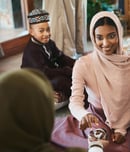
World Day of Muslim Culture, Peace, Dialogue and Film
Every year on March 11th, people around the globe celebrate the World Day of Muslim Culture, Peace, Dialogue, and Film. At its heart, this observance invites curiosity. It asks people to look beyond headlines and assumptions and instead meet Muslim cultures through creativity, everyday life, and conversation. The “film” part matters...
- Afghanistan
- Bangladesh
- Canada
- and 11 more

American Immigration Lawyers Association Day of Action
The American Immigration Lawyers Association (AILA) Day of Action is a yearly event where immigration lawyers from across the United States come together to advocate for fair and effective immigration policies. They meet with lawmakers to discuss the challenges within the current immigration system and propose practical solutions. This gathering...

Canadian Immigrants Day
Celebrate Canadian Immigrants Day by honoring newcomers’ stories, cultures, and contributions that enrich communities and strengthen Canada’s multicultural identity.

National Angel Island Day
National Angel Island Day honors a place where thousands once stood, waiting to enter a new life. The island’s quiet hills and old barracks still hold whispers of voices from across the ocean. Families remember the names, languages, and hopes that traveled with them. It’s a day that brings people...
National days and holidays on February 20 2027
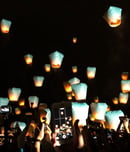
Lantern Festival
Amidst the dark winter sky, glows a world of wonder, an ancient Chinese tradition of sparkling lights and colors to warm the heart and ignite the soul, the lantern festival awaits!
- China
- Hong Kong SAR China
- Malaysia
- and 2 more

National Nest Box Week
If you want to invite more birds to your yard, consider putting up some cozy little homes for these feathered friends!
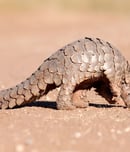
World Pangolin Day
Imagine a day dedicated to celebrating one of the planet's most unique creatures - the pangolin! It is fascinating to hear that the scaly, shy, and utterly fascinating pangolins have their own special day on the calendar. World Pangolin Day rolls around annually as a highlight for animal lovers everywhere...
- China
- Indonesia
- International
- and 2 more

National Love Your Pet Day
Nurturing an unbreakable bond with your furry companion, a profound connection that enriches life with boundless affection and joy.
- Australia
- Canada
- United Kingdom
- and 1 more
Seize Every Day
Join free for personalised recommendations, email reminders and exclusive guides. Never miss a day.