
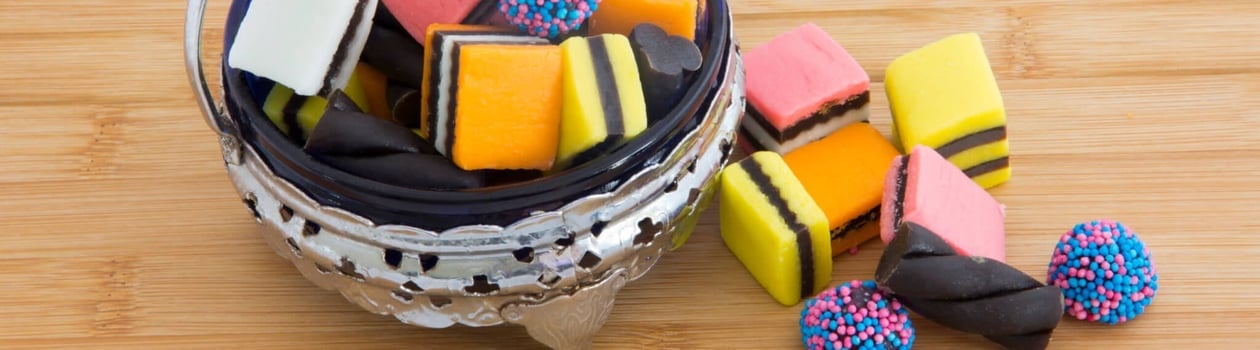
For those who fancy something a little bit sweet but also unique, why not get some delicious licorice to savor and enjoy in honor and celebration of this most important day: National Licorice Day!
Enjoyed by people all across the globe, licorice is a delightful and delectable treat that has a distinctive flavor and is found in many modern candies, as well as teas and even herbal food supplements that can be found at health food stores.
National Licorice Day is the perfect day to explore this unique flavor and celebrate everything about it!
National Licorice Day Timeline
Licorice is used medicinally
No one knows when its use started, but records date back at least this far for the use of licorice as medicine for eye ailments, skin problems, coughs and more.
Licorice flavor is used for baked goods
During this time, the flavor is squeezed from the licorice root and used to sweeten various cakes and breads.
Licorice is made into candy
The first record of licorice as the modern candy most people know is during this time period.
Licorice International is founded
One of the premier licorice companies in the United States, Licorice International is started in Lincoln, Nebraska this year.
First National Licorice Day is celebrated
Cooperating together, Licorice International and the National Confectioners Association create the first National Licorice Day.
How to Celebrate National Licorice Day
National Licorice Day is the perfect opportunity to celebrate and enjoy everything that has to do with licorice.
Consider these ways to get into the spirit of the day or come up with some other creative ideas of your own:
Try a New Type of Licorice
In addition to the standard flavors of licorice, such as black, strawberry or cherry, people can have access to an entire range of licorice candy flavors.
Licorice International is a company that sells more than 160 flavors of licorice from 14 different countries. Surely this will provide anyone with an opportunity to try something new.
Some of the most popular types include:
- Sweet Finnish Licorice. These are classic, short tubes of pure black licorice candy, made from real licorice extract, that are soft, mellow and satisfying to chew.
- Licorice Chalk. This is a unique treat hailing from the Old World, it looks exactly like a piece of white school chalk but it boasts a minty shell on the outside and licorice flavor on the inside.
- Black Licorice Caramels. Exactly what the name says, this soft creamy caramel candy is infused with the flavor of black licorice and many people really enjoy the contrast of the sweetness.
- BlackJack Chewing Gum. This classic licorice-flavored gum has been around off-and-on since 1884, but a manufacturer recently committed to bringing it back for those faithful fans who are hoping for a blast from the past.
Share Licorice with Friends and Family
Some great ways that it’s possible to share the enjoyment of National Licorice Day with friends and family include giving licorice as a gift.
Take some licorice laces or licorice candies to work to share with coworkers or to get on the good side of the boss.
Let them try one of the unique and interesting flavors listed above. Or, for those who are adventurous in the kitchen, consider trying to make licorice candy at home and then share with friends or neighbors!
Drink a Cup of Tea with Licorice Root
Many different kinds of herbal teas use licorice root extract as a flavoring as well as a benefit to the health of the person who drinks it.
This type of tea can usually be found at organic or health food stores. It might even be fun to try to mix up your own concoction of licorice root tea!
While some people really like the flavor of licorice on its own, others enjoy drinking it with a blend of other herbs, such as dried lemon balm, dried rose petals, ginger root, cinnamon stick, dried orange peel, chamomile flowers and many other options.
Understand the Health Benefits of Licorice Root
While considering drinking licorice tea, it’s great to realize that true licorice root made into tea or taken as a health supplement may have the following health benefits:
- Infection Protection. Licorice has more than 300 flavonoids and these plant compounds have powerful antibacterial and antiviral activity that helps promote good health.
- Reduced Acid Reflux. Those who have trouble with reflux may find that taking licorice root extract will help with their heartburn, perhaps even more than taking antacids.
- Upset Stomach. An old home remedy for people who have an upset stomach, licorice can help with gastrointestinal problems, possibly including issues like ulcers, indigestion or even irritable bowel syndrome (IBS).
Learn More About Licorice
In celebration of this delightful day, consider doing a little research to find out more about the history and health benefits of this important plant and its uses.
Then, don’t be afraid to share them in observance of the day. Start with some of these interesting facts:
- Licorice is a shrub (actually it’s a weed!) and the root is what is used to make the teas and candies.
- Licorice extracts may actually help to slow the effects of aging on the brain due to a compound called carbenoxolone.
- Aniseed is often used as a substitute for the licorice flavor. It is similar in flavor but does not have the same health benefits.
- A licorice plant found in the wild would be approximately five feet tall and have little flowers in purple and/or blue colors.
National Licorice Day FAQs
History of National Licorice Day
The natural licorice flavor used in candy and sweet treats is extracted from the licorice plant and can be used for making candy, to offer a special taste to a drink (licorice tea is a popular example), and it also has some special medicinal purposes.
Ancient Egyptians are known to have used licorice as a healing pharmaceutical agent.In fact, a great deal of this substance was found in the tomb of King Tut and hieroglyphics have been found that show it was enjoyed as a drink.
In addition to Egyptians, ancient Greeks, Romans, Hindus and Chinese all have been known to have incorporated the use of licorice into their cultures.
Further along the line in famous stories, Alexander the Great, Julius Caesar and Napoleon Bonaparte were all recorded as having used licorice for its helpful health benefits, including providing aid for problems such as skin issues, cough, eye ailments, stomach issues and more.
But it’s no wonder that people eventually started using licorice in sweets, however, because the glycyrrhizin that makes licorice sweet is 50 times sweeter than sugar!
Even so, records seem to show that it wasn’t until the 17th century that records indicate licorice may have been made into candy, originally in Holland. From there, sailors eventually shared this treat with people from various other countries in Europe and, ultimately, all over the world.
In modern times, this type of candy containing licorice flavoring is produced not only in Europe but also in Australia as well as in the Americas.
National Licorice Day was created in 2004 in cooperation with the National Confectioners Association and the candy company, Licorice International, which is located in Lincoln, Nebraska in the USA.
This day celebrates the rich history and unique flavor of all things licorice. Although black licorice is the original flavor, licorice now also comes in many flavors and colors other than black.
So for those who don’t really prefer the special taste of black licorice, which includes the black jelly beans found around Easter time, it wouldn’t be a crime to celebrate the day with a different flavor!
Facts About National Licorice Day
Ancient Remedy Across Civilizations
Licorice root has been documented as a medicinal ingredient in multiple classical medical systems, including ancient Egyptian, Greco‑Roman, traditional Chinese medicine, and Ayurveda, where it was used for coughs, sore throats, ulcers, and as a harmonizing herb in multi-herb formulas.
Modern reviews note that these long-standing uses are largely linked to glycyrrhizin, a sweet-tasting saponin that exerts anti-inflammatory and soothing effects on mucous membranes.
The Compound That Makes Licorice “Too Sweet”
Glycyrrhizin, the main sweet constituent of true licorice root (Glycyrrhiza glabra), is roughly 30 to 50 times sweeter than sucrose, yet it is not a sugar and has a completely different chemical structure.
This extreme sweetness is one reason licorice extract became popular as a flavoring and masking agent in medicines and tobacco products long before it was widely used in candy.
Why Heavy Licorice Intake Can Raise Blood Pressure
Chronic high intake of licorice root or concentrated licorice candy can lead to hypertension, low potassium, and even heart rhythm problems because glycyrrhizin interferes with an enzyme that normally inactivates cortisol in the kidney.
This enzyme inhibition mimics excess mineralocorticoid hormones, prompting health agencies such as the U.S. FDA and the European Food Safety Authority to issue guidance on limiting regular glycyrrhizin consumption.
Not All “Licorice” Candy Contains Licorice
In many modern confections, especially red “licorice” twists, the characteristic flavor does not come from licorice root at all but from anise, fennel, or artificial flavorings, while true licorice extract is often reserved for traditional black varieties.
Ingredient lists in the United States and Europe show that numerous popular brands labeled as licorice candy contain no Glycyrrhiza-derived ingredients, which also means they lack glycyrrhizin’s physiological effects.
Salty Licorice as a Northern European Taste Phenomenon
In Finland, Sweden, the Netherlands, and parts of Germany, salty licorice (salmiak or salmiakki) is a common treat flavored with both licorice extract and ammonium chloride, which gives it a sharply salty, slightly astringent taste that surprises many visitors.
The candy’s popularity is so strong in these regions that salty licorice is used not only in sweets but also in ice creams, liqueurs, and even specialty sodas.
Licorice in Traditional Chinese Medicine Formulas
In traditional Chinese medicine, licorice (known as gancao) is one of the most frequently prescribed herbs and appears in a large portion of classic multi-herb formulas.
Practitioners value it not just for soothing coughs and digestive discomfort but also for its reputed ability to “harmonize” other ingredients, moderating harsh effects and helping different herbs work together in a prescription.
From Field to Candy: Where Licorice Is Grown
Commercial licorice comes mainly from the roots of Glycyrrhiza glabra and related species cultivated or wild-harvested in regions with semi-arid climates, including parts of Turkey, Iran, Central Asia, China, and southern Europe.
International trade data show that these countries supply most of the raw licorice blocks and extracts that confectioners and pharmaceutical manufacturers later refine into flavorings used around the world.


You may also like

National Stewart’s Root Beer Day
Celebrate National Stewart’s Root Beer Day by savoring its creamy, nostalgic flavor, visiting classic stands, and honoring this iconic American soft drink.
- Canada
- United Kingdom
- United States

National Iced Tea Day
Celebrate National Iced Tea Day by exploring sweet, fruity, and herbal iced teas, learning its history, and discovering refreshing ways to enjoy this cool classic.
- Canada
- United Kingdom
- United States
Tea for Two Tuesday
Did you know that there's a special day dedicated just to enjoying tea with someone else? It's called Tea for Two Tuesday, and it is celebrated every year on the third Tuesday of March. Tea for Two Tuesday is not just about sipping your favorite brew; it's a day that...
- China
- India
- International
- and 2 more

National Black Cow Day
Celebrate National Black Cow Day with a classic root beer float, honoring its nostalgic soda fountain roots and timeless, creamy American treat charm.
- Canada
- United Kingdom
- United States
National days and holidays on April 12

Yuri’s Night
The first person to orbit the Earth, this trailblazer showed us the potential of humanity's spirit and our drive to explore the unknown.
- Antarctica
- Finland
- Germany
- and 6 more

National Public Health Week
The well-being of communities — disease prevention, and better living through knowledge and action, towards a healthier world.
- United States

Lelo Burti
Lelo Burti is a unique and vigorous event celebrated in the Georgian village of Shukhuti. It’s a thrilling spectacle where two teams from different parts of the village clash in a contest to push a 16-kilogram ball over their opponent’s goal line, marked by local streams. Hundreds of men participate...
- Georgia

National Dog Bite Prevention Week
It is hard to think something as loyal as a dog could ever harm someone. But even the sweetest pup may react when afraid or stressed. National Dog Bite Prevention Week brings this truth into focus. It reminds people that bites often come from everyday situations—startling a dog, grabbing its toy...
- United States
Seize Every Day
Join free for personalised recommendations, email reminders and exclusive guides. Never miss a day.