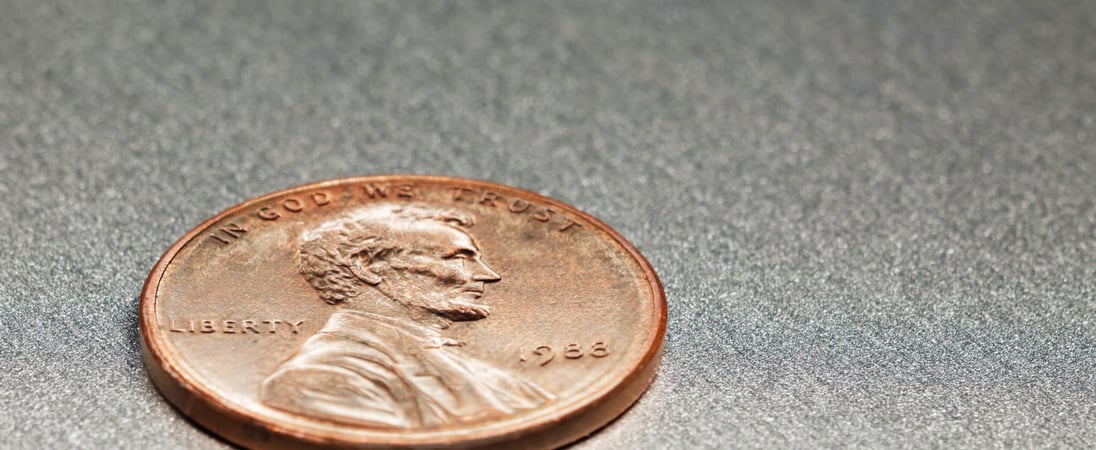
National Lost Penny Day
Scouring couch cushions and nooks, finding those elusive copper coins brings a little unexpected joy to everyday life.
When you think about it, pennies are a real nuisance.
They’re small and seemingly almost worthless, and despite putting them safely in your wallet or purse, they always seem to wind up blocking the filter on your washing machine, slipping down the sides of the cushions on your favourite armchair, or getting sucked up the vacuum cleaner.
Nevertheless, on one special day each year we can take the time to gather up those ever-wandering coins and finally do something more useful with them that we usually do by donating them to a charity of our choice.
National Lost Penny Day is the perfect day to take a moment to recognize that despite the fact that pennies may not seem like they are worth much, they can still be found and used to help those in need to whom each and every penny counts and adds up.
National Lost Penny Day Timeline
1787
First Official U.S. One-Cent Coin: The Fugio Cent
The Continental Congress authorizes the copper Fugio cent, attributed to Benjamin Franklin, featuring the mottos “Fugio” and “Mind Your Business,” becoming the first official U.S. one-cent piece.
1793
Introduction of the Large Copper Cent
The U.S. Mint in Philadelphia begins striking large copper cents for general circulation, establishing the cent as a fundamental unit of everyday American commerce.
1857
Coinage Act Shrinks the Cent and Ends the Half Cent
Congress passes the Coinage Act of 1857, abolishing the half cent and replacing the large copper cent with a smaller copper-nickel cent, reflecting changing metal costs and circulation needs.
1909
Lincoln Cent Debuts for Lincoln’s 100th Birthday
The Lincoln cent, designed by Victor David Brenner, is issued on February 12 to honor Abraham Lincoln’s centennial, becoming the first regular U.S. coin to feature a real person.
1959
Lincoln Memorial Reverse Replaces Wheat Ears
For the 150th anniversary of Lincoln’s birth, the reverse of the Lincoln cent is redesigned to show the Lincoln Memorial, replacing the original wheat-ear design used since 1909.
1982
Composition Changes from Bronze to Copper‑Plated Zinc
Due to rising copper prices, the Mint shifts the cent’s composition from mainly copper to copper‑plated zinc, making it cheaper to produce while keeping its familiar appearance.
2010
Union Shield Reverse Marks a New Era for the Cent
The U.S. Mint introduces a new reverse featuring a Union shield with a scroll reading “One Cent,” symbolizing national unity and replacing the long‑running Lincoln Memorial design.
How to Celebrate National Lost Penny Day
Look for Lost Pennies
National Lost Penny Day is the perfect time to go through your home—your sofa, the pockets of old coats you haven’t worn in ages, and every other nook and cranny you can think of — in order to find as many pennies (or loose change altogether) as possible.
If you have children, you could even turn the search into an elaborate game, a competition to see who can find the most coins laying about the home collecting dust.
Once you’ve turned your home upside-down, it will be time to count up all of the change you and your children have found, and see who won.
Spend Those Lost Pennies
The next step is to decide what to do with the money you’ve found, and this could be a chance to teach your children an important lesson or two about life.
You could help the winner search for a charity that could use the money, and then write a check out to that charity for the amount you found—even if it is only a few dollars, make sure your children understand just how many hot bowls of soup that could buy for the homeless, or how much dog or cat food that could buy for the animals at the animal shelter.
Share the Wealth
Alternately, if you feel that your children are mature enough for it, you could go as far as taking them downtown to buy a cup of coffee and a sandwich for that homeless man or woman who always sits on the same bench.
Whatever way you and your children choose to spend the money you’ve found, make sure that they understand just how much small gestures can mean to those in need. It is definitely a lesson they will never forget.
History of National Lost Penny Day
The first penny ever was designed by Benjamin Franklin and minted in 1787. The penny we’re familiar with today, however, adorned with the bust of late American president Abraham Lincoln, was first minted in 1909 and released on February 12th to commemorate the 100th anniversary of his birth.
The founder of National Lost Penny Day, Adrienne Sioux Koopersmith, wrote a log post about her idea, explaining that what she was trying to demonstrate was: “Petty change can make an astounding difference”, which is a positive message indeed, and one we can suspect Honest Abe himself would have supported.
In fact, one of Lincoln’s most well-known quotes was, “I walk slowly, but I never walk backward”.
National Lost Penny Day was first celebrated in 1995 and has been enjoyed annually ever since.
Facts About National Lost Penny Day
Penny Production Has Cost More Than One Cent For Years
According to U.S. Mint annual reports, it has cost more than one cent to make a one‑cent coin every year since 2006, meaning the government loses money on every new penny it produces; in 2023 the unit cost was about 2.7 cents per coin when metal, labor, and distribution are included.
World War II Turned Pennies Into Steel
During World War II, the United States temporarily shifted from copper to zinc‑coated steel for the 1943 one‑cent coin to conserve copper for ammunition and other wartime needs, producing more than a billion “steelies” that year before returning to a mostly‑copper alloy in 1944.
The Value Of Copper Once Exceeded A Penny’s Face Value
Because older U.S. cents are mostly copper, their melt value has sometimes exceeded one cent; in the mid‑2000s rising metal prices led the U.S. government to ban melting cents and nickels for scrap in 2006, with potential fines up to $10,000 and imprisonment for violators.
Pennies Shifted From Solid Copper To Zinc Cores In 1982
For most of U.S. history the cent was a largely copper coin, but in 1982 the Mint changed to a copper‑plated zinc planchet—97.5% zinc with a 2.5% copper coating—reducing the coin’s mass from 3.1 grams to 2.5 grams to cut material costs as copper prices climbed.
Abraham Lincoln Was The First Real Person On A Regular U.S. Coin
When the Lincoln cent debuted in 1909, it broke with a long tradition of using symbolic figures like Liberty rather than actual people on circulating U.S. coins, making Abraham Lincoln the first real historical person regularly depicted on American coinage.
Billions Of Pennies Circulate, But A Large Share Sit Idle
While the Federal Reserve estimates tens of billions of one‑cent coins are in circulation, studies and industry surveys suggest a large fraction of them sit unused in jars, drawers, and couch cushions, contributing to periodic “coin shortages” when demand for small change spikes and idle coins fail to recirculate.
Many Economists Advocate Eliminating The Penny Altogether
Because the penny no longer buys anything by itself, is costly to manufacture, and slows cash transactions, numerous economists and policy analysts—such as those writing in Harvard’s Kennedy School Review and for the American Economic Association—have argued that the U.S. should follow countries like Canada and Australia in retiring its smallest denomination and rounding cash totals instead.
Also on ...
View all holidays
Hug Day
Spread comfort, connection, and joy - one simple embrace can brighten someone’s day.


National Plum Pudding Day
Savor a delightful holiday dessert, rich with tradition and warm memories, as it brings a taste of nostalgia to your table.

Red Hand Day
Illuminating the plight of young lives ensnared in conflict, advocating for awareness about the use of child soldiers.
We think you may also like...

National Pawnbrokers Day
When unexpected expenses pop up, they're the go-to folks, turning items into quick cash without the hassle of a traditional loan.

Flip a Coin Day
With a simple toss, fate dances on the edge, a moment of chance that decides outcomes, leaving everything to gravity's whim.
National Lottery Day
Taking a chance on a potential windfall can be thrilling, but always remember to play within your limits to keep it fun.

Sandcastle Day
Head to a lake, river, sea or even sandbox near you and let your inner child out by building the greatest sandcastle of all time, turrets and all.