
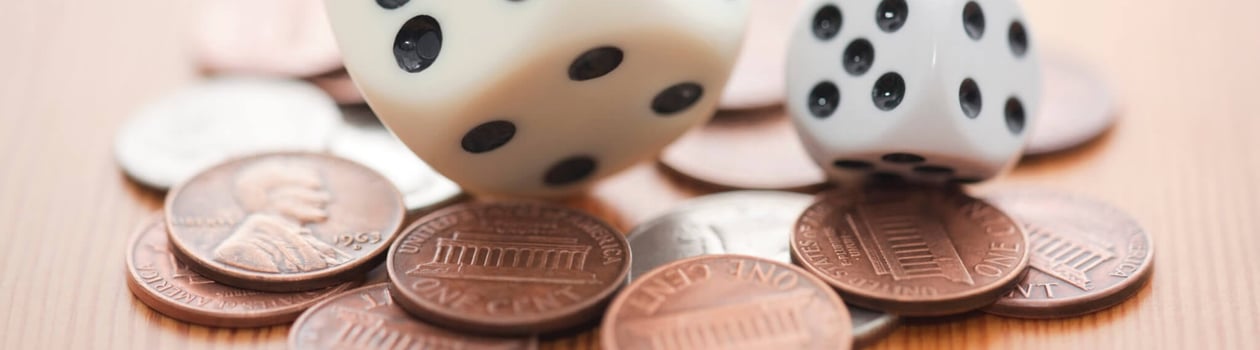
See a penny, pick it up,
All day long you’ll have good luck.
Pennies are often just a nuisance. They don’t seem to be worth much, especially considering their weight, which is decidedly disproportionate to their actual value.
So what are they really good for? Well, for centuries, finding a penny has been considered a good omen, an event that suggested something good would happen in the life of the finder.
National Lucky Penny Day is all about celebrating this simple superstition and doing what we can to make sure some good does, in fact, come of pennies.
How to Celebrate National Lucky Penny Day
Go On a Penny Hunt
Penny hunts can be lots of fun, contrary to popular opinion, especially if you have children to share them with.
You’s be amazed at just how many places you can find pennies and other spare change in. So, why not organize a contest? Whoever finds the most change wins!
This will not only serve as excellent entertainment but also help you tidy your home a little. So what are you waiting for? Time to go penny hunting!
Hold a Penny Hunt for the Kids
If you have more than one child and wish to make things even more fun, you could consider planting change around the house to be found. Let the best penny hunter win! But the fun doesn’t end once all of the pennies have been found—once you’ve recovered the money, you must figure out what to do with it.
Get Creative
This is where you can get really creative because there is an infinite amount of things that can be done even with a dollar or two.
Having your children contribute to the decision-making process could prove an interesting and educational experience as you could teach them the value of even small amounts of money.
Together, you could decide whether you want to keep the money and save it up for something bigger, or give it to some charity.
Make a Difference with Pennies
Wherever you live in the world, there are definitely tens if not hundreds of charitable organisations nearby that you can choose to donate to.
So, what do your children feel especially passionate about? Less fortunate children? The sick? Homeless animals?
National Lucky Penny Day is the perfect time to show them the value of money, and just how far a dollar or two can go for someone truly in need.
Pennies may indeed seem worthless in many cases, but National Lucky Penny Day can prove to be anything but!
Learn About National Lucky Penny Day
In order to understand the importance of National Lucky Penny Day, you need to learn about why people believe pennies bring them good luck.
When you are cleaning out your room or you put on a jacket you have not worn for some time and you find some spare change in your pocket, it always feels like a victory! But what is it about pennies that are considered lucky?
Well, according to one theory, people originally believed that pennies would bring them a lot of luck due to their religious beliefs.
Ancient civilizations believed that copper and other metals were gifts from the gods, which were intended to provide people with protection from evil. This theory was also fueled by a number of other superstitions, such as metal horseshoes and charm bracelets, which people also believed to be lucky.
This is not the only reason why a lot of people believe that pennies bring good luck. Another reason is to do with the two sides of a coin, which people believe to be a representation of the battle between evil and good. If you find a penny when it is heads side up, this means that you have luck on your side.
However, luck is not going to be as much in your favor if you find a coin and it is tails-side up. Some people say that if you find a penny and it is tails side up, you should flip it the other way round and leave it so that it brings the next person that finds it luck.
Here are some of the common superstitions that people have regarding pennies…
- Do not spend a penny that you find. Instead, save it for luck.
- If you place a penny in your shoe, it will bring good fortune.
- Carrying three pennies with you is going to bring you good luck.
- Throwing a penny coin over your left shoulder into a wishing well or water will grant your wish.
- Tossing a penny when you have a problem enables fate to take care of the issue for you.
- Coins with holes in them are considered especially lucky.
- If you put the first penny you get every day into your pocket, you are going to attract more as the day continues.
- If you find a penny, it means that there is more money coming your way.
- If you keep a coin in your baby’s crib, the baby will grow up to be wise, wealthy, and healthy.
- To secure good luck, you should carry a penny that was minted in your birth year.
- Having a jar filled with pennies in your kitchen is good luck.
- If you toss a penny overboard while you are traveling at sea, it will bring you a safe trip.
- Some also say that you should carry a penny in your pocketbook, which is wrapped in paper, so you are able to say that you are never broke.
These are just some of the different superstitions that people believe in when it comes to pennies and the luck they bring!
National Lucky Penny Day Timeline
Offa’s Silver Penny in Anglo-Saxon England
King Offa of Mercia introduces a standardized silver penny influenced by the Roman denarius, establishing the basic model for the English “penny” for centuries.
First Official United States One-Cent Coins
The U.S. Mint in Philadelphia issues the first federal one-cent pieces, large copper coins whose designs, including the Flowing Hair and Liberty Cap cents, begin America’s penny tradition.
From Large Cents to Small Cents
The Coinage Act of 1857 authorizes a smaller one-cent coin using a copper‑nickel alloy, replacing the hefty large cent and setting the general size of the modern U.S. penny.
The Lincoln Cent Debuts
To honor Abraham Lincoln’s 100th birthday, the United States introduces the Lincoln cent, the first regular U.S. coin to feature a real person, creating the familiar design still used in updated form.
The Steel “Wartime” Penny
During World War II, copper is diverted to the war effort and the Mint produces zinc‑coated steel cents, a one‑year issue that highlights how vital the penny’s metal was considered.
“See a Penny, Pick It Up” Rhyme Spreads
The children’s rhyme about spotting and picking up a penny for luck becomes common in English-speaking cultures, reinforcing the idea of the penny as a bringer of good fortune.
Metal Charms and Coin Luck Beliefs
From antiquity through the Middle Ages, European folk belief holds that metal objects such as coins, horseshoes, and amulets can protect against evil and attract good luck, shaping later “lucky penny” traditions.
History of National Lucky Penny Day
Today’s penny was modelled on the ancient Roman denarius. When the Ancient Romans invaded the part of Europe known today as England, they brought their monetary system with them.
Even when the Romans departed the region several hundred years later, the idea remained, and later English coins were made to be similar to those used by the ancient Romans.
The penny was officially introduced into England in 757 A.D., and they travelled to America with the first settlers.
The first copper pennies as we know them today were manufactured in the United Stated in 1793, as copper was plentiful in that part of the world at the time. When exactly pennies came to be seen as lucky is unknown; however, it this is thought to have been the case for hundreds of years.
Facts About National Lucky Penny Day
Copper Coins as Ancient Protection Charms
In many ancient cultures, including Greek and Roman societies, copper and bronze were linked to deities like Aphrodite and Venus and were thought to have protective and purifying powers.
Because these metals resisted corrosion and had a reddish, lifelike color, people associated them with vitality and divine favor, which helped small copper coins evolve into everyday talismans believed to ward off misfortune.
“Finder’s Keepers” and Early Lost-Property Laws
The comforting idea that a found coin is a rightful little “gift” to its finder has roots in early English and European lost-property customs.
Medieval and early modern law often treated low‑value dropped coins as de minimis losses that did not justify legal dispute, which reinforced a social norm that trivial finds were harmless to keep and could be enjoyed as a stroke of good fortune instead of a theft.
Coins as Everyday Amulets in Folk Magic
European and North American folk magic traditions frequently used ordinary coins as amulets, especially when marked, pierced, or tied to a specific year.
Ethnographic records from the 19th and early 20th centuries describe coins being sewn into clothing, hidden in doorframes, or worn on strings to protect children, attract prosperity, or ensure safe travel, showing that “lucky” coins were part of a much broader system of homegrown protective magic.
The Denarius and the Birth of the Penny
The English penny traces its lineage to the Roman silver denarius, a coin so important that the letter “d” was long used as the symbol for the penny in British accounting.
When Roman coinage spread across Europe, the denarius became a model for later medieval pennies, which served as the primary everyday denomination for centuries and helped entrench the idea of a ubiquitous “little coin” in daily life and language.
How Small Windfalls Boost Mood
Psychological studies on “found money” and small, unexpected gains show that even trivial amounts can noticeably improve people’s mood and sense of control.
Research on positive affect and everyday uplifts has found that minor pleasant surprises, such as finding a small coin, can momentarily increase reported happiness and reduce stress, helping explain why people often experience a found penny as disproportionately “lucky.”
The Endowment Effect and the Power of a Penny
Behavioral economists have documented the “endowment effect,” where people value an item more once they own it, regardless of its market price.
Experiments show that even very low‑value objects become more cherished after acquisition, which helps explain why a found coin tends to feel special and is more likely to be saved as a charm or memento than an identical coin received in ordinary change.
Why People Keep “Lucky” Objects
Research on superstition and performance suggests that carrying a “lucky” object can actually improve confidence and outcomes.
In controlled experiments, participants allowed to keep their lucky charms performed better on memory and motor tasks and reported higher self‑efficacy than those whose charms were removed, indicating that the belief attached to a simple object, like a penny, can measurably influence behavior and perceived luck.
National Lucky Penny Day FAQs



You may also like

National One Cent Day
Explore the history of the smallest value US coin, from its origin in 1793 to the image of Abraham Lincoln we recognize today on National One Cent Day.
- United States
National Lost Penny Day
Scouring couch cushions and nooks, finding those elusive copper coins brings a little unexpected joy to everyday life.
- United States

Flip a Coin Day
Celebrate Flip a Coin Day by honoring the simple coin toss, exploring famous flips, visiting mints, and using chance to make fun everyday decisions.
- Australia
- International
- United Kingdom
- and 1 more

Take a Penny/Leave a Penny Day
At many convenience stores, you’ll spot a little tray marked “Take a Penny, Leave a Penny.” This clever setup helps people avoid breaking larger bills just for a cent or two. Some folks drop in their extra pennies; others take one when they’re short. Take a Penny/Leave a Penny Day...
National days and holidays on May 23

Vivid Sydney
Vivid Sydney is a dazzling celebration that transforms the city into a vibrant playground of lights, music, and creativity. For weeks, iconic landmarks and urban spaces glow with stunning light installations and 3D projections, captivating both locals and tourists. This festival draws millions of visitors each year, offering an enchanting...
- Australia

Cannes Film Festival
The Cannes Film Festival is one of the most glamorous and important events in the film industry. Held annually in the beautiful city of Cannes on the French Riviera, this festival draws the biggest names in cinema, from directors to actors. The red carpet is a dazzling display of style...
- France

World Turtle Day
Discover World Turtle Day, honoring turtles and tortoises, raising awareness of their survival challenges, and inspiring education, conservation, and habitat protection.
- United States

National Taffy Day
Celebrate National Taffy Day by savoring chewy, colorful taffy, exploring its candy-making history, inventing new flavors, and sharing sweet memories with others.
- Australia
- Canada
- United States
Seize Every Day
Join free for personalised recommendations, email reminders and exclusive guides. Never miss a day.