
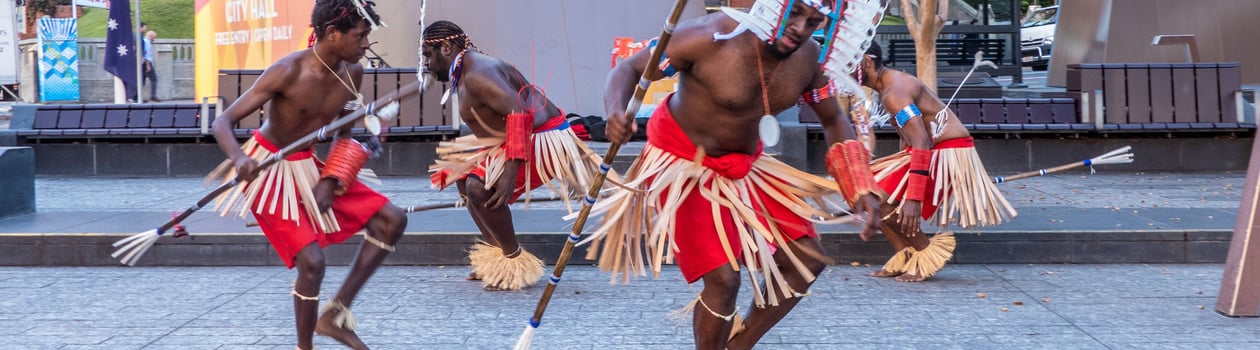
Mabo Day is a lively celebration that honors Eddie Koiki Mabo’s efforts. His determination to overturn unjust land laws has made a lasting impact.
This day is not just about remembrance; it is about acknowledging the strength and spirit of the Indigenous communities in Australia.
It spotlights a legal turning point that reshaped how land is understood in Australian law and, just as importantly, it encourages people to listen to the voices and experiences of Aboriginal and Torres Strait Islander peoples whose connections to Country and sea have always been real, specific, and carefully maintained.
How to Celebrate Mabo Day
Host a Storytelling Session
Invite friends and family to a storytelling session that centers on Eddie Koiki Mabo and the bigger idea his story represents: that a person’s identity, responsibilities, and rights can be deeply tied to land and community. Keep it welcoming and respectful, especially if people are hearing these ideas for the first time.
To make the session engaging, start by setting a few ground rules: let speakers finish, avoid debating someone’s lived experience, and treat cultural information with care. Then share a simple narrative arc that people can follow: Mabo’s childhood on Mer (Murray Island), his move to the mainland, the moment he learned that Australian law did not recognize his people’s ownership of their land, and the years of persistence that followed.
Props and costumes can be fun, but they can also slip into caricature if they mimic cultural elements. A better approach is to use visual aids like maps of the Torres Strait, photos of gardens or seascapes, or a timeline written on a poster board.
Add short quizzes afterward, but keep them thoughtful. For example, what does the “terra nullius” claim? What does “native title” try to recognize? Why might a court decision matter for everyday community life?
Create Art Together
Organize a community art project that explores themes of land, belonging, and justice. The key is to focus on meaning rather than just aesthetics. Mabo Day lends itself to art because the case is about more than paperwork. It is about place, memory, family lines, and responsibility, ideas that naturally show up in images, textures, and symbols.
A mural, group collage, or quilt-style piece can work well. Encourage participants to contribute one panel each, perhaps representing something that says “home” to them: a shoreline, a garden, a meeting place, a favorite tree, or a set of hands passing something carefully from one generation to the next.
Tie it back to Mabo’s legacy by including words like “recognition,” “truth,” “respect,” or “listening,” or by incorporating a simple motif of connected pathways to suggest how law, culture, and community intertwine.
If the group includes Indigenous artists, make sure they are invited to lead if they want to, and paid if the project has funding. When displaying the final piece in a community center or shared space, include a short explanation of what the artwork is responding to and how contributors approached the theme. That way, it becomes both an artwork and a learning tool.
Cook Traditional Dishes
Try cooking dishes connected to Torres Strait Islander foodways, or more broadly, learn about Indigenous ingredients and cooking methods in a respectful, curious spirit. Food is one of the easiest ways to gather people, but it also carries cultural meaning, so it helps to approach it as an act of appreciation and learning rather than a novelty.
A shared meal can include coconut-based curries, seafood dishes, tropical fruits, and bread like damper. If cooks are not sure where to start, they can focus on a simple menu and build in context: what ingredients are common in island communities, why certain foods are celebratory, and how geography shapes cuisine. The Torres Strait is a maritime region, so the sea often features heavily in local diets and stories.
Consider adding a “recipe swap” element. Participants can bring a dish and a short note about what it represents to them, then connect that back to the bigger Mabo Day theme: the relationship between people and place. Even for guests who are not Australian, this is a way to explore how land and water shape culture everywhere.
Host a Film Night
Plan a film night featuring documentaries and dramatizations that explain Eddie Mabo’s life and the court case in accessible terms. A film screening works especially well for groups who want a shared starting point before discussion, because it gives everyone the same basic facts and images to respond to.
Set the tone with a brief introduction: the film is not entertainment alone; it is an invitation to reflect. Keep snacks simple, and consider offering a quiet space for anyone who may find the subject heavy. After the film, facilitate a discussion with a few prompts that move beyond “Did you like it?” For example:
- What surprised viewers about how the law treated land ownership?
- What did the film show about perseverance, community support, or personal cost?
- How did it describe the concept of native title, and what questions remain?
If the group includes educators, a film night can be paired with a small reading circle using short summaries of key terms. The goal is not to turn people into legal experts but to help them speak accurately and thoughtfully.
Visit Local Cultural Centers
Explore Indigenous cultural centers, museums, or community-run galleries that share Aboriginal and Torres Strait Islander history and contemporary life. Many people think of Mabo Day as purely legal, but cultural centers help show what the law was failing to recognize in the first place: living communities with their own systems of knowledge, kinship, and responsibility to land.
A guided tour can add depth because trained guides often connect objects and artworks to broader themes like language revitalization, land management practices, and the ways Indigenous peoples have maintained continuity despite disruption. Visitors can look for exhibits that address land rights, the effects of colonization on legal systems, and the continuing work of reconciliation.
For families, it can help to give kids a “curiosity mission,” such as finding one artwork that speaks about home, one tool connected to daily life, and one story about the sea or the land. This keeps the visit engaging while reinforcing that Indigenous culture is not a single topic, but a set of diverse, living traditions.
Support Indigenous Businesses
Spend the day supporting Indigenous businesses, artists, and creators. This is one of the most practical ways to honor the spirit of Mabo Day because it helps sustain communities in the present, not just commemorate the past.
People can purchase artworks, textiles, books, music, or food products from Indigenous-owned businesses. When buying art, it is worth taking time to learn about authenticity and ethical purchasing. Indigenous art is sometimes copied or mass-produced without permission, so buying directly from Indigenous artists or reputable Indigenous-run outlets matters.
For those unsure what to buy, books by Indigenous authors or music by Indigenous musicians can be a meaningful start, offering voices and stories in their own words.
Supporting Indigenous businesses is also a reminder that land rights discussions connect to economic opportunity and self-determination. It is not only about symbolic recognition. It is about enabling communities to thrive on their own terms.
Plant a Community Garden
Start a community garden featuring native plants, bush foods, or pollinator-friendly species, depending on what is appropriate for the local environment. While Mabo Day is tied to a specific Australian legal decision, the underlying idea is universal: land is not just real estate, it is a living system that people care for and learn from.
If Indigenous elders or knowledge-holders are involved, follow their guidance on what plants and teaching approaches are appropriate to share. Gardening can be an easy entry point into conversations about traditional ecological knowledge, seasonal awareness, and the difference between simply using resources and caring for them.
A garden project can include signage that explains plant uses and ecological roles in plain language. It can also include a “care calendar” so the garden remains a long-term community asset rather than a one-day activity. People can use the garden as a quiet place for reflection, reinforcing the idea that recognition and respect are ongoing practices.
Organize a Charity Walk
Plan a charity walk or community run to raise funds for Indigenous-led causes, legal services, cultural programs, language initiatives, or education support. A walk works well because it is simple and inclusive, and it can be structured to teach as it goes.
Choose a route with a few planned stops. At each stop, share one short piece of information: what “terra nullius” meant in practice, what “native title” recognizes, why Eddie Mabo’s case took years, and how legal change can ripple into everyday life. Keep the tone energetic and positive, but avoid turning complex history into slogans.
To make it more community-centered, invite participants to write down one commitment, such as reading a book by an Indigenous author, attending a cultural event, or learning how land acknowledgments can be done meaningfully. The purpose is not guilt. It is constructive engagement and support.
Why Celebrate Mabo Day
People celebrate Mabo Day to recognize the fight against the legal fiction of terra nullius, which wrongly claimed that Australia was empty before European settlement.
Terra nullius is often summarized as “land belonging to no one,” but the deeper issue was what that idea allowed the law to ignore. It treated existing societies and long-held systems of land stewardship as if they did not count in a legal sense.
Mabo Day pushes back against that by emphasizing that Aboriginal and Torres Strait Islander peoples had, and continue to have, enduring connections to their lands and waters, including responsibilities passed through families and communities.
Eddie Mabo’s victory in the High Court highlighted the deep connections Aboriginal and Torres Strait Islander peoples have to their land. This decision led to the recognition of native title rights, ensuring that these connections were legally acknowledged and respected.
Native title can be misunderstood as a single, simple right, but it is better thought of as a legal recognition that some Indigenous rights and interests in land can survive, depending on the specific history of that place and whether a connection has been maintained according to traditional laws and customs. In practice, native title claims involve detailed evidence, community testimony, and careful legal processes.
The Mabo decision did not hand back every piece of land, and it did not erase the complexities created by later land grants and development. What it did was change the foundation: it opened a legal pathway for recognition that had been closed.
This day reminds us of the importance of land to Indigenous Australians. It celebrates their culture, traditions, and ongoing struggles for justice. The Mabo decision has paved the way for future generations to continue this vital work, ensuring that their heritage is protected and honored.
Mabo Day also invites a broader reflection on reconciliation: how communities can tell the truth about history, respect Indigenous authority and knowledge, and build relationships that are not based on denial.
For non-Indigenous people, it can be a prompt to move from vague support to concrete learning and action. For Indigenous communities, it can be a moment of pride, remembrance, and continued advocacy, acknowledging both progress and the work still required to achieve fair outcomes.
Mabo Day Timeline
British Claim of Terra Nullius in Australia
The British Crown declares sovereignty over eastern Australia and treats the continent as terra nullius, ignoring existing Aboriginal and Torres Strait Islander land laws and ownership.
Doctrines of Aboriginal “Waste Lands” Entrenched
Colonial legal and political doctrine develops around the idea of Aboriginal lands as “waste” or “unoccupied,” reinforcing terra nullius and facilitating large-scale pastoral and agricultural expansion without treaties.
Gurindji Walk-Off at Wave Hill
Vincent Lingiari leads Gurindji stockmen and families in a walk-off from Wave Hill cattle station in the Northern Territory, a protest that evolves from a wages dispute into a powerful land rights claim.
Australian Referendum Expands Federal Role in Indigenous Affairs
More than 90 percent of voters support changing the Constitution so the federal government can make laws for Aboriginal people and include them in the census, strengthening the political context for land rights struggles.
Aboriginal Land Rights (Northern Territory) Act
The Australian Parliament passes landmark legislation allowing Aboriginal people in the Northern Territory to claim land rights based on traditional occupation, creating a statutory model that precedes and informs later native title law.
Mabo v Queensland (No 2) High Court Decision
The High Court of Australia recognizes the Meriam people’s native title and rejects terra nullius, holding that Indigenous customary law can survive colonization and coexist with Australian common law.
Native Title Act Establishes Legal Framework
In response to Mabo, the Australian Parliament enacted the Native Title Act 1993, setting up procedures to recognize and protect native title and creating institutions such as the National Native Title Tribunal.
History of Mabo Day
Mabo Day began in 1992. It commemorates the High Court’s decision on June 3 of that year, which recognized Indigenous land rights in Australia. Eddie Koiki Mabo, a Torres Strait Islander, was the driving force. He challenged the idea that Australia was empty before European settlers arrived.
Eddie Koiki Mabo’s story is often told through the courtroom victory, but it is also a story of personal learning and community determination. He was born on Mer (also known as Murray Island) in the Torres Strait, a region with strong cultural ties to sea and land.
Like many people whose lives span island and mainland communities, he navigated different worlds and expectations. Over time, he became increasingly aware of the gap between what his community understood to be true about land ownership and what Australian law recognized.
A turning point came when Mabo learned that, in the eyes of the legal system, he did not “own” the land that had always been part of his family’s life. That realization did not stay private. It became a catalyst for action, involving not only Mabo but also other Meriam people and allies who worked through the long, demanding process of challenging the status quo.
Eddie Mabo started this legal fight in 1982. He wanted official recognition of his people’s land on Mer Island. After ten years, the court ruled in his favor. This ruling overturned the concept of terra nullius, meaning “land belonging to no one.” It was a historic victory for Aboriginal and Torres Strait Islander peoples.
The court’s reasoning mattered because it reshaped the underlying assumptions of property law in Australia. The decision recognized that Indigenous law and custom existed prior to colonization and could continue to exist, creating rights that the common law could recognize.
It also clarified that those rights were not automatic everywhere. They would depend on particular facts, including the continuity of traditional connection and the impact of later legal acts on the land.
Although the case is commonly associated with Eddie Mabo’s name, it reflected a collective effort. Legal challenges of this kind require evidence, testimony, and years of perseverance, often under intense pressure.
For many Indigenous claimants, the process can be emotionally taxing because it can require communities to describe sacred knowledge carefully, revisit painful histories, and prove what they have always known to be true.
Mabo Day, therefore, honors both the outcome and the persistence behind it. It recognizes that legal change rarely comes from a single moment of inspiration. It usually comes from sustained courage, organizing, and a willingness to keep going when the odds look bleak.
Each year, Mabo Day honors Eddie Mabo’s legacy, reminding us of his courage and determination. The day also celebrates the ongoing journey for Indigenous rights and recognition in Australia. It is a significant part of National Reconciliation Week, which aims to build stronger relationships between Indigenous and non-Indigenous Australians.
Within the broader reconciliation conversation, Mabo Day often serves as a practical anchor. It is a clear example of how a legal doctrine can shape everyday realities and how challenging that doctrine can create pathways for recognition.
It also highlights an important nuance: a court decision can change the law, but it cannot instantly repair every harm or resolve every dispute. The legacy of Mabo is therefore both inspiring and instructive. It shows what is possible, and it reminds communities that recognition is a continuing process that requires listening, fairness, and ongoing commitment.
Mabo Day Facts
Customary Land Law on Mer Island
Before British annexation, Mer (Murray Island) had a complex customary land tenure system where specific garden plots and reef areas were owned by extended families, passed down through hereditary lines, and managed under Island Court decisions, contradicting the later legal fiction that the land was unoccupied.
How Terra Nullius Entered Australian Jurisprudence
The doctrine of terra nullius in Australia emerged through 19th-century judicial reasoning that treated the continent as “practically unoccupied” for the purposes of British law, notably in cases like Cooper v Stuart (1889), which classified New South Wales as a “settled” colony where English law applied as if there were no prior landowners.
Mabo’s Use of Historical and Anthropological Evidence
The High Court’s 1992 Mabo judgment relied heavily on historical records, genealogies, and expert anthropological evidence about Meriam culture and land relationships, marking one of the first times in Australian law that Indigenous oral histories and customs were central to determining property rights.
Recognition of Native Title as a Property Right
In Mabo v Queensland (No 2), the High Court recognized native title as a form of property that can survive British sovereignty, provided that traditional laws and customs continue, and held that extinguishment must be clear and plain, thereby fundamentally reshaping Australian property law.
Scale of Native Title Determinations Since the 1990s
Since the Native Title Act 1993 came into force, Australian courts and tribunals have recognized native title over millions of square kilometers of land and sea, so that as of the early 2020s, more than 40 percent of the Australian landmass is subject to a native title determination, either granted or under claim.
Coexistence of Native Title and Other Land Interests
Australian law now recognizes that native title can coexist with other interests, such as pastoral leases, mining tenements, or national parks, with the nature of coexisting rights negotiated or determined on a case-by-case basis, which contrasts sharply with earlier assumptions that any grant to non-Indigenous parties automatically wipes out Indigenous rights.
Impact on Torres Strait Maritime Rights
Following Mabo, agreements and subsequent legal developments have acknowledged not only land but also sea rights for Torres Strait Islander communities, allowing for recognition of traditional fishing, hunting, and cultural practices within defined maritime areas under both Australian and Torres Strait Treaty arrangements.
Mabo Day FAQs



You may also like

National Close the Gap Day
National Close the Gap Day draws attention to the stubborn health and life expectancy gap between Indigenous and non-Indigenous Australians, with a particular focus on Aboriginal and Torres Strait Islander peoples. It is a day built around a simple, practical idea: when a community can access culturally safe health care...
- Australia

National Sorry Day
Discover the meaning of National Sorry Day, honoring the Stolen Generations, promoting reconciliation, and encouraging learning, reflection, and community support.
- Australia

National Apology Day
A dark chapter of Australia's history where Indigenous children were taken from their families and adopted out to non-Indigenous families.
- Australia

Canada’s National Indigenous Peoples Day
Learn about the various cultures and traditions of Canada’s Indigenous People, or join an event or ceremony to see how they have been preserved over time.
- Canada
- United States
National days and holidays on June 3

Vivid Sydney
Vivid Sydney is a dazzling celebration that transforms the city into a vibrant playground of lights, music, and creativity. For weeks, iconic landmarks and urban spaces glow with stunning light installations and 3D projections, captivating both locals and tourists. This festival draws millions of visitors each year, offering an enchanting...
- Australia

World Cider Day
Celebrate World Cider Day by exploring crisp apple ciders, learning their rich history, visiting orchards and cideries, and toasting this beloved drink.
- Australia
- Canada
- France
- and 5 more

National Repeat Day
Celebrate National Repeat Day by replaying favorite moments, revisiting special places, and finding joy in doing beloved experiences all over again.
- United States

National Tailors Day
Discover the art of a perfect fit on National Tailors Day, honoring skilled tailors who craft, alter, and refine clothing to help people look and feel their best.
- International
Seize Every Day
Join free for personalised recommendations, email reminders and exclusive guides. Never miss a day.