
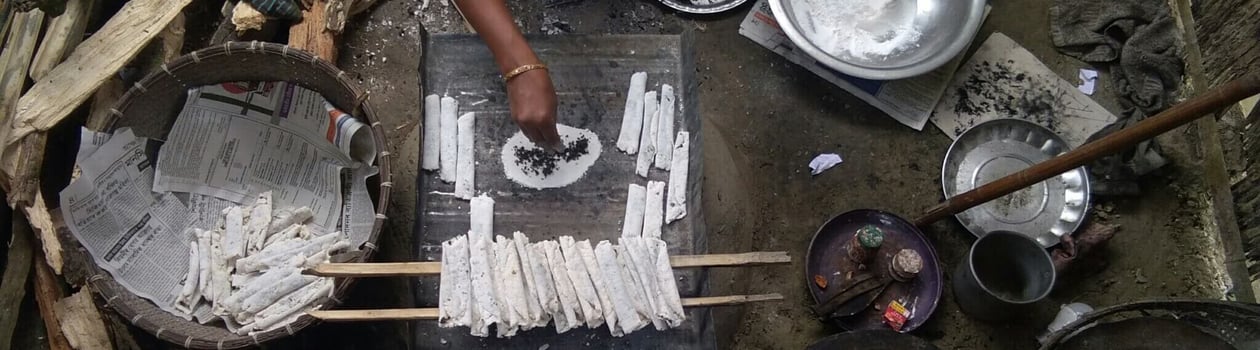
Magh Bihu, also known as Bhogali Bihu, is a vibrant harvest festival celebrated in Assam. It marks the end of the harvesting season and is a time of great joy, reflecting the spirit of abundance and community togetherness.
The festivities begin the night before, known as Uruka, when families and friends gather for a grand feast in temporary huts called Bhelaghars. They cook traditional dishes, share stories, and enjoy the warmth of the bonfire.
This communal spirit sets the stage for the main celebration, where a large bonfire, called Meji, is lit at dawn. People offer prayers to the fire, symbolizing gratitude for the bountiful harvest and seeking blessings for the future.
How to Celebrate Magh Bihu
Magh Bihu is a delightful way to embrace the spirit of harvest and community. Here are some playful and unique ideas to celebrate:
Gather for a Grand Feast
Cook up a storm with family and friends by preparing traditional dishes like pitha and laru. Share stories, laughter, and a hearty meal around a cozy bonfire.
Build a Bhelaghar
Construct a temporary hut using bamboo and leaves. Use it for your feast and then enjoy the warmth of a bonfire as the night sets in.
Light the Meji
Wake up early and light the Meji bonfire. This symbolizes burning away negativity and welcoming positivity. Scatter its ashes in your garden for a traditional touch.
Host Friendly Competitions
Arrange some fun, traditional games like egg-throwing contests or maybe a friendly tug-of-war. These activities add excitement and bring people together.
Relish with Friends and Neighbors
Invite neighbors for a potluck-style meal. Encourage everyone to bring a dish made with freshly harvested ingredients, promoting a sense of unity and sharing.
History of Magh Bihu
Magh Bihu, also known as Bhogali Bihu, is a vibrant harvest festival celebrated in Assam. Its roots trace back to ancient times, deeply intertwined with the rural lifestyle of the region. The festival marks the end of the harvest season and symbolizes abundance and gratitude.
Ancient-time Origin
It likely began around 3500 BC, evolving from ancient rites related to fire and fertility. The indigenous tribes of Assam, such as the Bodos, Chutias, and Deoris, played a significant role in shaping the early customs of this celebration.
The Ahoms, who arrived in Assam around the 13th century, also contributed to its evolution. They promoted Sali-kheti, or wet rice cultivation, which significantly improved agricultural practices in the region.
Bihu celebrations, including Magh Bihu, were institutionalized during their reign, with royal events held on the grounds of the Rang Ghar, the royal sports pavilion.
The festival has always been a time of feasting and community bonding. It begins on Uruka, the eve of Magh Bihu, with families and communities gathering for a grand meal.
Temporary structures called Bhelaghars are built using bamboo and leaves, and a large bonfire, known as Meji, is lit the next morning. This act is a symbolic way to bid farewell to the old and welcome the new agricultural cycle.
Magh Bihu’s rituals reflect a blend of influences from various tribes and communities in Assam. The Meji bonfire, a central feature of the celebration, originates from ancient fire worship practices.
While the exact origins of some traditions are debated, the festival’s core remains a celebration of nature’s bounty and communal harmony.
Present Day Trends
Despite its ancient roots, Magh Bihu continues to be a lively and dynamic festival, embodying the spirit of Assam’s rich cultural heritage.
It brings people together, transcending social barriers to celebrate the land, its produce, and the community’s unity.
On the day of Magh Bihu, you can hear laughter, music, and delicious aromas. Traditional games like buffalo fights and egg-throwing contests add to the excitement. The Meji fire, made of bamboo and hay, burns away the old and welcomes the new agricultural cycle.
Once the fire dies down, its ashes are scattered in the fields to enhance soil fertility, embodying the festival’s deep connection to nature and farming.
This lively celebration not only honors the land’s bounty but also strengthens community bonds, making it a cherished time for all who participate.



You may also like

Bohag Bihu
Bohag Bihu, celebrated in India, marks the beginning of spring and the Assamese New Year. It's a time filled with joy as nature blooms, and people come together to celebrate. Fields turn lush green, and the air buzzes with excitement. The festival brings a fresh start, symbolizing hope and abundance...
- India
Bonfire Night
An annual spectacle marked by crackling flames, brilliant displays in the night sky, and a historic plot remembered with reverence.
- Australia
- Canada
- New Zealand
- and 1 more

Camp Fire Girls Day
Camp Fire Girls Day celebrates the spirit of exploration, leadership, and service that has defined the organization for over a century. It honors the growth, achievements, and community contributions of young people who participate in Camp Fire. This movement began as a way to provide girls with meaningful outdoor experiences and...
- United States

Baisakhi
Baisakhi marks the Punjabi New Year, bringing vibrant energy and a fresh start for people in Punjab and beyond. It’s a day brimming with hope and joy as fields burst into life with golden crops ready for harvest. Also called Vaisakhi (spellings vary) the festival captures the spirit of renewal...
- Canada
- India
- Pakistan
- and 2 more
National days and holidays on January 14 2027

Makar Sankranti
Makar Sankranti marks a vibrant and joyful festival celebrated across India. This day symbolizes the shift in seasons and the longer days ahead. Families come together to enjoy sweet treats, exchange gifts, and fly colorful kites. It is a time of new beginnings and a chance to leave behind the...
- Bangladesh
- India
- Nepal
- and 1 more
Pongal
Pongal is a vibrant harvest festival celebrated with great enthusiasm in South India. It honors the sun, nature, and the farmers who bring food to the table. Families gather to offer thanks for the year’s abundance, making it a time filled with joy and gratitude. The name "Pongal" also refers...
- India
- Malaysia
- Singapore
- and 3 more

National Dress Up Your Pet Day
Set up a literal catwalk and treat your furry friends to some safe, comfortable fashion, organize a fun photo shoot or go all out with matching outfits.
- Australia
- Canada
- United Kingdom
- and 1 more

National Organize Your Home Day
Unleash the satisfying feeling of decluttering, creating a fresh space that invites relaxation and productivity in everyday life.
- United States
Seize Every Day
Join free for personalised recommendations, email reminders and exclusive guides. Never miss a day.