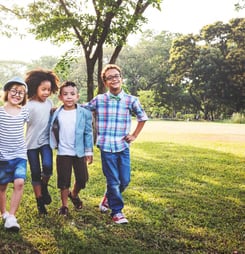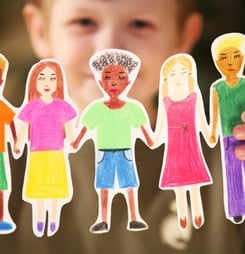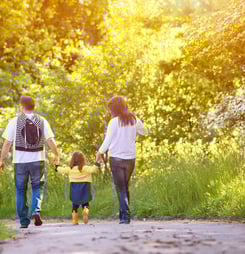

They start out so small and unassuming, but sometimes in what seems to be the blink of an eye, children are growing and changing into the adults who will carry the world forth for future generations.
National Children’s Day seeks to honor and show appreciation for these smaller folks filled with big imaginations who are sometimes overlooked!
How to Celebrate National Children’s Day
Sure, children are around every day and can even be a challenge sometimes, but National Children’s Day is here to serve as a reminder that kids are special and worth dedicating a day to! Consider some of these ideas for observing and enjoying this day:
Spend Time with a Child
Parents, grandparents, aunts and uncles can all consider ways that they can spend time enjoying the presence and company of a child in celebration of National Children’s Day.
Invite a child or children out for ice cream, to play a game, to go to the park or simply spend time drawing together. Usually, younger children don’t need fancy activities, they simply want to spend time with people who are interested in them.
Those who feel like doing a bit more advance planning for activities to do with the kids might want to consider if some of these would be fun:
- Camping. This is a great time for outdoorsy kids to have some fun, or for indoorsy kids to get a bit more in touch with nature. Whether it’s overnight tent camping and roughing, or something more akin to glamping, this is a great way to spend time together.
- Water Park. Kids love to get wet! Especially in the northern hemisphere when National Children’s Day falls at the beginning of the warmer weather.
- Share with Others. Some families who live in privileged societies might want to take this time to talk to their kids about others who might have less than they do. Then perhaps, collect some gently-used toys to donate to those who are less fortunate.
Attend National Children’s Day Events
While the history and dates of National Children’s Day have been a bit fluid, it’s quite likely that some communities or churches will still be celebrating on this traditional second Sunday of June.
Have loads of fun enjoying community barbecues, playground activities, bounce houses, art and creative events, music, balloons, sporting events and so much more as a nod to this day. The kids will love having a little festival that is dedicated just for them!
And if there aren’t even local events already on the schedule, why not create a local community event in honor of the day?!
Advocate for Children
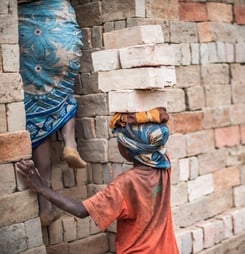
Children are in a difficult position as they are completely dependent upon the adults in their lives to have all of their needs met.
From food and shelter to education and medical care, children need their parents, extended family and community around them to take care of their needs – even when the children themselves may not know what those needs are!
National Children’s Day might be a good time to consider ways to get involved with local government and legislation that is working on behalf of kids or, on a larger scale, for children all over the world.
This might include signing petitions, volunteering for non-profit organizations, or developing a business partnership with advocacy organizations by becoming a stakeholder.
Those who would like to stay informed about the current issues that are relevant all over the world might want to check out some advocacy groups. SOS Children’s Villages, The Children’s Society, and Save the Children are just a few of the many viable options for getting involved.
History of National Children’s Day
The concept of National Children’s Day dates back to over a century when the idea was brought forth by a pastor in Chelsea, Massachusetts.
In 1856, Reverend Dr. Charles Leonard set up the second Sunday of June as a time for families to bring their children forward to address their needs as well as having them baptized. At the time, this day was called ‘Rose Day’, then ‘Flower Day’ and eventually it came to be known as Children’s Day.
While the idea of Children’s Day has often been supported within church establishments, it did not really make its way into the general public until the mid-1990s. This was when a retired school teacher named Lee Rechter began sharing her dream of a day that honored children.
Around this time, the idea gained some traction and support, even getting attention from the top when US President Bill Clinton established National Children’s Day in 1995. But the dates have been a bit confusing ever since.
Whereas Clinton set the date for October 8, a few years later in 2001 the date was proclaimed by President George W. Bush for the first Sunday in June.
Fast forward to another president in 2009, when Barack Obama also declared the day but changed it to November 20 to coincide with what is set aside by the United Nations as World Children’s Day.
So although the date has jumped around, the idea behind a National Children’s Day remains to be that this is a special time that is set aside to be reminded how important children are to the world in the present and in the future.
It’s also a day to consider unmet needs of children and aim to solve problems that could help them thrive better in society.
This is a great time for communities, governments, non-profit organizations, and families to seek to prioritize the health, welfare and education of children while advocating for their rights and supporting the best environments in which they can grow.
For every adult, National Children’s Day provides an ideal space and time to consider the ways that children bring hope and brightness to life, and to take part in plans where they can be honored and appreciated.
Facts About National Children’s Day
Children’s Rights Became International Law Only Recently
Although ideas about protecting children date back centuries, a comprehensive, legally binding treaty on children’s rights is very new.
The UN Convention on the Rights of the Child, which sets out civil, political, economic, social, and cultural rights for everyone under 18, was only adopted in 1989 and entered into force in 1990 after enough countries ratified it.
The United States Signed but Never Ratified the Child Rights Treaty
Every UN member except the United States has ratified the Convention on the Rights of the Child.
The U.S. government signed the treaty in 1995, signaling support in principle, but the Senate has never given its consent to ratification, so the convention is not legally binding in U.S. law.
Global Child Mortality Has Fallen by Half, Yet Millions Still Die
Child survival has improved dramatically this century. Between 2000 and 2022, the global under‑five mortality rate fell by about 51 percent, yet an estimated 4.9 million children still died before age five in 2022, mostly from preventable or treatable causes such as pneumonia, diarrhea, and malaria.
Hundreds of Millions of Children Are Malnourished in Different Ways
Malnutrition remains a widespread threat to healthy development. In 2020, about 149 million children under five were stunted, 45 million were wasted, and 39 million were overweight, showing that poor diets and nutrition now cause both undernutrition and unhealthy weight in children, sometimes in the same communities.
School Is Not Reaching or Teaching Many Children
Access to education has expanded, but learning gaps are stark. In 2018, around 258 million children, adolescents, and youth worldwide were out of school, and in low‑ and middle‑income countries an estimated 53 percent of children at late primary age could not read and understand a simple text even if they were enrolled.
Mental Disorders Affect More Than One in Eight Adolescents
Mental health is a major but often hidden part of child well‑being. The World Health Organization and UNICEF estimate that roughly 13 percent of adolescents aged 10 to 19 worldwide live with a diagnosed mental disorder, yet most do not receive appropriate care or support.
High‑Income Countries Do Not Always Rank Well for Children
Living in a rich country does not guarantee a good childhood. A 2020 UNICEF Innocenti “Report Card” comparing 41 high‑income countries found that the United States ranked near the bottom group for overall child well‑being, including mental health, physical health, and academic and social skills, showing that policy choices strongly shape children’s lives even in wealthy nations.