
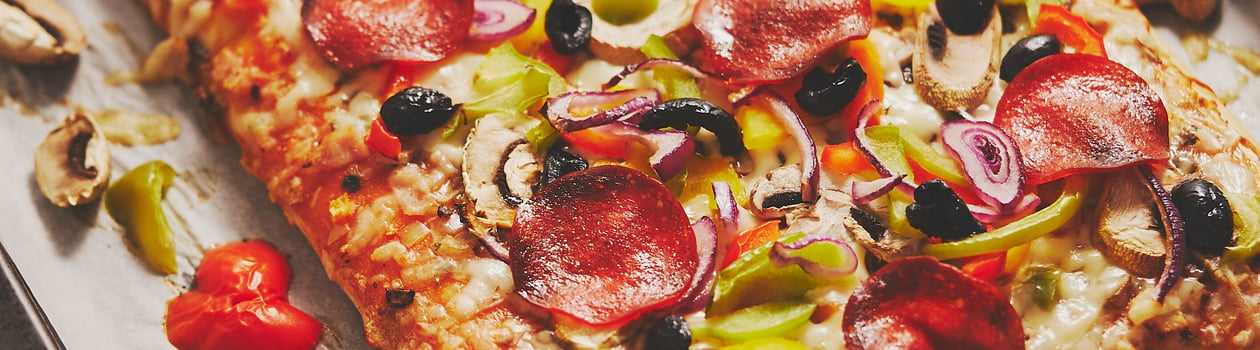
National Detroit-Style Pizza Day spotlights a pizza with a point of view. Instead of a floppy slice that needs a careful fold, this one arrives as a proud rectangle with a thick, airy crumb and a crackly bottom. Cheese runs right up to the edges, where it sizzles against the pan and turns into a caramelized, lacy border that tastes like the best corner of a grilled cheese.
It is also a celebration of how a regional specialty can grow into a national obsession. Detroit-style pizza is comfort food with industrial swagger: sturdy, no-nonsense, and engineered for maximum crunch, gooeyness, and sauce-in-every-bite satisfaction.
Baked in deep, steel pans once associated with Detroit’s automotive industry, this pizza isn’t just a meal, it’s an experience. Every bite delivers a perfect mix of crunch, stretchy cheese, and bold tomato flavor. It stands out in the pizza universe by flipping expectations: toppings and cheese go on first, while the sauce takes the spotlight on top.
This day is not only about indulging in a great slice. It is a nod to creativity, hometown pride, and the kind of culinary ingenuity that turns simple ingredients into a signature style. Detroit-style pizza brings people together, whether they are trying it for the first time or chasing the taste of an old favorite.
Its bold flavors and iconic texture are a reminder that some of the most memorable foods come from practical decisions and playful experimentation. National Detroit-Style Pizza Day offers a reason to savor a classic that has earned fans far beyond the city that inspired it.
How to Celebrate National Detroit-Style Pizza Day
Celebrating National Detroit-Style Pizza Day offers a delicious excuse to dig into this pan-baked legend. The best celebrations lean into what makes the style special: the crispy cheese edges, the pillowy interior, and the top-down sauce that announces itself with confidence.
Host a Pizza-Making Party
A Detroit-style pizza party is part cooking project, part delicious science experiment. The pan matters, but the approach matters more: the dough is usually higher hydration than many other pizza styles, which helps create that airy, focaccia-like interior. Because a wetter dough can feel sticky and unruly, it rewards a gentle touch and a little patience.
To set up the party, provide a few topping “stations” rather than a chaotic free-for-all. A typical Detroit-style build goes like this:
- Oil the pan generously. Oil helps the dough fry slightly as it bakes, creating a crisp bottom and encouraging easy release.
- Press and rest the dough. The dough often needs a short rest, then another press to reach the corners without tearing. That relaxation step is a big deal in getting an even thickness.
- Layer in the Detroit order. Many classic versions place pepperoni or other toppings directly on the dough, then scatter cheese all the way to the edges.
- Add sauce on top. Sauce commonly goes on in stripes or dollops, which keeps the crust from getting soggy and gives each slice a punch of tomato.
If the group wants a fun challenge, try two pans side-by-side: one “classic” with sauce stripes and brick-style cheese, and one experimental pan with creative toppings. Detroit-style pizza is sturdy enough to handle bold ideas like roasted vegetables, hot honey, or a drizzle of garlic butter after baking.
Visit a Local Pizzeria
For anyone who wants the benchmark experience, a pizzeria is the easiest way to understand why Detroit-style pizza has such a devoted following. A well-made version highlights the defining traits in a single bite: crunchy base, airy middle, and that toasted cheese edge that snaps a little when bitten.
When ordering, it helps to pay attention to details that signal the style is being treated with respect:
- The pizza arrives in a rectangular or square shape with a deeper profile than standard pies.
- Cheese reaches the rim of the pan, creating a caramelized perimeter.
- The sauce is applied on top rather than underneath the cheese.
Many places also lean into the traditional “racing stripe” look, which is not only charming but practical. Sauce on top stays bright and flavorful, and it gives diners control over the sauce-to-cheese ratio in each bite.
Organize a Pizza Tasting Event
A tasting is perfect for this style because Detroit-style pizza has noticeable, discussable differences even from one maker to another. The crust can range from very airy to more bread-like, the cheese edge can be deeply caramelized or lightly browned, and the sauce can vary from sweet-leaning to herb-forward.
To keep the tasting organized, use a simple scorecard or talking points:
- Crust texture: Is it airy and light, or dense and chewy?
- Bottom crispness: Does it crackle, or soften quickly?
- Cheese edge: Is it present on all sides? Is it crunchy, chewy, or almost candy-like?
- Sauce flavor: Bright and tomato-forward, or slow-cooked and rich?
- Balance: Does one element overwhelm the others?
For extra fun, include at least one homemade pan alongside restaurant versions. The contrast often sparks lively debate about what matters most: pan crisp, cheese edge, or sauce character.
Share Your Experience on Social Media
Detroit-style pizza is photogenic in a very specific way. The slices stand tall, the edges look dramatically browned, and the sauce-on-top design practically begs for a close-up.
A few easy ways to make the post more interesting than a standard “look at my dinner” photo:
- Photograph the cross-section to show the airy crumb and crisp bottom.
- Capture the cheese edge up close, since that caramelized border is a signature.
- Show the pizza coming out of the pan, especially if the cheese has fused into a lacy frame.
It also helps to describe what surprised the eater most. Many first-timers expect something heavy, but a well-made Detroit-style slice can feel surprisingly light inside, thanks to the dough’s structure and the way it bakes in the pan.
Learn About Its Origins
Detroit-style pizza is a reminder that food history is often shaped by the tools people have on hand. The style’s association with sturdy, rectangular steel pans ties it to a practical, industrial context, and that practicality became part of its charm.
Learning the basics of how and why the style developed makes the slice taste even better. It also explains why Detroit-style is not simply “square pizza.” The pan influences the bake, the oil changes the crust, and the cheese-to-the-edge technique creates a texture that other styles do not naturally produce.
Anyone doing a deeper dive can also explore how Detroit-style compares with other thick, rectangular pizzas, especially Sicilian-style. They may look similar at a distance, but Detroit-style’s caramelized cheese edge and sauce-on-top approach give it a distinctly different personality.
National Detroit-Style Pizza Day Timeline
Wisconsin Brick Cheese Is Created
Cheesemaker John Jossi develops brick cheese in Wisconsin, later used as a key topping that caramelizes along the edges of Detroit-style pizza.
First Licensed Pizzeria Opens in New York City
Lombardi’s in Manhattan receives a license to operate a pizzeria, helping introduce pizza to the United States and paving the way for distinct regional styles.
Detroit-Style Pizza Is Developed at Buddy’s Rendezvous
Gus and Anna Guerra create a new square pizza at Buddy’s Rendezvous in Detroit, baking airy dough in heavy steel automotive pans and topping it to the edge with brick cheese.
Detroit Pizzerias Spread the Square Pan Tradition
Places like Shield’s and Loui’s, run by pizza makers connected to Buddy’s, help make the rectangular, cheese-to-the-edge pizza a well-known Detroit specialty.
Detroit-Style Pizza Goes National
Restaurants across the United States adopt Detroit-style pizza, and food media spotlight its thick crust, caramelized cheese edges, and sauce-on-top presentation.
History of National Detroit-Style Pizza Day
National Detroit-Style Pizza Day was established in 2021 to honor a pizza tradition that began in Detroit in the mid-1940s. The observance is widely associated with Buddy’s Pizza, the pizzeria credited with introducing Detroit-style pizza to the world.
The origin story most often points to Buddy’s Rendezvous, where Gus Guerra and his wife Anna helped shape what became the signature Detroit-style approach. Instead of baking on a flat stone or round pan, the pizza was made in a rectangular, high-sided steel pan, a choice that defined everything that came after. The deep pan allowed for a thicker dough, encouraged a crisp, fried exterior when the pan was oiled, and created the conditions for the now-famous edge effect: cheese melting down the sides and browning into a crunchy border.
Detroit-style pizza also became known for a distinctive layering method. While many pizzas start with sauce and end with cheese, Detroit-style often flips that order. Cheese and toppings go on first, and the sauce is added on top, sometimes in stripes. Beyond the visual, it is a functional move: the sauce stays bright, the cheese has room to melt into the crust, and the crust itself avoids getting weighed down by moisture too early in the bake.
Over time, what began as a local specialty spread through Detroit and beyond. Other pizzerias developed their own versions, and the style evolved while keeping its core identity: rectangular pan, thick and airy crumb, crisp edges, and a cheese-forward bake.
Long before the national observance existed, the city of Detroit recognized Buddy’s Pizza with a local proclamation in 2011. That civic acknowledgment helped cement Buddy’s place in the story of the style and set the stage for wider recognition. A decade later, Buddy’s Pizza expanded the idea nationwide, promoting National Detroit-Style Pizza Day as a way to celebrate the style’s history and its ties to Detroit’s culinary culture.
The day now serves as a spotlight for a regional American pizza that has become widely loved. It honors the ingenuity behind a recipe that looks simple on paper, yet depends on a specific technique and a very particular kind of delicious geometry.
National Detroit-Style Pizza Day Facts
Blue Steel Pans Came From Detroit’s Factory Floors
Early Detroit-style pizzas were baked in heavy, blue steel pans modeled on industrial trays that auto and machine shops used to hold small parts.
The thick metal helped create the signature fried, crispy crust edges and defined the pizza’s rectangular shape, turning a piece of factory equipment into a core element of Detroit’s food identity.
Detroit-Style Pizza Evolved From Sicilian Roots
Food historians trace Detroit-style pizza back to Sicilian sfincione, a thick, rectangular pan-baked bread with toppings.
Italian immigrants in mid‑century Detroit adapted that Old World style using local ingredients and industrial pans, creating a focaccia-like base with cheese to the edge and sauce on top that is now recognized as a distinct American regional pizza.
Wisconsin Brick Cheese Is Central to the Style
A defining ingredient of classic Detroit-style pizza is Wisconsin brick cheese, a high-fat, semi-soft cheese developed in the late 19th century in Wisconsin.
When cubed or shredded and spread to the pan’s edge, it melts and fries against the steel, producing the caramelized, almost frico-like crust that separates Detroit-style pizza from other pan pizzas.
The “Red Racing Stripes” Sauce Has Practical Origins
Many Detroit-style pies are finished with tomato sauce ladled in thick stripes across the top, often called “racing stripes.”
This pattern is not just decorative; by adding sauce after the cheese melts, bakers avoid a soggy crust and help keep the airy crumb and crispy edges intact while still delivering a bold tomato flavor in each bite.
Detroit-Style Helped Spark a Modern Regional Pizza Boom
For decades, Detroit-style pizza was mostly a local secret, but its rise on national menus in the 2010s helped fuel broader interest in distinct regional American pizzas.
Food media and large chains highlighted the style’s square pans and caramelized cheese, and it began appearing alongside New York slices, Chicago deep dish, and New Haven pizza in guides to U.S. pizza traditions.
Industrial Pans Create a Different Crust Chemistry
The seasoned, heavy-gauge steel pans used for Detroit-style pizzas behave differently from aluminum pizza pans or stone decks.
Their dark, oiled surfaces absorb and radiate heat quickly, effectively shallow-frying the dough where it meets the metal, which gives the crust a distinctive combination of open, breadlike crumb and crackling, almost fried underside.
Detroit-Style Pizza Went From Neighborhood Bar Snack to Global Export
What began as a bar pizza in a single east-side Detroit tavern gradually spread through regional chains like Jet’s and later inspired national offerings at brands such as Pizza Hut and Little Caesars.
Today, Detroit-style pizzerias operate in cities from New York to London and Tokyo, showing how a hyperlocal, industrial-era food can become part of the global pizza canon.
National Detroit-Style Pizza Day FAQs



You may also like

National Deep Dish Pizza Day
Ike Sewell invented deep-dish pizza in Chicago in 1943; that’s why it’s often called “Chicago style”. There might even be discounts on Deep Dish Pizza Day!
- United States

National Cookie Dough Day
Unbaked delight with a mix of sweetness and texture, a culinary temptation awaiting the oven's transformative touch.
- Australia
- Canada
- United Kingdom
- and 1 more

National Pizza Day
Imagine sinking your teeth into a hot, crispy, cheesy slice of heaven. Each bite is a flavor explosion, transporting you to pizza paradise.
- Canada
- Italy
- United Kingdom
- and 1 more

National Pizza Party Day
Make your own pizza at home, order in, or gather some friends for a pizza crawl through town to enjoy the ever popular Pizza Party Day.
- Canada
- United Kingdom
- United States
National days and holidays on June 23

St. John’s Eve
Discover the meaning of St. John’s Eve, a mystical night of bonfires, herbs, dancing, and water rituals that blend Christian, folk, and nature traditions.
- Brazil
- Canada
- Denmark
- and 6 more

International Women in Engineering Day
Donate to the cause and help spread awareness about the amazing opportunities for girls who might have an interest in pursuing a career in engineering.
- Canada
- India
- United Kingdom
- and 1 more

National Typewriter Day
Computers are great, but there’s nothing quite like the satisfying “clack” of a typewriter. Dust off that family heirloom, or see if someone you know has one.
- Australia
- Canada
- United Kingdom
- and 1 more

Public Service Day
Give a big thanks to the public servants who keep our communities running, from restoring power during a storm to checking for gas leaks and more.
- Canada
- United Kingdom
- United States
Seize Every Day
Join free for personalised recommendations, email reminders and exclusive guides. Never miss a day.