
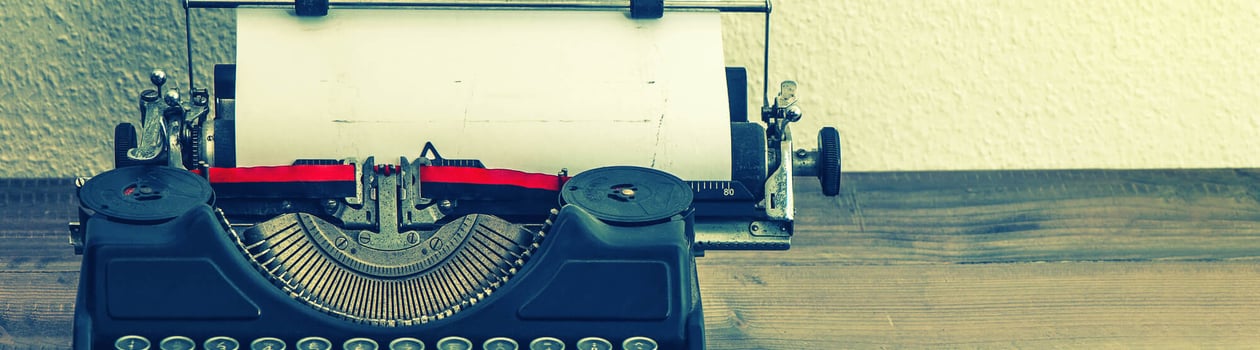
Let’s dive into a fascinating celebration that takes us back in time – National Typewriter Day. Imagine a world before laptops and smartphones, where thoughts were hammered out letter by letter, mistakes had to be handled with a clever workaround, and the sound of writing was a steady chorus of clicks, clacks, and a proud little “ding” at the end of each line.
This day brings that world back to life, not as a museum piece, but as something that can still be used, collected, repaired, and enjoyed by anyone who likes words with a side of machinery.
How to Celebrate National Typewriter Day
Here are some quirky and playful suggestions to celebrate National Typewriter Day, blending tradition with a touch of fun:
Throw a Typewriter Tea Party
Invite friends over and have them type out their favorite tea recipes or poems on a typewriter. Dress up in vintage attire to add to the ambiance. For extra flair, set out different papers to experiment with: crisp stationery, colored sheets, or even index cards. A typewriter turns each page into a little artifact, especially when the ink hits with that slightly uneven, human pressure that printers can’t imitate.
Typewriter Scavenger Hunt
Organize a hunt around town or within a large home, hiding clues that can only be deciphered when typed out on a typewriter. The final clue leads to a hidden vintage typewriter or themed prizes. To keep it delightfully “analog,” type the clues on scrap paper, then cut them into strips and roll them like tiny telegrams. Bonus points for using carbon paper to create duplicates for multiple teams.
Compose a Typewritten Letter to a Friend
There’s nothing more personal than a letter typed out the old-fashioned way. Seal it with wax for an extra vintage touch. A typewritten letter also encourages a different tone, often more thoughtful and less rushed. If a typo sneaks in, it becomes part of the charm, or it can be corrected the classic way: strike through, retype, and keep moving.
Typewriter Art Session
Gather some creative souls and use typewriters to create art. Whether you form pictures with the letters or use the ink in unconventional ways, the only limit is your imagination.
Typewriter art works especially well with repeated characters like parentheses, slashes, asterisks, and underscores. Even simple designs like a skyline, a cat silhouette, or a botanical pattern become surprisingly striking when made from punctuation.
Host a Story Slam
Participants bring their typewriters and engage in a timed story-writing contest. They share their stories aloud in a friendly competition. The most captivating tale wins a quirky, typewriter-themed trophy.
To make it smoother for all skill levels, offer prompts that fit the medium: “Write a scene with only dialogue,” or “Write a mystery in 150 words.” Typewriters reward momentum, so the best entries often come from letting the keys run ahead of second-guessing.
Vintage Typewriter Display
If you’re a collector, organize a mini-exhibition of your typewriters. Invite others to try typing on them and share the stories behind each machine.
A helpful display label can include the model name, approximate era, and a fun detail: “manual portable,” “electric,” “glass keys,” or “two-tone ribbon.” People love learning why one machine feels buttery and quiet while another sounds like it’s auditioning for a percussion section.
Typewriter Karaoke
Instead of singing, participants type out the lyrics to their favorite songs on typewriters as the music plays. This hilarious twist on karaoke is sure to get lots of laughs. It also becomes a playful lesson in rhythm and timing, since the typist has to anticipate choruses, repeats, and the occasional breathless bridge. For a twist, try “typewriter subtitles,” where one person types dramatic stage directions while another “performs” the song.
Repair and Restore Workshop
Host a workshop where enthusiasts can learn how to clean, repair, and restore old typewriters. It’s a practical way to celebrate and preserve the legacy of these machines.
Even a simple “freshen-up” can be satisfying: brushing out dust, cleaning the type slugs so letters print clearly, and replacing a dry ribbon. A workshop can also include a show-and-tell of tools and supplies, like small brushes, cotton swabs, and careful cleaning methods that won’t harm paint or decals.
A few friendly restoration reminders can keep the celebration from turning into a pile of loose screws:
- Start with gentle cleaning and testing before taking anything apart.
- Avoid heavy oiling, since too much lubricant can attract dust and gum up the works.
- If a machine has serious issues like a cracked platen (the rubber roller) or missing parts, it may be best treated as a longer-term repair project rather than a quick fix.
About National Typewriter Day
This particular date was chosen because it is the anniversary of a special patent. On June 23, 1868, a US patent was issued for an early typewriting machine associated with Christopher Latham Sholes and his collaborators, Carlos Glidden and Samuel W. Soule. Their work helped set the stage for typewriters to become practical tools rather than curious experiments.
National Typewriter Day is not just about remembering an old machine. It’s about celebrating the art of writing itself, and the way a tool can shape how people think. Typewriters made writing tactile and physical. Each letter required a press with real resistance, and each line required a return of the carriage. That hands-on process naturally nudged writers toward a steadier pace, which could feel slower than a computer, but often more deliberate.
Typewriters also changed the idea of “finished.” In the digital world, text can be endlessly revised, reformatted, and polished until it loses all evidence of the messy draft underneath. A typewriter is less forgiving. It invites drafting with momentum, then revising later with intention. Some writers adore that constraint, because it reduces the temptation to edit every sentence before the next one exists.
So, why do we celebrate this day? It’s simple. Typewriters changed the world. They helped standardize documents, transformed offices, and made it easier to produce clear, legible text at scale. They also left behind habits and tools that never really went away.
The most famous survivor is the QWERTY keyboard layout, originally refined to suit mechanical typebars and still used on modern devices. Even everyday words like “backspace” carry the echo of the typewriter era.
On National Typewriter Day, people honor the invention itself, but also what it represents: communication built one keystroke at a time. It’s a nod to history, a salute to writers and clerks and students of earlier generations, and an excuse to enjoy the satisfying snap of a key reaching the page.
National Typewriter Day Timeline
Henry Mill’s Early Writing Machine Patent
English engineer Henry Mill received a British patent for an “artificial machine or method for the impressing or transcribing of letters,” an early conceptual step toward mechanical writing devices.
William Austin Burt Patents the “Typographer”
American inventor William Austin Burt patents his Typographer in the United States, a slow but influential precursor to the writing machine that points the way toward later typewriters.
Malling-Hansen’s Hansen Writing Ball
Danish inventor Rasmus Malling-Hansen developed the Hansen Writing Ball, one of the first typewriters to be commercially produced and used in offices and institutions in Europe.
Sholes, Glidden, and Soule Secure U.S. Typewriter Patent
Christopher Latham Sholes, Carlos Glidden, and Samuel W. Soule received U.S. Patent No. 79,265 for a typewriter, laying the groundwork for the first commercially successful typewriter.
Remington Begins Production of the Sholes & Glidden
E. Remington & Sons starts commercial production of the Sholes & Glidden “Type Writer,” later known as the Remington No. 1, bringing practical typewriters into widespread business use.
Typewriters Transform Women’s Office Work
As typewriters spread through offices, women moved into clerical and secretarial roles in large numbers, reshaping workplace gender patterns and creating new paths to paid employment.
From Handwriting to Mechanized Business Communication
The rapid adoption of typewriters standardizes business correspondence, accelerates document production, and helps build the modern, paperwork-heavy office that defines 20th‑century administration.
History of National Typewriter Day
National Typewriter Day points back to a long and inventive road, because the dream of a machine that could quickly put letters on paper existed long before one truly caught on.
Early concepts for mechanical writing devices appeared centuries ago. One often-mentioned precursor is a 16th-century idea attributed to Venetian printer Francesco Rampazetto, sometimes described as a “tactile writer.” Devices like this sit in the hazy prehistory of writing technology: interesting, imaginative, and suggestive of the desire to mechanize text, even if they did not become widespread tools.
By the 18th century, inventors were thinking in patent terms. An English patent granted to Henry Mill in 1714 described a machine that could produce letters resembling print, though the details and whether it was ever built remain uncertain. The important point is not that these early efforts created the modern typewriter in a straight line, but that they reveal a steady fascination with speeding up and standardizing written communication.
The 19th century finally delivered workable machines, and it did so through repeated experimentation. Different inventors pursued different solutions: some tried dial systems, others used unusual key arrangements, and some created machines that looked more like scientific instruments than office equipment.
One notable example is the Hansen Writing Ball, invented by Danish educator Rasmus Malling-Hansen in the 1860s and patented in 1870. Shaped unlike the familiar “keyboard in front, paper in back” design, it is often described as an early commercially produced typewriter. It proves that the typewriter was not one single invention, but a whole category that had to be discovered.
National Typewriter Day specifically highlights the Sholes connection. Christopher Latham Sholes was a printer and newspaper man, which made him intimately familiar with letters as physical objects: arranged, inked, and pressed into place.
Working with collaborators like Glidden and Soule, Sholes developed a keyboard-operated machine that could print characters onto paper. The June 23, 1868 patent is an anchor point in that development, marking a moment when the typewriter began to look like a real product rather than a workshop curiosity.
The leap from “invented” to “everywhere” came next. Rights to the Sholes and Glidden design were later connected with manufacturing by E. Remington & Sons, a company with experience building precise machinery.
Remington began producing a commercial model in the early 1870s, helping push the typewriter into offices and public awareness. Early machines were not perfect. Some printed in ways that were hard to see while typing, and the mechanics could be finicky. Still, the promise was irresistible: fast, standardized writing that did not rely on penmanship.
As typewriters spread, they reshaped work. Business correspondence, contracts, invoices, and reports could be produced more quickly and read more easily. This shift also helped grow the demand for trained typists. In many workplaces, typing and stenography became common routes into clerical jobs, and those roles increasingly drew women into office employment in large numbers. The typewriter, in other words, was not only a machine but also a social change agent, altering who did office work and what skills were valued.
The technology kept evolving. Manual machines dominated for decades, then electric typewriters arrived with a lighter touch and steadier imprint. Later, electronic typewriters added features like correction functions, changing how errors were handled.
Even as computers replaced typewriters in everyday offices, typewriters continued to influence digital habits. The QWERTY layout endured, and the language of typing stayed with it: “carriage return,” “shift,” and “backspace” still make sense to people who have never touched a ribbon spool.
National Typewriter Day also reflects a modern resurgence of affection for these machines. Collectors restore and trade them. Writers use them as creative tools, enjoying the focused attention a typewriter demands.
Public “type-ins” and demonstrations invite newcomers to try typing on a real mechanical keyboard, often for the sheer joy of it. Even well-known fans have helped keep typewriters in the public imagination, including actor Tom Hanks, who has spoken openly about his enthusiasm for collecting and using them.
In the end, National Typewriter Day celebrates both the practical and the poetic. It honors engineering that made words easier to produce, and it celebrates the strangely satisfying experience of writing when every letter is a tiny mechanical event.
National Typewriter Day Facts
Hidden Typing
Early Remington “upstrike” typewriters printed on the underside of the platen, so typists could not see what they were writing until the paper was removed.
This blind-typing design, carried over from the Sholes and Glidden machine, made proofreading difficult and helped drive later innovations like front-strike “visible writing” mechanisms.
Why QWERTY Stuck
The familiar QWERTY layout was devised for 19th‑century mechanical typewriters and optimized around physical constraints such as the spacing of typebars and sales priorities, not human ergonomics.
Despite later alternatives like the Dvorak layout promising efficiency gains, QWERTY’s early commercial success locked it in as the de facto standard on typewriters and, later, on computer and smartphone keyboards.
Typewriters and Women’s White‑Collar Work
As typewriters spread through offices around 1900, they helped transform clerical work into a predominantly female occupation.
Business colleges trained women in typing and shorthand, and employers often framed these jobs as “respectable” office work, which opened a new path into paid white‑collar employment even as wages and promotion prospects remained lower than for male office staff.
From Gunmaker to Office Icon
E. Remington & Sons, a company better known in the 19th century for rifles and sewing machines, became the first major mass producer of typewriters when it took on the Sholes and Glidden design.
Starting commercial production in 1873, Remington used its industrial capacity and sales network to turn a niche invention into standard office equipment.
Typewriters as Early Assistive Technology
Mechanical writing machines were quickly recognized as tools for blind and low‑vision users, who could produce neat inked text without needing to see the page.
This accessibility role helped spur refinements in keyboard mechanisms and layouts, and shows that typewriters were part of disability technology history as well as office history.
Typewriters to Terminals
In the 1960s and 1970s, electric typewriters helped bridge the gap to interactive computing when companies like IBM built computer terminals around typewriter mechanisms.
The IBM 2741 terminal, for example, used a modified Selectric typewriter as its keyboard and printer, so office workers could interact with computers through a device that still looked and sounded like a typewriter.
Monospaced Letters and Modern Manuscripts
Because typewriters used monospaced typefaces, in which every character takes up the same horizontal space, whole publishing practices grew up around that look.
The Courier typeface was created for typewriters and later adopted in early computer systems, and many screenplay and manuscript guidelines still call for 12‑point Courier, a visual legacy of the typewriter era.
National Typewriter Day FAQs



You may also like

World Typing Day
Efficiently communicating ideas through the rhythmic dance of fingers on keys fosters a seamless exchange of information.
- Australia
- Canada
- India
- and 4 more
National Sewing Machine Day
Celebrate National Sewing Machine Day by honoring the invention that transformed sewing, fashion, and DIY crafts, inspiring creativity and handmade style.
- Canada
- United Kingdom
- United States

Crackers Over The Keyboard Day
Tip your computer keyboard over and gently tap all around it in order to see what kinds of nasty crumbs, eraser shavings, and who knows what else falls out.
- United States

National Memo Day
Discover the history of memos and celebrate National Memo Day by writing fun, meaningful messages that brighten communication at home, work, and beyond.
- United States
National days and holidays on June 23
St. John’s Eve
Discover the meaning of St. John’s Eve, a mystical night of bonfires, herbs, dancing, and water rituals that blend Christian, folk, and nature traditions.
- Brazil
- Canada
- Denmark
- and 6 more
International Women in Engineering Day
Donate to the cause and help spread awareness about the amazing opportunities for girls who might have an interest in pursuing a career in engineering.
- Canada
- India
- United Kingdom
- and 1 more

Public Service Day
Give a big thanks to the public servants who keep our communities running, from restoring power during a storm to checking for gas leaks and more.
- Canada
- United Kingdom
- United States

National Pecan Sandies Day
Celebrate National Pecan Sandies Day by savoring buttery shortbread cookies with crunchy pecans, sharing homemade batches, and honoring this timeless sweet treat.
- United States
Seize Every Day
Join free for personalised recommendations, email reminders and exclusive guides. Never miss a day.