
Always working to keep up with the food trends that their customers love, McDonald’s is famous for bringing about new creations while paying heed to their old classics.
And that’s what National Egg McMuffin Day is all about!
National Egg McMuffin Day Timeline
First printed mention of “eggs Benedict”
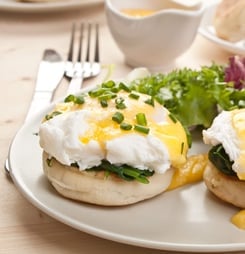
New York’s Delmonico’s Restaurant is credited with popularizing eggs Benedict, the upscale brunch dish that later inspired the Egg McMuffin’s flavor profile.
https://www.britannica.com/story/who-invented-eggs-benedict
McDonald’s introduced the Speedee Service System
The McDonald brothers formalized an assembly‑line “Speedee Service System,” creating the template for modern fast‑food kitchens that would later make mass‑produced breakfast sandwiches possible.
McDonald’s tests breakfast hours in select locations
As commuting and suburban car culture grow, McDonald’s begins experimenting with earlier opening times, laying the groundwork for a dedicated breakfast menu.
Herb Peterson developed the first Egg McMuffin prototype
Santa Barbara franchisee Herb Peterson created a handheld take on eggs Benedict, using a Teflon egg ring to fit a freshly cracked egg onto an English muffin with cheese and Canadian bacon.
Egg McMuffin entered test markets at 63 cents
McDonald’s began testing the Egg McMuffin in U.S. restaurants, selling it for 63 cents and proving that customers would buy a hot breakfast sandwich from a burger chain.
Nationwide rollout of the Egg McMuffin
The Egg McMuffin is introduced across the United States, marking a “breakfast revolution” that turns morning meals into a major segment of McDonald’s business.
Launch of McDonald’s full breakfast menu
Building on the Egg McMuffin’s success, McDonald’s rolled out a complete breakfast lineup, cementing the fast‑food breakfast sandwich as a staple of American eating habits.
History of National Egg McMuffin Day
With its inaugural appearance in the early 1970s, the Egg McMuffin has become a venerable item on the menu of the worldwide fast food mogul, McDonald’s.
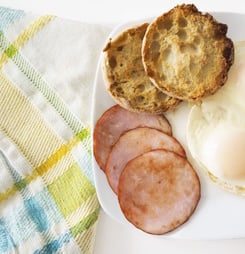
The Egg McMuffin is a fairly simple menu item, containing a fried egg, a slice of cheese and piece of Canadian bacon all placed on top of a toasted and buttered English muffin.
It is said that the Egg McMuffin was created to be something resembling Eggs Benedict, and was originally served open faced, with a small tub of strawberry jam. Although the sweet and savory combo didn’t catch on, customers can still ask for a packet of jam upon request when ordering an Egg McMuffin.
At the center of the launch of the breakfast menu for the restaurant chain in the 1970s, the Egg McMuffin cost only 63 cents when it was originally released, which would be around $3.29 today when inflation is considered.
It wasn’t until 2020 that McDonald’s officially declared National Egg McMuffin Day but it seems to be celebrated annually now. On the first observance of the day in 2020, the restaurant offered a coupon for a free Egg McMuffin for customers who downloaded the new McDonald’s App.
Today, National Egg McMuffin Day is a grand tradition that may not always come with a free breakfast sandwich. But it’s still certainly worth a trip to McDonald’s to celebrate the more than 50 years of delight the Egg McMuffin has brought to the world!
How to Celebrate National Egg McMuffin Day
Enjoy National Egg McMuffin Day in a variety of ways, getting started with some of these delicious ideas:
Pick Up an Egg McMuffin
Head over to McDonald’s on National Egg McMuffin Day and see what different varieties of breakfast sandwiches are available.
Egg McMuffins, Sausage McMuffins, and Sausage McMuffins with egg are just a few of the delicious offerings on the fast food restaurant menu. And mentioning that it’s a special day might just provide a discount or deal!
Learn to Make Copycat Egg McMuffins
It isn’t always necessary to go out in order to enjoy the delicious flavors that come from the Egg McMuffin because it’s possible to make them at home.
The biggest trick about copycatting this recipe has to do with getting the egg into that perfectly round shape.
While McDonald’s does cook their eggs on a griddle just like anyone else, they use a round mold that’s just slightly smaller than the size of the English muffin to cook the egg in. A makeshift one can be made by using the lid of a mason jar or something similar.
While cooking the egg, go ahead and toast and butter the muffin, and cook the Canadian bacon. Add a slice of cheese to the muffin, stack up the egg and bacon, and that homemade Egg McMuffin is ready to be enjoyed!
How the Egg McMuffin Changed Fast-Food Breakfast
These facts trace how a simple breakfast sandwich reshaped fast-food mornings, from clever kitchen innovations that made eggs work in a handheld format to the creation of an entirely new breakfast category.
Together, they show how adapting classic brunch ideas, standardizing ingredients, and solving high-volume cooking challenges turned a regional bakery showpiece into a global drive-thru staple.
Ring-Mold Eggs Changed Fast-Food Breakfast Cooking
To make eggs work in a hand-held sandwich, McDonald’s developers introduced metal ring molds on a flat-top griddle so a freshly cracked egg would cook into a neat circle the size of an English muffin.
This technique solved consistency and assembly problems in a high-volume kitchen and was widely copied by other chains, helping standardize the look and texture of fast-food breakfast sandwiches.
How Fast-Food Breakfast Created a New Meal Segment
When major chains invested in morning menus in the 1970s, they were not just adding a few items; they were creating a new daypart in the restaurant industry.
Corporate histories credit the first successful breakfast sandwich with convincing operators that people would buy hot, portable breakfasts on their commute, which in turn pushed competitors to develop their own offerings and turned “fast-food breakfast” into a multibillion-dollar category.
From Brunch Classic to Drive‑Thru Staple
The familiar breakfast-sandwich formula of egg, cured pork, and cheese on a split bread rounds traces conceptually to Eggs Benedict, which appeared in New York restaurant menus in the late 19th century.
By adapting Benedict’s poached egg on an English muffin into a simplified, griddled version, fast-food developers translated an upscale hotel brunch dish into something that could be produced in seconds on an assembly line.
English Muffins Were Once a Regional Specialty
Before they were used in mass-market breakfast sandwiches, English muffins were primarily an East Coast and specialty-bakery product in the United States.
Corporate interviews note that early fast-food innovators had to arrange dedicated supply lines to bring English muffins into new regions, which helped turn what had been a niche, bakery-style bread into an everyday supermarket staple across the country.
Breakfast Became a Cornerstone of Fast-Food Revenue
By the early 21st century, company executives were describing breakfast as a “cornerstone” of their brand, underscoring how important the morning daypart had become for sales and customer loyalty.
Internal retrospectives credit the success of the first mass-market egg sandwich with laying the groundwork for hash browns, hotcakes, specialty coffees, and later premium breakfast items that now account for a significant slice of many chains’ daily traffic.
A Single Sandwich Helped Normalize Eating in the Car
The design of the modern breakfast sandwich, built to be eaten with one hand and wrapped in paper, dovetailed with the rise of car commuting in the United States.
Fast-food histories point out that morning sandwiches were engineered to be drip-resistant, compact, and easy to hold, which encouraged people to treat the car as a primary place to eat breakfast and reinforced on-the-go eating as part of everyday American life.