National Farm Animals Day
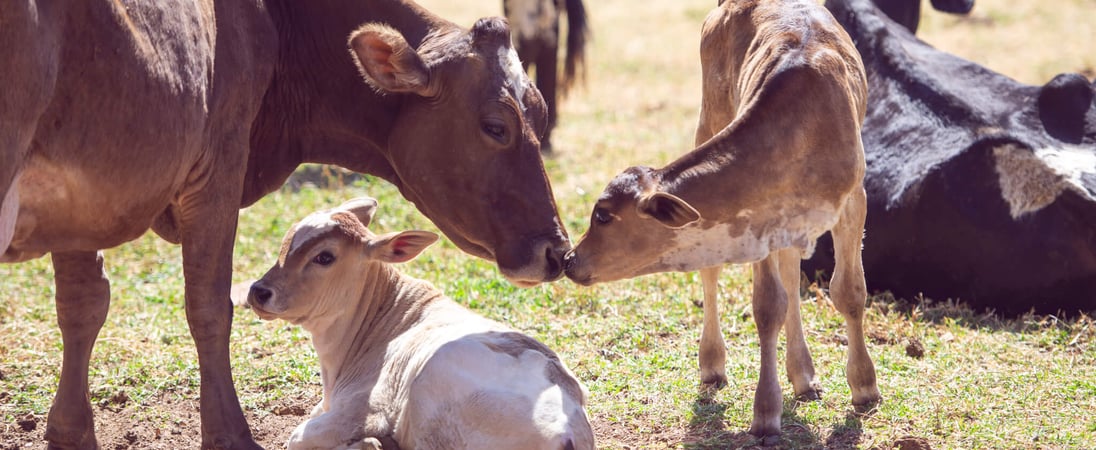
From cows to chickens, farm animals are essential to agriculture. They provide meat, eggs, and dairy while also helping maintain the land.
All over the world, farm animals are kept to provide milk, eggs, meat and other products. But many farm animals are treated poorly and kept under terrible conditions.
National Farm Animals Day brings an opportunity to show appreciation and raise awareness for these delightful and important creatures.
National Farm Animals Day Timeline
c. 10,000–8000 BCE
Early Domestication of Farm Animals
Humans begin domesticating sheep, goats, cattle, and pigs in the Fertile Crescent, laying the foundation for settled farming and early livestock husbandry.
1493
Cattle, Pigs, and Other Livestock Brought to the Americas
On his second voyage, Christopher Columbus brings cattle, pigs, and other farm animals to the Caribbean, beginning the spread of European livestock and husbandry systems in the Americas.
1822
First Modern Animal Welfare Law Passed in Britain
The British Parliament enacts Martin’s Act, one of the first laws to prohibit cruelty to cattle, horses, and sheep, marking a legal recognition of farm animal welfare concerns.
1866
ASPCA Founded to Fight Animal Cruelty
The American Society for the Prevention of Cruelty to Animals is founded in New York, becoming the first animal welfare organization in the United States and later addressing conditions for farm animals.
1957
Modern “Broiler” Chicken Industry Takes Off
Selective breeding and intensive production techniques produce the modern broiler chicken, accelerating the rise of confined, high-density poultry farming and related welfare concerns.
1966–1978
Foundations of Federal Farm Animal Protection in the U.S.
The Animal Welfare Act of 1966 and the Humane Methods of Slaughter Act amendments in 1978 establish federal standards for the handling and slaughter of certain animals, including livestock in many slaughterhouses.
1999
European Union Adopts Landmark Farm Animal Welfare Rules
The EU’s Directive 1999/74/EC begins phasing out conventional battery cages for laying hens and sets minimum welfare standards, influencing global debates on humane treatment of farm animals.
How to Celebrate National Farm Animals Day
National Farm Animals Day provides a variety of opportunities to enjoy and celebrate interesting things about these unique and important creatures. Have fun with some of these ideas for celebrating the day:
Visit a Working Farm with Animals
In honor of National Farm Animals Day, some working farms offer options for people from the community to visit their farms and learn more about farm animals by getting up close and personal with them.
Kids can often see the way that chickens, goats or pigs are treated, and perhaps there will even be a little petting zoo where they can feed them, feel their fur and have loads of fun!
The Barn Sanctuary, located in Chelsea, Michigan might be a great place to visit farm animals that have been rescued from neglect or abuse.
Make a Donation
One super way to show support for National Farm Animals Day might be to make a donation to a charity or organization that works to protect and help them.
These charities work to prevent the mistreatment and abuse of farm animals and other animals. Some of these non-profit organizations include:
- Humane Farming Association. This organization was founded in 1985 and has been working to prevent the dangers of factory farming ever since then. Their programs include veal boycotting, farm animal rescue and fighting for slaughterhouse regulations.
- American Society for the Prevention of Cruelty to Animals (ASPCA). This American organization works to protect all animals, including pet breeding and farm animals.
- Barn Sanctuary. This organization provides a safe haven for farm animals who have either been neglected or abused. Animals can be adopted and sponsored as they are rehabilitated and cared for.
- Mercy for Animals. This charity works to prevent the practice of cruelty to animals by reducing suffering of animals while also working to make viable alternatives to animal products.
History of National Farm Animals Day
Farming was likely one of the first ways that people supported themselves as they settled into communities, domesticating plants and animals sometime around 10,000 years ago or more.
For thousands of years, farms were kept by families and the animals were treated well as a vital part of survival.
Unfortunately, modern times have brought about larger and larger farms that have turned to practices of factory farming where the animals are treated less humanely.
This might mean that they are exposed to unhealthy growth hormones, kept in very small spaces where disease is prevalent, or are just generally provided with a low quality of life.
National Farm Animals Day was founded in 2005 by animal enthusiast, Colleen Paige, to show how important these farm animals are to the world and how much they deserve to be treated humanely.
Facts About National Farm Animals Day
Cows Remember Faces and Hold Grudges
Research in animal cognition has shown that cows can recognize individual people and other cows, remember them for months, and react differently based on past experiences, which suggests a capacity for both long-term memory and emotional learning.
Pigs Match Dogs in Many Cognitive Tests
Scientific studies have found that pigs can use mirrors to locate hidden food, learn joystick-controlled video-game tasks, and solve mazes, placing them among the most cognitively sophisticated domesticated animals and comparable to dogs in several problem-solving tasks.
Chickens Communicate with a “Vocabulary” of Calls
Ethologists have documented that chickens use over two dozen distinct vocalizations to signal food discovery, warn about different types of predators, and coordinate with chicks, and they adjust these calls based on who is listening, suggesting a surprisingly complex communication system.
Farm Animals Domesticated in Separate Centers of the Ancient World
DNA and archaeological evidence show that major farm animals were not domesticated in a single cradle of agriculture but in multiple regions, with cattle and sheep first domesticated in the Fertile Crescent, pigs in both the Near East and East Asia, and chickens in Southeast Asia from wild red junglefowl.
Livestock Supply a Small Share of Calories but a Large Share of Protein
Global food-balance data indicate that animal-source foods provide less than 20 percent of the world’s dietary calories but around one-third of total protein and most dietary vitamin B12, which underscores the nutritional importance of farm animals in many diets.
Most Farm Animals Live in Intensive Systems
Analyses by international animal-welfare researchers estimate that the vast majority of chickens raised for meat and eggs, and more than half of pigs worldwide, are kept in intensive indoor or confined systems, rather than on pasture, making housing design and management critical to their welfare.
Environmental Footprint of Beef Far Exceeds That of Plant Foods
Comparative life-cycle assessments have found that beef production is responsible for several times more greenhouse gas emissions per gram of protein than plant-based staples and even other animal products, largely because cattle produce methane and require more land and feed, which magnifies the environmental implications of raising cattle.
National Farm Animals Day FAQs
How are farm animals typically raised in industrial systems compared with higher welfare or pasture-based farms?
In intensive or industrial systems, many farm animals are kept indoors at relatively high stocking densities, which can limit movement and natural behaviors such as grazing, rooting, or dust bathing.
Higher welfare or pasture-based farms generally provide more space, bedding or environmental enrichment, and some outdoor access.
These conditions can support better leg health, lower stress, and more natural social behavior, although actual welfare outcomes still depend on how each farm is managed and monitored.
Are animals like cows, pigs, and chickens considered sentient in modern science and policy?
Modern animal welfare science and many international standards recognize common farm animals as sentient, meaning they can experience pain, fear, and other emotional states.
Studies in behavior, learning, and cognition show that pigs can solve problems and remember tasks, cattle form social bonds and react to separation, and chickens respond to changes in their environment and show signs of fear.
This evidence informs welfare guidelines that aim to minimize pain and distress and to help animals cope with their surroundings.
What are some of the most common welfare concerns for farm animals?
Common welfare concerns for farm animals include overcrowding, poor air quality, and limited space that restricts movement and natural behaviors.
Painful procedures such as castration, tail docking, dehorning, or beak trimming may be carried out with limited or no pain relief in some systems.
Lameness in dairy cows, rapid growth and leg problems in broiler chickens, and prolonged confinement for breeding pigs are also frequently reported issues.
Science-based assessments emphasize that good welfare involves more than survival and includes comfort, the ability to perform motivated behaviors, and freedom from prolonged fear and distress.
Do animal welfare labels on meat, eggs, and dairy reliably indicate better treatment for farm animals?
Independent third-party welfare certification programs usually require farms to meet standards that go beyond basic legal requirements, such as lower stocking densities, provision of bedding or enrichments, and sometimes outdoor access.
However, labels differ greatly in strictness, how often farms are inspected, and how clearly their standards are defined and published.
Some marketing terms, such as “natural” or “farm fresh,” may not correspond to specific welfare rules.
Consumers who want to prioritize animal welfare are often advised to look for certifications with transparent criteria, regular auditing, and publicly available standards.
Is it accurate to say that better animal welfare always makes farming less sustainable?
Improving animal welfare can increase certain costs, such as providing more space per animal or using slower-growing breeds, but it does not automatically make farming less sustainable.
Measures like better housing design, careful handling, and improved health care can reduce injuries, disease, and mortality, which may offset some additional inputs.
Environmental impacts also depend on factors such as feed production, manure management, and land use.
Many experts therefore recommend evaluating animal welfare, environmental outcomes, and farm economics together within a broader “One Welfare” or systems approach.
How do different countries regulate the treatment of farm animals?
Regulation of farm animal treatment varies widely across regions.
The European Union, for example, has specific rules for housing, transport, and slaughter for several species, and some member states adopt stricter requirements.
Other parts of the world rely more on general anti-cruelty laws, voluntary industry standards, or codes of practice rather than detailed species-specific legislation.
International organizations publish recommendations on topics such as transport and slaughter, but actual protections depend on how each country incorporates these into national law and how effectively those laws are enforced.
What practical steps can someone take if they want to support better lives for farm animals through their choices?
People who want to support better conditions for farm animals can start by learning how different production systems operate and what local labels or certifications mean.
Some choose products certified by reputable higher welfare schemes or buy from producers that share clear information about housing, feeding, and handling practices.
Others adjust how often they purchase animal products or diversify the types they buy. Individuals can also support organizations, research, or educational efforts that work on improving standards for housing, transport, and slaughter.
Also on ...
View all holidays
National Hug Your Dog Day
Give that furry creature a special celebration by enjoying National Hug Your Dog Day with them.


National Siblings Day
Show your siblings you appreciate them, even if you sometimes want to kill them, or volunteer to adopt-a-sibling and enrich some else’s life on Siblings Day.